
 en
en
 English
 русский
 Français
 Español
 Português
 Tiếng Việt
Content
- 1 Understanding 10cm Gray Knitted Elastic
- 2 Why Knitted Elastic Is Different from Other Elastic Materials
- 3 Performance Benefits in Daily Use
- 4 Applications Across Apparel and Protective Products
- 5 Advanced Manufacturing Processes
- 6 Quality Management and Manufacturing Strengths
- 7 How 10cm Gray Knitted Elastic Compares with Competing Product Choices
- 8 Design and Sewing Considerations
- 9 Purchasing Guidance for Buyers
- 10 Frequently Asked Questions
- 10.1 What is 10cm gray knitted elastic used for?
- 10.2 What does the 10cm width mean?
- 10.3 Is this product suitable for direct skin contact?
- 10.4 Can the gray color be customized?
- 10.5 Can the elasticity be customized?
- 10.6 How does knitted elastic differ from woven elastic?
- 10.7 Can it be used in medical supports?
- 10.8 What quality certifications are associated with the manufacturer?
- 10.9 Does the manufacturer accept OEM and ODM orders?
- 10.10 How should buyers test the product before placing a large order?
- 11 Conclusion
- 12 References
- 13 Product: 10cm Gray Knitted Elastic
Elastic materials are essential components in apparel, medical supports, sportswear, protective equipment, and numerous textile products. The right elastic must do more than stretch. It must provide controlled extension, recover its original dimensions, maintain comfort against the skin, preserve its appearance after repeated use, and remain consistent during cutting, sewing, assembly, and final product testing. For manufacturers, these requirements are closely connected to production efficiency, product quality, and customer satisfaction.
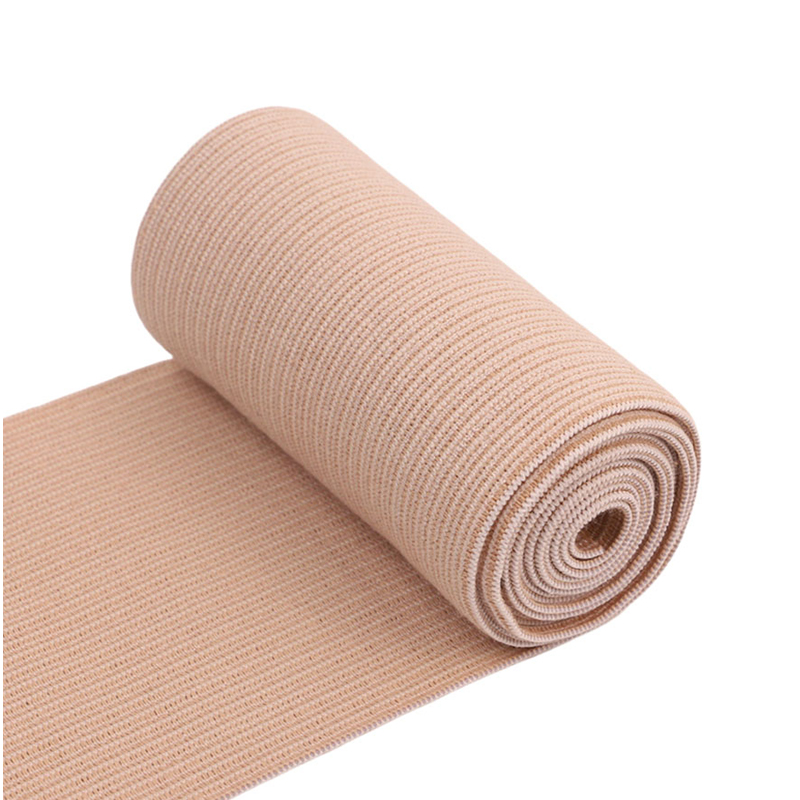
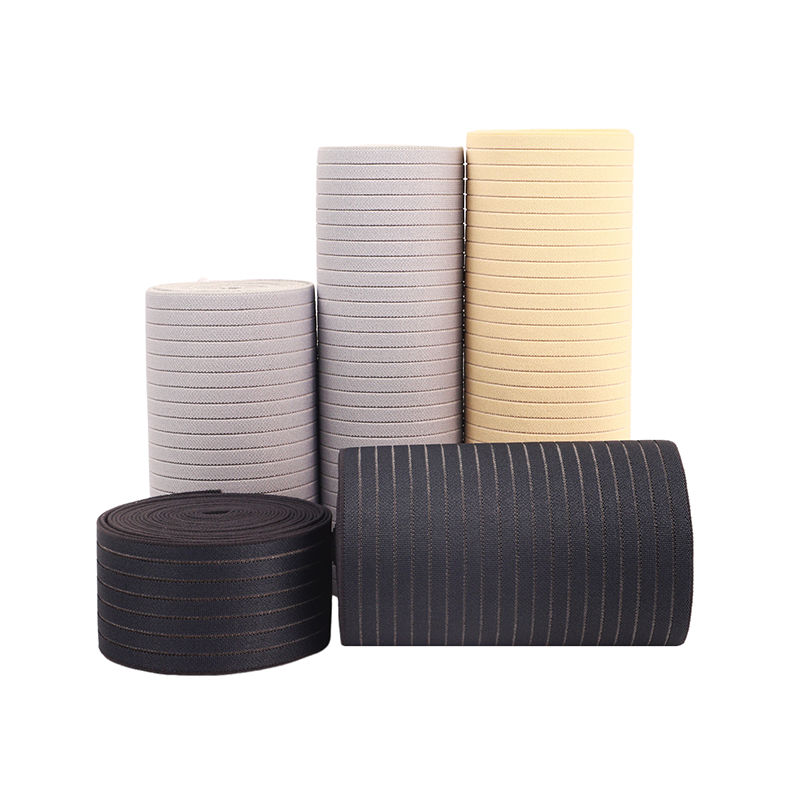
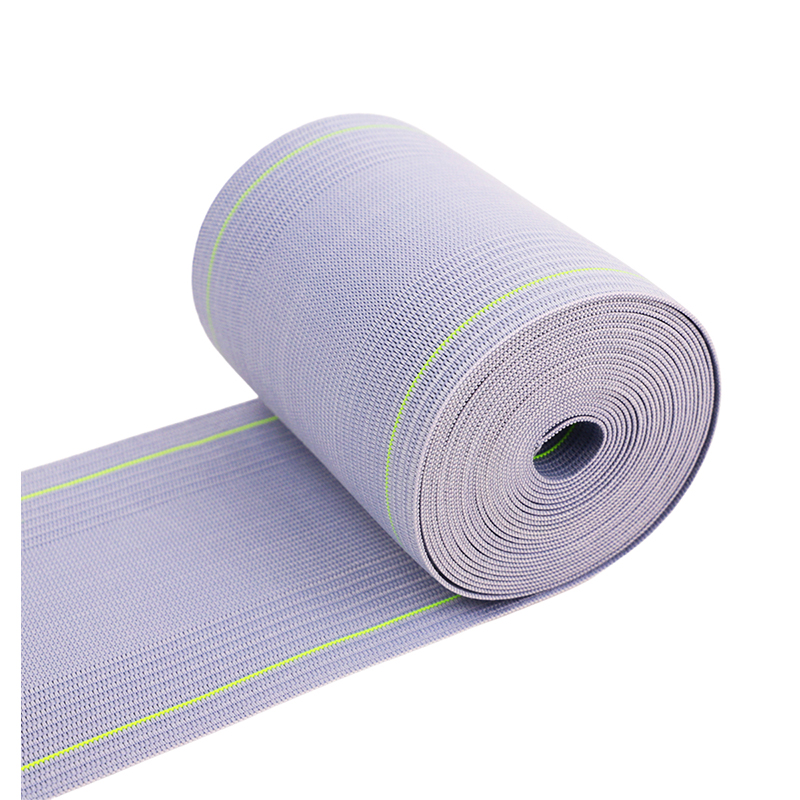
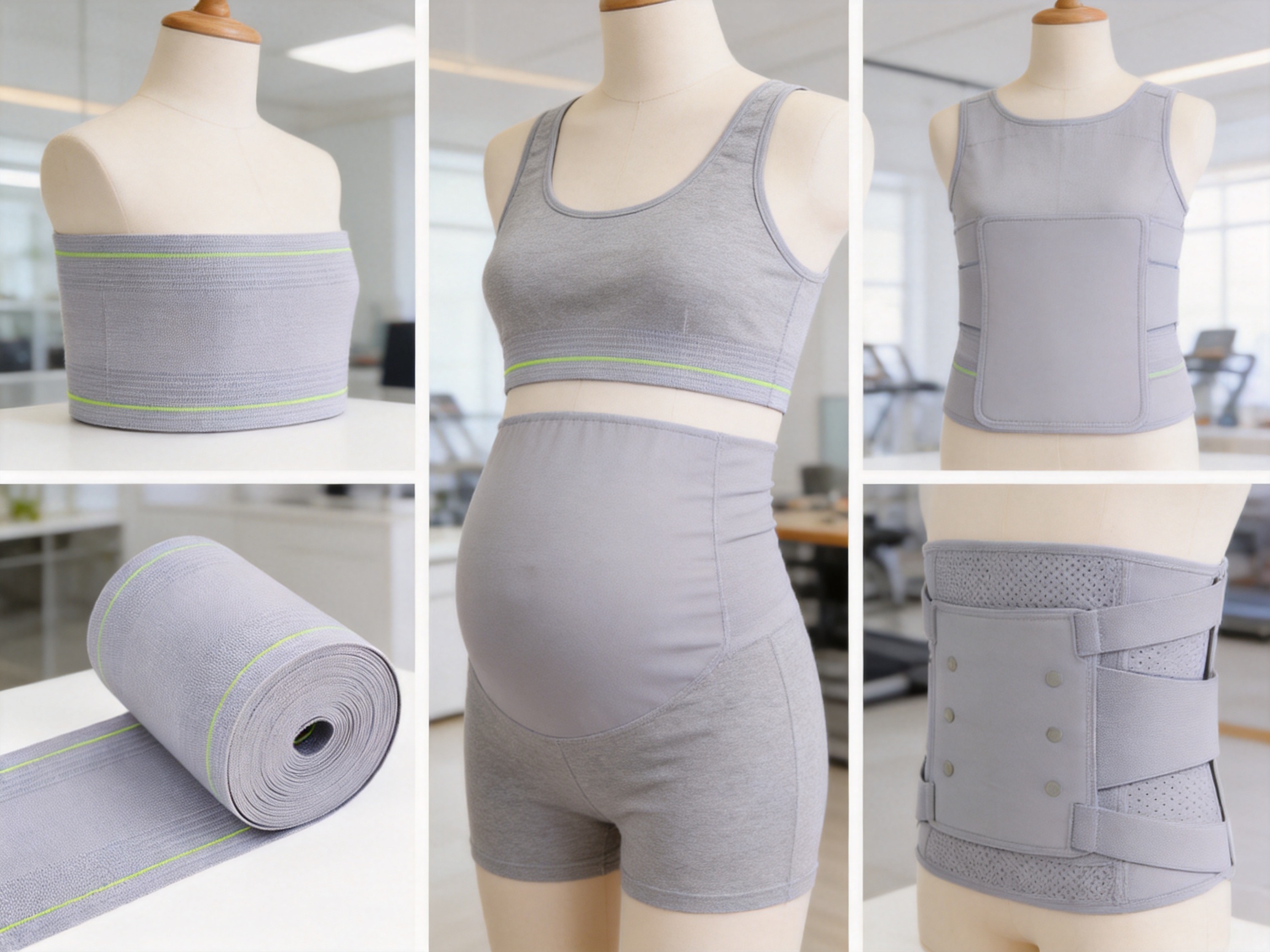
10cm gray knitted elastic is designed to answer these needs with a wide knitted structure, a soft surface, strong and even elasticity, and a neutral color suitable for many product categories. Its 10cm width offers broader support and coverage than narrow elastic tape, while its knitted construction provides flexibility without sacrificing dimensional stability. This combination makes it suitable for garment waistbands, sportswear, loungewear, shapewear, maternity clothing, medical supports, orthopedic braces, sewing projects, and other textile applications where comfort and dependable recovery are important.
Manufactured by Jinhu Hengxiang Webbing Co., Ltd., this product reflects the company’s long-term experience in elastic and non-elastic webbing production. The company combines specialized warping, knitting, inspection, testing, and packaging processes with material selection and customized production capabilities. Its experience in sports protection and medical protective equipment also gives the product a practical foundation for applications that require stable performance and consistent quality.
10cm Gray Knitted Elastic
Understanding 10cm Gray Knitted Elastic
10cm gray knitted elastic is a wide elastic textile produced by knitting elastic yarns and supporting yarns into a flexible, interconnected structure. Unlike rigid woven materials, knitted elastic can extend and contract smoothly because its loops respond dynamically to movement and tension. The result is a textile component that can follow body contours, accommodate motion, and return toward its original dimensions after stretching.
The 10cm width is one of the product’s most important functional features. A wide elastic band distributes pressure over a larger area than a narrow band, which can improve wearing comfort and reduce concentrated tension. It can also provide better coverage in waistbands, abdominal supports, maternity garments, sports braces, and shaped apparel. Depending on the final product design, the material may be used as a continuous panel, a waistband component, a support section, or a reinforcement area.
The gray color is neutral, practical, and adaptable. It can be used as a visible design element in modern sportswear or concealed inside garments where color coordination remains important. Gray is also suitable for products intended for unisex markets because it is neither highly decorative nor limited to a particular style direction. It can be combined with black, white, navy, blue, red, or other colors, giving product designers considerable flexibility.
Although the product is soft, softness does not mean weakness. A well-engineered knitted elastic must balance several characteristics at the same time. It should stretch sufficiently during use, recover after extension, resist unwanted deformation, and maintain a stable surface during sewing and laundering. The yarn selection, knitting tension, machine settings, finishing methods, and inspection procedures all influence this balance.
Core Product Characteristics
| Characteristic | Product Benefit | Typical Application Value |
|---|---|---|
| 10cm wide construction | Provides broad coverage and distributes tension | Waistbands, support garments, braces, and large textile panels |
| Knitted structure | Allows smooth flexibility and comfortable movement | Sportswear, loungewear, shapewear, and maternity clothing |
| Strong elasticity | Supports controlled extension and secure fit | Garments and products that must remain in position |
| Even stretch | Reduces uneven pressure and irregular appearance | High-quality finished apparel and protective equipment |
| Good recovery | Helps the material return toward its original shape | Repeated-use products and washable garments |
| Soft texture | Improves comfort during prolonged contact or wear | Underwear, loungewear, maternity products, and supports |
| Gray color | Offers neutral and modern visual coordination | Fashion apparel, sports products, and concealed components |
Why Knitted Elastic Is Different from Other Elastic Materials
Elastic webbing is available in several constructions, including woven elastic, knitted elastic, braided elastic, and narrow elastic bands. Each construction has its own performance profile. The most suitable choice depends on the required width, stretch, surface feel, recovery, thickness, edge stability, and intended use.
Knitted elastic is formed through a loop-based structure. This structure allows the material to flex in multiple directions and generally gives it a softer hand than many rigid or tightly constructed alternatives. It is especially useful when the elastic will be worn close to the body or integrated into products that must move with the user.
Woven elastic can offer high dimensional stability and a firm feel, making it useful for applications requiring stronger resistance to deformation. However, some woven constructions may feel more structured or less pliable when used directly against the skin. Knitted elastic is often preferred when softness, comfort, and flexible movement are major priorities.
Braided elastic is commonly used in lightweight applications and can be economical for certain designs. However, braided structures may narrow when stretched and may not provide the same broad, stable coverage as a 10cm knitted elastic. For waistbands, support panels, and wide garment sections, a knitted construction can provide a more consistent visual and functional surface.
Narrow elastic bands are useful for lingerie edges, masks, small garment openings, and other compact applications. They are not intended to replace wide elastic when the product requires broad pressure distribution or a larger support area. The 10cm format therefore occupies a different functional position, offering a practical balance between flexibility and coverage.
Advantages Compared with Less Suitable Alternatives
The principal advantage of 10cm gray knitted elastic is its combination of width and flexibility. A narrow tape may concentrate force on a small section of the body, while a stiff material may restrict movement. The wider knitted format spreads the elastic effect over a larger area and allows the textile to adapt to body motion.
Another advantage is surface comfort. Since the product is intended for apparel and body-contact applications, a soft hand can contribute significantly to the user experience. A comfortable elastic is less likely to feel abrasive, excessively rigid, or intrusive during extended wear.
The product also supports design consistency. Its even elasticity helps manufacturers create waistbands and support sections with a more uniform fit. Inconsistent stretch can result in twisting, uneven gathering, localized pressure, or an unstable finished appearance. Consistency in the elastic tape helps reduce these risks during garment assembly.
The neutral gray shade provides an additional advantage over highly specialized or visually restrictive colors. It can be used in exposed designs, hidden construction areas, sample development, or coordinated collections without requiring a complex color strategy. When custom colors are needed, the manufacturer’s production experience can support discussions about tailored color requirements.
Performance Benefits in Daily Use
Comfortable Stretch
Comfort is one of the main reasons designers select knitted elastic for apparel and wearable products. The material needs to stretch when the user moves, sits, bends, exercises, or changes position. If an elastic component does not adapt smoothly, it can create discomfort and reduce the usability of the final product.
The knitted structure of this 10cm elastic allows the loops to respond to movement. This produces a flexible feel that is particularly useful in waistbands, maternity garments, loungewear, and sportswear. The material can follow the changing shape of the body without behaving like a rigid band.
Reliable Shape Recovery
Stretch alone is not enough. A high-quality elastic must also recover after extension. Recovery helps the waistband or support section remain functional after repeated movement. Without satisfactory recovery, a garment may gradually become loose, lose its intended shape, or fail to remain securely positioned.
10cm gray knitted elastic is developed to provide strong and even elasticity with useful recovery. Its performance depends on the complete manufacturing system, including suitable yarns, controlled knitting tension, machine maintenance, finishing, and inspection. When these elements are managed carefully, the resulting tape can offer more predictable behavior in production and use.
Broad Pressure Distribution
The width of the product allows force to be distributed over a broader area. This can be valuable in abdominal binders, support garments, orthopedic braces, and maternity products. Instead of relying on a very narrow strip to hold a garment or support a body area, a wide elastic panel can provide more balanced contact.
Broad coverage may also improve visual appearance. A wide waistband can create a smooth transition between the garment and the body, while a narrow band may produce more pronounced lines or concentrated gathering. For shapewear and fitted apparel, this distinction can influence both comfort and styling.
Soft Hand and Skin-Friendly Feel
Products worn for long periods require careful attention to texture. A soft elastic surface can improve acceptance by reducing the feeling of stiffness or friction. This is especially relevant to underwear, maternity clothing, loungewear, sports supports, and garments worn during rest or recovery.
Softness must be balanced with strength. If the surface is soft but the structure is unstable, the product may not perform adequately. The value of this knitted elastic lies in its intended balance of a pleasant hand, strong elasticity, and structural consistency.
Versatile Appearance
Gray is suitable for contemporary and functional product designs. In sportswear, it can support a technical or understated visual identity. In loungewear, it can complement soft and neutral color palettes. In medical or protective equipment, it can provide a clean and practical appearance.
For manufacturers producing multiple product lines, a neutral elastic may also simplify inventory planning. It can be used across several styles and categories rather than being restricted to a single color family. This can support more efficient sampling and production management.
Applications Across Apparel and Protective Products
Garment Waistbands
Waistbands are one of the most common applications for wide knitted elastic. The material can be inserted into a casing, sewn directly to fabric, or integrated into a multi-layer waistband structure. Its width helps create a broad and stable fit, while its flexibility allows the garment to accommodate body movement.
The product can be used in casual trousers, skirts, shorts, sleepwear, underwear, uniforms, and performance garments. Designers may select different sewing methods depending on the fabric weight, desired appearance, and required degree of support.
Sportswear
Sportswear must accommodate repeated motion, stretching, bending, and changes in body position. Elastic components are used in waistbands, compression garments, training apparel, recovery wear, and support products. The 10cm width can provide a stable contact area without requiring several narrow tapes to be assembled side by side.
In sportswear, the elastic should work with the outer fabric rather than restrict it. A knitted structure may help the garment respond more naturally to movement. Its gray color can also suit monochrome, technical, and minimalist sports designs.
Loungewear and Sleepwear
Loungewear and sleepwear place special emphasis on softness and relaxed comfort. Garments are often worn for many hours, so an elastic component that feels excessively firm or rough can reduce product appeal. Wide knitted elastic can provide gentle stability while supporting a comfortable fit.
Its neutral appearance is suitable for pajamas, homewear sets, elastic-waisted pants, and leisure garments. It can also be covered by fabric when the designer wants a fully integrated appearance.
Shapewear
Shapewear requires controlled elasticity and secure positioning. Wide elastic can help create a smooth transition across the waist or abdomen and may support the garment’s shaping architecture. The product should be selected together with appropriate fabrics, seams, panels, and compression levels because the performance of a finished shapewear garment depends on the complete design.
The soft knitted surface can be beneficial in products worn close to the skin. Even stretch can also help reduce irregular tension across the garment, although final performance should always be verified through prototype testing and wear trials.
Maternity Clothing
Maternity garments need to adapt as the body changes. A waistband or support panel must offer flexibility while remaining comfortable and stable. The broad format of 10cm gray knitted elastic makes it suitable for maternity waistbands, belly-support panels, adjustable garment sections, and related textile products.
In maternity applications, comfort and pressure distribution are especially important. Product developers should assess the elastic together with the garment pattern, seam position, fabric stretch, and intended period of wear. A suitable design can allow the elastic to support the garment without creating unnecessary localized pressure.
Medical Supports and Orthopedic Braces
Elastic webbing is widely used in medical protective equipment, sports supports, and orthopedic braces. In these products, the material may help maintain positioning, provide adjustable tension, or support a fabric structure around the body. The broad knitted format can be considered for abdominal supports, body support panels, rehabilitation garments, and brace components.
Medical and orthopedic applications require careful engineering. The elastic must be evaluated for its intended use, load, skin contact, washing conditions, fastening method, and expected service life. The presence of a suitable elastic does not by itself make a finished product a medical device. Manufacturers must complete their own design validation, risk assessment, compliance procedures, and performance testing.
Sewing and DIY Textile Projects
The product is also useful for sewing studios, sample rooms, costume construction, craft workshops, and DIY textile projects. Its wide format can be cut into sections for waistbands, support panels, fabric assemblies, and experimental designs. Gray is easy to coordinate with many fabrics, making it practical for prototypes and small-batch projects.
Advanced Manufacturing Processes
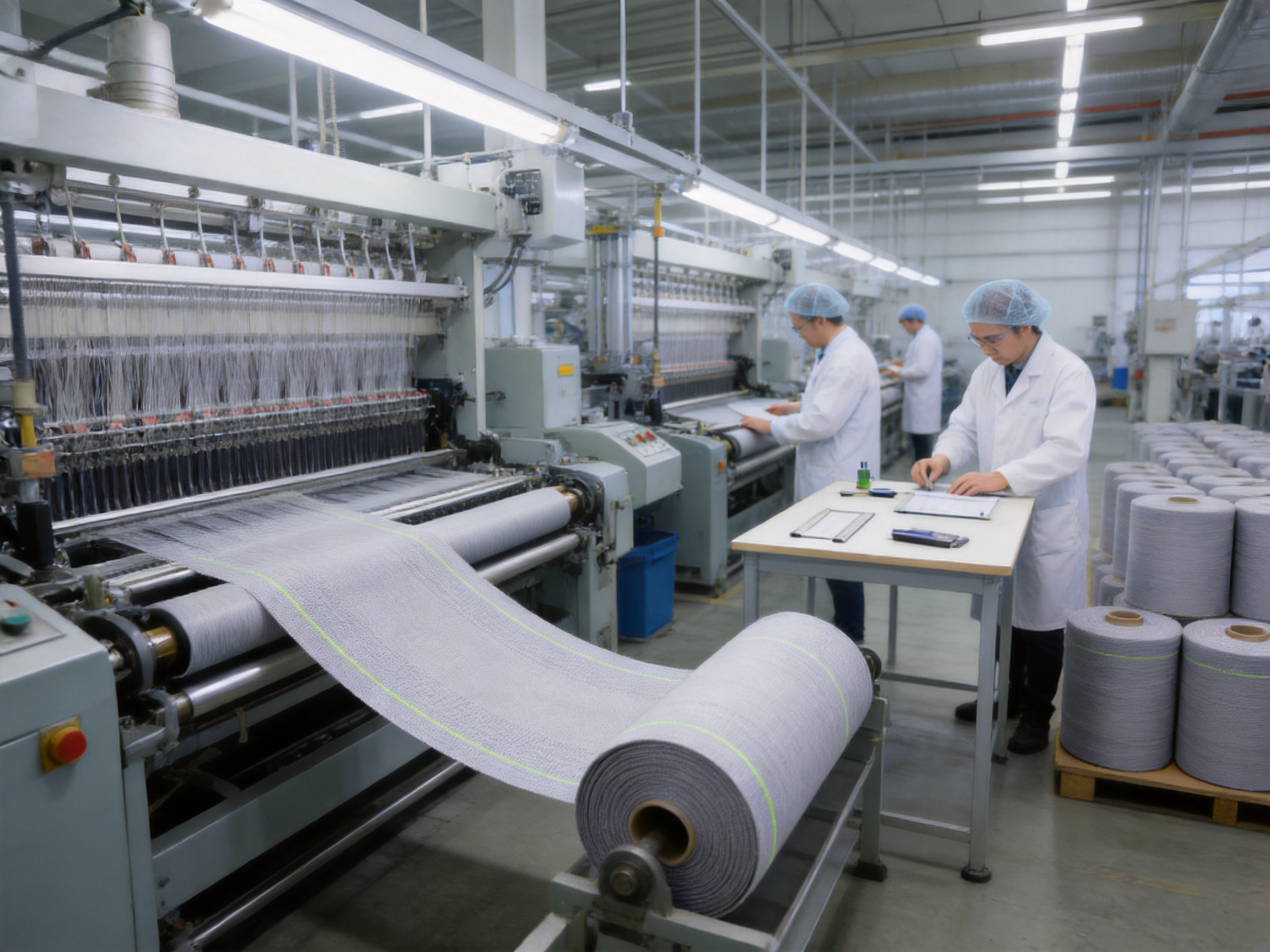
The performance of knitted elastic is strongly influenced by the production process. Jinhu Hengxiang Webbing Co., Ltd. has developed manufacturing capabilities covering material preparation, warping, knitting, inspection, testing, and packaging. The company was established in 2005 and has more than 20 years of experience in elastic and non-elastic webbing production.
Material Selection and Preparation
Material selection is the first stage in creating a stable elastic product. Yarn characteristics influence softness, strength, stretch, recovery, surface appearance, and resistance to repeated use. Production teams must consider the intended application and select materials that can work together in the knitting process.
Before knitting, materials are prepared and organized to support consistent feeding. Proper preparation helps reduce tension variation, yarn entanglement, and interruptions during production. It also establishes the foundation for a more uniform finished surface.
Warping Operations
Warping machines prepare yarns in an organized arrangement for subsequent processing. Accurate warping helps control the number, spacing, and tension of yarns entering the knitting system. Variations at this stage can influence width, density, surface regularity, and elastic behavior.
Modern warping equipment can improve production consistency and support repeat orders. When the same specifications are required over multiple batches, controlled preparation helps the manufacturer reproduce established settings more reliably.
Knitting Process
Knitting machines form the interconnected loop structure that gives the product its flexibility. Machine settings influence the width, thickness, density, hand feel, and stretch characteristics of the elastic. Operators and technicians must monitor yarn feed, knitting tension, machine speed, needle condition, and production stability.
For a 10cm knitted elastic, width control is particularly important. A small variation may affect sewing alignment, product coverage, or the appearance of the finished garment. The knitting process must therefore balance elasticity with dimensional control.
Even knitting also supports a more consistent surface. Irregular loops, broken yarns, loose sections, or changes in density can create weak points and visual defects. Routine monitoring helps identify problems early and reduces the risk of producing large quantities of nonconforming material.
Finishing and Stabilization
After knitting, elastic webbing may undergo finishing or stabilization steps designed to improve handling, appearance, and consistency. The exact process depends on the yarn combination, product specification, customer requirements, and intended application.
Finishing can influence softness, surface cleanliness, width, roll formation, and dimensional behavior. A suitable finishing approach should preserve the useful elasticity of the knitted structure rather than excessively restricting it. Production personnel must therefore select and control finishing conditions carefully.
Inspection and Testing
Inspection is an essential part of manufacturing quality. It may include visual examination, width measurement, stretch evaluation, recovery assessment, surface inspection, roll-length verification, and packaging checks. For customers using the product in high-volume production, consistent inspection reduces the chance of unexpected variation at the sewing or assembly stage.
Quality control should cover both appearance and performance. A product may look acceptable but still have uneven elasticity or inadequate recovery. Conversely, a product may meet stretch requirements but show surface or color irregularities. A comprehensive approach evaluates the characteristics that matter to the final application.
Packaging and Delivery Preparation
Packaging protects the elastic during storage and transportation. Properly prepared rolls or packages help prevent contamination, crushing, moisture exposure, and unnecessary deformation. Clear identification also supports warehouse management and traceability.
Jinhu Hengxiang Webbing Co., Ltd. has introduced and updated packaging machines along with warping, knitting, and woven equipment. This investment supports higher production efficiency and more organized order fulfillment. The company reports production capacity reaching millions of meters of elastic and non-elastic webbing each month, enabling it to serve both regular and customized orders.
Quality Management and Manufacturing Strengths
A dependable supplier must offer more than a single product specification. Customers need confidence that the material can be produced consistently, supplied on schedule, customized when necessary, and supported after delivery. Jinhu Hengxiang Webbing Co., Ltd. emphasizes quality control throughout material sourcing, processing, testing, and packing.
The company has obtained Oeko-Tex Standard 100 and ISO 13485 certificates. These certifications reflect structured quality and product-safety management practices relevant to textile and medical-related manufacturing environments. Customers should still confirm the specific scope and validity of certifications for their intended project, but the company’s certification background provides an important foundation for supplier evaluation.
Experience in Sports and Medical Applications
The company specializes in elastic and non-elastic webbing, particularly for sports supports and orthopedic braces. This experience is relevant to 10cm gray knitted elastic because these applications demand controlled stretch, stable positioning, repeatable quality, and careful consideration of comfort.
Knowledge gained from support products can also benefit apparel customers. Sports and medical products often expose weaknesses that may be less obvious in ordinary fashion applications. Repeated stretching, frequent washing, body movement, and extended contact all require a material that performs consistently.
OEM and ODM Support
Different products require different elastic characteristics. One customer may need a softer surface, while another may require firmer recovery or a specific color. A third customer may need a special width, thickness, texture, roll length, or packaging arrangement.
OEM and ODM support allows the supplier to cooperate with customers during product development. Customized discussions may cover yarn selection, elasticity, texture, color, width, finishing, packaging, and quality requirements. Customers can provide samples, drawings, technical specifications, or application details to help the production team recommend an appropriate configuration.
Large-Scale Production Capability
High production capacity is useful when customers require stable supply over multiple seasons or for large-volume orders. The company’s investment in advanced machinery and reported monthly output of millions of meters indicates the ability to support substantial demand while maintaining organized production planning.
Large-scale capability may also improve supply-chain efficiency. A manufacturer with dedicated equipment and experienced personnel can often coordinate material preparation, production scheduling, inspection, and packing more effectively than a supplier that relies entirely on outsourced processes.
International Market Experience
The company’s products are sold across China and exported to North America, Eastern Europe, the Middle East, South Asia, and other regions. International experience can help a supplier understand differences in customer specifications, packaging expectations, documentation, delivery schedules, and communication requirements.
For overseas buyers, reliable communication is especially important during sample approval and bulk production. Clear confirmation of specifications helps reduce misunderstandings related to width, color, elasticity, roll length, tolerance, and inspection standards.
How 10cm Gray Knitted Elastic Compares with Competing Product Choices
When comparing elastic products, buyers should evaluate the complete performance profile rather than choosing solely by price. A lower-cost material may create additional expenses if it produces sewing problems, inconsistent sizing, frequent returns, or premature product failure. The most economical solution is often the one that delivers stable quality throughout production and use.
Compared with narrow elastic, 10cm knitted elastic offers broader coverage and more balanced pressure distribution. Compared with rigid or firm woven structures, it can provide a softer and more flexible hand. Compared with highly decorative colors, gray offers wider coordination and may simplify inventory.
Compared with products from suppliers that focus only on basic elastic tape, this product benefits from a manufacturer with experience in sports protection, orthopedic braces, medical protective equipment, and customized webbing. That background can be valuable when an application requires more than a standard fashion waistband.
| Evaluation Area | 10cm Gray Knitted Elastic | Potential Limitation of Less Suitable Alternatives |
|---|---|---|
| Coverage | Wide format supports broad body or garment areas | Narrow bands may concentrate pressure or require multiple strips |
| Flexibility | Knitted loops support smooth movement | Rigid structures may feel restrictive in body-contact products |
| Comfort | Soft texture is suitable for extended wear | Rough or firm materials may reduce user comfort |
| Appearance | Neutral gray coordinates with many designs | Specialized colors may limit use across product lines |
| Customization | Suitable for discussions about elasticity, texture, and color | Limited suppliers may offer only fixed specifications |
| Supply Capability | Supported by dedicated equipment and high production capacity | Small suppliers may struggle with repeat volume or delivery planning |
| Quality Background | Manufactured by a company with Oeko-Tex and ISO 13485 certification experience | Unverified suppliers may provide less transparent quality information |
Design and Sewing Considerations
Successful use of wide knitted elastic begins with appropriate product design. Designers should determine whether the elastic will be exposed, enclosed in a casing, sewn between fabric layers, or joined directly to the garment. Each method affects the required seam allowance, needle selection, thread type, stitch density, and handling procedure.
Because knitted elastic is flexible, it should be guided carefully during cutting and sewing. Excessive pulling during assembly may create inaccurate lengths or unwanted gathering. Sewing operators should follow the approved production method and use samples to confirm how much the elastic should be extended during attachment.
Fabric compatibility is also important. A lightweight fabric may require a different sewing approach from a heavy sports fabric or multilayer support textile. The elastic should be assessed with the final fabric combination, not only as an isolated tape.
Designers should also consider laundering and care instructions. Washing temperature, detergents, drying conditions, and repeated mechanical action can affect elastic performance. The finished product should be tested under the care conditions expected by the end user.
Prototype Testing
Before bulk production, a prototype should be created using the intended elastic, fabric, thread, seams, and hardware. The prototype should be checked for comfort, appearance, stretch, recovery, fit, and ease of assembly.
For support products, testing should include movement and repeated-use simulations. For apparel, testing may include sitting, bending, walking, washing, and extended wear. For medical-related products, additional validation and compliance activities may be required according to the final product classification and market regulations.
Storage and Handling
Elastic webbing should be stored in a clean, dry environment away from direct sunlight, excessive heat, moisture, and chemicals that could affect yarn performance. Rolls should not be crushed under excessive weight. Proper storage helps preserve the material’s surface, shape, and elasticity before use.
During production, operators should avoid unnecessary dragging across rough surfaces. Clean handling reduces the risk of staining, snagging, and surface damage. If the product is stored for a long period, the buyer should inspect sample rolls before releasing them to production.
Purchasing Guidance for Buyers
Buyers should provide complete information when requesting a quotation or sample. Useful details include the intended application, required width, preferred color, approximate stretch, recovery expectations, fabric type, order quantity, roll length, packaging requirements, and delivery destination.
If the elastic will be used in a medical support or orthopedic product, the buyer should also explain the expected load, body-contact conditions, washing method, fastening system, and applicable regulatory requirements. This allows the supplier to recommend a more appropriate construction and identify any testing needs.
Samples should be evaluated under realistic conditions. Buyers should measure width both relaxed and during use, observe stretch uniformity across the roll, assess the surface feel, check recovery after repeated extension, and inspect the product after laundering if washing is part of the final application.
It is also important to establish acceptable tolerances before bulk production. Width, color, stretch, recovery, thickness, roll length, and appearance should be agreed upon in writing. Clear standards make inspection more objective and reduce disputes between supplier and customer.
Questions to Confirm with a Supplier
Buyers may ask whether the elastic can be customized in width, color, texture, stretch, and recovery. They may also confirm available sample quantities, minimum order requirements, lead time, packaging method, inspection procedures, certificate documentation, and production capacity.
For repeat orders, buyers should ask how approved samples and specifications are recorded. Consistent reference standards help the supplier reproduce the required product and help the buyer compare subsequent deliveries.
Frequently Asked Questions
What is 10cm gray knitted elastic used for?
It is used for garment waistbands, sportswear, loungewear, shapewear, maternity clothing, body-support garments, orthopedic braces, medical protective equipment, sewing projects, and other textile products requiring broad, comfortable, and flexible elastic support.
What does the 10cm width mean?
The 10cm measurement refers to the approximate width of the elastic in its relaxed product form, subject to the agreed manufacturing tolerance. Buyers should confirm the exact specification with the supplier because width can be customized for different applications.
Is this product suitable for direct skin contact?
The product has a soft texture and is intended for applications where comfort is important. However, the suitability of a final product for direct skin contact depends on the complete material system, including yarns, dyes, finishes, sewing threads, and other components. Buyers should request and review the relevant material and safety documentation for their application.
Can the gray color be customized?
Gray is the standard color described for this product, but Jinhu Hengxiang Webbing Co., Ltd. provides customized webbing services and can discuss color requirements. Custom colors may depend on order quantity, available materials, sample approval, and production conditions.
Can the elasticity be customized?
Customized elasticity can be discussed according to the required application. The target stretch and recovery should be evaluated together with the width, thickness, yarn selection, garment design, and intended load. A sample and technical confirmation are recommended before bulk production.
How does knitted elastic differ from woven elastic?
Knitted elastic uses interconnected loops that generally provide a softer and more flexible structure. Woven elastic uses interlaced yarns and may offer a firmer, more stable hand. Neither construction is universally superior; the correct choice depends on the application. Knitted elastic is especially useful when comfort, flexibility, and broad body coverage are priorities.
Can it be used in medical supports?
It can be considered for medical supports, abdominal binders, orthopedic braces, and related products. The final product must be designed and validated according to its intended use and applicable regulations. Elastic webbing alone does not establish medical-device compliance.
What quality certifications are associated with the manufacturer?
Jinhu Hengxiang Webbing Co., Ltd. has obtained Oeko-Tex Standard 100 and ISO 13485 certificates. Buyers should request current documentation and confirm the scope of the certificates for their specific purchasing and compliance requirements.
Does the manufacturer accept OEM and ODM orders?
Yes. The company welcomes OEM and ODM orders and can discuss customized elasticity, texture, color, and other webbing specifications. Customers should provide application details and technical requirements during the quotation and sample-development stage.
How should buyers test the product before placing a large order?
Buyers should inspect width, color, surface feel, stretch, recovery, and visual consistency. The elastic should also be sewn into a prototype using the intended fabric and tested through movement, laundering, and repeated-use conditions that reflect the final product.
Conclusion
10cm gray knitted elastic is a practical solution for products that require comfort, broad coverage, smooth stretch, and dependable recovery. Its knitted construction gives it the flexibility needed for movement, while its wide format helps distribute tension across a larger area. The soft texture and neutral gray color further expand its usefulness across apparel, sportswear, maternity clothing, shapewear, medical supports, orthopedic braces, and textile projects.
Its advantages become more meaningful when supported by controlled manufacturing. Jinhu Hengxiang Webbing Co., Ltd. combines experience dating from 2005 with specialized warping, knitting, woven, inspection, and packaging equipment. The company’s focus on quality control, OEM and ODM service, international supply, and sports and medical applications provides a strong foundation for customers seeking more than a standard elastic tape.
For the best results, buyers should evaluate the elastic in the context of the final product. Application requirements, fabric compatibility, sewing methods, washing conditions, stretch targets, and regulatory obligations should all be considered. Through sample approval, clear specifications, and appropriate testing, 10cm gray knitted elastic can support the production of comfortable, stable, and reliable textile products.
References
1. Oeko-Tex Association. Standard 100: General Principles for Testing Textiles for Harmful Substances.
2. International Organization for Standardization. ISO 13485: Medical Devices—Quality Management Systems—Requirements for Regulatory Purposes.
3. Textile Institute. Textile Terms and Definitions, elastic textile and knitted fabric terminology.
4. Textile Research and Development Foundation. Principles of Elastic Textile Construction, Stretch, and Recovery.
5. Apparel Manufacturing Technology Association. Guidance on Elastic Components, Sewing, Garment Fit, and Production Inspection.
6. Jinhu Hengxiang Webbing Co., Ltd. Product and company information supplied for 10cm gray knitted elastic and related webbing manufacturing capabilities.