
 en
en
 English
 русский
 Français
 Español
 Português
 Tiếng Việt
Content
- 1 Understanding 3-Inch Beige Knitted Elastic
- 2 Key Product Advantages
- 3 Comparison with Other Elastic Constructions
- 4 Applications in Apparel and Textile Products
- 5 Manufacturing Process and Technical Control
- 6 Why Manufacturing Experience Matters
- 7 Quality Certifications and Quality Assurance
- 8 Customization Capabilities
- 9 Advantages for Commercial Buyers
- 10 Recommended Handling and Sewing Practices
- 11 Product Selection Checklist
- 12 Environmental and Responsible Manufacturing Considerations
- 13 How the Product Supports Different Industries
- 14 Q&A
- 14.1 What is 3-inch beige knitted elastic?
- 14.2 What makes knitted elastic different from woven elastic?
- 14.3 Is this elastic suitable for waistbands?
- 14.4 Can it be used in underwear?
- 14.5 Can it be used in sports or orthopedic supports?
- 14.6 Why is beige a useful color?
- 14.7 Can the elasticity be customized?
- 14.8 Does the company accept OEM and ODM orders?
- 14.9 What quality certifications does the manufacturer have?
- 14.10 How should the elastic be stored?
- 14.11 Should buyers test samples before ordering in bulk?
- 14.12 What information should be included in an inquiry?
- 15 Conclusion
- 16 References
- 17 Product: 3 Inch Beige Knitted Elastic
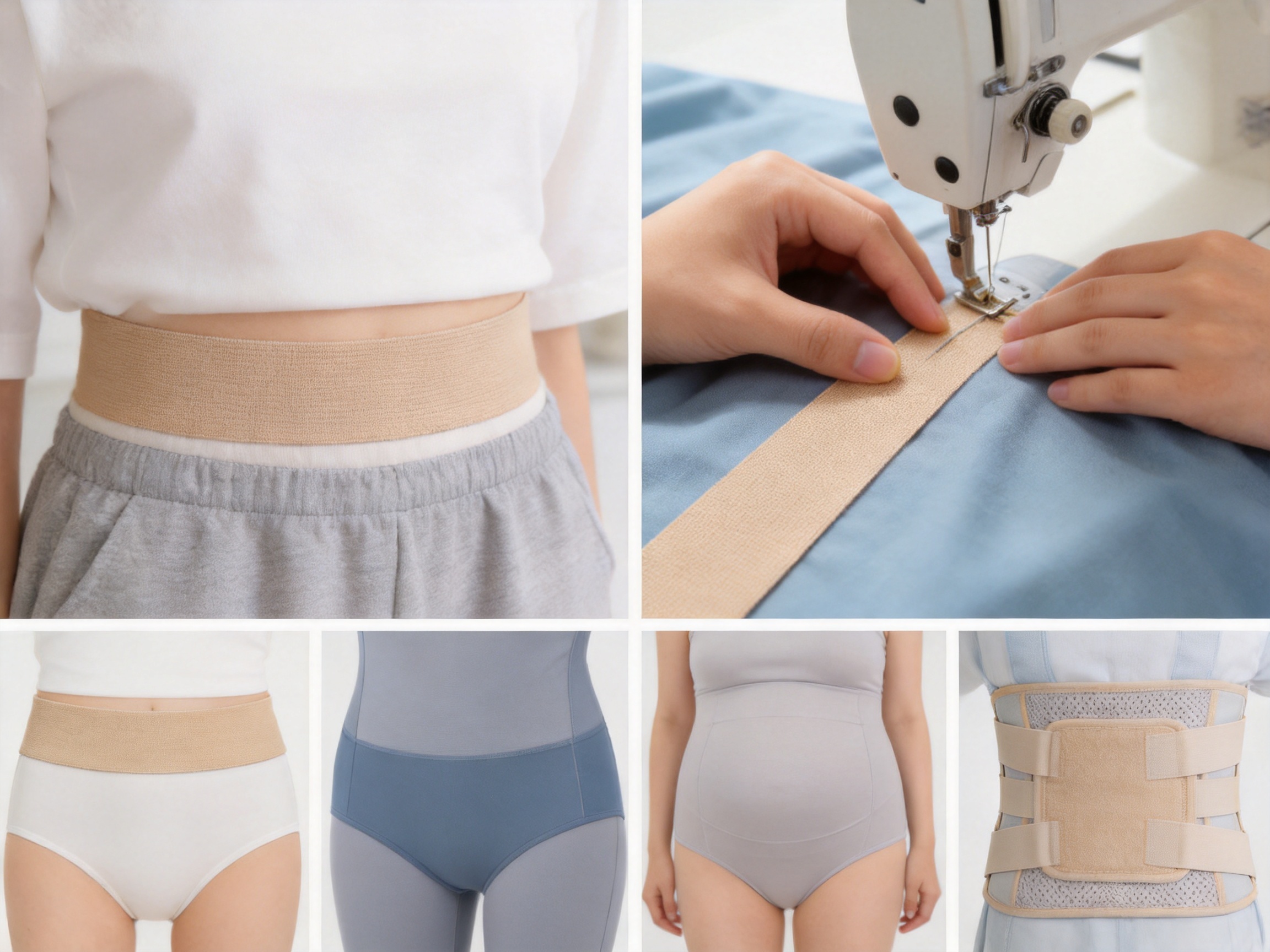
Three-inch beige knitted elastic is a practical and adaptable textile component designed for applications that require controlled stretch, comfortable contact, and dependable recovery. Its wide knitted construction distributes tension across a broader surface than narrow elastic products, making it suitable for waistbands, underwear, activewear, maternity garments, medical support products, sewing projects, and many other textile applications. The neutral beige shade provides a discreet appearance and can coordinate easily with light-colored, skin-tone, or natural fabrics.
Although elastic materials may appear simple, their performance depends on many factors, including yarn quality, knitting structure, width consistency, stretch ratio, recovery behavior, softness, breathability, edge stability, color uniformity, and production control. A well-designed 3-inch knitted elastic must provide enough extension for comfort while returning reliably to its original dimensions after repeated use. It should also maintain a pleasant hand feel and resist premature deformation during sewing, laundering, wearing, and storage.
This product is manufactured by Jinhu Hengxiang Webbing Co., Ltd., a professional Chinese producer of elastic and non-elastic webbing. Established in 2005, the company has developed extensive experience in webbing production for sports supports, orthopedic braces, medical protective equipment, apparel, and general textile use. Its production capabilities include warping, knitting, weaving, testing, finishing, and packaging, supported by modern equipment and systematic quality-control procedures.
Understanding 3-Inch Beige Knitted Elastic
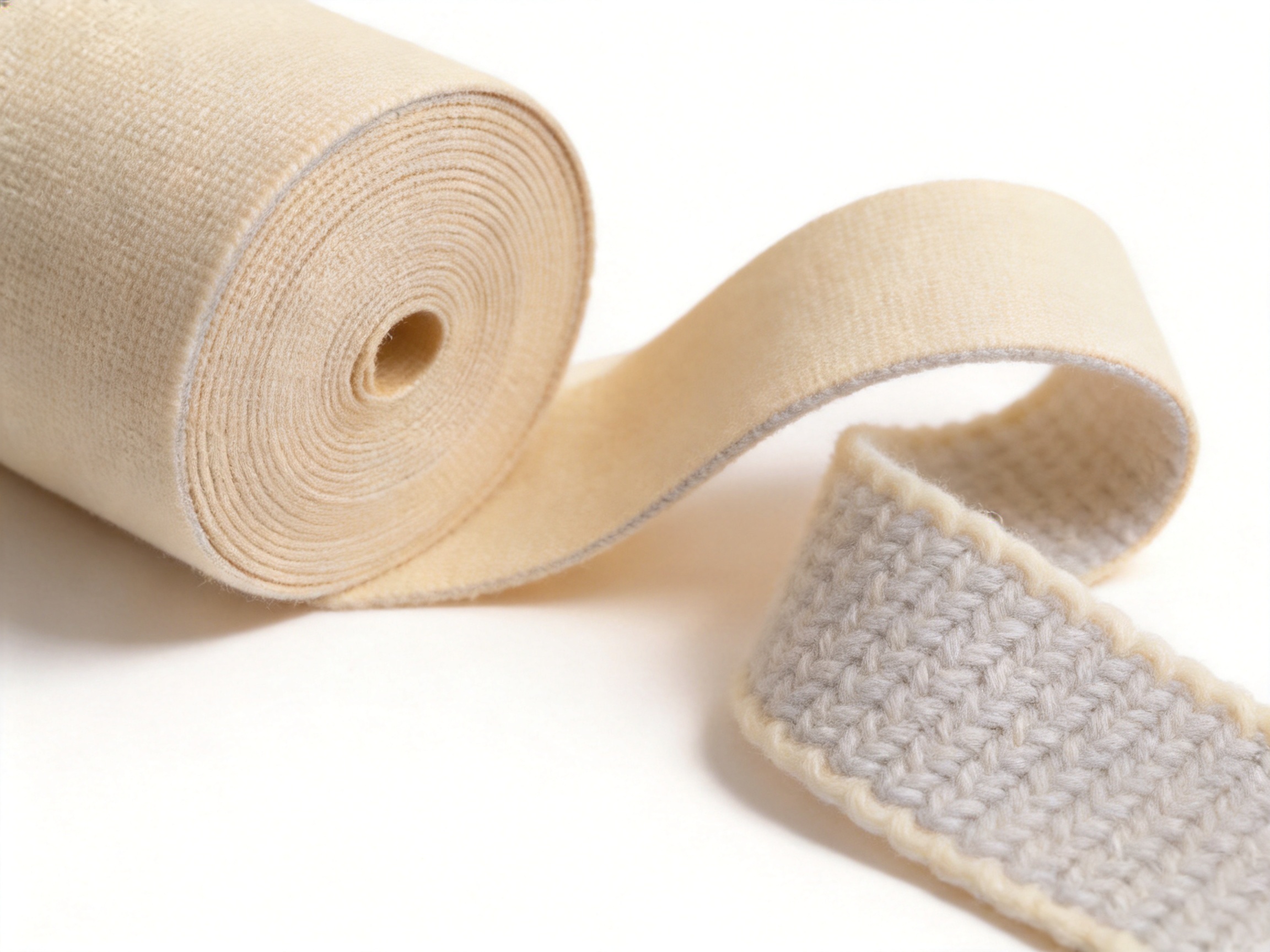
Knitted elastic is produced by forming interconnected loops of yarn into a flexible fabric-like structure. Unlike a simple rigid woven strip, the knitted construction allows the material to expand, contract, and conform to curved surfaces. This structure helps create a soft and comfortable product with a balanced combination of elasticity, breathability, and flexibility.
The 3-inch width is especially useful because it provides a larger contact area than narrow elastic bands. A wider elastic can distribute pressure more evenly and reduce the concentrated pulling sensation sometimes associated with thin elastic. This makes it an effective choice for garment sections that need stable support around the waist, abdomen, hips, or other broad body areas.
The beige color is a functional choice rather than merely a decorative one. Beige can blend with many fabrics and is often selected for undergarments, base layers, maternity garments, skin-contact accessories, and products where a low-visibility component is preferred. It can also be used as a neutral base for sewing and manufacturing applications in which the elastic is partially concealed inside a garment or textile assembly.
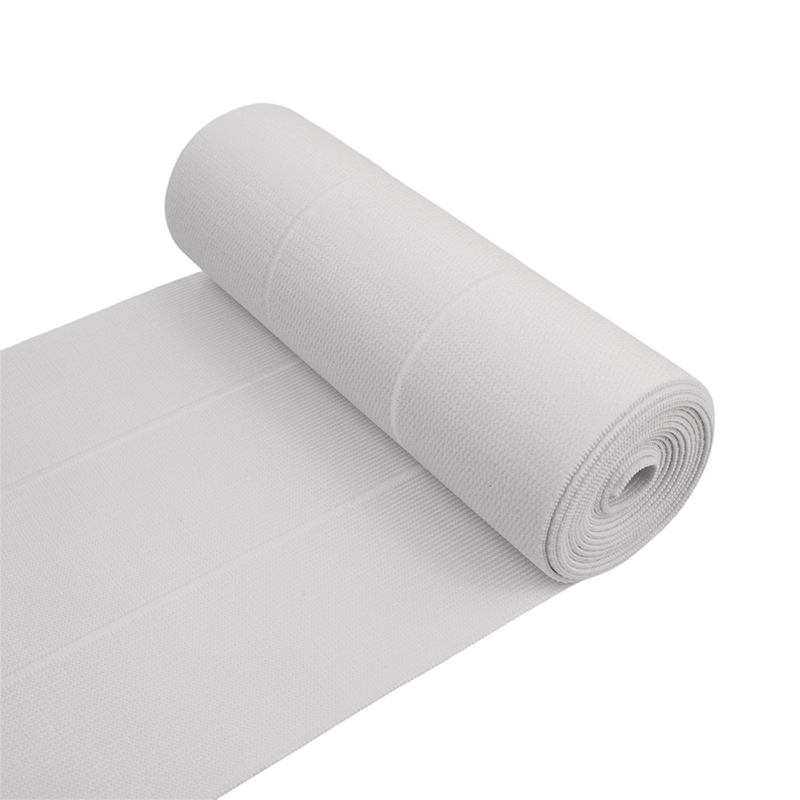
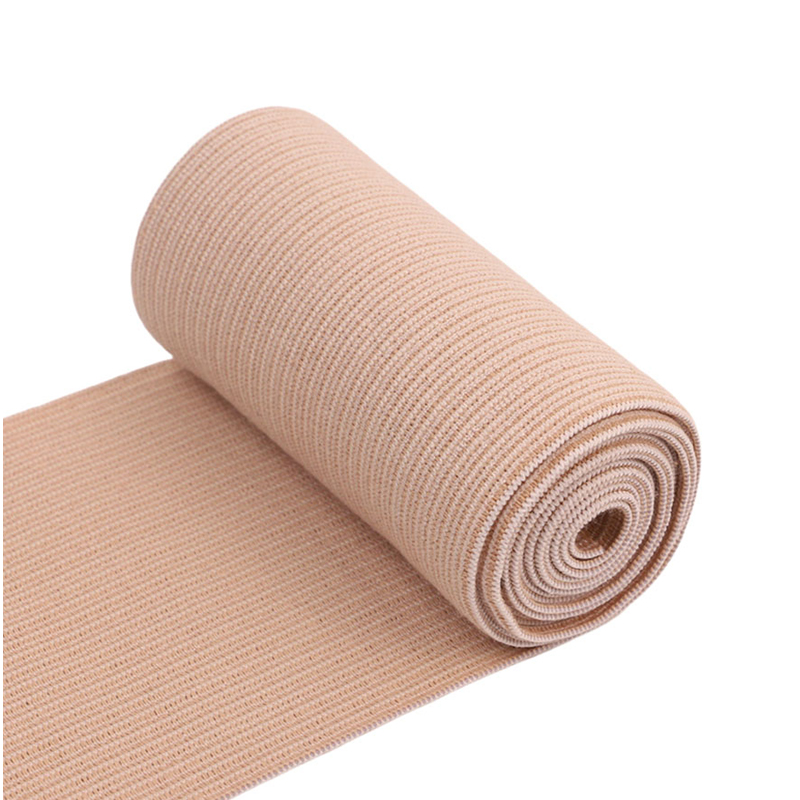
The product reference for this item is 8131. It is categorized as wide knitted elastic and is designed to provide reliable stretch for both commercial production and smaller-scale sewing or DIY work. The knitted surface creates a soft hand feel, while the wide format supports stable tension across the application area.
Key Product Advantages
Soft Hand Feel for Direct Skin Contact
Comfort is one of the most important requirements for elastic used in apparel and wearable products. The 3-inch beige knitted elastic is made from high-quality yarns selected to support a soft and pleasant surface. This helps reduce roughness and discomfort when the elastic is placed close to the skin.
A soft hand feel is valuable in underwear, activewear, maternity garments, waistbands, support garments, and other products that may be worn for extended periods. The knitted structure can also create a more textile-like surface than some plain rubber or rigid elastic constructions, allowing the finished product to feel more integrated with the surrounding fabric.
Comfort depends not only on softness but also on how the elastic distributes force. Because the material is wide, it can spread tension over a larger area. When properly selected and applied, this helps reduce pressure concentration and contributes to a smoother wearing experience.
Excellent Stretch with Reliable Recovery
Elasticity is useful only when a material can recover after stretching. If an elastic strip extends easily but remains permanently elongated, the garment or finished product may lose its fit and support. This 3-inch knitted elastic is designed to combine flexible extension with reliable recovery, helping it return toward its original shape after use.
Reliable recovery supports consistent fit during repeated wearing. In waistbands, for example, the elastic can expand when the wearer moves or puts on the garment and then contract to maintain a secure fit. In maternity wear, it can accommodate changing body dimensions while preserving a controlled level of support. In activewear, it can follow body movement without becoming loose too quickly.
Recovery performance is influenced by the yarn composition, knitting pattern, machine settings, finishing conditions, and quality inspection. Controlled manufacturing is therefore essential. A product that is elastic in appearance but inconsistent in recovery can create sewing problems, uneven fit, or premature product failure.
Wide Construction for Even Tension
The 3-inch width is one of the product’s main functional strengths. A wide elastic surface can distribute tension more evenly than a narrow band, particularly when used around broad garment sections. This can help improve comfort and reduce the risk of localized pressure.
Wide elastic is often preferred for abdominal garments, waistbands, maternity products, support clothing, and medical or orthopedic applications where a larger area of controlled flexibility is required. It can also provide a more stable foundation for sewing because the wider surface offers more room for stitching and attachment.
Even tension is also important for appearance. If the elastic stretches irregularly across its width, the finished garment may develop wrinkles, waves, or uneven gathering. A stable knitted structure helps the elastic maintain a more uniform visual and functional performance.
Breathable Knitted Structure
Knitted constructions naturally contain interlooped spaces that can support air movement and flexibility. Compared with dense, rigid materials, a knitted elastic can feel lighter and more breathable when incorporated into apparel or wearable products.
Breathability is especially useful in underwear, sportswear, maternity clothing, and support products that remain close to the body. Improved air exchange can contribute to greater wearing comfort during daily activities or exercise. The material’s flexibility also allows it to conform to body movement instead of creating a stiff barrier.
Breathability should be considered together with the final product design. Fabric selection, lining, stitching, garment structure, and compression level all affect the overall wearing experience. Nevertheless, a flexible knitted elastic provides a strong starting point for creating comfortable textile products.
Durability for Everyday Use
Elastic products may be stretched and released many times during their service life. They may also be exposed to body movement, friction, laundering, folding, sewing stress, and storage pressure. A durable elastic should maintain useful performance under these ordinary conditions.
The knitted construction of this product is designed for repeated use, while the manufacturing process emphasizes material consistency and controlled production. When correctly sewn and handled, the elastic can contribute to long-lasting garment performance without losing its useful shape too quickly.
Durability also depends on proper application. Needles, thread tension, stitch density, washing conditions, heat exposure, and the amount of extension applied during sewing can influence service life. Manufacturers and sewing professionals should select construction methods appropriate to the intended use.
Comparison with Other Elastic Constructions
Different elastic structures are suitable for different purposes. Woven elastic, knitted elastic, narrow elastic bands, elastic panels, and hook-and-loop straps each have distinct advantages. The selection should be based on width, softness, stretch, stability, appearance, attachment method, and the demands of the final product.
| Elastic Type | Typical Strength | Common Applications | Key Consideration |
|---|---|---|---|
| Wide knitted elastic | Soft stretch, flexibility, breathability, comfortable surface | Waistbands, underwear, activewear, maternity wear, support garments | Best when comfort and broad tension distribution are important |
| Woven wide elastic | Firm structure, dimensional stability, strong support | Heavy-duty waistbands, uniforms, equipment, structured garments | May feel firmer and less flexible than knitted elastic |
| Narrow elastic band | Compact size and localized stretch | Sleeves, lingerie details, straps, small garment openings | Less suitable for broad pressure distribution |
| Woven elastic panel | Large surface coverage and structural support | Medical products, braces, abdominal support, specialized garments | Selected when a broad engineered panel is required |
| Elastic hook and loop strap | Adjustability and repeated fastening | Orthopedic supports, braces, closures, adjustable accessories | Designed for fastening rather than continuous waistband use |
Compared with many narrow elastic products, the 3-inch knitted elastic offers broader coverage and a more balanced distribution of tension. Compared with especially firm woven elastic, it may provide a softer and more flexible wearing sensation. This makes it a strong choice for applications in which the user needs support without excessive stiffness.
Compared with elastic hook-and-loop straps, knitted elastic is better suited to continuous bands that remain integrated into a garment. Hook-and-loop systems are valuable where adjustability is essential, but they may add bulk or create a different surface feel. The knitted elastic provides a smooth, continuous textile component that can be sewn directly into the product.
Applications in Apparel and Textile Products
Waistbands
Waistbands are one of the most common uses for wide knitted elastic. The material can be incorporated into skirts, trousers, shorts, pajama bottoms, uniforms, casual garments, and other clothing. Its 3-inch width provides a broad support area, while its stretch allows the garment to accommodate normal body movement.
In a waistband, recovery is especially important. The elastic must extend when the garment is put on, but it should not remain permanently loose after repeated use. The beige shade can be concealed within the waistband or selected as a coordinated component for light-colored garments.
Designers can use the elastic as a fully enclosed waistband, a partially exposed waistband, or a structural layer combined with other fabrics. The appropriate method depends on the garment style, desired level of support, stitch design, and production volume.
Underwear and Intimate Apparel
Underwear requires materials that are soft, flexible, and comfortable for prolonged skin contact. The knitted surface of this product supports a smooth hand feel, while the wide design can distribute tension across the waist or other garment sections.
For intimate apparel, the choice of thread, seam placement, cover fabric, and finishing method is important. The elastic should be attached without creating sharp edges, excessive compression, or uncomfortable stitching. When properly integrated, the product can help create a secure fit while maintaining flexibility.
Activewear and Sports Clothing
Activewear must accommodate movement, repeated stretching, perspiration, and frequent laundering. Wide knitted elastic can be used in sports shorts, training garments, fitness clothing, yoga wear, dancewear, and other performance-oriented apparel.
Its flexibility allows it to follow body movement, while the broad contact area can help the garment remain in position. The breathable knitted structure may also contribute to comfort during exercise. For demanding sports applications, manufacturers should evaluate the elastic together with the full garment system, including fabric weight, stitch strength, moisture management, and washing conditions.
Maternity Wear
Maternity garments need to accommodate changing body dimensions while remaining comfortable and stable. The stretch and recovery characteristics of wide knitted elastic make it suitable for maternity waistbands, belly-support garments, adjustable clothing, and related textile products.
The neutral beige color can be used in garments where a discreet internal component is preferred. Because the product is soft and wide, it may help create a smoother transition between the garment and the body. The final compression level should always be determined by the garment design and intended purpose.
Medical and Orthopedic Supports
Wide elastic components are commonly used in medical supports, orthopedic braces, abdominal products, rehabilitation garments, and sports protection equipment. The 3-inch format can provide broad, controlled flexibility for products that require a stable fit around the body.
In medical or orthopedic applications, material selection must be supported by careful design validation. Factors such as pressure distribution, skin contact, cleaning requirements, repeated extension, seam security, and product labeling should be assessed by the finished-product manufacturer. The elastic itself is an important component, but its performance depends on the complete support system.
The manufacturer’s experience in elastic webbing for sports supports and orthopedic braces provides relevant technical knowledge for these applications. Its quality systems and medical-oriented production experience can support customers that require consistent materials for protective and support products.
Sewing and DIY Projects
Small manufacturers, designers, costume makers, and home sewing enthusiasts can use 3-inch knitted elastic in a wide range of projects. It is suitable for handmade skirts, lounge clothing, soft accessories, fabric organizers, costumes, and custom support garments.
Before cutting the material, users should determine the required finished length and the desired level of tension. Excessive stretching during sewing can cause a waistband to become too tight, while insufficient tension may create a loose finished result. Testing a short sample is recommended before completing a larger project.
Manufacturing Process and Technical Control
Material Preparation
Reliable elastic begins with controlled raw materials. High-quality yarns must be selected according to the required softness, stretch, recovery, color, durability, and end-use conditions. Material sourcing is an important part of production because differences in yarn quality can affect the appearance and performance of the finished elastic.
Raw materials are typically checked before entering production. The inspection may consider color, surface condition, yarn uniformity, strength, and compatibility with the intended knitting structure. Consistent preparation helps reduce variation during later processing.
Warping and Yarn Arrangement
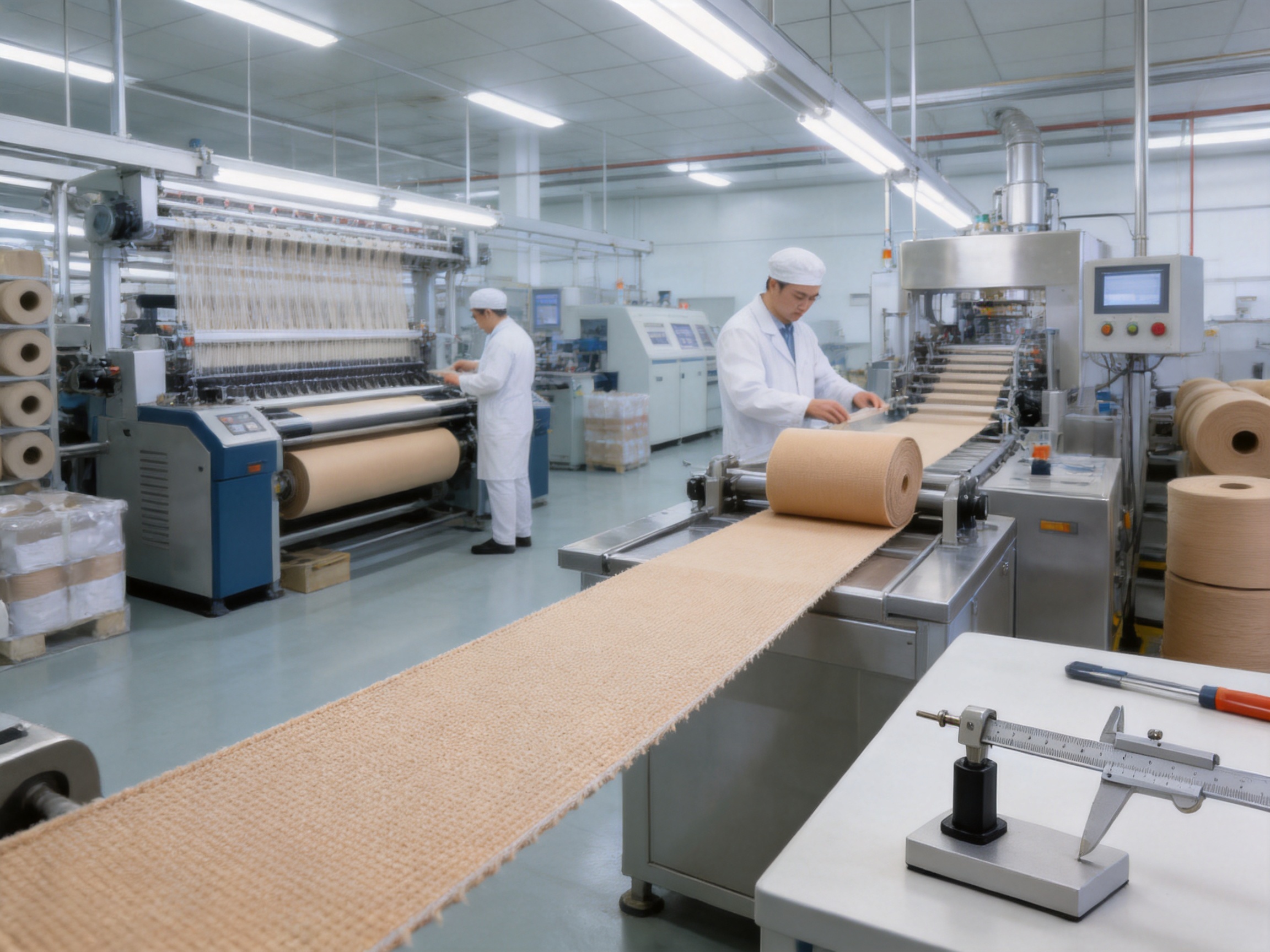
Warping prepares yarns for efficient and organized processing. Correct yarn arrangement supports stable production and helps maintain uniformity across the width of the elastic. Tension must be controlled so that yarns enter the knitting process in a consistent condition.
Irregular yarn tension can contribute to uneven loops, width variation, streaks, or inconsistent stretch. Modern warping equipment allows manufacturers to improve process stability and manage larger production requirements with greater precision.
Knitting
Knitting is the central process that creates the elastic’s looped structure. Machine settings, yarn tension, knitting density, needle condition, and production speed all influence the final characteristics of the product.
For a 3-inch wide knitted elastic, width control is particularly important. The product must maintain a stable width across the roll or production batch so that it can be cut, sewn, and integrated into finished products efficiently. The knitting structure must also be balanced so the elastic can stretch across its width without losing its intended shape.
Production personnel monitor the material during knitting to identify visible defects, irregular loops, broken yarns, holes, contamination, and changes in width or surface appearance. Early detection reduces waste and helps ensure that only acceptable material proceeds to subsequent stages.
Finishing and Conditioning
After knitting, the elastic may undergo finishing or conditioning processes intended to stabilize its appearance, hand feel, and performance. These processes must be controlled carefully because excessive heat, tension, or chemical treatment can affect elasticity and recovery.
Finishing can help create a more uniform surface and improve the product’s suitability for sewing. The precise treatment depends on the material specification, required color, application, and customer expectations. A carefully managed finishing stage contributes to consistency between production batches.
Inspection and Testing
Quality control should continue throughout production rather than being limited to a final visual check. Measurements may include width, stretch, recovery, surface appearance, color, strength, and dimensional stability. Testing procedures should be selected according to the product’s intended use.
Visual inspection can identify surface defects, stains, broken loops, edge problems, and color differences. Physical testing can help evaluate whether the elastic meets the required extension and recovery behavior. Packaging inspection ensures that rolls or lengths are properly protected and clearly identified before shipment.
Systematic inspection is especially important for customers producing medical supports, sports protection products, and high-volume apparel. Consistent incoming materials can reduce production interruptions, improve cutting and sewing efficiency, and support more predictable finished-product quality.
Packaging and Shipment Preparation
After approval, the elastic is prepared for shipment in a way that protects it from contamination, moisture, crushing, and unnecessary deformation. Proper packaging also helps customers identify product specifications, batch information, color, width, and quantity.
Efficient packaging equipment supports stable output and helps the manufacturer handle large monthly production volumes. Clear packing procedures are valuable for both domestic and export orders because they simplify receiving, storage, inspection, and production planning.

3 Inch Beige Knitted Elastic
Why Manufacturing Experience Matters
Elastic webbing is a specialized textile product. Its quality is influenced by the interaction of yarns, machinery, knitting structures, finishing conditions, and inspection standards. A manufacturer with long-term experience can better understand how these factors affect the final product and can respond more effectively when a customer needs a specific stretch, texture, color, or width.
Jinhu Hengxiang Webbing Co., Ltd. was established in 2005 and has more than two decades of professional production experience. Its product range includes elastic webbing and non-elastic webbing for sports protection, orthopedic braces, medical protective equipment, garments, and other applications.
The company has introduced and updated production equipment including warping machines, knitting machines, woven machines, and packaging machines. This equipment supports an integrated production structure, allowing the company to manage multiple stages internally and maintain closer control over process coordination.
Manufacturing millions of meters of elastic and non-elastic webbing each month demonstrates the company’s ability to support both standard and larger-volume requirements. High production capacity can help customers plan continuous supply, reduce the risk of material shortages, and maintain stable production schedules.
Quality Certifications and Quality Assurance
The company has obtained Oeko-Tex Standard 100 and ISO 13485 certificates. These certifications are significant indicators of structured quality management and attention to product safety and medical-related production requirements.
Oeko-Tex Standard 100 is associated with testing textile products for harmful substances. For products used in apparel, wearable products, and skin-contact applications, attention to material safety is an important part of responsible manufacturing.
ISO 13485 is a quality-management standard related to medical devices and associated production systems. While the certification does not replace finished-product validation by a customer, it demonstrates that the manufacturer has developed procedures relevant to controlled production for medical applications.
Quality assurance begins with material sourcing and continues through processing, testing, and packing. This approach is valuable because elastic performance can be affected by small variations at any stage. A systematic quality process helps reduce inconsistencies and supports dependable product performance.
Customization Capabilities
Although the standard product is a 3-inch beige knitted elastic, customers may require different specifications for particular applications. Customization may involve color, width, elasticity, texture, thickness, surface feel, roll length, packaging, or other production details.
Color customization can help customers match a garment collection, create private-label products, or coordinate elastic with a specific fabric. Beige is a versatile standard choice, but other shades may be needed for visible waistbands, branded apparel, medical products, or fashion applications.
Elasticity customization is also important. A waistband for casual clothing may require a different stretch and recovery profile from an abdominal support or orthopedic brace. The manufacturer can discuss the required performance according to the product design and intended use.
Texture and hand feel can influence customer perception and wearing comfort. Some products require a smooth and soft surface, while others may require a firmer or more structured feel. The knitted construction can be adjusted within practical production limits to support different application requirements.
OEM and ODM orders are welcome. This means customers can request production according to their own product specifications or work with the manufacturer to develop an appropriate elastic solution. Early communication about drawings, samples, application conditions, performance expectations, and testing requirements helps improve development efficiency.
Advantages for Commercial Buyers
Stable Supply for Production Planning
Commercial buyers need materials that can be reordered with consistent specifications. A manufacturer with established equipment, production experience, and documented quality procedures is better positioned to support repeat orders.
Stable supply is particularly important for garment factories, medical-product manufacturers, sports-support brands, and distributors. If the elastic changes significantly between batches, customers may need to adjust patterns, stitch settings, cutting dimensions, or finished-product specifications. Consistency helps reduce these operational problems.
Competitive Production Efficiency
Integrated production equipment can improve manufacturing efficiency by connecting material preparation, knitting, inspection, and packaging. Efficient production may help support competitive pricing while maintaining appropriate quality standards.
Competitive pricing should not be evaluated only by the initial purchase price. Buyers should also consider cutting waste, sewing efficiency, defect rates, delivery reliability, product consistency, and the cost of customer complaints or returns. A dependable elastic can provide better overall value throughout the supply chain.
Export Experience
The company’s products are sold throughout China and exported to North America, Eastern Europe, the Middle East, South Asia, and other regions. Experience with international customers can support clearer communication regarding specifications, packaging, documentation, lead times, and quality expectations.
International supply requires attention to shipment preparation, product identification, order coordination, and customer service. Export experience can help reduce misunderstandings and support smoother cooperation between the manufacturer and overseas buyers.
Technical Customer Support
Elastic selection often requires more than choosing a width and color. Customers may need assistance determining suitable stretch, recovery, construction, thickness, and application methods. A manufacturer with experience in sports supports, orthopedic braces, medical protective equipment, and apparel can provide useful technical input during product development.
Customer support may include sample development, specification confirmation, production advice, packaging coordination, and follow-up after delivery. Thoughtful service is particularly valuable when the elastic is part of a new product rather than a simple replacement material.
Recommended Handling and Sewing Practices
Before production, customers should inspect the elastic for width, color, surface condition, and general consistency. A small sample should be stretched and released several times to observe its behavior. If the material will be used in a finished garment, testing should be performed with the actual fabric and stitching method.
Elastic should be stored in a clean, dry environment away from direct sunlight, excessive heat, moisture, oils, and sharp objects. Rolls should not be compressed unnecessarily for long periods because constant pressure can affect shape and handling.
During cutting, use clean and sharp equipment to create accurate edges. Inconsistent cutting may cause uneven tension across the finished garment. When sewing, avoid excessive stretching unless the pattern specifically requires controlled extension during attachment.
Thread tension and stitch density should be adjusted according to the elastic and fabric combination. Too much thread tension can restrict elasticity or create puckering, while too little tension may result in loose seams. A test seam allows the operator to evaluate comfort, appearance, stretch, and recovery before full-scale production.
For products that will be washed frequently, laundering tests should be performed before final approval. Washing temperature, detergent, drying method, and mechanical agitation can all affect the behavior of elastic. Finished-product testing is recommended for any application requiring long service life or close dimensional control.
Product Selection Checklist
When selecting 3-inch beige knitted elastic, buyers should first identify the application. A casual waistband, activewear garment, maternity product, medical support, and orthopedic brace may each require different performance characteristics.
The required finished width should be confirmed after considering seam allowance, folding, covering, and attachment design. Buyers should also define the desired level of stretch, the amount of recovery needed, the expected service life, and whether the elastic will contact the skin directly.
Color requirements should be discussed clearly. Beige can refer to different visual tones depending on the fabric, lighting, and dyeing system. If color matching is important, a physical sample or approved color standard should be used.
Customers should also confirm packaging, roll length, order quantity, delivery schedule, inspection requirements, and documentation before placing a production order. Clear specifications help reduce delays and support consistent manufacturing.
| Selection Factor | Questions to Confirm | Why It Matters |
|---|---|---|
| Width | Is the required finished width exactly 3 inches, or will folding or covering be used? | Ensures correct fit within the garment or support design |
| Stretch | How far must the elastic extend during use? | Determines comfort, fit, and functional movement |
| Recovery | How quickly and consistently must the elastic return after stretching? | Supports long-term shape retention |
| Color | Will the beige be visible or concealed? | Guides color matching and appearance requirements |
| Hand feel | Will the product contact skin directly? | Influences comfort and customer satisfaction |
| End use | Is the product for apparel, sports, maternity, medical, or orthopedic use? | Helps determine suitable testing and specification control |
| Quantity | Is the order for sampling, small production, or continuous supply? | Supports capacity planning and packaging decisions |
Environmental and Responsible Manufacturing Considerations
Responsible textile manufacturing involves more than product performance. It also includes efficient use of raw materials, reduction of production waste, appropriate packaging, equipment maintenance, and careful control of processing conditions.
Long-lasting elastic can contribute to product sustainability by reducing the need for frequent replacement. When a waistband, support garment, or textile accessory retains its fit and usefulness for a longer period, the overall product may generate less waste during its service life.
Manufacturers can also support sustainability by improving production efficiency and reducing defective output. Updated machinery, process monitoring, and careful inspection help avoid unnecessary consumption of yarns, energy, packaging materials, and transportation resources associated with rejected goods.
Customers should consider the complete life cycle of the finished product. The chosen elastic should be appropriate for the garment’s expected use, care instructions, durability requirements, and disposal conditions. Product development teams may also evaluate fabric compatibility and the possibility of efficient cutting to reduce offcuts.
How the Product Supports Different Industries
In apparel manufacturing, the elastic provides a combination of comfort, stable width, and repeatable stretch. These qualities can support efficient garment construction and improve the fit of finished products.
In sports protection, the elastic can help hold a support in place while allowing controlled movement. The broad width is suitable for designs that require larger body coverage and even tension.
In orthopedic and medical-related products, the material can serve as one component of a structured support system. The manufacturer’s experience and ISO 13485 certification provide a foundation for cooperation, while the customer remains responsible for validating the complete finished product according to its intended use and applicable requirements.
In maternity wear, the product can help garments adapt to changing body dimensions without relying on rigid closures. In sewing and DIY applications, it offers a practical material for custom projects that require a wide and comfortable stretch component.
This versatility is one of the strongest advantages of the product. Buyers can use one general elastic category across multiple product lines while adjusting the surrounding construction to achieve different levels of fit, support, and comfort.
Q&A
What is 3-inch beige knitted elastic?
It is a wide elastic textile measuring approximately 3 inches in width, produced with a knitted loop structure and finished in a neutral beige color. It is designed to provide soft comfort, flexible stretch, and reliable recovery for garments, support products, and sewing applications.
What makes knitted elastic different from woven elastic?
Knitted elastic is formed from interlooped yarns, which generally provide a softer, more flexible, and more breathable structure. Woven elastic is formed by interlacing yarns and is often selected for firmer support and higher structural stability. The appropriate option depends on the desired balance of comfort, stretch, strength, and dimensional control.
Is this elastic suitable for waistbands?
Yes. The 3-inch width is well suited to waistbands in skirts, trousers, shorts, loungewear, uniforms, activewear, and maternity garments. Its broad surface can distribute tension across the waist and provide a stable, comfortable fit.
Can it be used in underwear?
Yes. The soft hand feel and knitted structure make it suitable for underwear and other garments that may remain close to the skin. The final design should use appropriate seams, thread, covering fabrics, and tension settings to maximize comfort.
Can it be used in sports or orthopedic supports?
It can be used as a component in sports protection products, orthopedic braces, and other support garments. Because these applications may involve specific pressure, safety, and durability requirements, the finished product should be tested and validated by the customer before commercial use.
Why is beige a useful color?
Beige is a versatile neutral shade that can blend with many light-colored or skin-tone fabrics. It is especially useful when the elastic is concealed, when a discreet appearance is preferred, or when the product is intended for underwear, maternity wear, or wearable support applications.
Can the elasticity be customized?
Customization may be available according to the customer’s required application, width, texture, color, and performance. Buyers should provide technical information, samples, drawings, or intended-use details so the manufacturer can evaluate the appropriate specification.
Does the company accept OEM and ODM orders?
Yes. OEM and ODM cooperation is welcomed. Customers can request production based on their own specifications or work with the manufacturer to develop a suitable elastic webbing solution.
What quality certifications does the manufacturer have?
The company has obtained Oeko-Tex Standard 100 and ISO 13485 certificates. These certifications reflect attention to textile safety, documented quality processes, and controlled production relevant to medical-related products.
How should the elastic be stored?
It should be stored in a clean, dry, and well-ventilated area away from direct sunlight, excessive heat, moisture, oils, and sharp objects. Avoid unnecessary compression or prolonged deformation during storage.
Should buyers test samples before ordering in bulk?
Yes. Sample testing is recommended, particularly for new applications. Buyers should evaluate width, stretch, recovery, color, softness, sewing behavior, laundering performance, and compatibility with the final fabric or support structure.
What information should be included in an inquiry?
An inquiry should include the required width, color, approximate quantity, intended use, desired stretch and recovery, packaging requirements, delivery location, and any relevant drawings or physical samples. Clear information allows the manufacturer to provide a more accurate recommendation and quotation.
Conclusion
3-inch beige knitted elastic is a versatile wide elastic product that combines a soft hand feel, excellent stretch, reliable recovery, breathability, and a neutral appearance. Its broad structure helps distribute tension evenly, making it suitable for waistbands, underwear, activewear, maternity garments, medical supports, orthopedic braces, sports protection products, and DIY sewing projects.
Its advantages over narrower or more rigid elastic constructions include broader coverage, comfortable flexibility, improved adaptability to body movement, and a more textile-like surface. Compared with hook-and-loop straps, it offers a continuous sewn-in solution without requiring a separate fastening system. These characteristics make it a practical choice for manufacturers seeking comfort and dependable performance in one elastic component.
The product is supported by the experience and production capabilities of Jinhu Hengxiang Webbing Co., Ltd. Since 2005, the company has developed professional expertise in elastic and non-elastic webbing, supported by warping, knitting, weaving, testing, and packaging equipment. Its monthly production capacity, export experience, customization services, OEM and ODM capabilities, Oeko-Tex Standard 100 certification, and ISO 13485 certification provide a strong foundation for domestic and international cooperation.
For the best result, customers should define the application clearly, test samples with the intended fabric or support structure, and confirm technical specifications before mass production. With appropriate selection and sewing control, 3-inch beige knitted elastic can provide a comfortable, stable, and durable solution for many modern textile products.
References
1. International Organization for Standardization. ISO 13485: Medical Devices—Quality Management Systems—Requirements for Regulatory Purposes.
2. OEKO-TEX Association. Standard 100 by OEKO-TEX: Textile Testing and Product Safety Principles.
3. Textile Institute. Textile Terms and Definitions: Elastic Materials, Knitted Structures, and Textile Performance.
4. ASTM International. Standard Practices for Testing Textile Webbing, Elastic Materials, and Related Textile Components.
5. Textile industry technical literature on knitted elastic construction, stretch recovery, dimensional stability, and garment sewing performance.