
 en
en
 English
 русский
 Français
 Español
 Português
 Tiếng Việt
Content
- 1 Product Overview
- 2 Why the 7cm Width Matters
- 3 High-Quality Woven Construction
- 4 Stable Elasticity for Repeated Use
- 5 Durability and Long-Term Value
- 6 Comfortable Support Without Excessive Pinching
- 7 Dark Grey as a Versatile Production Color
- 8 Applications in Waistbands
- 9 Applications in Activewear and Sports Protection
- 10 Applications in Shapewear and Support Garments
- 11 Applications in Medical and Orthopedic Products
- 12 Applications in Industrial and DIY Sewing
- 13 Manufacturing Expertise and Production Capacity
- 14 Quality Control from Material Sourcing to Packing
- 15 Certifications and Responsible Manufacturing
- 16 Customization for Different Product Requirements
- 17 Advantages Compared with Lower-Quality Alternatives
- 18 Recommended Product Evaluation Process
- 19 Handling, Storage, and Sewing Considerations
- 20 Quality and Supply Benefits for International Buyers
- 21 Q&A
- 21.1 What is the width of this woven elastic panel?
- 21.2 What color is the product?
- 21.3 What is the main construction of the panel?
- 21.4 Can the panel be used in medical supports?
- 21.5 Is it suitable for activewear?
- 21.6 Can it be used for shapewear?
- 21.7 Does the panel resist fraying?
- 21.8 Will the elastic keep its shape after repeated use?
- 21.9 Can the product be customized?
- 21.10 What production equipment does the manufacturer use?
- 21.11 Does the manufacturer support OEM and ODM orders?
- 21.12 What certifications does the company have?
- 21.13 How should buyers test the panel before bulk ordering?
- 21.14 Is dark grey suitable for different garment colors?
- 21.15 What industries can use this product?
- 22 Conclusion
- 23 References
- 24 Product: 7cm Dark Grey Woven Elastic Panels
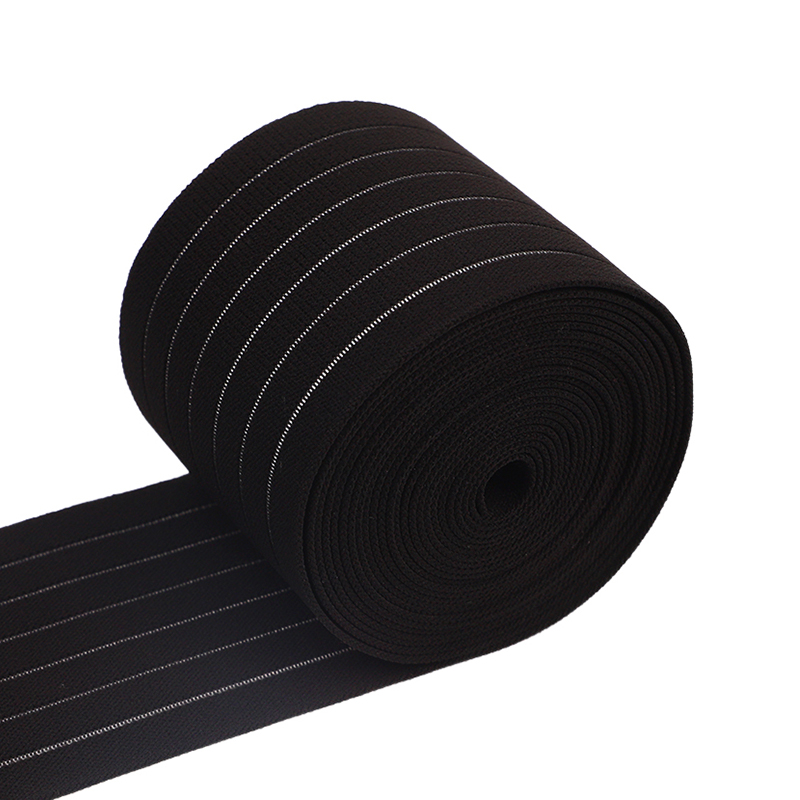
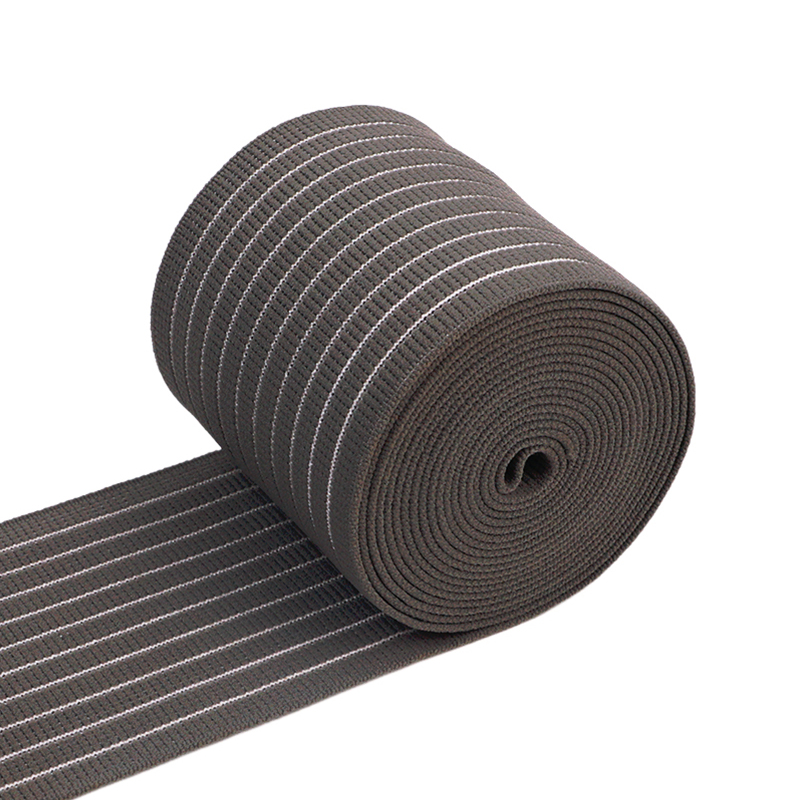
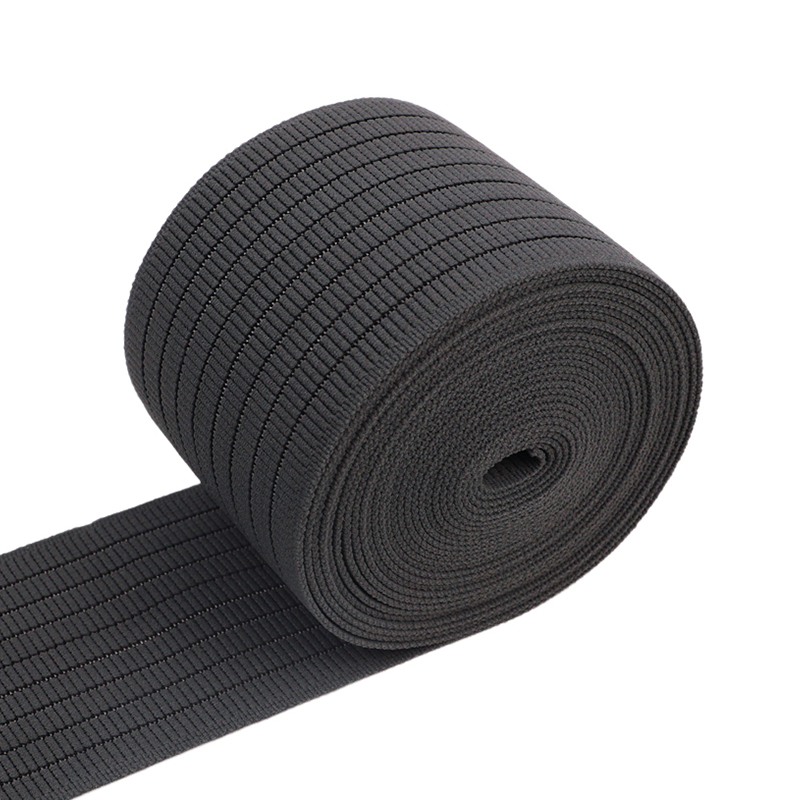
A 7cm dark grey woven elastic panel is a practical and dependable material for applications that require controlled stretch, stable recovery, and a comfortable fit. Designed with a high-quality woven structure, this panel combines firm support with a clean appearance, making it suitable for garments, medical supports, sports protection products, shapewear, industrial sewing, and do-it-yourself projects. Its balanced width provides broad contact with the body or garment surface, helping distribute tension more evenly than narrow elastic materials.
Elastic panels are important functional components rather than simple decorative accessories. They influence how a product fits, moves, supports, and maintains its shape during repeated use. A panel that stretches too easily may lose its effectiveness, while one that is too rigid may cause pressure, discomfort, or premature fabric failure. The 7cm dark grey woven elastic panel is developed to offer a practical middle ground: enough elasticity for movement and adjustment, combined with sufficient stability for secure positioning and long-term performance.
Product code 8156 represents a woven elastic panel manufactured for customers seeking a versatile width, a neutral dark grey color, and reliable woven construction. It is suitable for manufacturers, garment factories, medical-product suppliers, sports-equipment producers, wholesalers, designers, and sewing professionals who need a consistent elastic component for production or customized projects.
Product Overview
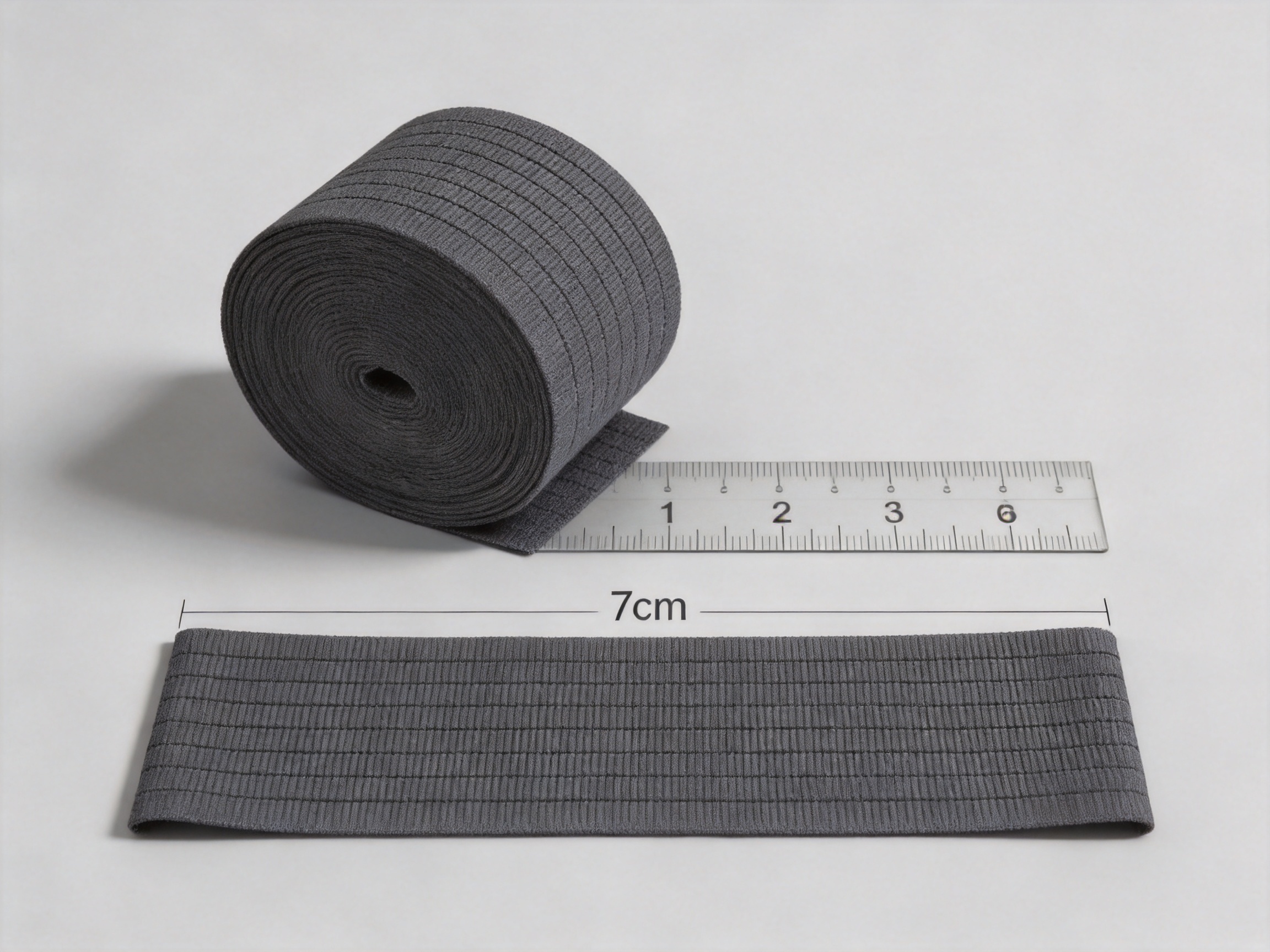
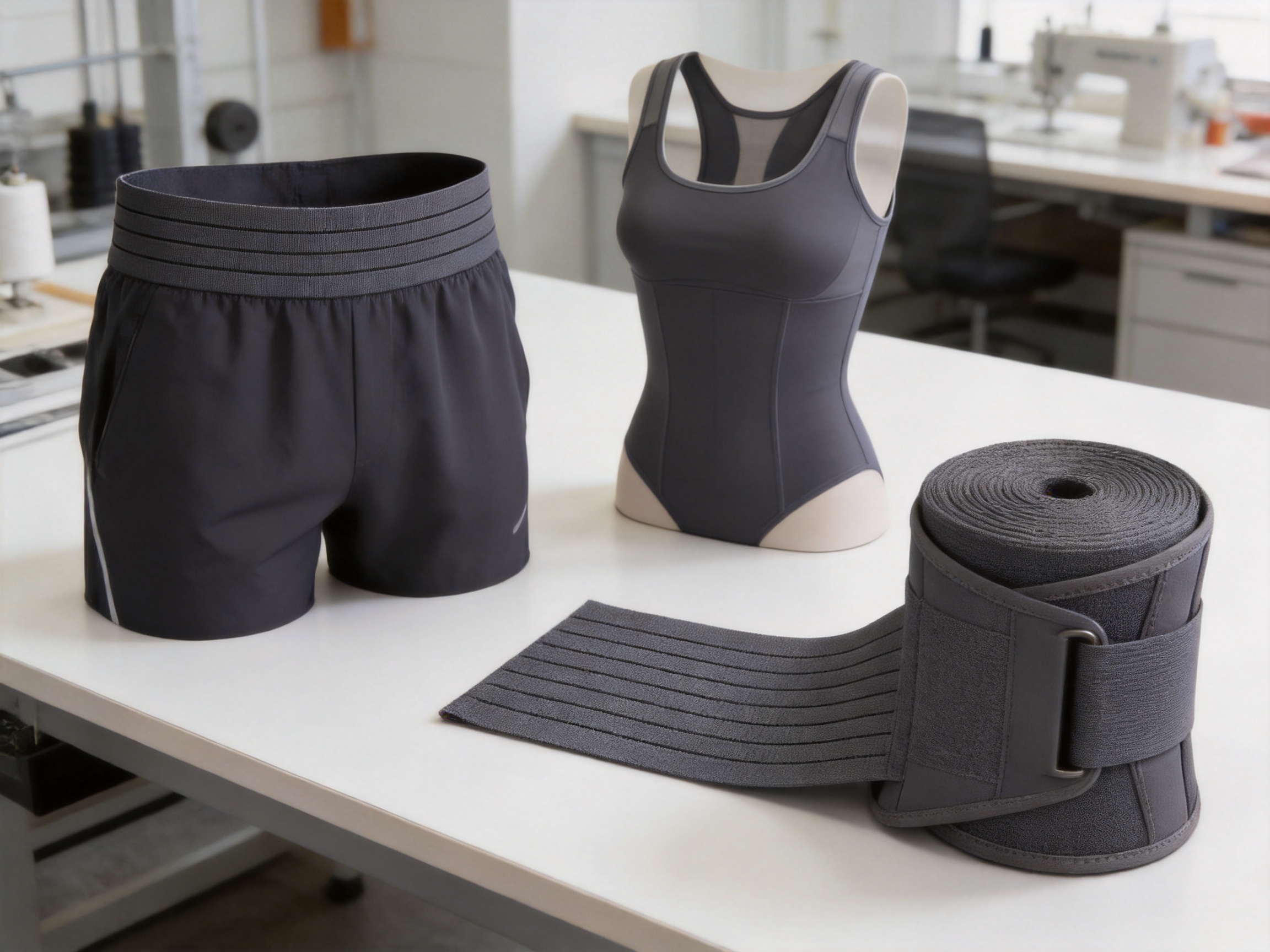
The 7cm dark grey woven elastic panel is produced in a 7cm width, giving it a broad and stable profile. Compared with narrow elastic bands, a wide panel can spread tension across a larger area. This feature is valuable in waistbands, support garments, orthopedic braces, protective equipment, and other products where concentrated pressure may reduce comfort.
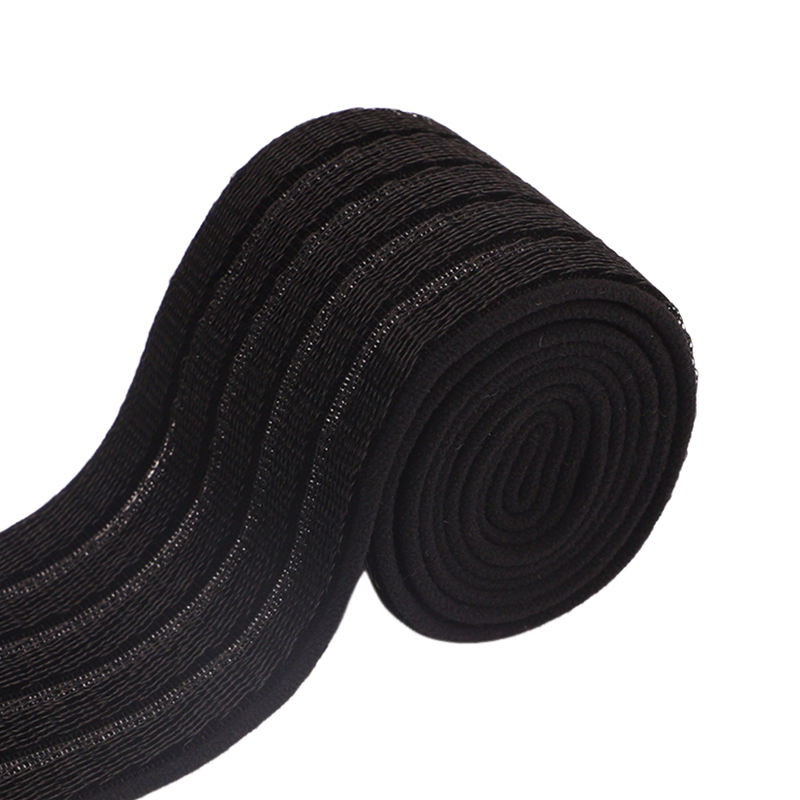
The panel uses a woven structure that interlaces yarns in an organized pattern. This construction creates a firm and orderly surface while allowing controlled extension. The woven body helps the product resist fraying, distortion, and unwanted rolling when it is cut, sewn, stretched, or incorporated into a finished product.
Its dark grey shade is neutral and adaptable. It can be used as a concealed internal component or as a visible design element. Dark grey coordinates well with black, charcoal, navy, grey, white, and many muted fashion colors. It also presents a professional appearance in medical, athletic, workwear, and industrial products.
The product is intended for applications that require a dependable balance of elasticity, recovery, comfort, and durability. It can be sewn directly into garments, used as a reinforcing panel, integrated into support equipment, or adapted for custom production according to the customer’s requirements.
| Product Attribute | Specification or Benefit |
|---|---|
| Product type | Woven elastic panel |
| Product code | 8156 |
| Width | 7cm |
| Color | Dark grey |
| Construction | High-quality woven structure |
| Primary performance | Stable stretch, shape retention, and firm support |
| Typical applications | Waistbands, activewear, shapewear, medical supports, sports protection, industrial sewing, and DIY projects |
| Main advantages | Durability, controlled elasticity, comfort, versatile appearance, and broad application range |
Why the 7cm Width Matters
Width is one of the most important factors in selecting elastic material. A narrow band is useful when a product requires discreet tension in a small area, but a wider panel is often more effective when support, stability, or pressure distribution is needed. At 7cm, this woven elastic panel provides a substantial contact area without becoming excessively bulky for many garment and support applications.
In a waistband, the width allows the elastic to sit securely against the body while helping reduce the sensation of a thin strip digging into the skin. In activewear, a broad elastic section can support the garment during bending, stretching, and repetitive movement. In shapewear, the panel can contribute to a smooth and controlled fit while helping the garment maintain its intended silhouette.
For medical and sports-support products, a wider elastic surface can distribute tension more evenly over the covered region. This may improve perceived comfort and reduce localized pressure when the product is correctly designed and fitted. The elastic panel itself does not replace professional product engineering, medical assessment, or appropriate sizing, but its width gives designers a useful foundation for developing stable support products.
A 7cm width also provides enough material surface for secure stitching. Manufacturers can select suitable seam allowances, stitch patterns, and reinforcement methods to create a durable connection between the elastic panel and the surrounding fabric. Depending on the finished product, the panel may be sewn flat, enclosed within a fabric channel, layered with other textiles, or attached to a supporting structure.
Wide elastic panels are also convenient for prototyping. Designers can cut or configure the material for different patterns, test various tension levels, and evaluate its behavior in the intended application. This makes the 7cm format useful for both mass production and smaller customized projects.
High-Quality Woven Construction
The performance of woven elastic depends heavily on the quality of its yarn arrangement, weaving precision, tension control, and finishing process. A well-organized woven structure creates a stable surface with consistent mechanical behavior. It helps the elastic panel extend in a predictable manner and return toward its original dimensions after release.
Woven construction is particularly valuable when the material must endure repeated handling and movement. During production, elastic panels may be guided through sewing machines, folded, stretched, cut, compressed, or joined to other materials. In the finished product, they may experience frequent extension and recovery. A strong woven body is better positioned to withstand these conditions than a poorly constructed material with uneven density or unstable edges.
The woven structure also contributes to visual quality. Even spacing, a uniform surface, and controlled edge formation can help the finished product appear more professional. This matters in consumer apparel, sports products, medical supports, and industrial goods where customers often associate consistent appearance with dependable manufacturing.
Another benefit is resistance to deformation. Elastic materials can lose value when they become wavy, twisted, excessively stretched, or permanently elongated. The stable construction of this panel helps limit such problems when the material is properly selected, sewn, stored, and used within its intended conditions.
For buyers comparing woven elastic products, construction quality should be evaluated alongside nominal width and color. Two panels with the same width may perform very differently if their yarn quality, weaving density, edge treatment, or finishing consistency differs. A high-quality woven structure offers a stronger basis for predictable production results.
7cm Dark Grey Woven Elastic Panels
Stable Elasticity for Repeated Use
Stable elasticity is one of the central advantages of the 7cm dark grey woven elastic panel. The material is designed to stretch when needed and recover its shape after use. This allows a garment or support product to accommodate movement while continuing to provide a secure fit.
Repeated-use products place special demands on elastic components. A waistband may be pulled on and off many times. An activewear garment may be extended during exercise. A brace may be adjusted, tightened, and released repeatedly. If the elastic loses its recovery too quickly, the product may become loose, uncomfortable, or ineffective. Stable elasticity helps extend the useful service life of the finished item.
The panel’s elasticity is also beneficial during fitting and assembly. Manufacturers can position the material under controlled tension and attach it to the surrounding fabric. When the garment is worn, the elastic can respond to body movement without creating unnecessary slack. Proper sewing tension remains important because excessive stretching during assembly can affect the final dimensions and recovery behavior.
Compared with low-quality elastic that may stretch unevenly across its length, a consistent woven panel supports more predictable cutting and sewing. Predictability helps manufacturers reduce variation between finished products. It can also simplify production planning, quality inspection, and customer approval processes.
Stable elasticity should not be confused with maximum stretch. The most suitable elastic is not always the one that stretches the farthest. Each application requires a specific balance of extension, recovery, force, width, and comfort. The 7cm woven panel is valuable because it is intended for controlled support and reliable everyday performance rather than uncontrolled expansion.
Durability and Long-Term Value
Durability is a major consideration for buyers of elastic webbing and panels. A material that fails early can increase replacement costs, generate customer complaints, interrupt production, and damage confidence in the finished product. The woven construction of this panel is designed to resist common forms of wear, including fraying, deformation, and loss of structure during normal handling and use.
Resistance to fraying is particularly important after cutting. In many products, elastic panels must be cut to length or shaped according to a pattern. Unstable edges can unravel during sewing and may create a weak seam or untidy appearance. A stable woven structure helps manufacturers maintain cleaner edges and more reliable assembly, although the final production method should still include appropriate edge control where necessary.
The panel can also provide long-term value through material versatility. A single product format may support several categories, including apparel, medical equipment, sports products, and industrial sewing. Buyers can simplify sourcing by selecting a dependable panel that suits multiple product lines. This can support more efficient inventory management and reduce the need to maintain numerous small quantities of similar elastic products.
Durability also depends on correct application. The panel should be matched with suitable fabrics, thread, needle size, stitch density, and washing or cleaning requirements. Finished products should be designed so that the elastic is not exposed to conditions outside its intended performance range. When material selection and production methods are aligned, the woven panel can contribute to a longer-lasting finished product.
Comfortable Support Without Excessive Pinching
Comfort is essential in any product worn against the body. Elastic that provides support but causes pinching, rolling, or excessive pressure may be rejected by users even if it remains mechanically strong. The 7cm width helps spread contact over a broader area, while the woven structure provides firm support without relying on a narrow, concentrated strip.
In garments, comfort is affected by several factors, including width, edge design, fabric softness, seam placement, tension, and the shape of the wearer. The elastic panel cannot determine all of these factors, but it gives designers a stable component with which to develop a comfortable construction. It may be covered with soft fabric, inserted into a casing, or positioned in a way that reduces direct skin contact.
For activewear and sports supports, comfort supports consistent use. Athletes and active consumers need products that remain secure during movement without becoming distracting. A panel that maintains its position and adjusts with the body can improve the overall wearing experience when integrated into a well-designed product.
In shapewear and fitted garments, a wide panel can help create smooth transitions between different fabric sections. Instead of relying on several narrow elastics that may create lines or uneven tension, designers may use a wider panel to obtain a more uniform fit. The appropriate tension must always be determined through testing because excessive compression can reduce comfort.
For medical protective equipment and orthopedic braces, comfort is closely connected with compliance. Users are more likely to wear a support product as intended when it feels secure, adjustable, and tolerable during extended use. The panel can contribute to this objective, but the complete product should be developed and assessed according to the relevant medical, safety, and performance requirements.
Dark Grey as a Versatile Production Color
Color selection influences both product appearance and manufacturing flexibility. Dark grey is a practical neutral that can function as a visible design detail or a concealed internal component. It offers a softer alternative to solid black while maintaining a professional and understated appearance.
In sportswear, dark grey can complement black panels, reflective details, colored fabrics, and performance materials. In medical supports, it gives the product a clean and technical appearance. In industrial sewing, the neutral shade can be selected for utility products where appearance should remain simple and coordinated.
Dark grey can also be useful for product families that include several colors. It may serve as a standard base color across different models, allowing manufacturers to maintain visual consistency while changing outer fabrics or decorative elements. For private-label products, a neutral elastic panel can be integrated into a wide range of designs without requiring extensive color matching.
Color consistency remains important. Buyers should confirm color requirements during development, especially when the elastic will be visible. Bulk production may involve color evaluation, sample approval, and inspection procedures to help maintain a consistent result between batches.
Applications in Waistbands
Waistbands are one of the most common uses for wide woven elastic. The 7cm panel can provide a stable foundation for skirts, trousers, shorts, underwear, uniforms, loungewear, and other garments that require a secure waist fit. Its width supports a broad and comfortable waistband construction while its elasticity allows the garment to accommodate normal body movement.
In casual clothing, the panel can be enclosed within a fabric casing or sewn directly into a waistband assembly. In performance garments, it may be combined with moisture-managing fabrics, compression textiles, mesh, or reinforcement layers. In workwear, it can contribute to a firm fit while supporting repeated movement throughout the working day.
The appropriate construction depends on the garment pattern and desired level of support. Manufacturers may use flat seams to reduce bulk, cover the panel with soft fabric, or position it between layers. Stitching should be selected to secure the panel without restricting its ability to extend and recover.
For high-volume apparel production, consistent width and stable elasticity can help simplify cutting and assembly. A predictable panel reduces the need for repeated adjustment on the production line and helps finished garments maintain a more uniform fit.
Applications in Activewear and Sports Protection
Sports and activewear products must accommodate repeated motion, perspiration, friction, and frequent washing or cleaning. Elastic panels used in these products should remain secure while allowing the wearer to bend, stretch, run, lift, or change direction. The 7cm dark grey woven elastic panel is suitable for waist sections, support zones, protective garments, training equipment, and other products that benefit from broad elastic coverage.
In sports supports, the panel may be used as part of a knee, elbow, wrist, shoulder, back, or abdominal support system, depending on the product design. It can help hold a support in position and provide controlled adjustment. The complete product must still include suitable structural materials, fasteners, padding, and shaping elements for the intended body area.
In activewear, a stable elastic section can reduce garment movement during exercise. A waistband or support panel that shifts repeatedly may cause discomfort and reduce performance. The woven elastic can help maintain contact between the garment and the body, provided the design uses appropriate sizing and tension.
Sports products also require attention to washing, sweat exposure, drying, and storage. Manufacturers should test the complete assembly under realistic use conditions rather than assessing the elastic in isolation. Such testing can help determine whether the selected thread, fabric, stitching, and finishing method complement the panel’s performance.
Applications in Shapewear and Support Garments
Shapewear depends on controlled tension and smooth construction. The 7cm panel may be used in waist sections, body-contouring garments, support underwear, posture-related apparel, and other fitted products. Its broad surface can help distribute tension and reduce the risk of a narrow elastic line becoming visibly pronounced beneath clothing.
When incorporated into shapewear, the panel may be layered with stretch fabric or placed in a strategic zone where additional stability is needed. The material can help the garment return toward its intended shape after movement. It may also provide a transition between highly elastic fabric and more stable sections.
Product developers should carefully evaluate compression levels, skin comfort, seam placement, and recovery after repeated wear. Shapewear must balance shaping performance with freedom of movement. The elastic panel is a component that supports this balance, but the finished product should be tested on representative users and body shapes.
Dark grey is also suitable for internal construction where the panel is not intended to be visible. Its neutral color can simplify assembly across multiple garment colors and reduce the need for numerous color-specific elastic inventories.
Applications in Medical and Orthopedic Products
Elastic materials are widely used in medical protective equipment, orthopedic braces, rehabilitation supports, abdominal supports, and other products that require controlled adjustment. The 7cm width is suitable for designs that need a broad securing area, although the exact application must be determined by qualified product developers and according to applicable requirements.
In an abdominal support or orthopedic brace, the panel may help maintain the position of the support around the body. Its broad contact area can contribute to a stable fit, while its elasticity allows the wearer to move and breathe more comfortably than a completely rigid material would permit.
Medical products often require strict attention to material traceability, cleanliness, biocompatibility considerations, labeling, testing, and quality management. Elastic webbing should therefore be purchased from a manufacturer capable of supporting consistent production and documentation requirements. The material must be evaluated as part of the complete medical device or protective product.
The supplier’s ISO 13485 certification is relevant to customers operating in medical-product supply chains because it reflects a quality-management framework associated with medical devices. Certification does not automatically make every finished product suitable for every medical use, but it demonstrates that the manufacturer has established processes designed to support controlled production and quality management.
For medical applications, buyers should communicate the intended use, required dimensions, color, elasticity, testing expectations, packaging requirements, and applicable market regulations before placing an order. Clear technical communication helps ensure that the selected panel is appropriate for the finished product.
Applications in Industrial and DIY Sewing
The product is also suitable for industrial sewing projects and do-it-yourself applications. Designers and sewing professionals can use it in custom garments, costume construction, equipment covers, utility products, handmade supports, bags, fabric organizers, and other projects that require broad elastic tension.
For industrial use, a stable panel can improve the repeatability of production. Operators can work with a consistent material width and predictable behavior, reducing unexpected stretching or distortion during sewing. The panel can be integrated into automated or semi-automated processes when the equipment and pattern are properly configured.
For DIY users, the 7cm width offers flexibility for experimenting with waistbands, support sections, and custom-fit designs. It can be cut to length and sewn using suitable domestic or industrial equipment. Users should test a small section first to determine the ideal stitch, seam allowance, and tension for the chosen fabric.
Because applications vary widely, customers should not assume that one sewing method is suitable for every project. Lightweight apparel, thick neoprene, medical textiles, and heavy-duty fabrics may require different needles, threads, stitch patterns, and reinforcement methods.
Manufacturing Expertise and Production Capacity
The product is manufactured by Jinhu Hengxiang Webbing Co., Ltd., a professional Chinese producer of elastic and non-elastic webbing. Established in 2005, the company is located in Jinhu County, Huai’an City, Jiangsu Province, China. Its long-term involvement in webbing production gives it experience in the material, equipment, process, and quality requirements associated with elastic components.
The company operates across research and development, production, sales, and service. This integrated structure allows customer requirements to be communicated between technical and commercial teams. Buyers can discuss dimensions, elasticity, colors, textures, application needs, packaging, and customization requirements rather than selecting only from a fixed standard range.
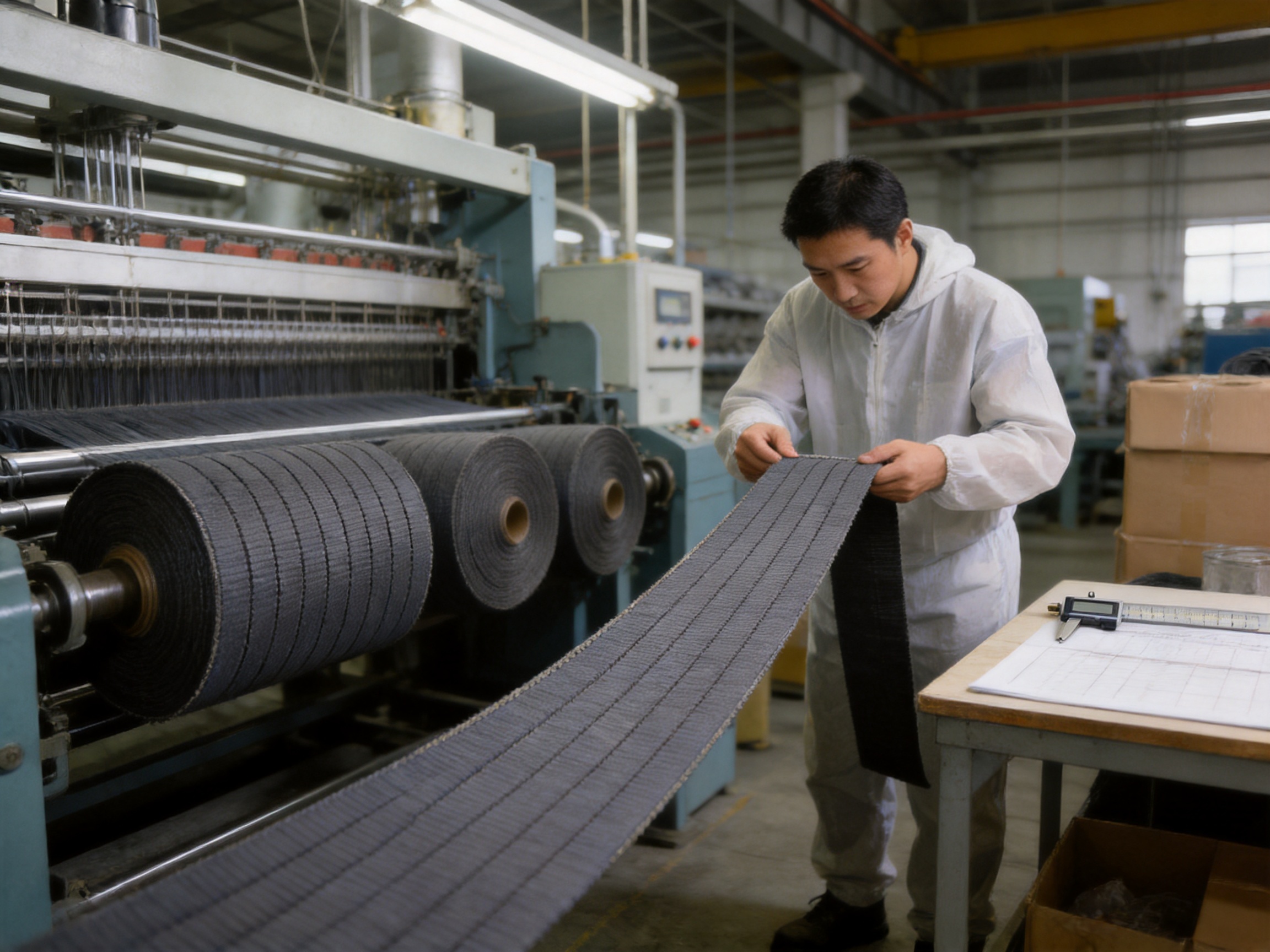
Production includes advanced equipment such as warping machines, knitting machines, woven machines, and packaging machines. Each type of equipment contributes to a different stage of manufacturing. Warping machines help prepare yarns in an organized and controlled arrangement. Woven machines create the interlaced structure of the panel. Packaging machines support orderly handling and shipment preparation.
The company reports a production capacity of millions of meters of elastic and non-elastic webbing per month. This capacity can be valuable for customers that require stable supply, repeat orders, or large-scale production. Capacity alone is not a guarantee of suitability, but it provides an important foundation for serving different order volumes and market sectors.
Advanced equipment also supports process consistency. When machinery is properly maintained, calibrated, and operated by trained personnel, it can help control width, density, tension, winding, and appearance. Consistent process control is particularly important for elastic products because small variations can affect the fit and behavior of the finished product.
Quality Control from Material Sourcing to Packing
Quality control begins before weaving. The selection of yarns and other raw materials influences the finished panel’s elasticity, strength, appearance, and durability. Careful sourcing helps reduce variation and provides a more reliable starting point for production.
During processing, operators and quality personnel can monitor the material’s width, surface, edge condition, color, and general construction. Depending on the customer’s requirements, additional testing may be used to evaluate stretch, recovery, strength, dimensional stability, and performance after repeated use.
Inspection should continue after production. Finished rolls or lengths can be checked for defects such as broken yarns, uneven weaving, stains, inconsistent color, edge damage, or abnormal tension. Proper packaging protects the material during storage and transportation and helps customers receive products in usable condition.
The company states that it maintains strict quality control throughout material sourcing, processing, testing, and packing. This complete-process approach is stronger than relying only on final inspection. Preventive controls can identify problems earlier, reduce waste, and improve consistency between production batches.
For international buyers, reliable quality management also supports communication and documentation. Clear specifications, approved samples, inspection records, and packaging information can help both parties coordinate production and reduce misunderstandings.
Certifications and Responsible Manufacturing
The company has obtained Oeko-Tex Standard 100 and ISO 13485 certifications. Oeko-Tex Standard 100 is associated with testing textile products for certain harmful substances under the requirements of the applicable certification system. ISO 13485 is a quality-management standard related to medical devices.
These certifications are meaningful to buyers who supply apparel, sports products, medical supports, and protective equipment. They indicate that the company has invested in recognized systems and procedures. However, customers should still confirm whether a particular product, color, finish, and intended application meets the regulations of their target market.
Responsible manufacturing also involves efficient use of materials, organized production planning, waste reduction, and careful packaging. Sustainability expectations vary by customer and market, so buyers may request additional information about raw materials, production practices, packaging materials, and environmental policies during supplier evaluation.
A responsible supply relationship is built through transparent communication. Customers should provide accurate specifications, while the manufacturer should clearly communicate achievable tolerances, lead times, testing conditions, and any limitations. This approach supports practical and sustainable cooperation rather than relying on general claims alone.
Customization for Different Product Requirements
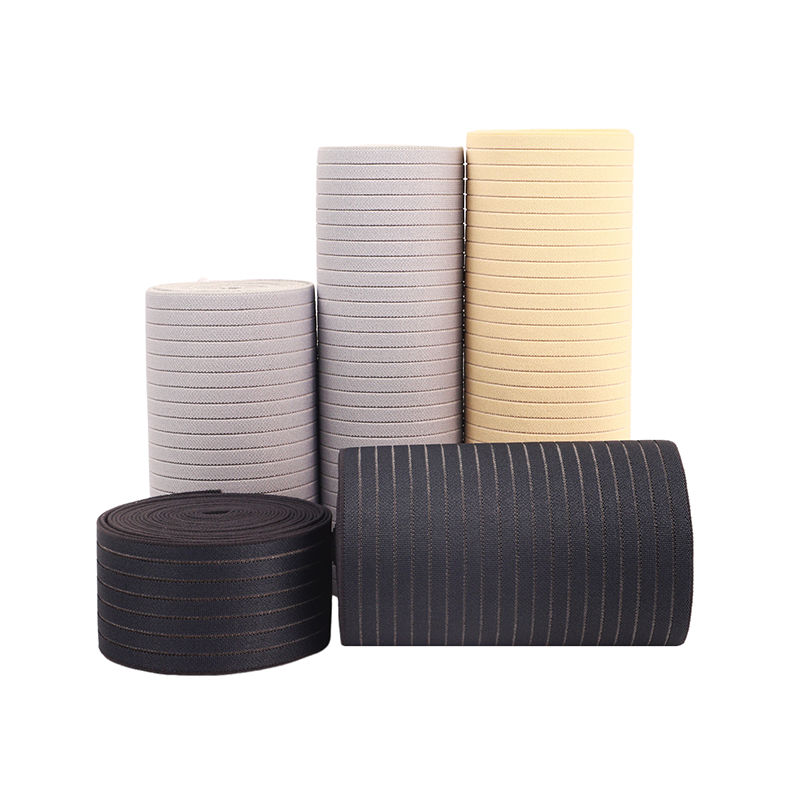
Different customers may require different elastic performance characteristics. Some applications need firmer support, while others prioritize softness and comfort. Some products require a specific color, texture, width, or roll length. The manufacturer offers customized webbing with tailored elasticity, texture, and color to help meet these needs.
Customization can begin with a technical discussion of the finished product. Important information may include the application, target users, desired stretch range, recovery expectations, width tolerance, sewing method, washing conditions, color reference, packaging format, and estimated order quantity.
Sampling is an important stage in customization. A sample allows the customer to evaluate the panel in the actual garment or support product rather than judging it only as a loose material. Testing can reveal whether the panel rolls, whether the seam remains comfortable, whether the tension is appropriate, and whether the color works with the surrounding fabric.
Once a sample is approved, production specifications should be documented clearly. This may include the approved sample, technical data, inspection criteria, packaging requirements, and labeling information. Documented approval helps maintain consistency in repeat orders.
Customization is especially useful for OEM and ODM customers. An OEM buyer may require a panel that fits an established product design, while an ODM customer may need support during the development of a new product. A manufacturer with weaving, knitting, testing, and packaging capabilities can provide more coordinated assistance across the development process.
Advantages Compared with Lower-Quality Alternatives
The 7cm dark grey woven elastic panel offers several practical advantages over low-quality or poorly matched alternatives. Its first advantage is construction stability. A properly woven panel is less likely to fray, distort, or develop irregular tension than an inferior elastic material with weak structure.
Its second advantage is balanced performance. The panel is not selected only for stretch; it is intended to provide a combination of elasticity, recovery, support, and comfort. This balance is useful in products that must remain secure without feeling excessively restrictive.
Its third advantage is application flexibility. The same 7cm format can be evaluated for apparel, activewear, shapewear, sports protection, medical supports, industrial sewing, and DIY projects. This versatility may help customers simplify sourcing and develop multiple product categories around one dependable material format.
Its fourth advantage is a professional appearance. The dark grey color is easy to coordinate, while the woven surface can contribute to a clean and organized finished product. Appearance is especially important where the panel is visible or where product quality is judged visually.
Its fifth advantage is supplier capability. A product is only as reliable as the system behind it. The manufacturer’s experience since 2005, advanced production equipment, quality-control procedures, certifications, monthly capacity, and OEM or ODM support provide a stronger foundation than an unverified supply source.
Buyers should still compare samples and test products under their own conditions. A fair comparison should consider elasticity, recovery, force, width stability, edge quality, color, sewing performance, durability, documentation, lead time, and total cost rather than focusing only on unit price.
Recommended Product Evaluation Process
Before large-scale purchasing, customers should define the role of the elastic panel in the finished product. Is it intended primarily for comfort, retention, compression, adjustment, reinforcement, or appearance? Clarifying the main function helps determine the most appropriate performance requirements.
The next step is to review the physical specification. Confirm the 7cm width, color, roll or piece length, edge condition, surface texture, and packaging format. If the product will be sewn under tension, request information about suitable production methods and recommended handling practices.
Customers should then test stretch and recovery. A basic evaluation may measure the panel’s relaxed length, extended length, and length after a defined recovery period. More advanced testing may examine repeated extension cycles, force at different elongation levels, and dimensional changes after washing or environmental exposure.
Seam testing is equally important. Sew the panel to the actual fabric or support material using the intended thread and stitch. Examine the seam after stretching, repeated movement, laundering, or cleaning. Inspect whether the edge rolls, whether the thread cuts the elastic, and whether the fabric tears beside the seam.
Finally, evaluate the complete product on representative users or test forms. Product-level testing reveals issues that may not appear when the panel is examined alone. Approval should be based on the finished application, especially for medical, sports, and close-fitting products.
Handling, Storage, and Sewing Considerations
Elastic panels should be stored in a clean, dry environment away from excessive heat, direct sunlight, moisture, and chemicals that may affect textile performance. Rolls should not be compressed unnecessarily for long periods, and heavy objects should not be placed on top of the material.
During handling, avoid dragging the panel across rough surfaces or exposing it to sharp edges. Keep cutting tools clean and sharp to produce an even edge. If the panel is cut into pieces, the production team should confirm whether the selected design requires edge finishing or reinforcement.
Sewing parameters should be selected according to the panel and the fabric. A suitable needle and thread can reduce damage, while an appropriate stitch pattern can preserve elasticity in the seam. Excessive stitch density may create a rigid line that restricts movement, whereas insufficient reinforcement may lead to seam failure.
Manufacturers should also control the amount of tension used during assembly. Stretching the panel excessively while sewing can produce a finished product that is too tight or that does not recover correctly. A controlled production jig, template, or tension guide may improve repeatability in high-volume manufacturing.
Quality and Supply Benefits for International Buyers
International customers often need more than a material supplier. They need a partner capable of maintaining specifications across repeat orders, communicating clearly, preparing export packaging, and responding to product-development questions. The manufacturer’s experience serving China and overseas markets supports this broader supply-chain role.
The company’s products are sold in China and exported to North America, Eastern Europe, the Middle East, South Asia, and other regions. Experience across different markets can help the company understand varied customer expectations regarding specifications, packaging, documentation, and delivery coordination.
Competitive pricing and timely delivery are also identified as company strengths. These benefits should be assessed together with quality and service. The lowest price may not represent the lowest total cost if the material causes production delays, high rejection rates, frequent replacement, or customer complaints.
OEM and ODM support can further reduce development barriers. Buyers can provide drawings, samples, measurements, or product descriptions and discuss how the elastic panel can be adapted. Early technical communication may prevent costly changes after mass production begins.
Q&A
What is the width of this woven elastic panel?
The panel is 7cm wide. This broad format is suitable for applications that need stable coverage, balanced tension, and improved pressure distribution compared with narrow elastic bands.
What color is the product?
The product is dark grey. This neutral color can be used in visible designs or concealed within garments, braces, sports products, and industrial sewing assemblies.
What is the main construction of the panel?
It is made with a woven elastic structure. The interlaced construction supports durability, stable elasticity, resistance to fraying, and improved shape retention during repeated use.
Can the panel be used in medical supports?
It can be evaluated for medical supports, orthopedic braces, abdominal supports, and medical protective equipment, depending on the finished product design and applicable requirements. Customers should discuss the intended medical application and conduct complete product testing before use.
Is it suitable for activewear?
Yes. The panel is suitable for waist sections, support zones, sports garments, and protective products that need controlled stretch and secure positioning during movement.
Can it be used for shapewear?
Yes. Its 7cm width may help provide broad and stable tension in shapewear and fitted garments. The final design should be tested for comfort, compression, recovery, seam strength, and appearance.
Does the panel resist fraying?
The strong woven construction is designed to resist fraying and deformation. The final edge performance will also depend on cutting quality, sewing technique, handling, and whether the application requires additional edge finishing.
Will the elastic keep its shape after repeated use?
The panel is designed to maintain stable elasticity and shape after repeated stretching and recovery. Actual performance depends on the degree of extension, environmental conditions, washing method, sewing construction, and overall product design.
Can the product be customized?
Customization is available for requirements such as elasticity, texture, color, and other webbing characteristics. Customers should provide technical specifications or samples so the manufacturer can assess the requested design.
What production equipment does the manufacturer use?
The manufacturer uses equipment including warping machines, knitting machines, woven machines, and packaging machines. These machines support yarn preparation, elastic production, finishing, and organized shipment preparation.
Does the manufacturer support OEM and ODM orders?
Yes. OEM and ODM orders are welcome. The company can discuss customized webbing requirements for different industries and finished-product designs.
What certifications does the company have?
The company has obtained Oeko-Tex Standard 100 and ISO 13485 certifications. Customers should confirm the specific documentation required for their product, market, and intended application.
How should buyers test the panel before bulk ordering?
Buyers should test width, color, stretch, recovery, edge stability, sewing performance, seam strength, comfort, and durability in the actual finished product. Washing, cleaning, and repeated-use tests should be included when relevant.
Is dark grey suitable for different garment colors?
Yes. Dark grey is a versatile neutral that coordinates with black, charcoal, navy, grey, white, and many other colors. It can be used as a visible design feature or a concealed component.
What industries can use this product?
Potential industries include apparel, sportswear, medical supports, orthopedic products, protective equipment, shapewear, industrial sewing, garment accessories, and custom DIY production.
Conclusion
The 7cm dark grey woven elastic panel is a versatile component designed for applications that require stable elasticity, broad coverage, reliable recovery, and comfortable support. Its woven structure helps resist fraying and deformation, while its 7cm width distributes tension more evenly than narrow elastic formats. The dark grey color provides a professional and adaptable appearance for both visible and concealed applications.
The panel can be used in waistbands, activewear, shapewear, sports protection, medical supports, industrial sewing, and DIY projects. Its value lies in the combination of performance and flexibility: it can support different product categories while offering manufacturers a consistent material format for development and production.
Jinhu Hengxiang Webbing Co., Ltd. strengthens this product offering through long-term experience, advanced warping, knitting, weaving, and packaging equipment, quality control from material sourcing through packing, recognized certifications, customized production, and OEM or ODM support. With production capacity reaching millions of meters per month and export experience across multiple regions, the company is positioned to serve both standard and specialized webbing requirements.
For the best result, buyers should evaluate the panel within the complete finished product. Clear specifications, sample approval, suitable sewing methods, controlled assembly tension, and realistic durability testing will help ensure that the selected elastic performs as expected. When properly matched with the application, the 7cm dark grey woven elastic panel can contribute to durable, comfortable, and professionally manufactured products.
References
1. Product specification information for the 7cm dark grey woven elastic panel, product code 8156.
2. Company manufacturing information concerning woven elastic, non-elastic webbing, production equipment, customization, and export service.
3. Oeko-Tex Standard 100 principles concerning the assessment of textile products for selected harmful substances.
4. ISO 13485 quality-management principles for organizations involved in medical-device-related production.
5. General textile engineering principles concerning woven construction, elastic recovery, dimensional stability, seam performance, and product-level testing.
6. General apparel and medical-support design practices concerning width selection, pressure distribution, fit, comfort, and repeated-use durability.