
 en
en
 English
 русский
 Français
 Español
 Português
 Tiếng Việt
Content
- 1 Understanding the 8cm White Velcro Elastic Panel
- 2 Core Product Advantages
- 3 Advantages Compared with Conventional Fastening Options
- 4 Applications Across Multiple Product Categories
- 5 Manufacturing Expertise and Production Strength
- 6 Product Integration and Design Recommendations
- 7 Why Work with a Specialized Webbing Manufacturer?
- 8 Purchasing and Development Considerations
- 9 Frequently Asked Questions
- 9.1 What is an 8cm white Velcro elastic panel?
- 9.2 What makes this panel different from ordinary hook-and-loop tape?
- 9.3 Why is the 8cm width useful?
- 9.4 Can the panel be used in medical products?
- 9.5 Is the panel suitable for sportswear?
- 9.6 Can it be used for maternity wear?
- 9.7 Is the white color the only available option?
- 9.8 Can the product be customized?
- 9.9 How should the panel be sewn into a finished product?
- 9.10 How durable is the panel?
- 9.11 Does the company support large orders?
- 9.12 What quality certifications does the manufacturer have?
- 9.13 Where is the product manufactured?
- 9.14 How can customers request product information?
- 10 Conclusion
- 11 References
- 12 Product: 8cm White Velcro Elastic Panels
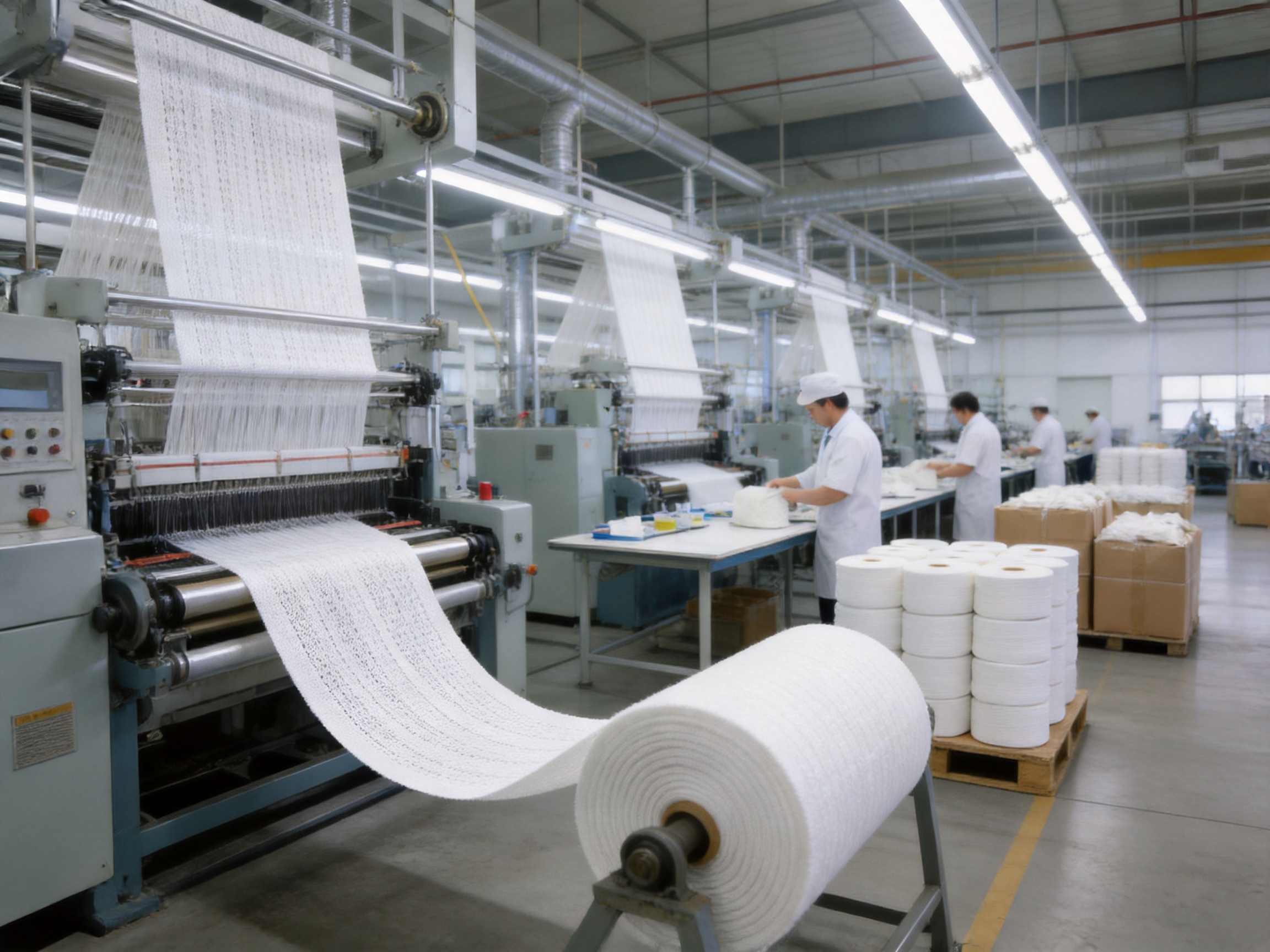
In garments, medical supports, sports protection products, maternity wear, and many do-it-yourself applications, the fastening system often determines whether a product feels secure, comfortable, and practical. A fastening material must do more than simply connect two sections. It should provide dependable holding power, allow convenient adjustment, withstand repeated use, and work smoothly with the surrounding fabric. The 8cm white Velcro elastic panel is designed to meet these combined requirements by bringing together wide elastic construction and hook-and-loop fastening in one functional component.
This product combines the controlled stretch of high-quality elastic with the convenience of an adjustable hook-and-loop closure. Its 8cm width helps distribute tension across a broader area instead of concentrating pressure along a narrow line. The result is a fastening panel that can support stable positioning while preserving flexibility and user comfort. The clean white color is also easy to coordinate with medical textiles, sportswear, underwear, maternity products, protective equipment, and other fabric constructions.
Unlike a conventional rigid strap, the elastic panel can adapt to movement and changes in body position. Unlike a basic elastic band without a fastening system, it can be opened, adjusted, and secured repeatedly. Unlike a narrow hook-and-loop strip, its wider elastic format can help provide more balanced contact and a more stable fit. These characteristics make it a practical choice for manufacturers looking for a versatile component that combines support, flexibility, and ease of use.
Understanding the 8cm White Velcro Elastic Panel
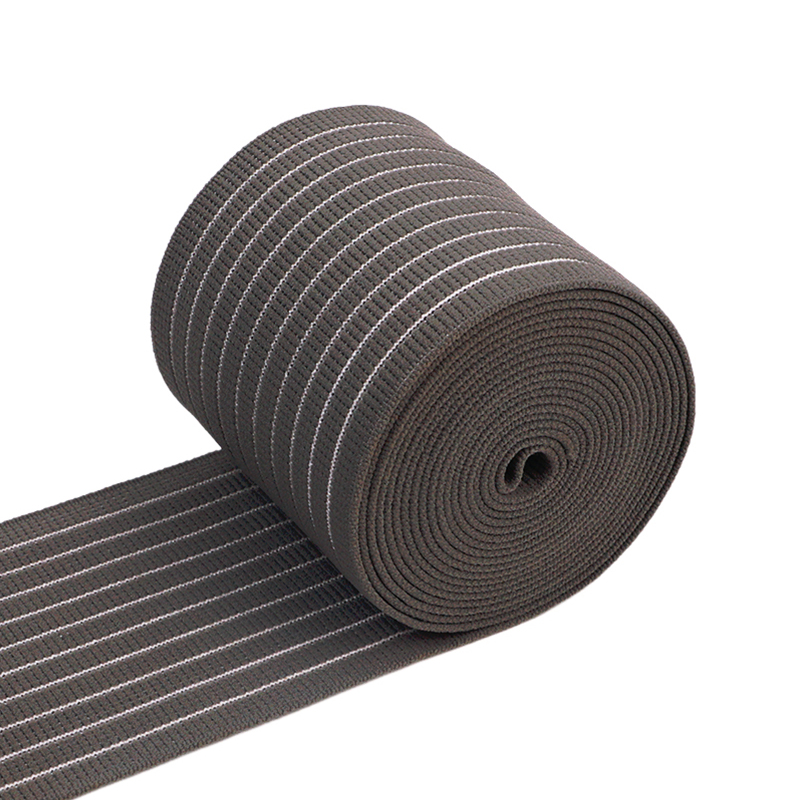
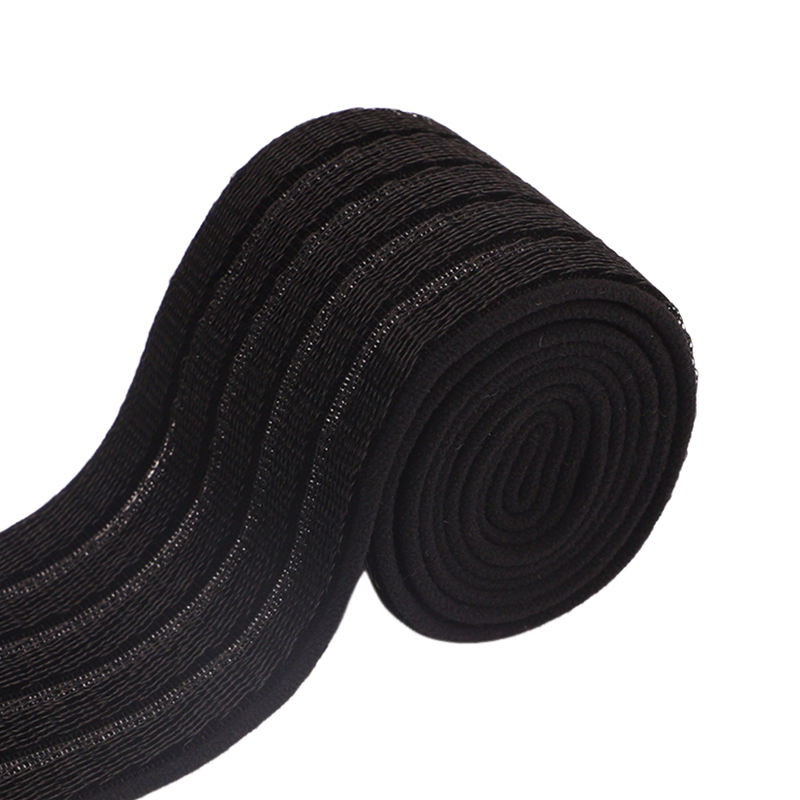
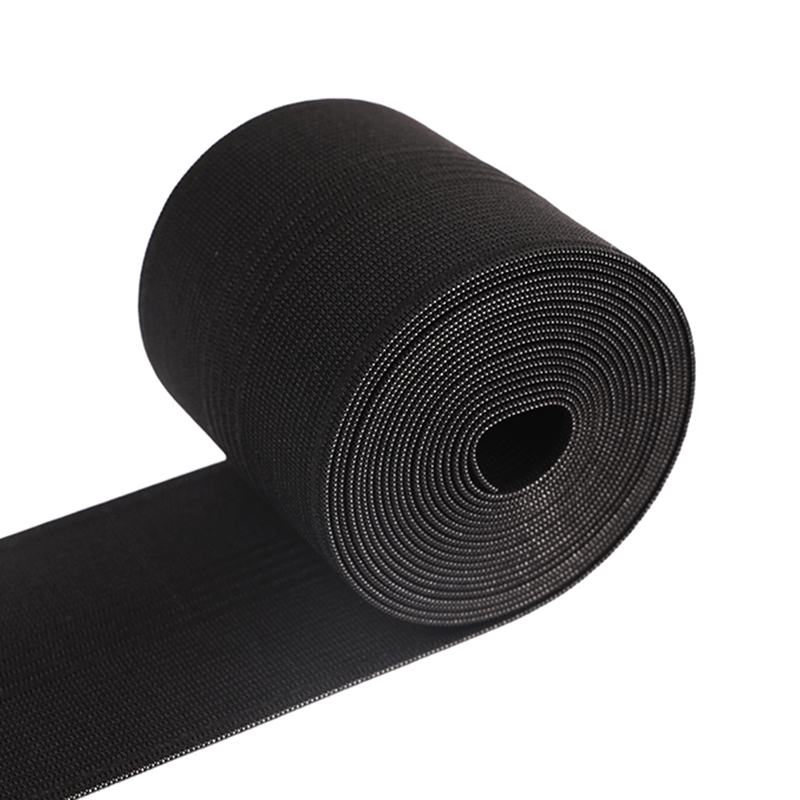
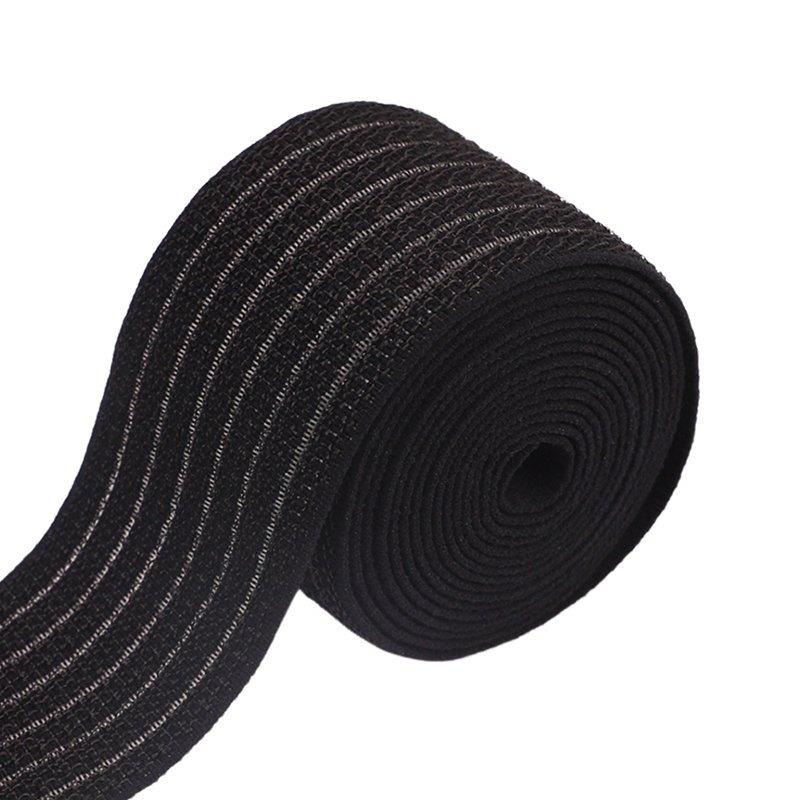
The 8cm white Velcro elastic panel is an elastic hook-and-loop strap product identified by product code 8077. It is manufactured as a wide panel that combines stretchable material with hook-and-loop fastening. The elastic section allows controlled extension and recovery, while the hook-and-loop section enables the user to open and close the product conveniently and adjust the fastening position according to the required fit.
The 8cm width is an important part of the product’s function. A wider fastening panel can spread holding force over a larger contact area, which is useful when a garment or support product needs stable positioning. A broad panel can also reduce the feeling of a narrow strap pressing into one particular line. The actual performance of any finished application will depend on the garment structure, fabric selection, sewing method, closure design, and required level of tension, but the wide construction provides a strong starting point for manufacturers.
The white appearance gives the material a clean, neutral look. White can be used as a visible design feature or concealed inside a finished product. It is especially suitable for medical and orthopedic products where a hygienic, professional, and uncomplicated appearance is often preferred. It can also be matched with white, light-colored, or contrasting fabrics in sports supports, maternity products, rehabilitation garments, and home sewing projects.
The panel is designed for applications that need both secure fastening and flexibility. It can be incorporated into products that must be put on and removed frequently, adjusted for different users, or tightened and loosened during use. The combination of elastic recovery and hook-and-loop adjustment makes it more versatile than a fixed-length strap or a non-adjustable sewn closure.
Core Product Advantages
Adjustable and Secure Fastening
The most immediate advantage of the panel is its adjustable hook-and-loop closure. Users can separate the fastening surfaces, reposition the panel, and secure it again without requiring a buckle, button, zipper, or permanent knot. This helps simplify product operation and allows the finished item to accommodate differences in body shape, clothing layers, movement, and personal comfort preferences.
In a medical support or sports protection product, adjustability can be especially important. The user may need a lighter fit during rest and a firmer fit during activity. A hook-and-loop closure allows these changes to be made quickly. For manufacturers, the closure can also simplify the product design because the adjustment mechanism is integrated into the strap rather than requiring a separate fastening component.
A secure closure must remain stable after adjustment. The hook-and-loop surfaces are intended to provide a firm hold when properly engaged. The elastic structure adds flexibility without removing the user’s ability to control the fastening tension. Together, these features help the panel balance ease of adjustment with reliable positioning.
Wide Construction for Balanced Tension
The 8cm width gives the panel a broader contact area than a narrow elastic band. This can be beneficial when the material is used to stabilize a larger section of a garment or support product. A broad panel can help distribute tension more evenly across the attachment area, reducing the tendency of the fastening force to be concentrated along a narrow edge.
Balanced tension is useful in abdominal binders, orthopedic braces, rehabilitation supports, maternity garments, and sports protection products. In these applications, the fastening component may need to hold a panel, wrap, or support section in place while the wearer bends, walks, stretches, or changes position. The wide design helps the fastening system work as part of a larger support structure rather than acting as a small isolated strap.
The wide construction can also provide designers with greater freedom. A manufacturer may use one broad panel instead of several narrow straps, depending on the product design. This may simplify assembly and create a cleaner appearance. It can also reduce the number of separate components that must be cut, aligned, sewn, and inspected during production.
Elastic Flexibility for Movement
Rigid fastening materials can hold a product in place, but they may not respond comfortably when the wearer moves. Elastic construction allows a degree of controlled give. This flexibility can help the finished item follow body movement and accommodate ordinary changes in circumference without immediately feeling restrictive.
Elasticity is particularly relevant for products used during exercise, rehabilitation, pregnancy, recovery, or daily activities. The body does not remain in one position, and support products must often function while the wearer sits, stands, bends, walks, or reaches. A flexible panel can work with these movements more naturally than a completely non-stretch fastening material.
Elastic flexibility should not be confused with uncontrolled looseness. A quality elastic panel is expected to stretch and recover in a predictable manner appropriate to its construction. The right balance between extensibility, recovery, width, and closure strength allows the material to provide support while retaining comfort. Final performance should always be evaluated in the specific finished product and under its intended conditions of use.
Comfort During Extended Wear
Comfort is a major consideration when a fastening panel is used in a product worn for long periods. The panel’s soft and flexible structure can help reduce the rigid feeling associated with hard closures. Its wide format may also help distribute contact across a larger area, which can support a more comfortable fit when the product is correctly designed and adjusted.
Comfort depends on more than the fastening material alone. The final result is influenced by edge finishing, seam placement, lining fabric, garment pressure, closure orientation, and the user’s adjustment. Nevertheless, choosing an elastic panel with a flexible structure provides manufacturers with a material foundation suited to comfort-oriented products.
For medical and sports applications, comfort can influence whether a user continues to wear a support product as recommended. If a support is difficult to adjust or uncomfortable during movement, the user may not obtain the intended benefit from the product. A convenient and flexible closure can make daily use easier and encourage consistent wear.
Durability for Repeated Use
Hook-and-loop products are often opened and closed many times during their service life. The elastic component may also be stretched repeatedly whenever the product is put on, adjusted, or removed. The 8cm white Velcro elastic panel is designed to combine strong elastic construction with a fastening surface intended for repeated practical use.
Durability is important in medical supports, sports braces, maternity garments, and reusable protective products. Manufacturers need components that can maintain their function through regular handling and normal use. A durable panel can help reduce premature replacement and support the overall service life of the finished product.
Actual durability depends on many factors, including the degree of stretch, frequency of opening and closing, washing method, exposure to sweat or moisture, sewing construction, storage conditions, and contact with other materials. Product developers should conduct application-specific testing before mass production. Even so, selecting a purpose-designed elastic hook-and-loop panel is generally more suitable than adapting an ordinary decorative trim or a fastening material that was not designed for repeated tension.
Clean White Appearance
Color affects both product appearance and manufacturing flexibility. White is a versatile color that can be combined with many fabric shades and design concepts. It can blend into white medical garments, create a clean contrast against dark sportswear, or provide a neutral foundation for prototypes and custom projects.
The clean appearance is particularly appropriate for orthopedic braces, rehabilitation supports, abdominal binders, maternity products, and other healthcare-related goods. It communicates simplicity and can help the fastening component look integrated rather than visually distracting. For private-label and OEM products, a neutral white base can also be incorporated into a wide range of customer designs.
When color matching is important, manufacturers may discuss customized colors and construction requirements with the supplier. The company’s broader production capabilities include customized webbing with tailored elasticity, texture, and color, allowing the basic product concept to be adapted for different customer programs where appropriate.
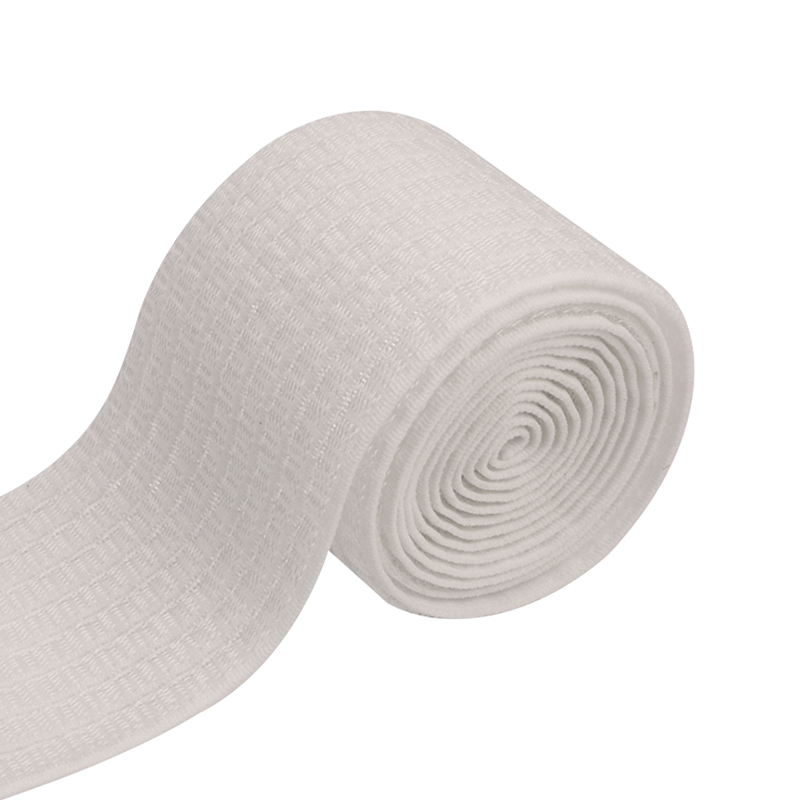
8cm White Velcro Elastic Panels
Advantages Compared with Conventional Fastening Options
Product developers often compare elastic hook-and-loop panels with several alternative fastening materials. Each option has a place in the market, but the 8cm white panel offers a useful combination of features that may be difficult to obtain from a single conventional component.
| Fastening option | Typical strength | Common limitation | Advantage of the 8cm elastic panel |
|---|---|---|---|
| Rigid buckle strap | Can provide firm mechanical fastening | May be less flexible and more complicated to adjust | Offers elastic movement and quick hook-and-loop adjustment |
| Non-adjustable elastic band | Provides stretch and recovery | Does not offer convenient opening and repositioning | Combines elasticity with a reusable closure |
| Narrow elastic tape | Suitable for lightweight edging and small components | May concentrate tension in a limited area | Uses an 8cm-wide format for broader contact and stability |
| Plain hook-and-loop tape | Allows quick fastening and release | May lack the stretch required for moving body areas | Adds elastic flexibility to the adjustable fastening system |
| Button or snap closure | Can provide a simple permanent position | Offers limited fine adjustment between fixed points | Allows more flexible positioning and tension control |
| Drawstring or tie closure | Can be economical and easy to integrate | May require manual tying and can shift during use | Provides a faster, more repeatable fastening process |
This comparison does not mean that one material is suitable for every design. Instead, it illustrates why an elastic hook-and-loop panel can be attractive when a product must offer controlled flexibility, easy opening, and adjustable support. The panel can reduce the need to combine several separate components, helping designers create a more integrated fastening system.
Compared with a fixed elastic band, the panel is easier to open and close. A fixed band may need to be pulled over the body or attached permanently during assembly, while a hook-and-loop panel can be opened for convenient donning and doffing. Compared with plain hook-and-loop tape, the elastic construction can make the fastening system more accommodating during movement. Compared with a buckle, the panel can provide a flatter and softer construction, depending on the finished design.
The broad 8cm format is another point of differentiation. Many narrow straps are useful for small adjustments, but they may not provide the surface area required for broad support sections. A wide elastic panel can be used as a major structural fastening element in products where stability and tension distribution are important.
Applications Across Multiple Product Categories
Medical Supports and Orthopedic Braces
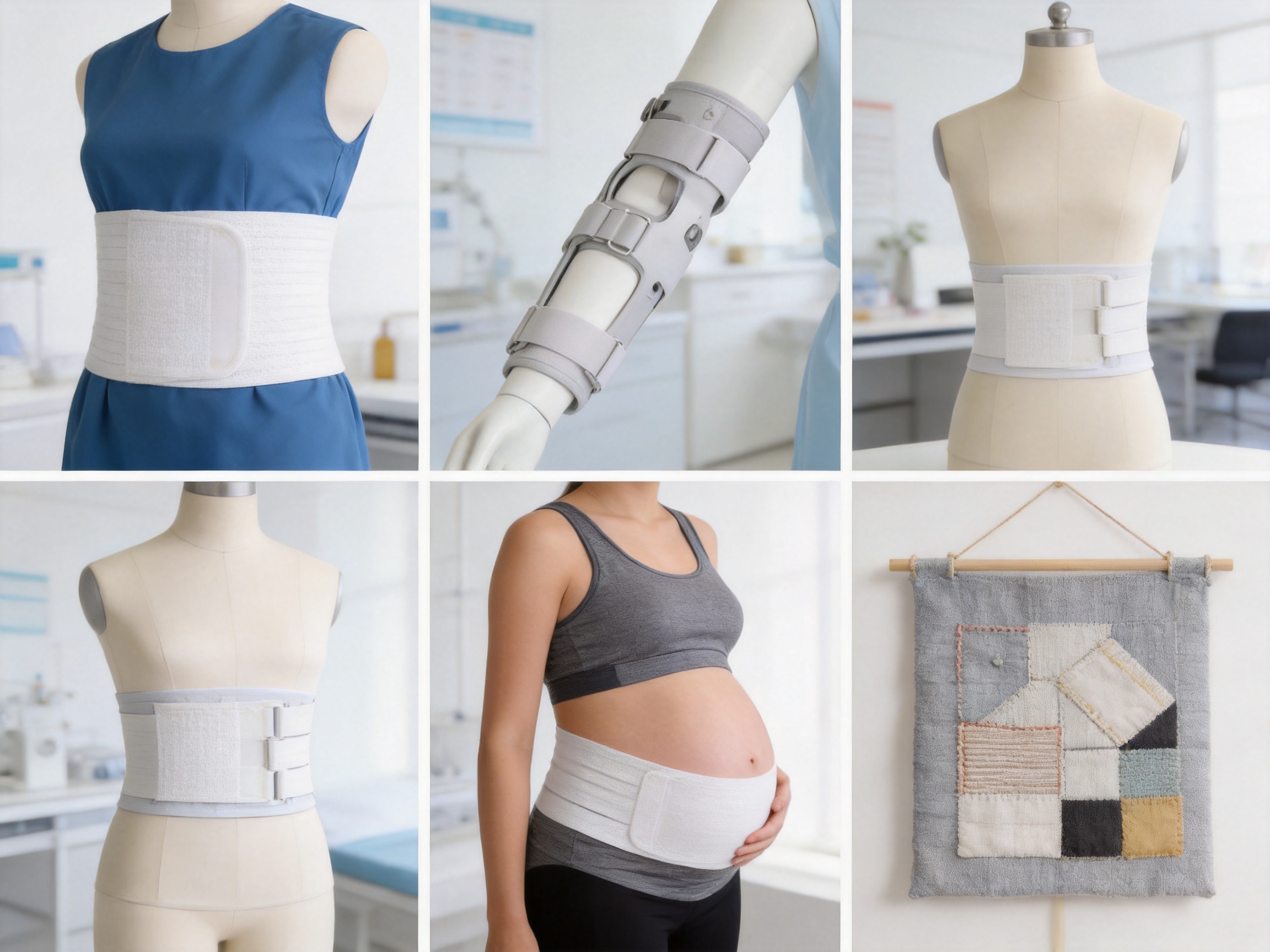
Medical supports and orthopedic braces often require a secure fit that can be adjusted by the wearer or a caregiver. The 8cm white Velcro elastic panel can be incorporated into support products that need repeated opening, closing, and repositioning. Its elastic structure may help the product remain more comfortable during ordinary movement, while the hook-and-loop closure provides a practical method for controlling fit.
Possible applications include abdominal support products, rehabilitation braces, orthopedic wraps, post-operative support garments, and other protective equipment. The white color is compatible with many clinical and healthcare-oriented designs. The material may be sewn to a main support panel, attached as a wrap closure, or incorporated into a larger multi-section fastening system.
Medical product manufacturers must determine whether a specific design meets all applicable medical-device, hygiene, biocompatibility, labeling, and performance requirements. The panel is a component and should be evaluated as part of the complete finished product. Cleaning, sterilization, laundering, skin contact, and repeated-use conditions should be assessed according to the intended application.
Sports Protection and Athletic Supports
Sports protection products must often remain stable while the wearer is running, jumping, stretching, lifting, or changing direction. A fastening component that is too rigid may restrict movement, while a component that is too loose may allow the support to shift. The elastic hook-and-loop panel offers a practical balance by combining stretch with adjustable closure.
It can be considered for waist supports, athletic braces, protective wraps, training belts, rehabilitation sleeves, and other sports-related products. The user can adjust the panel before activity and make changes when necessary. Its broad width can help secure a larger section of protective material and create a more stable connection between the support and the body.
Sports products are exposed to sweat, friction, repeated stretching, and frequent washing. Manufacturers should select compatible fabrics, thread, binding, and sewing patterns, then test the completed product under realistic use conditions. Proper integration is essential to ensure that the panel’s performance is not weakened by poor seam placement or excessive stress at the attachment points.
Abdominal Binders
Abdominal binders require a fastening system that can provide adjustable compression or support while remaining practical for daily use. A wide elastic hook-and-loop panel can be used to close or reinforce an abdominal support design. The 8cm width may help create a stable fastening area, particularly when combined with a broad binder body.
The elastic structure may accommodate moderate changes in body position and circumference. The hook-and-loop mechanism allows the user to open the binder without pulling the entire product over the body. This can be useful for products designed for recovery, support, maternity use, or general abdominal stabilization.
The exact level of compression should be determined by the complete binder design and the intended medical or consumer application. The fastening panel itself does not define the clinical function of the finished product. Designers should consider pressure distribution, breathable materials, edge comfort, adjustability, and instructions for safe use.
Maternity Wear
Maternity products often need to adapt to changing body dimensions while maintaining comfort and support. An elastic hook-and-loop panel can provide adjustable fastening in maternity belts, support garments, abdominal panels, and related products. The user can modify the fit as needed instead of relying on a fixed-size closure.
Comfort is especially important in maternity applications because the garment may be worn for extended periods. A soft and flexible panel can support a more comfortable design when combined with suitable lining materials and carefully positioned seams. The white color can coordinate with light-colored maternity garments or remain hidden inside the construction.
Manufacturers should assess the panel’s placement carefully. The closure should be easy to reach, should not create uncomfortable pressure points, and should not interfere with sitting, walking, or other ordinary activities. Prototype fitting on different body shapes can help determine the most effective construction.
DIY and Home Sewing Projects
The panel is also suitable for DIY projects where a maker needs a broad, adjustable, and stretchable fastening component. It can be used for custom supports, handmade protective garments, costume structures, rehabilitation accessories, adjustable wraps, bags, equipment covers, and other fabric projects.
For home sewing, the material offers a straightforward alternative to combining separate elastic and hook-and-loop strips. It can help reduce assembly steps and create a clean, functional closure. Makers should use a strong needle, suitable thread, and a seam construction appropriate for the expected tension. Reinforcement stitching may be useful at the ends and attachment points, especially when the finished product will be pulled frequently.
Protective Equipment and Specialty Garments
Protective equipment often requires adjustable connections because users may wear different clothing layers or have different body proportions. The panel can be integrated into protective belts, support garments, workwear accessories, equipment covers, and specialty textile products. Its broad format provides designers with an option for securing larger sections without relying exclusively on hard plastic or metal hardware.
For specialty garments, the panel can contribute to a balance between function and appearance. The neutral white color is easy to incorporate into prototypes, while customized color options may be discussed for larger production programs. The ability to combine elasticity and fastening can also help designers reduce visual clutter and create a more streamlined finished product.
Manufacturing Expertise and Production Strength
The product is manufactured by Jinhu Hengxiang Webbing Co., Ltd., a professional webbing manufacturer established in 2005 in Jinhu County, Huai’an City, Jiangsu Province, China. The company focuses on the research, development, production, sale, and service of elastic webbing and non-elastic webbing. Its product experience is especially connected with sports supports and orthopedic braces, making the 8cm elastic hook-and-loop panel relevant to a broader portfolio of functional textile components.
More than 20 years of production experience provides an important foundation for understanding webbing structures, elasticity, textile behavior, and application requirements. A company that specializes in webbing can approach the product from the perspective of yarn selection, construction, tension, surface feel, width consistency, processing, and final use. This specialization is valuable because a fastening panel must perform as part of a complete textile product rather than as an isolated strip.
Integrated Production Equipment
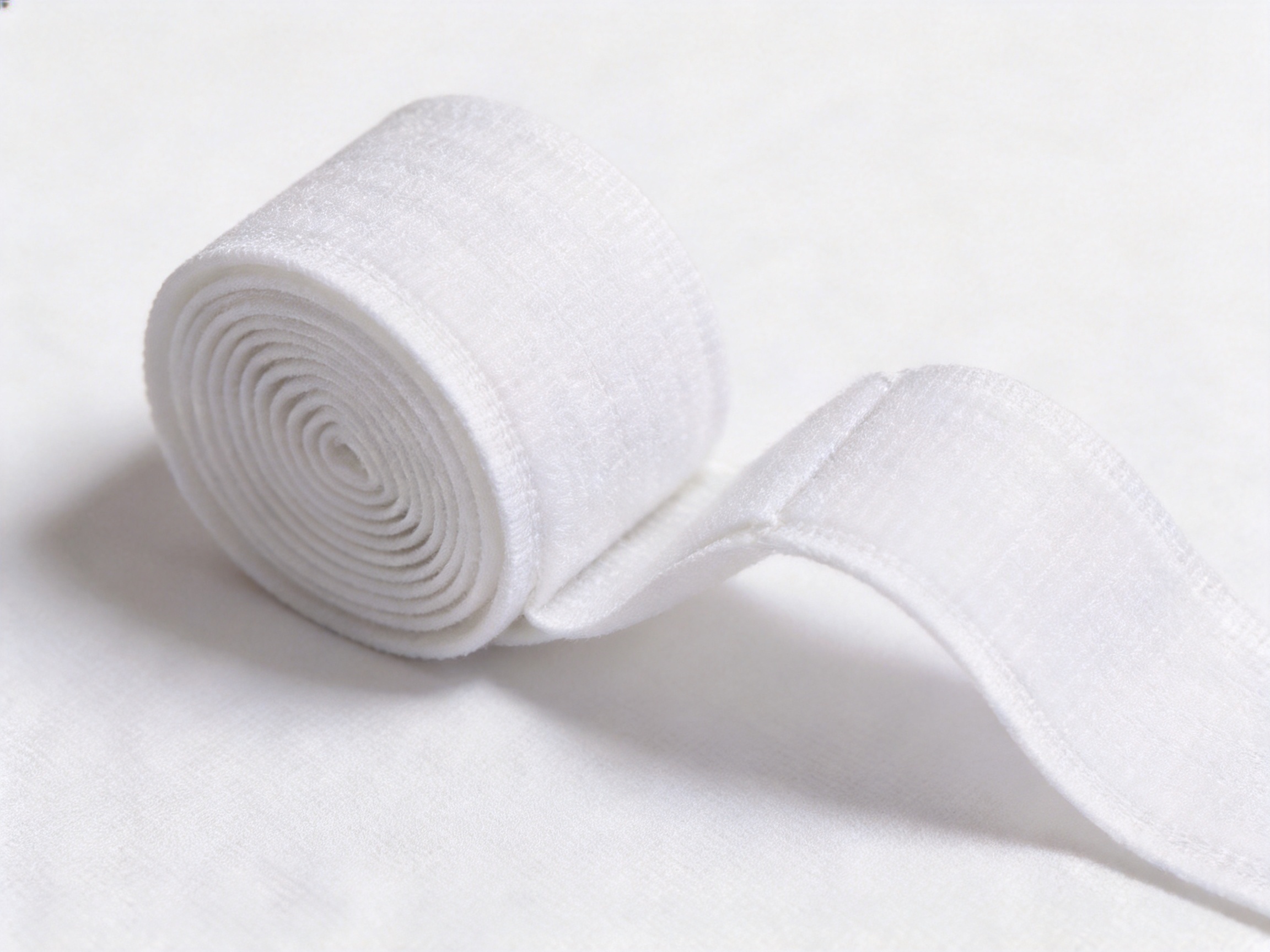
The company has introduced and updated advanced production equipment, including warping machines, knitting machines, woven machines, and packaging machines. Each stage contributes to the final quality and consistency of the product.
Warping equipment helps prepare yarns in an organized and controlled arrangement before subsequent processing. Consistent yarn preparation supports stable production and helps establish the foundation for uniform webbing construction. For elastic products, controlled preparation is important because variations in yarn arrangement can influence width, texture, and stretch behavior.
Knitting machines are used for knitted webbing structures and related textile components. Knitted construction can provide flexibility and a soft hand, depending on the yarns and production parameters used. Woven machines support woven webbing production and allow the company to manufacture different structures for different application requirements. The combination of knitting and weaving capabilities gives the manufacturer broader technical flexibility than a facility limited to a single production method.
Packaging machines contribute to consistent preparation for shipment and storage. Proper packaging can help protect the product from contamination, tangling, moisture, and handling damage. It also supports more efficient order processing and delivery, particularly when products are supplied in large quantities or prepared for export markets.
Large-Scale Monthly Output
The company produces millions of meters of elastic and non-elastic webbing every month. This production capacity is important for customers who require regular supply, stable replenishment, and scalable order fulfillment. A manufacturer with substantial monthly output may be better positioned to support both development-stage orders and larger commercial programs.
Large-scale capacity also supports production planning. Customers can discuss required widths, colors, textures, elasticity, packaging, and order schedules with a supplier that has established manufacturing resources. For high-volume users, supply continuity can be as important as the initial product specification. Delays or inconsistent replenishment can interrupt garment assembly and increase inventory pressure, so production scale is a meaningful commercial advantage.
At the same time, volume must be combined with quality control. High output alone does not guarantee suitability. The company’s stated approach emphasizes strict quality control throughout material sourcing, processing, testing, and packing. This full-process approach is intended to maintain consistency as production moves from incoming materials to finished rolls or panels.
Quality Control from Material to Packing
Quality begins with the selection and inspection of materials. Elastic webbing performance can be influenced by the quality and consistency of the yarns, elastic elements, hook-and-loop components, and supporting materials. Controlling material sourcing helps reduce variation before production begins.
During processing, the manufacturer can monitor construction, width, appearance, elasticity, texture, and other characteristics relevant to the intended application. Production controls are especially important for an 8cm panel because the finished width and fastening alignment affect how easily it can be integrated into a garment or support product.
Testing provides another opportunity to identify variation or potential problems. Depending on the customer’s requirements, testing may consider dimensions, stretch and recovery, surface appearance, fastening performance, color, and durability. Finished-product testing should be matched to the actual use case, since a medical support, sports brace, and DIY accessory may have different performance priorities.
Finally, packing protects the product after production. Accurate packing and labeling help customers identify materials, manage inventory, and prepare the product for manufacturing. Attention to packaging is particularly important for exported goods that may pass through multiple transportation and storage stages before reaching the customer.
Certifications and Professional Standards
The company has obtained Oeko-Tex Standard 100 and ISO 13485 certificates. These certifications are significant indicators of its commitment to recognized quality and management requirements.
Oeko-Tex Standard 100 is associated with testing textile products for certain harmful substances. For customers selecting materials for garments, supports, and other textile products, this certification can provide useful information about the company’s attention to textile safety requirements. The exact scope and validity of certification should always be confirmed for the specific product and current certification period.
ISO 13485 is a quality management standard associated with medical devices. Its relevance is especially notable for a manufacturer serving orthopedic braces, sports supports, and medical protective equipment. Certification does not automatically mean that every finished customer product is a medical device or meets every regulatory requirement. However, it demonstrates that the company operates within a quality-management framework relevant to medical-product manufacturing and supply.
OEM and ODM Support
OEM and ODM orders are welcome. This allows customers to work with the manufacturer on products that require more than a standard catalog selection. Customization may involve elasticity, texture, color, width, structure, packaging, or other production details, subject to technical feasibility and order requirements.
For an 8cm elastic hook-and-loop panel, customization discussions may be useful when a customer needs a particular stretch response, surface feel, color match, or attachment configuration. A development process may include reviewing drawings, confirming samples, testing the material in the customer’s prototype, and establishing production standards before bulk manufacture.
Customization can provide an advantage over suppliers that only offer fixed specifications. It allows the material to be more closely matched to the customer’s garment design and target market. It can also help brands create a distinctive product rather than using an entirely generic component.
Product Integration and Design Recommendations
Choosing the Correct Orientation
When integrating the panel into a product, designers should determine which surface will face inward or outward and how the hook-and-loop sections will overlap. The orientation affects ease of operation, skin comfort, appearance, and the amount of usable adjustment. Samples should be tested by the intended user group before finalizing the design.
The panel should be positioned so that the user can reach the closure without excessive stretching or twisting. In abdominal binders and braces, the closure may be placed at the front, side, or back depending on the product structure and intended method of use. In sports products, the closure should be accessible while also being protected from unnecessary snagging during activity.
Reinforcing Attachment Areas
The fastening panel may experience repeated pulling at its ends and along its sewn edges. Strong attachment methods are therefore important. Designers can consider reinforced seams, bar tacks, box stitching, multiple rows of stitching, or other constructions suitable for the fabric and expected load.
The best attachment method depends on whether the panel is sewn to elastic fabric, woven fabric, foam laminate, mesh, or a multi-layer support material. Stitch density should be sufficient to hold the panel without damaging the elastic structure. Excessive needle perforation may weaken some materials, while insufficient reinforcement may lead to seam failure.
Balancing Support and Comfort
More tension does not always mean better performance. A support product should be designed to provide the intended level of stability without creating unnecessary restriction. The elastic panel allows adjustment, but the finished product should include clear guidance on how tightly it should be fastened.
Designers should evaluate the product in multiple positions, including standing, sitting, bending, walking, and active movement where relevant. They should look for rolling, folding, slipping, uncomfortable edges, and excessive pressure. Testing with different body shapes and clothing layers can reveal whether the adjustment range is sufficient.
Care and Maintenance Considerations
Care instructions should be established for the complete product. Washing temperature, detergent, drying method, and repeated laundering can influence elastic recovery, color, surface condition, and hook-and-loop performance. The panel should be tested under the care conditions that will appear on the final product label.
Users should keep the hook-and-loop surfaces properly engaged or protected during washing when appropriate. Uncovered hook surfaces can catch on other fabrics and may collect lint. Product designers may consider covers, protective flaps, or packaging instructions if the application involves frequent laundering.
Storage also matters. The panel should be kept clean and dry and should not be exposed unnecessarily to conditions that could degrade textile or elastic components. The supplier can provide additional technical information for customers who need specific care or testing guidance.
Why Work with a Specialized Webbing Manufacturer?
A specialized webbing manufacturer can offer more focused technical knowledge than a general textile supplier. Webbing products require attention to width, tension, elasticity, edge behavior, surface texture, color, and attachment performance. These details influence the reliability of the final garment or support product.
Jinhu Hengxiang Webbing Co., Ltd. has built its business around elastic and non-elastic webbing, particularly for sports supports and orthopedic braces. This product focus gives the company experience with materials that must perform under tension and repeated movement. It also aligns with the requirements of medical protective equipment and functional garments.
The company’s combination of equipment, production capacity, certifications, and customization services provides customers with a complete sourcing option. Customers can discuss product development, sample approval, bulk manufacturing, packaging, and delivery with one specialized supplier. This can simplify communication and reduce the need to coordinate different vendors for separate elastic and fastening components.
The company serves the Chinese market and exports to North America, Eastern Europe, the Middle East, South Asia, and other regions. International sales experience can help support export-oriented customers who require organized production, consistent packing, and communication across different markets. Customers should confirm shipping terms, documentation, lead times, and product-specific compliance requirements during the quotation process.
Purchasing and Development Considerations
Before placing an order, customers should provide as much information as possible about the intended application. Useful details may include required width, color, approximate length, target elasticity, hook-and-loop arrangement, sewing method, end treatment, packaging format, order quantity, and expected delivery schedule.
It is also helpful to describe the finished product. A panel intended for a medical abdominal binder may require different testing and handling from one used in a lightweight DIY accessory. Explaining the use case allows the manufacturer to recommend a more suitable construction and identify issues that may not be visible from a simple width specification.
Sampling is recommended before bulk production. A sample can be sewn into the customer’s prototype and evaluated for fit, closure convenience, tension, comfort, appearance, and durability. If adjustments are needed, the manufacturer and customer can revise the specifications before confirming a production standard.
Customers should also clarify whether they need standard white material or a customized color. White is versatile, but some products may require a specific shade to match a fabric or brand identity. Color approval procedures should be agreed upon in advance, especially for large orders or repeat production.
For regulated applications, customers are responsible for evaluating the finished product against the laws and standards applicable in their target market. The supplier can provide available material information and certification documentation, but the finished medical or protective product may require additional testing, labeling, and regulatory review.
Frequently Asked Questions
What is an 8cm white Velcro elastic panel?
It is a wide elastic hook-and-loop fastening panel with an 8cm width and a white color. It combines elastic stretch with an adjustable hook-and-loop closure for applications that require secure fastening, flexibility, and convenient adjustment.
What makes this panel different from ordinary hook-and-loop tape?
Ordinary hook-and-loop tape may provide adjustable fastening but does not necessarily provide the stretch and recovery needed for moving body areas. This panel combines hook-and-loop fastening with elastic construction, helping the finished product accommodate movement and changing fit requirements.
Why is the 8cm width useful?
The wide format provides a larger contact area and can help distribute tension more evenly than a narrow strap. It is suitable for products that need broad support or stable positioning, although the final performance depends on the complete design and attachment method.
Can the panel be used in medical products?
It can be considered for medical supports, orthopedic braces, abdominal binders, rehabilitation products, and medical protective equipment. The finished product must be evaluated according to the applicable medical, safety, hygiene, and regulatory requirements in its target market.
Is the panel suitable for sportswear?
Yes. Its elastic flexibility and adjustable fastening make it suitable for sports supports, protective garments, training accessories, and rehabilitation products. The finished design should be tested under realistic movement, sweat, washing, and repeated-use conditions.
Can it be used for maternity wear?
Yes. The adjustable closure can help maternity products accommodate changing body dimensions. Designers should pay particular attention to comfort, pressure distribution, accessibility, and fit during sitting, walking, and other everyday activities.
Is the white color the only available option?
The described product is white. The manufacturer also provides customized webbing with tailored elasticity, texture, and color, so customers can discuss alternative requirements according to product specifications, order quantity, and technical feasibility.
Can the product be customized?
OEM and ODM orders are welcome. Customers may discuss construction, elasticity, texture, color, packaging, and other requirements with the manufacturer. Samples and technical confirmation are recommended before bulk production.
How should the panel be sewn into a finished product?
The sewing method depends on the base fabric, expected tension, and application. Reinforced stitching, suitable thread, and secure end treatment are commonly considered for products exposed to repeated pulling. The attachment should be tested as part of the complete product.
How durable is the panel?
The panel is designed for durable, repeated use, combining elastic material with hook-and-loop fastening. Actual service life depends on tension, frequency of adjustment, washing, sweat, storage, sewing construction, and other conditions. Application-specific testing is recommended.
Does the company support large orders?
The company produces millions of meters of elastic and non-elastic webbing every month and supports OEM and ODM orders. Customers should confirm production capacity, lead time, minimum order quantity, packaging, and delivery arrangements for their specific project.
What quality certifications does the manufacturer have?
The company has obtained Oeko-Tex Standard 100 and ISO 13485 certificates. Customers should request current documentation and confirm that the relevant certification scope applies to the products and application under consideration.
Where is the product manufactured?
The product is manufactured by Jinhu Hengxiang Webbing Co., Ltd. in Jinhu County, Huai’an City, Jiangsu Province, China. The company supplies customers in China and exports to North America, Eastern Europe, the Middle East, South Asia, and other regions.
How can customers request product information?
Customers can contact the manufacturer to discuss specifications, samples, customization, packaging, and order requirements. The company’s telephone number is 0086-15895705812, and its email address is john@mixshowint.com.
Conclusion
The 8cm white Velcro elastic panel provides a practical combination of wide support, elastic flexibility, adjustable fastening, and clean appearance. Its design addresses several common limitations of conventional fastening materials: it is more adjustable than a fixed elastic band, more flexible than plain hook-and-loop tape, broader than a narrow strap, and simpler to operate than many rigid hardware closures.
These characteristics make it suitable for medical supports, orthopedic braces, sports protection products, abdominal binders, maternity wear, rehabilitation garments, protective equipment, specialty textiles, and DIY projects. The panel can help manufacturers create products that are easier to put on, remove, adjust, and maintain while supporting a comfortable and stable fit.
Its value is further supported by the manufacturer’s specialized webbing experience, modern warping, knitting, weaving, and packaging equipment, large monthly production capacity, quality control procedures, OEM and ODM services, and Oeko-Tex Standard 100 and ISO 13485 certifications. The company’s focus on elastic and non-elastic webbing enables it to provide technical support from material selection through production and packing.
For the best results, customers should evaluate the panel as part of the complete finished product. Correct orientation, reinforced attachment, appropriate tension, compatible fabrics, care testing, and application-specific quality checks are all important. When these factors are properly considered, the 8cm white Velcro elastic panel can serve as a dependable and versatile component for functional garments and support products.
References
1. Jinhu Hengxiang Webbing Co., Ltd. Product Information for 8cm White Velcro Elastic Panels, Product Code 8077.
2. Jinhu Hengxiang Webbing Co., Ltd. Corporate Information and Manufacturing Capability Statement.
3. Oeko-Tex Association. Standard 100 Textile Product Safety and Harmful Substance Testing Principles.
4. International Organization for Standardization. ISO 13485 Quality Management Systems for Medical Devices.
5. General textile engineering principles concerning elastic webbing construction, hook-and-loop fastening, seam reinforcement, and repeated-use performance.