
 en
en
 English
 русский
 Français
 Español
 Português
 Tiếng Việt
Content
- 1 Product Overview
- 2 Key Product Advantages
- 3 Applications in Sports and Protective Equipment
- 4 Applications in Medical and Orthopedic Products
- 5 Applications in Garments and Accessories
- 6 Applications in Bundling and General Organization
- 7 Manufacturing Experience and Production Capability
- 8 Material and Construction Control
- 9 Quality-Control Approach
- 10 Certifications and Compliance Considerations
- 11 Advantages Over Generic Competitive Webbing
- 12 Technical Specification Planning
- 13 Design and Sewing Recommendations
- 14 Purchasing and Quality Assurance Process
- 15 Packaging, Storage, and Handling
- 16 Sustainability and Responsible Production
- 17 Why Choose This Elastic Loop for Custom Projects?
- 18 Recommended Development Workflow
- 19 Frequently Asked Questions
- 19.1 What is the width of the elastic loop?
- 19.2 What colors does the product have?
- 19.3 Can this product be used with hook-and-loop closures?
- 19.4 Is the elastic loop suitable for medical products?
- 19.5 Can the elasticity be customized?
- 19.6 Can the product be used in sports supports?
- 19.7 How should the elastic loop be sewn?
- 19.8 What information should be included in an inquiry?
- 19.9 Does the manufacturer support OEM and ODM orders?
- 19.10 What certifications are associated with the manufacturer?
- 19.11 Where is the manufacturer located?
- 19.12 How can buyers request more information?
- 20 Conclusion
- 21 References
- 22 Product: 5cm Black And Green Elastic Loop
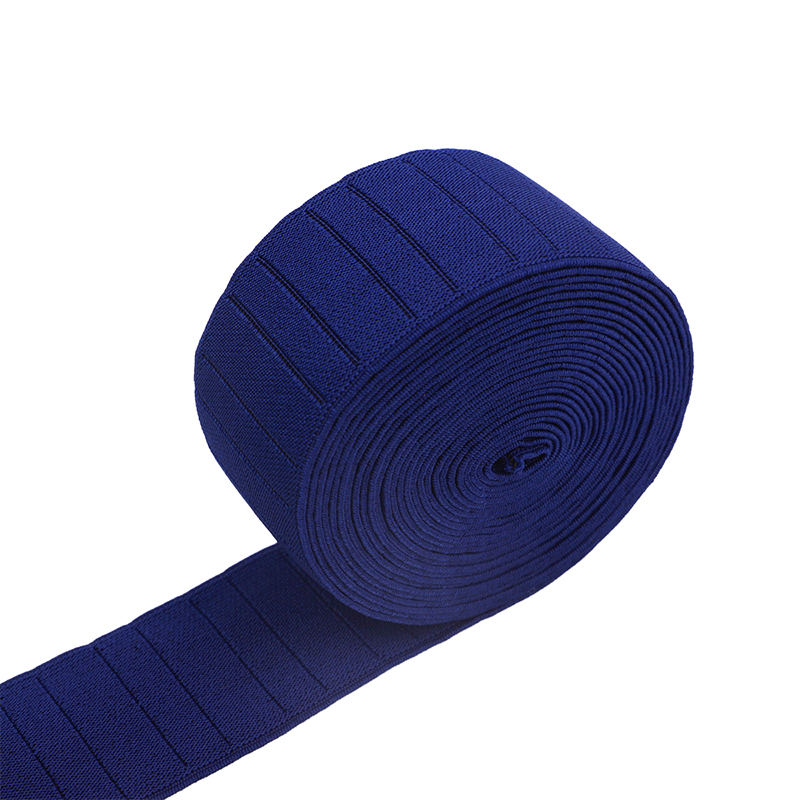
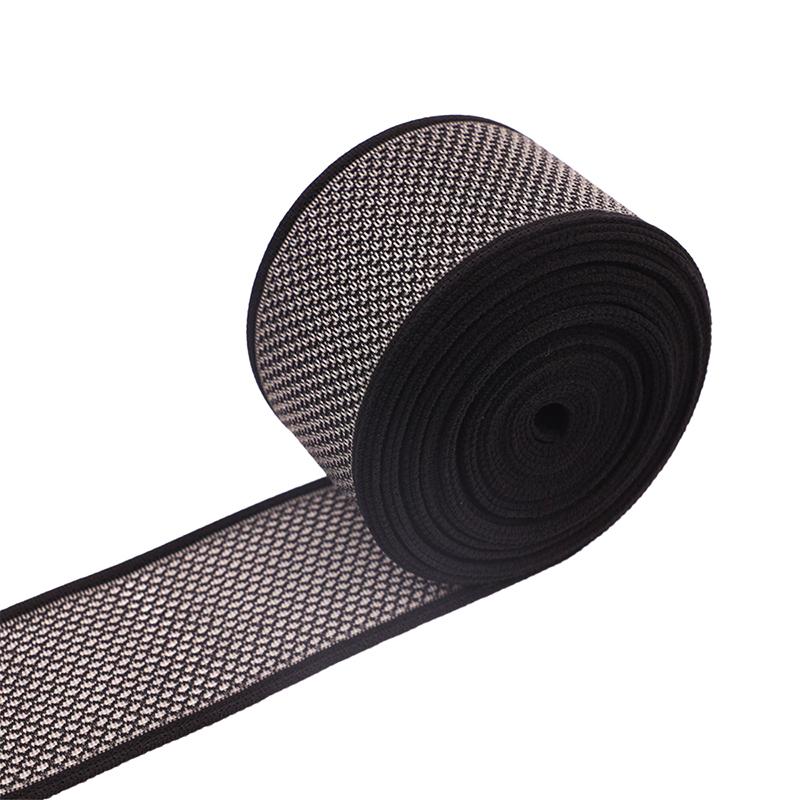
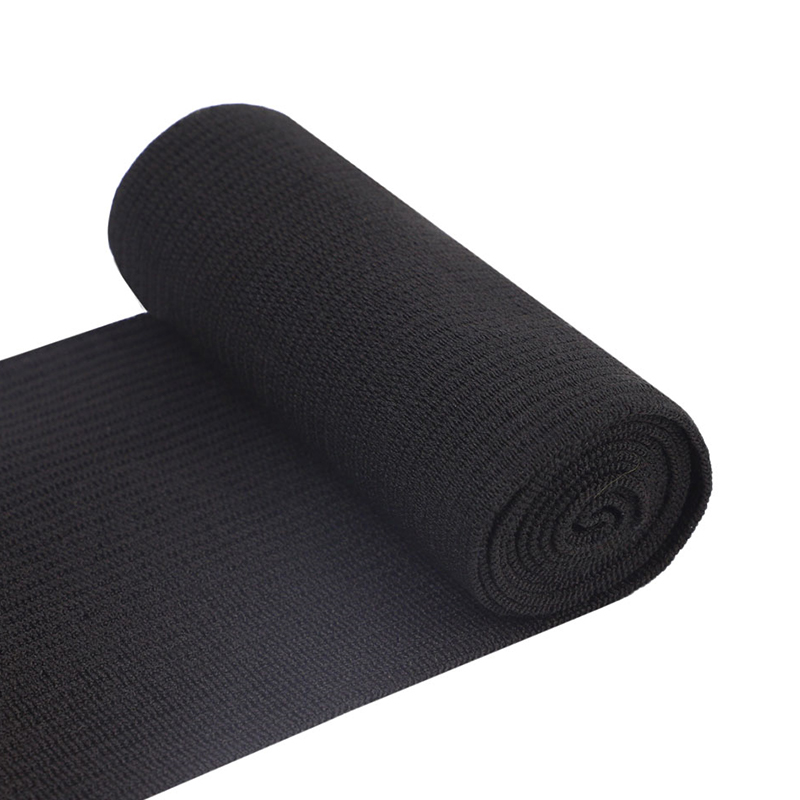
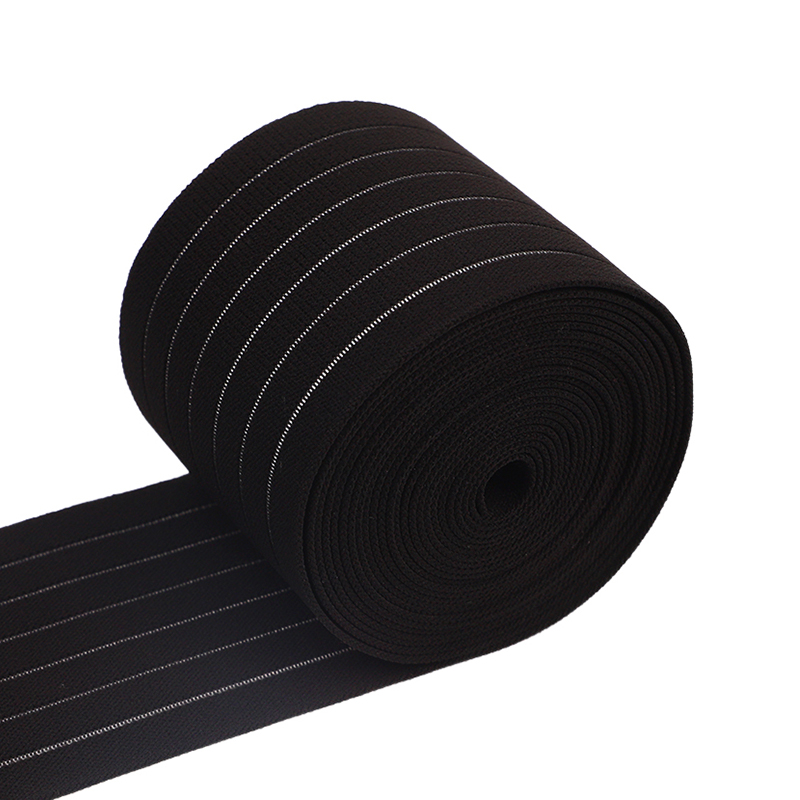
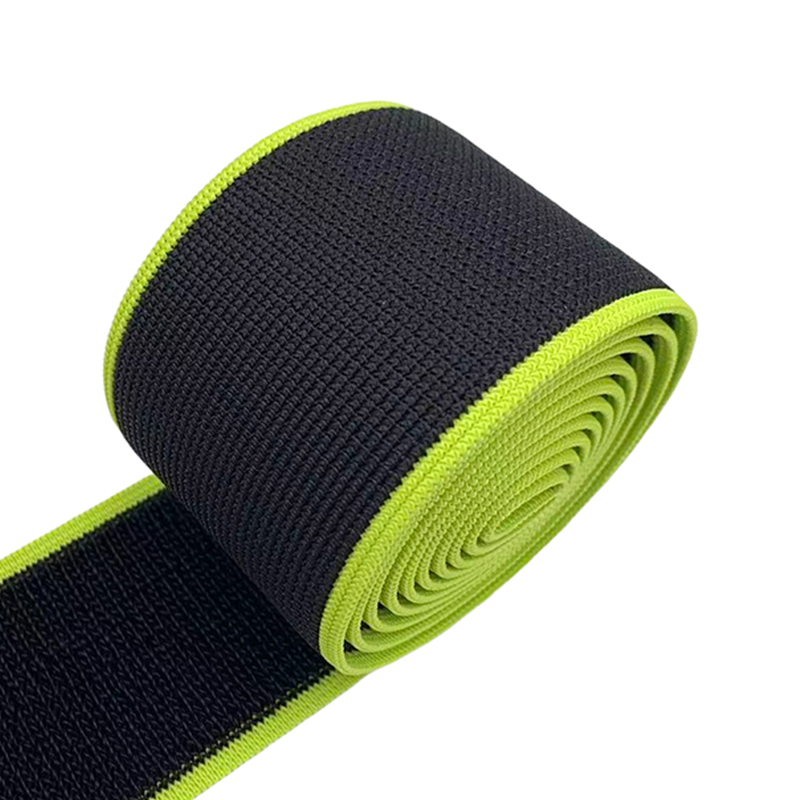
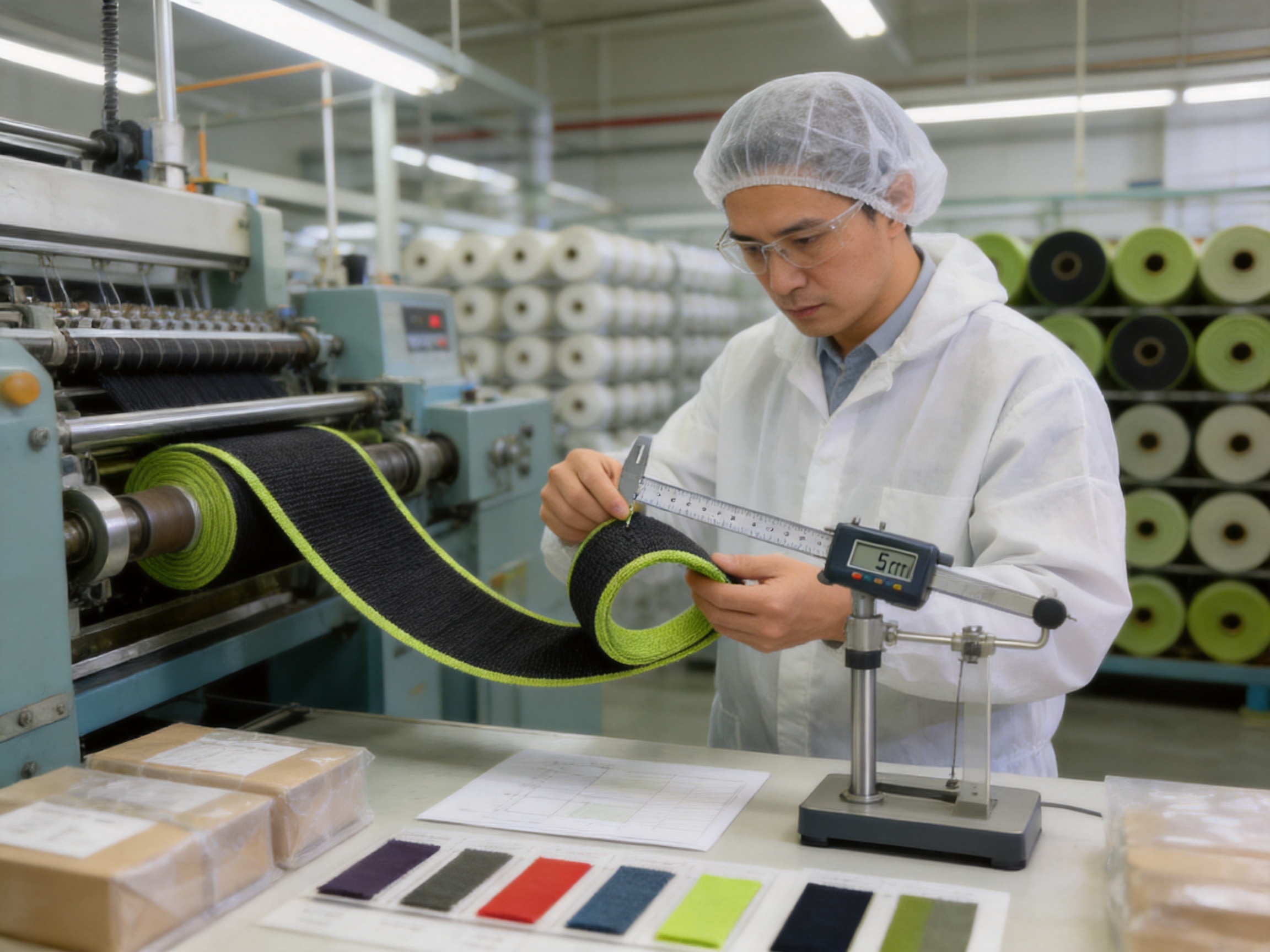
The 5cm Black and Green Elastic Loop is a practical, adaptable webbing component designed for projects that require controlled stretch, dependable holding power, and convenient adjustment. With a compact width of 5cm, a black base, and vibrant green accents, this elastic loop combines functional performance with a modern sporty appearance. It can be used in garments, sports supports, orthopedic braces, protective equipment, accessories, and a wide range of custom fastening or bundling applications.
Unlike ordinary rigid straps, an elastic loop can accommodate movement while maintaining contact with the surrounding material. This makes it particularly useful where a product must remain secure without feeling excessively restrictive. The loop structure also supports easy attachment, wrapping, adjustment, and repeated handling. When integrated with a compatible hook fastening surface or another fastening component, it can help users achieve a flexible and reliable closure system.
The product is manufactured by Jinhu Hengxiang Webbing Co., Ltd., a professional Chinese webbing manufacturer with more than 20 years of production experience. The company specializes in elastic webbing and non-elastic webbing for sports protection, medical protective equipment, orthopedic braces, and related applications. Its production capabilities, quality-control procedures, material selection, and customization services provide important advantages for buyers seeking stable supply and consistent product performance.
5cm Black And Green Elastic Loop
Product Overview
The 5cm Black and Green Elastic Loop is a wide elastic fastening component with a nominal width of 5cm. Its black-and-green color combination offers a clear visual distinction from plain black elastic products and is well suited to sportswear, protective products, rehabilitation equipment, and fashion-oriented accessories. The dark background presents a professional appearance, while the green detail adds visibility and visual energy.
The product is constructed from elastic webbing designed to stretch under tension and return toward its original dimensions after the load is released. This stretch-and-recovery behavior allows the loop to follow moderate body movement and product deformation. In applications such as braces or support products, that flexibility can help maintain a secure fit while allowing the wearer to move more naturally.
Its 5cm width provides a useful balance between coverage and flexibility. Narrow elastic bands are suitable for small straps and delicate edging, but they may concentrate pressure or twist more easily when used in wider support applications. Very wide bands can provide greater coverage, but may be less convenient to route through compact products. A 5cm elastic loop offers a versatile intermediate format for many apparel, medical, sports, and accessory designs.
The loop format is also important. Instead of functioning only as a flat length of elastic tape, the product can be incorporated into a fastening or attachment system. It may be sewn into a garment, secured around a support structure, paired with a hook-and-loop closure, or used to hold and organize flexible components. The exact installation method depends on the product design, expected loading, and required durability.
Key Product Advantages
Controlled Elasticity and Recovery
A major advantage of the elastic loop is its ability to stretch when tension is applied and recover when the tension is reduced. This characteristic is valuable in products that must accommodate changing dimensions, repeated movement, or differences between users. The loop can provide a more forgiving fit than a rigid webbing strap while still contributing to secure positioning.
For sports supports and orthopedic braces, controlled elasticity can help the product remain close to the body during activity. For garments, it can improve comfort around areas that expand or contract during movement. For accessory projects, it can hold objects together without requiring a perfectly fixed dimension. Good elastic recovery also helps reduce excessive looseness after repeated use.
Useful 5cm Width
The 5cm width is broad enough to provide a stable contact area but compact enough for practical integration into many products. Wider contact can distribute tension across a larger area and may reduce the tendency of the webbing to cut into soft materials. It can also provide a more substantial visual appearance in sportswear, support equipment, and bags.
Compared with very narrow elastic, a 5cm loop may be easier to handle during sewing, assembly, and adjustment. It gives designers sufficient surface area for stitching and can make the fastening structure easier for the end user to grip. Compared with extremely wide elastic, it generally requires less space and can be routed through smaller panels or housings.
Distinctive Black and Green Appearance
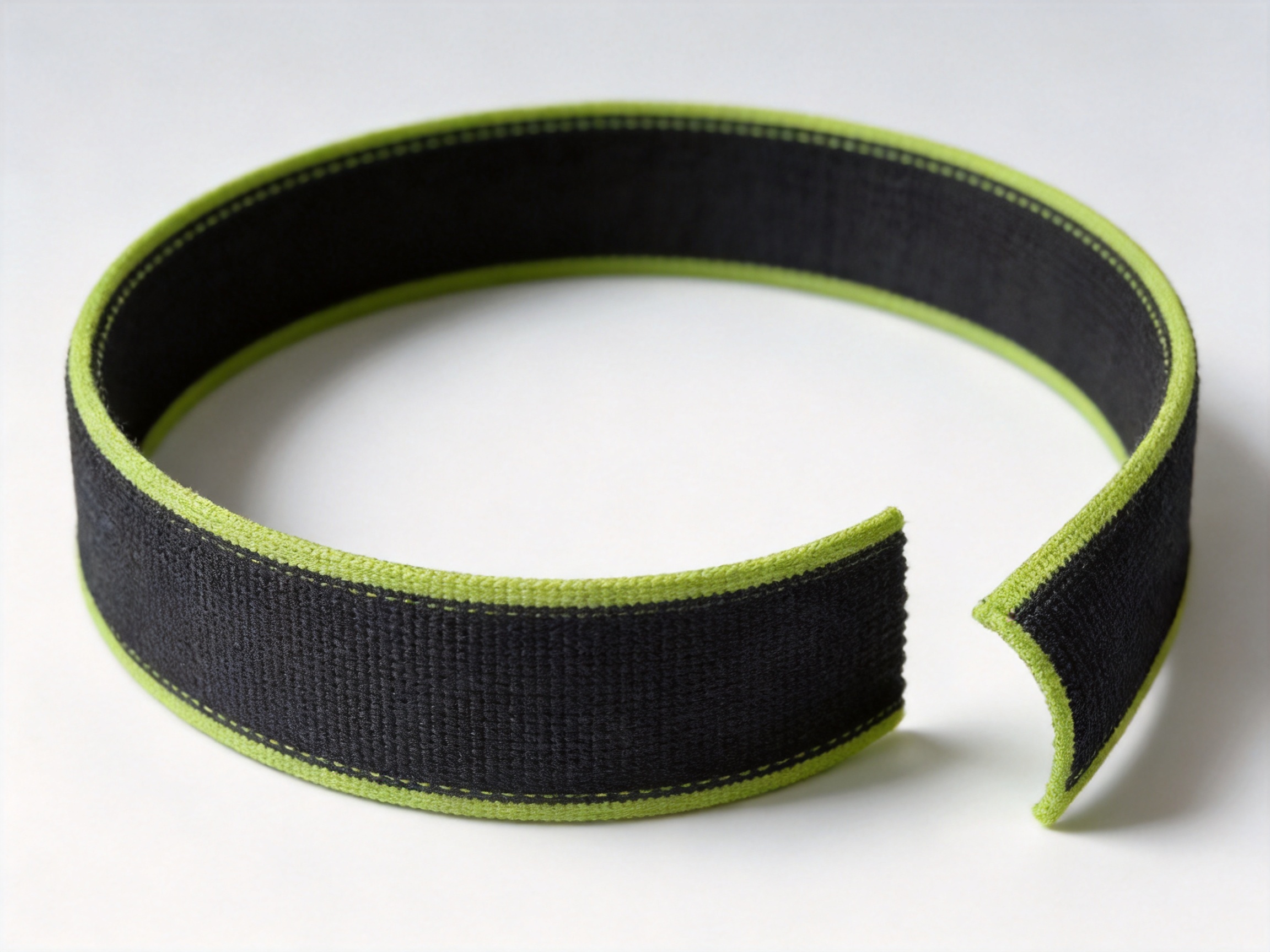
Color is an important design factor in consumer products. The black-and-green combination communicates strength, activity, and modern styling. Black can coordinate with a wide range of fabrics and synthetic materials, while the green accent can identify an adjustment area, add contrast, or support a specific product color scheme.
The visual design may be especially suitable for sports supports, gym accessories, outdoor products, protective equipment, and youth-oriented garments. It can also be customized for buyers who require a different color arrangement or a private-label appearance. Color selection should be discussed with the manufacturer because final results can depend on yarn type, dyeing conditions, production batch, and requested color standard.
Convenient Attachment and Adjustment
The elastic loop format supports convenient attachment, adjustment, and bundling. It can be sewn into a panel, passed around a component, or used as part of a hook-and-loop fastening system. Its flexibility allows it to conform to curved surfaces and irregular shapes more readily than rigid tape.
In a wearable product, the loop can help create an adjustable closure. In an accessory, it may secure a flap or hold a component in place. In packaging or organization products, it can provide a reusable method for gathering cables, fabric items, or lightweight equipment. The loop can therefore serve both functional and decorative purposes across different product categories.
Balanced Strength and Flexibility
Elastic webbing must balance several performance requirements. If it is too soft, it may not provide adequate support or may lose its shape quickly. If it is too rigid, it may be uncomfortable or difficult to adjust. The 5cm Black and Green Elastic Loop is intended to offer flexible performance while maintaining sufficient strength for secure holding and repeated use.
Its suitability for a specific application depends on factors such as fiber composition, elastic yarn, construction, thickness, applied tension, stitch pattern, environmental exposure, and expected service life. Buyers should provide technical requirements to the manufacturer so that the construction can be selected or customized for the intended use.
Applications in Sports and Protective Equipment
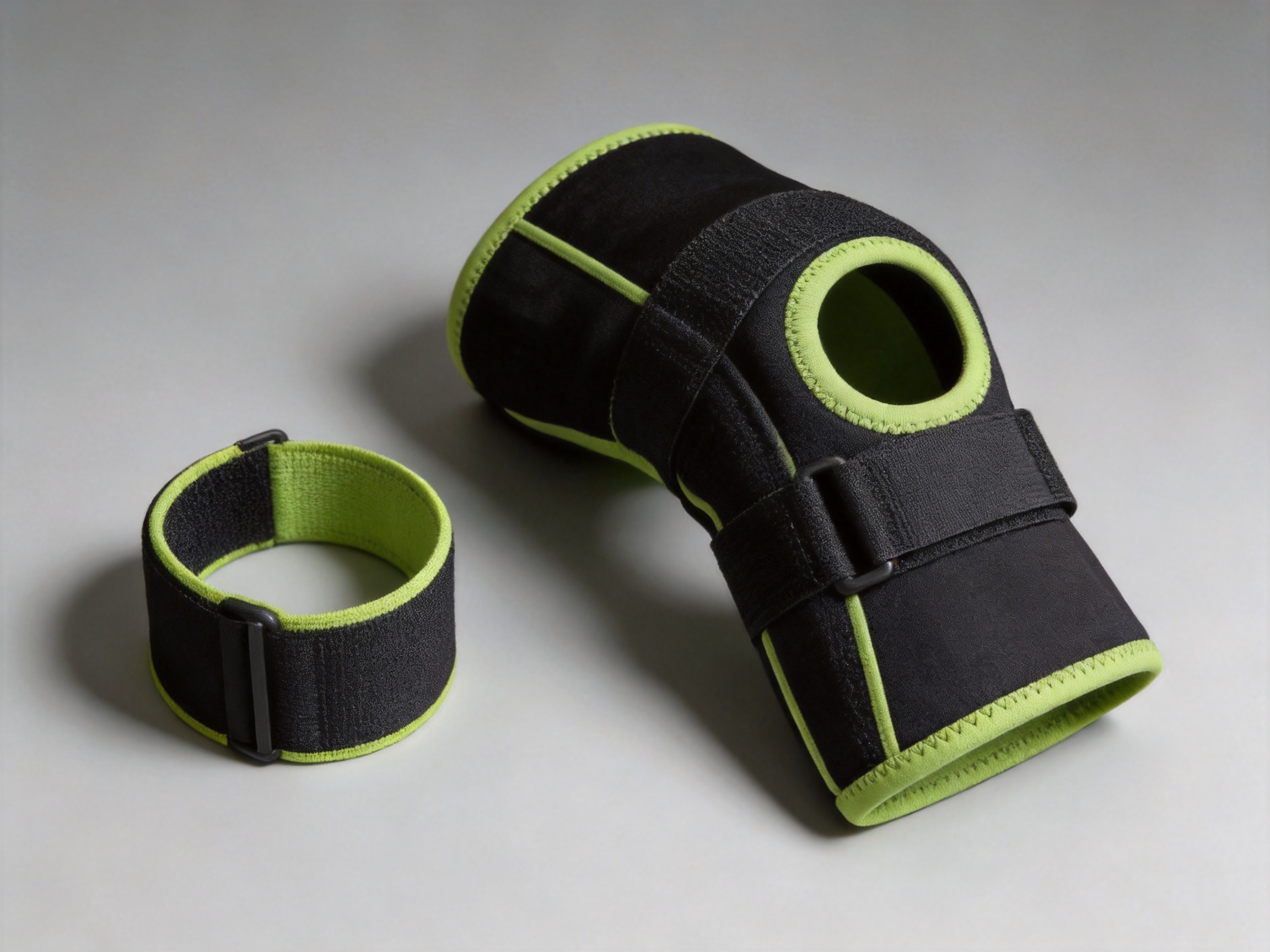
Sports protection products require materials that can move with the user while helping maintain stable positioning. Elastic loops are commonly considered for knee supports, elbow supports, wrist supports, ankle products, shoulder supports, waist supports, and other protective designs. The 5cm width can provide a broad holding area for moderate-support applications and can be combined with foam, neoprene, woven fabric, molded components, or other elastic panels.
In a sports brace, the loop may be positioned around a limb or connected to a larger support panel. It can help maintain compression or prevent the product from shifting during walking, training, stretching, or recreational activity. Designers should control the amount of tension carefully because excessive compression may reduce comfort, while insufficient tension may produce an unstable fit.
The black-and-green appearance is suitable for products positioned as active, athletic, or performance-oriented. The contrast can also make adjustment points easier to identify. If multiple straps are used in one product, color accents may help communicate the order of operation or distinguish one closure from another.
For protective equipment, the elastic loop can be incorporated into guards, support sleeves, stabilizing bands, and equipment retention systems. It may be used as a secondary securing component alongside a rigid shell or padded structure. The final product should be tested under realistic conditions, including repeated stretching, sweat exposure, washing, abrasion, and movement.
Applications in Medical and Orthopedic Products
Medical and orthopedic products often require reliable materials with repeatable performance. Elastic webbing may be used in abdominal supports, orthopedic braces, rehabilitation products, compression-related accessories, and protective medical equipment. The 5cm loop can contribute to adjustability and patient comfort when properly designed into the complete product.
For an abdominal support or orthopedic brace, a loop fastening system can allow the user or healthcare professional to adjust the fit according to body shape and support requirements. Elasticity may help the support remain in contact with the body during normal movement. The loop should be integrated with appropriate fabric, stitching, closure hardware, and edge treatment to prevent irritation and premature failure.
The product should not be treated as a medical device by itself. Its suitability for a medical application depends on the complete finished product, applicable regulations, risk assessment, labeling, testing, and clinical or performance requirements. Buyers developing regulated products should communicate their intended use and compliance needs before placing an order.
Jinhu Hengxiang Webbing Co., Ltd. has experience producing webbing for sports supports and orthopedic braces. The company reports ISO 13485 certification and Oeko-Tex Standard 100 certification. These certifications are relevant indicators of structured quality management and textile-related safety control, although buyers should confirm the current certificate scope, validity, and applicability to the specific product before relying on them for a project.
Applications in Garments and Accessories
The elastic loop can be sewn into clothing, performance apparel, bags, footwear accessories, protective covers, and other textile products. It may serve as a closure, adjustment strap, retention loop, decorative detail, or internal support element. Its moderate width gives designers sufficient space for stitching while retaining a flexible profile.
In garments, the loop can be used around cuffs, waist areas, shoulder components, or removable panels. In bags and accessories, it may secure a flap, compress a pocket, organize a bundled item, or provide a visible contrast detail. The black-and-green color combination can support technical, outdoor, tactical-inspired, or athletic product designs.
When sewing elastic webbing, the stitch structure should be selected according to the direction of loading. A simple straight stitch may be suitable for some low-load applications, while box-X stitching, bar tacks, zigzag stitching, or reinforced seam construction may be more appropriate for higher tension. The stitching must avoid unnecessarily restricting the elastic section unless the design intentionally requires a fixed end.
Manufacturers should also consider how the elastic loop interacts with adjacent fabric. Rough edges, sharp hardware, poorly finished seams, or excessive friction can damage the webbing over time. A complete assembly test is therefore more meaningful than evaluating the webbing in isolation.
Applications in Bundling and General Organization
Because the product is flexible and loop-shaped, it may also be used for lightweight bundling and organization. It can gather fabric components, hold small accessories together, organize flexible cables, or maintain the position of parts during storage and transport. Compared with disposable ties, a reusable elastic loop can be more convenient for items that must be opened and closed regularly.
For these uses, buyers should evaluate the loop size, stretch range, recovery, surface friction, and resistance to abrasion. The expected bundle diameter should be compared with the available elastic range. If the loop is stretched excessively or kept under constant high tension, its service life may be reduced. Proper sizing and application design help preserve performance.
The product is most appropriate for applications where moderate holding force is required. It should not automatically be used for lifting, fall protection, load restraint, or any safety-critical application unless the complete product has been specifically engineered and tested for that purpose.
Manufacturing Experience and Production Capability
Jinhu Hengxiang Webbing Co., Ltd. was established in 2005 and is located in Jinhu County, Huai’an City, Jiangsu Province, China. The company focuses on the research, development, production, sale, and service of elastic and non-elastic webbing. Its product focus includes materials for sports protection, medical protective equipment, orthopedic braces, garments, and related industrial applications.
More than two decades of production experience can support practical problem solving across the manufacturing process. Webbing performance depends on many connected variables, including yarn selection, warping, machine settings, knitting or weaving parameters, tension control, finishing, inspection, packing, and storage. An experienced manufacturer is better positioned to identify how these variables influence stretch, recovery, width, appearance, and dimensional stability.
The company has introduced and updated production equipment including warping machines, knitting machines, woven machines, and packaging machines. These equipment categories correspond to important stages of webbing production. Warping equipment prepares yarns in an organized and controlled arrangement. Knitting and weaving machines create the required structure. Packaging equipment supports consistent handling and shipment preparation.
The company reports monthly production of millions of meters of elastic and non-elastic webbing. This production scale can benefit customers who require regular supply, repeat orders, or support for larger product programs. Capacity alone does not guarantee performance, so buyers should still request samples, specifications, inspection records, and production schedules appropriate to their project.
Material and Construction Control
The performance of an elastic loop begins with the selection and preparation of its raw materials. Elastic yarn, covering yarn, colored yarn, and structural yarns all influence the finished result. The appropriate combination depends on the desired stretch, recovery, hand feel, surface appearance, width, thickness, and application environment.
For the 5cm Black and Green Elastic Loop, color and construction must be coordinated so that the finished webbing presents a consistent visual pattern. Uneven tension during weaving or knitting can affect stripe alignment, width, edge quality, and surface regularity. Production controls are therefore important for maintaining a stable appearance across a roll or shipment.
Elastic materials can also be affected by heat, humidity, chemicals, ultraviolet exposure, washing, and mechanical abrasion. The manufacturer and buyer should discuss the expected conditions before finalizing the specification. A product intended for indoor garment use may require a different construction from one intended for outdoor sports equipment or repeated medical laundering.
In a customized order, technical discussions may include nominal width, thickness, stretch percentage, recovery requirement, load at a specified elongation, color reference, surface texture, edge construction, roll length, packaging, and labeling. Clear specifications reduce misunderstandings and improve consistency between samples and mass production.
Quality-Control Approach
Quality control should extend from material sourcing through production, testing, and packing. At the incoming-material stage, yarns and other components may be checked for color, count, condition, and documentation. During production, operators and quality personnel can monitor width, appearance, tension, construction, and visible defects.
Finished elastic webbing may be evaluated for dimensions, stretch, recovery, appearance, and physical performance. Depending on the application, buyers may also request tests for colorfastness, abrasion resistance, washing stability, chemical resistance, or other relevant characteristics. The exact test methods should be agreed upon in advance because results can vary according to specimen preparation and testing conditions.
For medical or protective applications, traceability and documentation are particularly important. Lot identification, inspection records, production references, and retained samples can help customers investigate any issue that occurs after delivery. A controlled packing process also helps prevent contamination, damage, moisture exposure, and incorrect product identification during shipment.
Jinhu Hengxiang Webbing Co., Ltd. describes strict quality control throughout material sourcing, processing, testing, and packing. This full-process approach is an advantage over suppliers that focus only on final visual inspection. Prevention during production is generally more effective than relying exclusively on sorting after the webbing has been completed.
Certifications and Compliance Considerations
The company has obtained Oeko-Tex Standard 100 and ISO 13485 certificates. Oeko-Tex Standard 100 is associated with testing textile products for certain harmful substances under the applicable certification framework. ISO 13485 is a quality management standard associated with organizations involved in medical-device-related products and services.
Certifications can improve buyer confidence, but they should be reviewed carefully. The certificate issuer, certificate number, validity period, product scope, facility scope, and applicable clauses should be checked. A certification held by a manufacturer does not automatically mean that every product is suitable for every regulated application.
Customers should identify their own compliance requirements, especially when the elastic loop will be incorporated into a medical device, personal protective product, children’s product, or export item subject to specific market rules. Hengxiang can discuss available documentation and production controls, while the finished-product manufacturer remains responsible for confirming the compliance of the complete product.
Advantages Over Generic Competitive Webbing
Application-Focused Experience
One advantage of sourcing from a manufacturer focused on sports supports and orthopedic braces is the company’s familiarity with applications where stretch, comfort, recovery, and repeated adjustment matter. Generic elastic suppliers may offer a broad range of tapes, but may not have the same focus on support products or medical protective equipment.
Application-focused experience can help during development. A buyer may receive guidance on width, construction, stitching, tension, and material selection instead of purchasing a standard roll without technical discussion. This is especially useful when the loop will become part of a new brace, support, or protective product.
Customization Capability
Hengxiang offers customized webbing with tailored elasticity, texture, and color. This can provide an advantage over suppliers that sell only fixed stock specifications. Customization may allow a buyer to match a brand color, adjust the hand feel, modify the stretch level, or develop a width and structure better suited to the finished product.
Customization should be managed through a documented development process. Buyers should approve a representative sample, confirm the target specification, and define acceptable tolerances before mass production. If the product will be sewn into a high-volume article, pilot assembly and repeated-use testing are recommended.
Production Scale and Supply Support
A reported capacity of millions of meters per month can be valuable for customers that need regular production. Stable capacity may reduce the risk of long interruptions between sample approval and bulk delivery. It may also support multiple product lines requiring different colors, widths, or elastic constructions.
Supply capability should be evaluated together with lead time, minimum order quantity, raw-material planning, packaging, export experience, and communication. Hengxiang’s products are sold in China and exported to North America, Eastern Europe, the Middle East, South Asia, and other regions, indicating experience with international customer requirements and shipment coordination.
Integrated Equipment Resources
The availability of warping, knitting, weaving, and packaging equipment within the company’s production system can simplify coordination. An integrated manufacturing environment may provide better control over construction changes, production planning, and quality feedback than a heavily outsourced supply chain.
Integrated equipment does not eliminate the need for inspection, but it can make it easier to trace problems back to a production stage. If a customer identifies a concern involving width, color, edge formation, or elasticity, the manufacturer can review relevant process conditions and adjust future production more efficiently.
OEM and ODM Support
OEM and ODM services are useful for buyers developing private-label products or complete support systems. The elastic loop can be supplied as a component for a customer-designed product, or it can be developed as part of a broader webbing solution. Cooperation may cover color matching, construction development, packaging, labeling, and production planning.
Clear communication is essential for successful OEM and ODM work. The buyer should provide drawings, samples, intended use, estimated annual volume, performance targets, regulatory expectations, and shipping requirements. The manufacturer can then evaluate feasibility and propose a suitable construction.
Technical Specification Planning
Before ordering the 5cm Black and Green Elastic Loop, buyers should prepare a technical specification that describes the intended application. The specification should identify whether the loop will be used in a garment, sports support, orthopedic brace, accessory, bundling product, or another item. It should also state whether the webbing will contact skin and whether it will be washed or sterilized.
Important parameters may include nominal width, thickness, relaxed length, stretch range, recovery after extension, force at a specified elongation, color, pattern, edge finish, roll length, and packaging method. If the product will be sewn, the specification may also include seam requirements and acceptable stitching methods.
Testing should reflect actual use. For example, a sports support may require repeated extension cycles, sweat exposure, washing, and abrasion testing. A garment may require colorfastness and laundering tests. A medical support may require more extensive validation of fit, compression, material safety, and cleaning procedures. Laboratory testing and finished-product testing should be planned together.
| Evaluation Area | Why It Matters | Recommended Buyer Action |
|---|---|---|
| Width and thickness | Influence coverage, sewing space, comfort, and product appearance. | Measure samples at multiple points and define acceptable tolerances. |
| Stretch and recovery | Determine fit, holding performance, and resistance to permanent deformation. | Specify testing length, extension percentage, load, and recovery time. |
| Color and pattern | Support product identity, contrast, and visual consistency. | Approve a physical sample or recognized color reference. |
| Edge quality | Affects comfort, fraying resistance, and sewing performance. | Inspect edges and test the webbing in the intended assembly. |
| Seam behavior | Influences the strength of the finished product. | Conduct pull and repeated-use tests on sewn samples. |
| Environmental resistance | Shows whether performance remains stable during washing, sweat, heat, or abrasion. | Test under conditions that represent actual use. |
| Documentation | Supports traceability, quality review, and compliance management. | Request specifications, inspection records, and applicable certificates. |
Design and Sewing Recommendations
The elastic loop should be installed so that its stretch direction matches the intended direction of movement or tension. Incorrect orientation can reduce adjustment range or create twisting. Designers should also avoid sharp folds and unnecessary contact with rough hardware that could abrade the surface.
Stitching should be positioned to distribute force across the webbing. Concentrating all tension at a small, poorly reinforced stitch point may cause tearing or yarn damage. Box-X patterns, bar tacks, multiple rows of stitching, or other reinforcement methods can be considered according to the expected load and product construction.
When the loop is used against the body, the surrounding fabric and seam allowances should be evaluated for comfort. The webbing itself may be flexible, but exposed seams, hard edges, or excessive tension can still create discomfort. Prototype testing with representative users can help identify problems that are not visible during bench inspection.
If the webbing is paired with hook-and-loop material, the hook and loop surfaces should be aligned correctly and sized to carry the expected load. The elastic component should not be stretched beyond the closure’s effective engagement range. Repeated opening and closing may create lint or surface wear, so the entire fastening assembly should be evaluated rather than the elastic loop alone.
Purchasing and Quality Assurance Process
A reliable purchasing process normally begins with an inquiry that includes product name, width, color, application, estimated quantity, required delivery date, and desired sample length. Buyers should state whether the product is intended for medical, sports, garment, or general accessory use. This information helps the manufacturer recommend an appropriate construction.
After initial communication, the buyer should request a sample for physical evaluation. The sample should be inspected for color, width, thickness, stretch, recovery, surface feel, edge quality, and compatibility with the intended sewing process. It is advisable to test the material in a prototype instead of judging it only as a loose roll of webbing.
Once the sample is approved, the specifications should be documented in a purchase order or technical agreement. The agreement may include tolerances, packaging, labeling, inspection standards, sample approval references, and treatment of nonconforming products. Keeping an approved sample or sealed reference is useful for comparison during future orders.
For repeat purchases, customers should monitor batch-to-batch consistency. Small changes in yarn, machine settings, finishing, or dyeing can affect the feel and performance of elastic webbing. A manufacturer with controlled records and traceability can respond more effectively when a variation is identified.
Packaging, Storage, and Handling
Elastic webbing should be packed to protect it from dust, moisture, crushing, and excessive heat. Rolls or folded packages should be identified clearly with product code, color, width, lot number, quantity, and production information when required. Good packaging reduces the risk of mixing different specifications during transport or warehouse handling.
Storage should normally take place in a clean, dry, and well-ventilated area away from direct sunlight, strong heat sources, oils, solvents, and chemicals that may affect elastic materials. The webbing should not be compressed unnecessarily for long periods. Customers should follow any storage instructions provided with the specific product.
During handling, workers should avoid dragging the webbing across rough floors or sharp edges. If rolls are opened for inspection, they should be rewound or protected properly to prevent tangling and contamination. A first-in, first-out inventory system can help minimize extended storage time.
Sustainability and Responsible Production
Webbing production involves yarns, dyes, energy, water, packaging, and transportation. Responsible production therefore requires attention to material efficiency, process control, waste reduction, durable performance, and appropriate packaging. A durable elastic loop can contribute to longer product life, reducing the need for frequent replacement.
Hengxiang states that it is committed to quality, innovation, and sustainability. Buyers seeking a lower-impact supply chain should request specific information about material composition, production waste, packaging materials, energy management, chemical control, and available environmental documentation. Sustainability claims are most useful when supported by measurable procedures and records.
Product durability is also a sustainability factor. If an elastic loop maintains its function through repeated adjustment and normal use, the finished product may remain serviceable for longer. However, durability must be verified through application-specific testing, because performance depends on construction, load, laundering, environmental exposure, and assembly methods.
Why Choose This Elastic Loop for Custom Projects?
The 5cm Black and Green Elastic Loop is a strong candidate for buyers who need more than a generic narrow elastic tape. Its width provides useful support and handling characteristics, while its loop structure supports attachment and adjustment. The distinctive color combination can add visual identity to a finished product without requiring a separate printed label or decorative treatment.
The product is particularly suitable for customers who value flexibility, custom development, and supply continuity. Its manufacturer can discuss tailored elasticity, texture, and color, allowing the material to be adapted to project requirements. This is important for OEM and ODM customers whose products must meet specific fit, appearance, and performance targets.
Hengxiang’s experience in elastic and non-elastic webbing, investment in production equipment, reported international sales, and certifications related to textile safety and medical quality management provide a solid foundation for cooperation. Buyers should still conduct their own product validation, but the available manufacturing background can reduce development risk and improve communication during commercialization.
Recommended Development Workflow
Stage One: Define the Application
Start by describing the complete product and the role of the elastic loop within it. Identify the expected user, movement, load, contact area, closure method, washing conditions, and service life. This prevents the material from being selected solely on color or width without considering actual performance.
Stage Two: Confirm the Initial Specification
Use the 5cm black-and-green construction as the starting point, then confirm the required stretch, recovery, thickness, edge finish, and roll format. If the standard construction does not meet the target, discuss custom elasticity, texture, or color with the manufacturer.
Stage Three: Evaluate Samples
Test the sample by hand and in a sewn prototype. Measure its width and thickness, observe its recovery after extension, evaluate stitching, and inspect the appearance after simulated use. Where relevant, conduct washing, abrasion, sweat, heat, or chemical exposure tests.
Stage Four: Approve the Finished Assembly
Do not approve the webbing separately from the product when the application is performance-sensitive. Evaluate the complete brace, garment, accessory, or protective product. Confirm that the loop works correctly with the selected hook material, buckle, seam, panel, or hardware.
Stage Five: Establish Mass-Production Controls
Document the approved sample, tolerances, inspection methods, packaging, and lot identification. Agree on how changes will be communicated and how nonconforming goods will be handled. This process supports consistent quality during repeat production.
Frequently Asked Questions
What is the width of the elastic loop?
The nominal width is 5cm. Buyers should confirm the permitted width tolerance and measurement method with the manufacturer, particularly when the product will be sewn into a precision-cut panel or used with matching fastening hardware.
What colors does the product have?
The product is described as black and green. The black-and-green appearance is suitable for sporty, technical, outdoor, protective, and fashion-oriented designs. A physical sample or agreed color reference should be approved for production.
Can this product be used with hook-and-loop closures?
Yes, the elastic loop can be incorporated into a hook-and-loop fastening system when the construction is properly designed. The hook material, engagement area, stitching, applied tension, and repeated opening cycles should all be evaluated together.
Is the elastic loop suitable for medical products?
It may be considered for medical protective equipment, orthopedic braces, abdominal supports, and related products, subject to complete-product testing and applicable regulatory requirements. The elastic loop alone should not be regarded as a finished medical device. Buyers should confirm certification scope and validate the final product.
Can the elasticity be customized?
The manufacturer offers customized webbing with tailored elasticity, texture, and color. Buyers should provide application details and performance targets so that a suitable construction can be developed and tested.
Can the product be used in sports supports?
Yes. Its elastic construction and 5cm width make it suitable for consideration in many sports support and protective equipment designs. The final tension, seam construction, and support level must be selected according to the intended body area and activity.
How should the elastic loop be sewn?
The sewing method depends on the expected load and product design. Reinforced stitching, such as box-X patterns or bar tacks, may be considered for higher-tension points. A prototype should be tested to confirm that the seam does not damage the webbing or restrict its intended stretch.
What information should be included in an inquiry?
An inquiry should include the required width, color, quantity, application, stretch target, recovery requirement, packaging preference, delivery location, and delivery schedule. If the webbing will be used in a regulated or skin-contact product, those requirements should also be stated.
Does the manufacturer support OEM and ODM orders?
Yes. OEM and ODM orders are welcome. The manufacturer can work with customers on customized webbing, including elasticity, texture, color, and other production details. Technical drawings, samples, and clear performance requirements can improve development efficiency.
What certifications are associated with the manufacturer?
The company reports Oeko-Tex Standard 100 and ISO 13485 certificates. Buyers should request current documentation and verify the scope and validity of each certificate for their particular application.
Where is the manufacturer located?
Jinhu Hengxiang Webbing Co., Ltd. is located in Gongnong Village, Licheng Town, Jinhu County, Huai’an City, Jiangsu Province, China. The company serves customers in China and international markets.
How can buyers request more information?
Buyers can contact the manufacturer to discuss samples, specifications, customization, quantities, quality requirements, and delivery arrangements. The listed telephone number is 0086-15895705812, and the listed email address is john@mixshowint.com.
Conclusion
The 5cm Black and Green Elastic Loop is a versatile webbing component for products that require stretch, recovery, secure holding, and convenient adjustment. Its 5cm width offers useful coverage and handling, while its black-and-green design adds a distinctive sporty appearance. The loop format supports integration into garments, sports supports, orthopedic braces, protective equipment, accessories, and lightweight bundling systems.
Its strongest advantages are realized when the material is matched carefully to the finished product. Buyers should evaluate stretch, recovery, stitching, color, abrasion, washing, environmental exposure, and fastening compatibility through representative samples and complete-product testing. Proper specification and installation are essential for achieving dependable service life.
With experience dating from 2005, updated warping, knitting, weaving, and packaging equipment, large monthly production capacity, international market experience, OEM and ODM support, and reported Oeko-Tex Standard 100 and ISO 13485 certifications, Jinhu Hengxiang Webbing Co., Ltd. provides a capable manufacturing source for customized elastic and non-elastic webbing. For customers seeking a practical and visually distinctive elastic loop, this product offers a balanced starting point for development and long-term supply.
References
1. Jinhu Hengxiang Webbing Co., Ltd. Product information for the 5cm Black and Green Elastic Loop, product code 8109.
2. Jinhu Hengxiang Webbing Co., Ltd. Company profile and manufacturing capability information.
3. ISO 13485, Medical Devices Quality Management Systems—Requirements for Regulatory Purposes.
4. Oeko-Tex Standard 100, Standard and Methodology for Testing Textiles for Harmful Substances.
5. Textile Institute, Textile Terms and Definitions.
6. ASTM International, Standard Practices and Test Methods for Textile Webbing, Elastic Materials, and Related Products.
7. International Organization for Standardization, Guidance on Quality Management, Product Validation, and Process Control.