
 en
en
 English
 русский
 Français
 Español
 Português
 Tiếng Việt
Content
- 1 Product Overview
- 2 Why a 7 cm Width Matters
- 3 Woven Construction and Performance
- 4 Key Product Advantages
- 5 Applications in Medical and Orthopedic Products
- 6 Applications in Sports and Activewear
- 7 Applications in Shapewear and Apparel
- 8 Advantages Compared with Narrow or Less Structured Elastic
- 9 Manufacturing Expertise and Production Capabilities
- 10 Quality Control from Material Sourcing to Packing
- 11 Certifications and Responsible Supply
- 12 Customization for Different Product Requirements
- 13 Design and Sewing Considerations
- 14 Storage, Handling, and Care
- 15 Why Work with an Experienced Webbing Manufacturer?
- 16 Recommended Customer Evaluation Process
- 17 Frequently Asked Questions
- 17.1 What is a 7 cm woven elastic panel?
- 17.2 What makes the dark grey color practical?
- 17.3 Is the panel suitable for abdominal binders?
- 17.4 Can it be used in orthopedic braces?
- 17.5 How does it compare with narrow elastic?
- 17.6 Can the elasticity be customized?
- 17.7 Can the color or texture be customized?
- 17.8 Is the product suitable for direct skin contact?
- 17.9 What certifications are associated with the manufacturer?
- 17.10 What production equipment does the manufacturer use?
- 17.11 Can the panel be ordered for OEM or ODM projects?
- 17.12 How should buyers test the panel?
- 17.13 What information should be included in an inquiry?
- 18 Conclusion
- 19 References
- 20 Product: 7cm Dark Grey Woven Elastic Panels
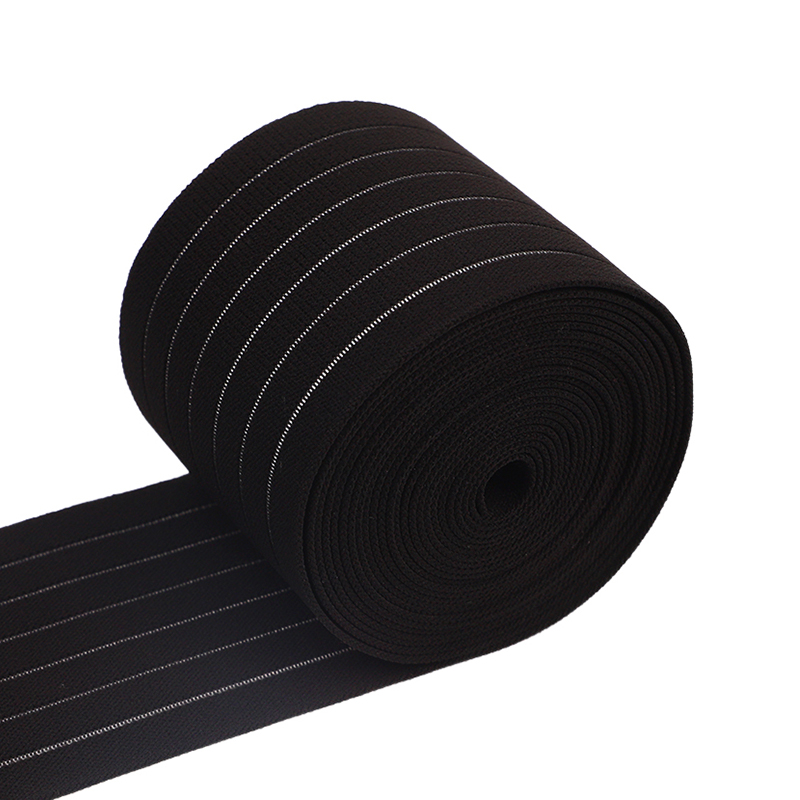
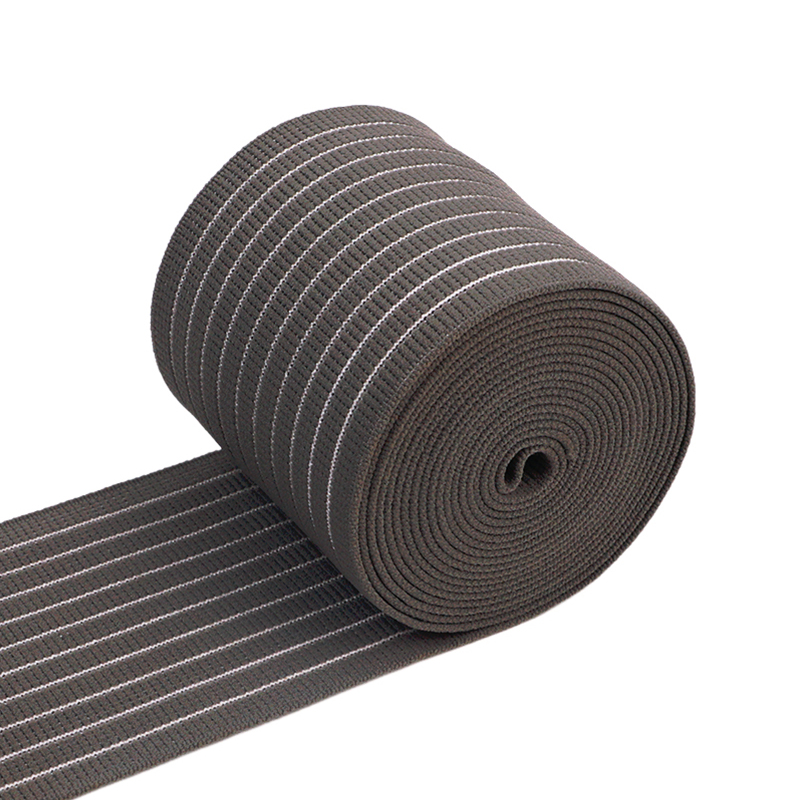
A 7 cm dark grey woven elastic panel is a practical and versatile material designed for applications that require dependable stretch, controlled compression, and long-term dimensional stability. Its balanced width, neutral color, and woven construction make it suitable for apparel, sports supports, orthopedic products, medical protective equipment, shapewear, industrial sewing, and many do-it-yourself projects.
Unlike narrow elastic bands that may concentrate pressure in a small area, a 7 cm panel distributes tension across a wider surface. This broader contact area can improve comfort, reduce localized pinching, and create a more stable fit around the body or garment. At the same time, the woven structure provides strength and resistance to deformation, helping the panel maintain its appearance and performance during repeated use.
The dark grey color adds another practical advantage. It is sufficiently neutral for use with many fabric colors, while offering a modern appearance that can be more discreet than bright or highly contrasting elastic. For manufacturers, designers, and product developers, this combination of width, color, stretch, and durability provides a reliable starting point for both standard and customized products.
Product Overview
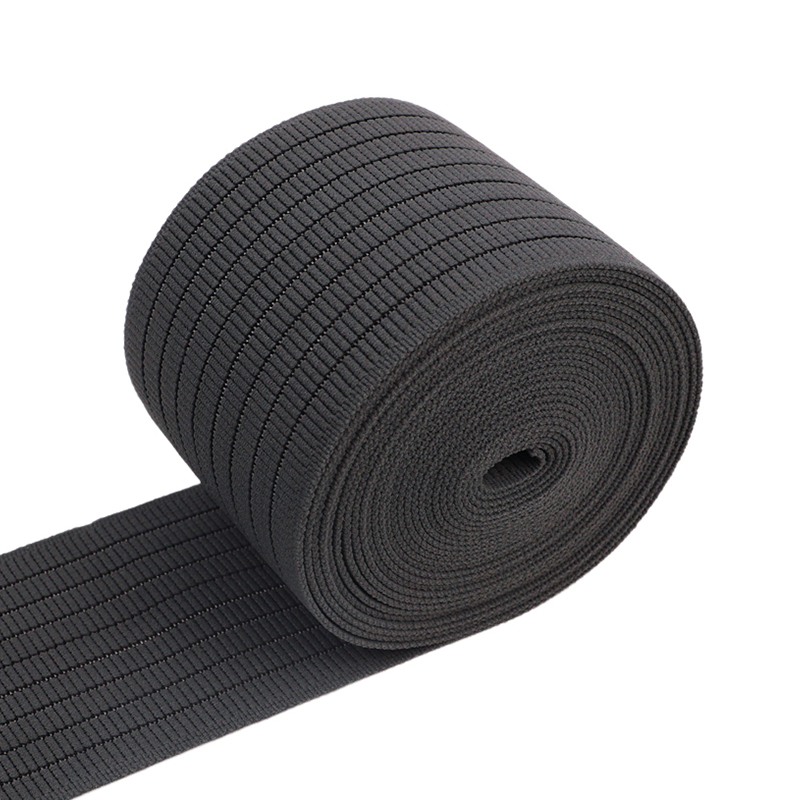
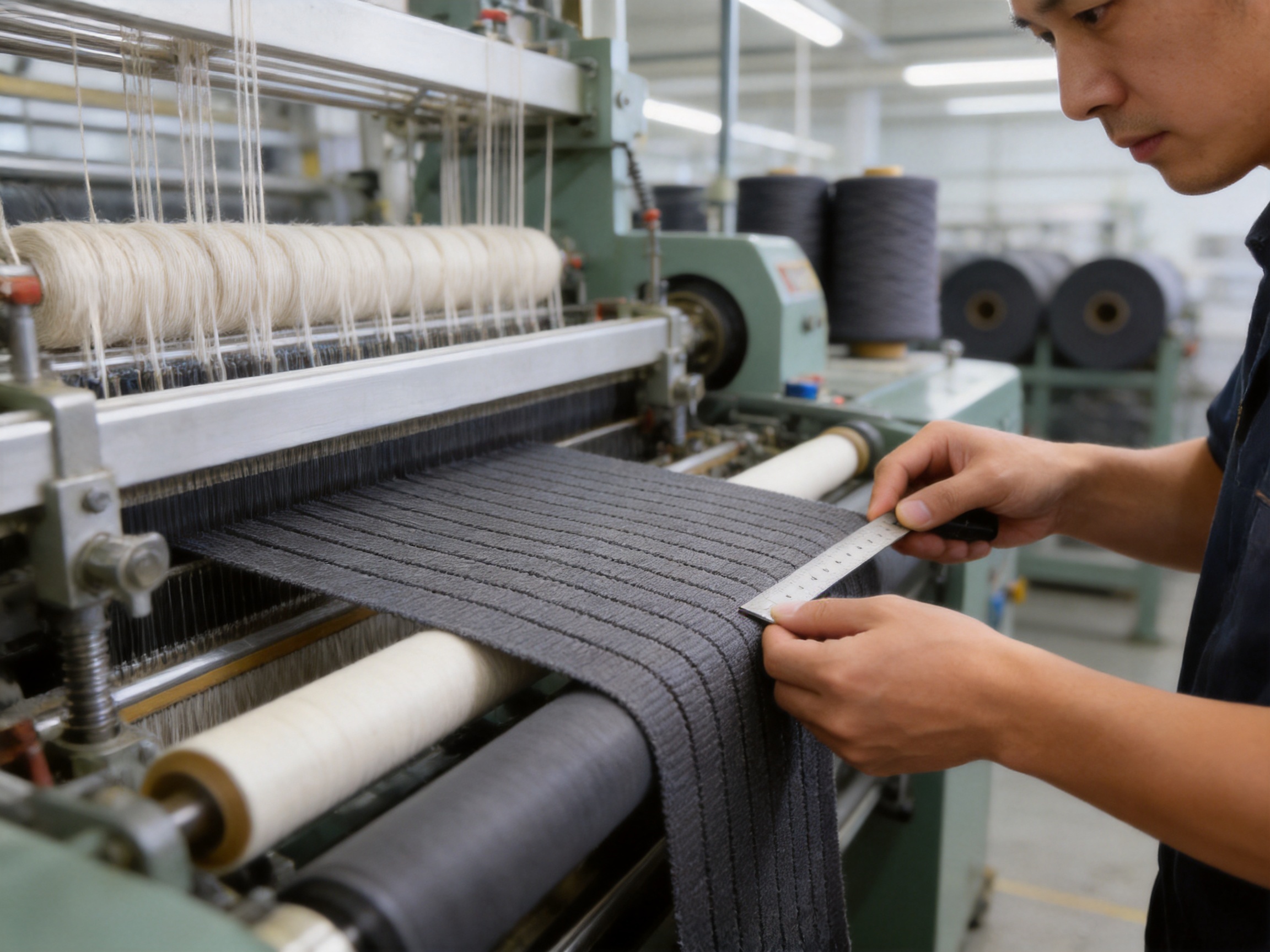
The 7 cm dark grey woven elastic panel is manufactured as a wide elastic webbing component with a woven structure. Its principal function is to provide controlled elasticity and firm support without sacrificing flexibility. The material can be incorporated into waistbands, compression garments, body supports, sports braces, rehabilitation products, and other sewn assemblies.
The 7 cm width is an important part of the product design. It provides more coverage than narrow elastic and can help distribute pulling forces over a wider section of fabric or the human body. This makes the panel appropriate for products where stability is more important than highly localized stretch. It can also simplify construction because one wide panel may replace several narrower strips.
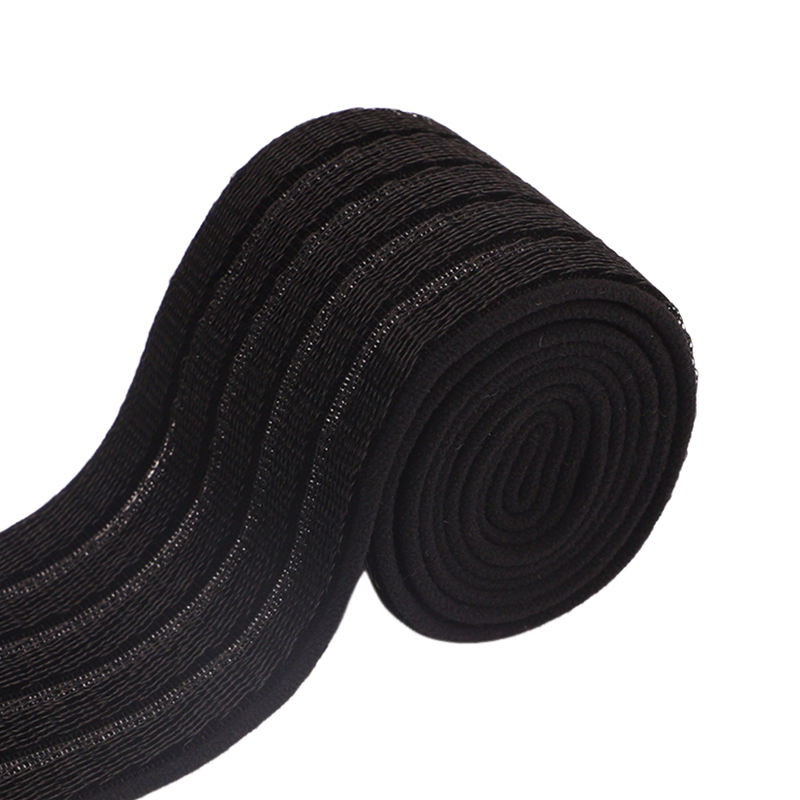
The woven construction is designed to balance strength and elasticity. A well-produced woven elastic panel must stretch when force is applied, return toward its original dimensions after release, and resist excessive distortion during regular handling. The structure should also remain neat at the edges and retain adequate integrity during sewing, cutting, folding, and assembly.
As a neutral, medium-dark shade, dark grey can be used in both visible and concealed applications. It can complement black, charcoal, blue, grey, white, and many other colors. In finished products, it may contribute to a professional and understated appearance, particularly in medical supports, athletic products, workwear, and modern apparel.
| Product Attribute | General Description | Practical Benefit |
|---|---|---|
| Product type | Woven elastic panel | Combines controlled stretch with structural stability |
| Width | 7 cm | Provides broad coverage and more even tension distribution |
| Color | Dark grey | Offers a neutral, professional appearance |
| Construction | High-quality woven structure | Helps resist fraying, deformation, and premature wear |
| Main functions | Support, retention, compression, and fit adjustment | Suitable for apparel, medical, sports, and industrial products |
| Customization potential | Elasticity, texture, and color may be tailored | Supports application-specific product development |
7cm Dark Grey Woven Elastic Panels
Why a 7 cm Width Matters
Width has a direct effect on how an elastic panel performs. A narrow band can be useful for straps, small openings, and lightweight garments, but it may create concentrated tension when used for broad support. A 7 cm panel offers a larger working surface, which can help distribute pressure across a wider area and create a more secure connection between the elastic and the surrounding fabric.
In waistbands, the width can improve comfort by reducing the likelihood that the elastic will cut into the skin. In abdominal supports and orthopedic braces, a wider panel can provide a more consistent support zone. In shapewear, it can help create a smooth transition between different sections of the garment. In sports equipment, the panel may support a stable fit while allowing the wearer to move.
A wider panel can also offer design efficiency. Instead of arranging multiple narrow elastic strips side by side, manufacturers may use a single 7 cm component. This may reduce the number of sewing operations, simplify material handling, and produce a cleaner appearance. The final result depends on the garment design, sewing method, tension requirements, and other materials, but the wide format provides useful flexibility during product development.
For industrial and DIY sewing projects, a 7 cm width is also convenient because it is large enough to handle easily while remaining adaptable to different patterns. It can be cut, folded, layered, or sewn into a larger assembly, provided that the chosen processing method is appropriate for the structure and elasticity of the material.
Woven Construction and Performance
Woven elastic panels are produced by arranging yarns in an organized interlaced structure. This construction differs from a simple loose strip or an elastic material that depends only on surface coating. The woven arrangement contributes to the panel’s stability, appearance, and ability to withstand handling.
One major benefit is resistance to fraying. All textile materials require suitable cutting and sewing practices, but a stable woven structure can help maintain edge integrity better than less structured alternatives. This is particularly valuable when the elastic is exposed to repeated movement, washing, friction, or tension.
Another benefit is shape retention. When an elastic panel is repeatedly stretched and released, it must manage mechanical stress without becoming excessively loose or distorted. The woven structure supports the elastic elements and helps the panel maintain a consistent profile. Performance will vary according to the application, stretch level, environmental conditions, and care method, but the construction is intended for reliable repeated use.
The woven surface also provides a professional textile appearance. It may be integrated into finished garments without looking overly bulky or unfinished. For product manufacturers, this makes the panel useful not only as a hidden functional component but also as a visible design element.
Good woven elastic production requires careful control of yarn selection, tension, weaving conditions, width, finishing, and inspection. Small changes in any of these areas may influence stretch recovery, hand feel, edge quality, and appearance. For this reason, manufacturing discipline is just as important as the basic material specification.
Key Product Advantages
Durable and Long-Lasting Construction
The panel is designed with a strong woven construction that supports long service life. It is intended to resist common forms of textile stress, including repeated stretching, bending, rubbing, and handling during sewing. This durability is important in garments and supports that are worn frequently or adjusted many times.
Compared with basic elastic materials that may lose shape quickly, a properly manufactured woven panel can provide more consistent performance over time. Its durability may help reduce premature replacement and support better value for manufacturers and end users. Actual service life depends on the finished product, washing conditions, loading, exposure to chemicals, and other factors, but structural stability is a central product advantage.
Stable Elasticity
Elasticity is useful only when it is controlled. A panel that stretches easily but fails to recover may become loose, uneven, or uncomfortable. The 7 cm woven elastic panel is designed to maintain a balanced relationship between stretch and recovery. This allows it to provide support while remaining flexible enough for movement and adjustment.
Stable elasticity can improve production consistency as well. When a material behaves predictably during sewing and assembly, manufacturers can establish more reliable patterns and tension settings. This can reduce variation between finished pieces and make quality control easier.
Comfortable Support
The wide format helps distribute tension over a larger area. This can reduce pressure concentration and make the panel more comfortable than a narrow component in applications that require broad support. The objective is firm retention without unnecessary pinching, rolling, or sharp pressure points.
Comfort also depends on the garment design, seam placement, contact fabric, panel tension, and user sensitivity. Nevertheless, a wide, stable elastic panel gives designers a strong material foundation for creating supportive products that remain wearable during daily activity.
Versatile Dark Grey Appearance
Dark grey is an adaptable color for many product categories. It can be used in black or charcoal garments when a low-contrast effect is required, or paired with lighter fabrics when a deliberate contrast is preferred. The shade may also help conceal ordinary handling marks better than very light colors.
For medical and sports products, dark grey can communicate a clean and professional appearance. For fashion and shapewear, it can support understated styling. For industrial and DIY projects, it is practical because it fits a wide range of color schemes.
Broad Application Range
The panel can serve both functional and decorative purposes. It may be used as a waistband, support strip, reinforcement, adjustment section, or integrated component in a larger webbing system. Its potential applications include abdominal binders, orthopedic braces, athletic supports, compression garments, shapewear, underwear, activewear, workwear, bags, and custom sewing projects.
This versatility can simplify sourcing for companies that serve several product categories. Instead of purchasing completely different materials for every design, a manufacturer may evaluate whether one wide woven elastic construction can meet multiple requirements. Application testing remains essential, but the product’s format allows broad experimentation.
Applications in Medical and Orthopedic Products
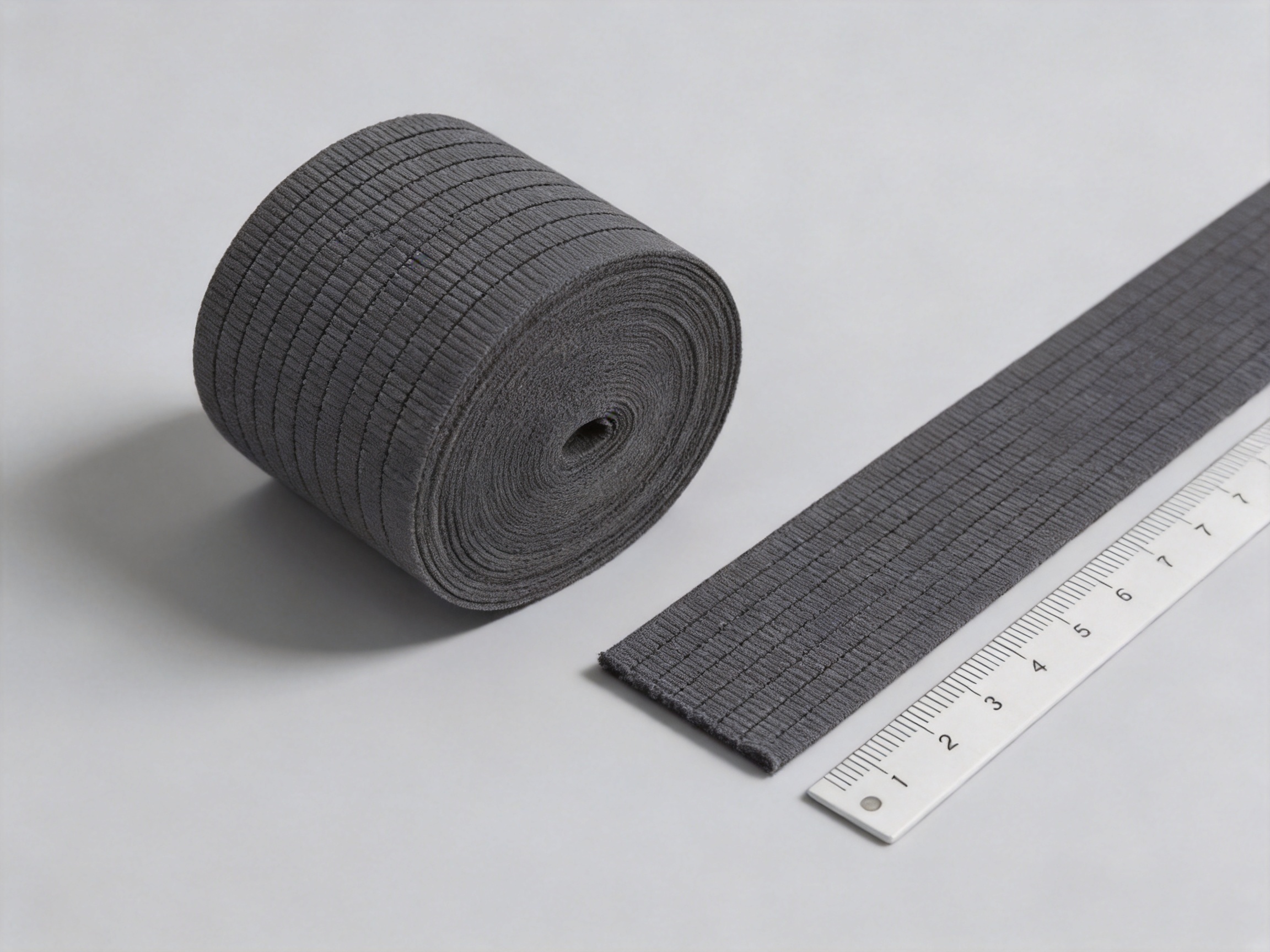
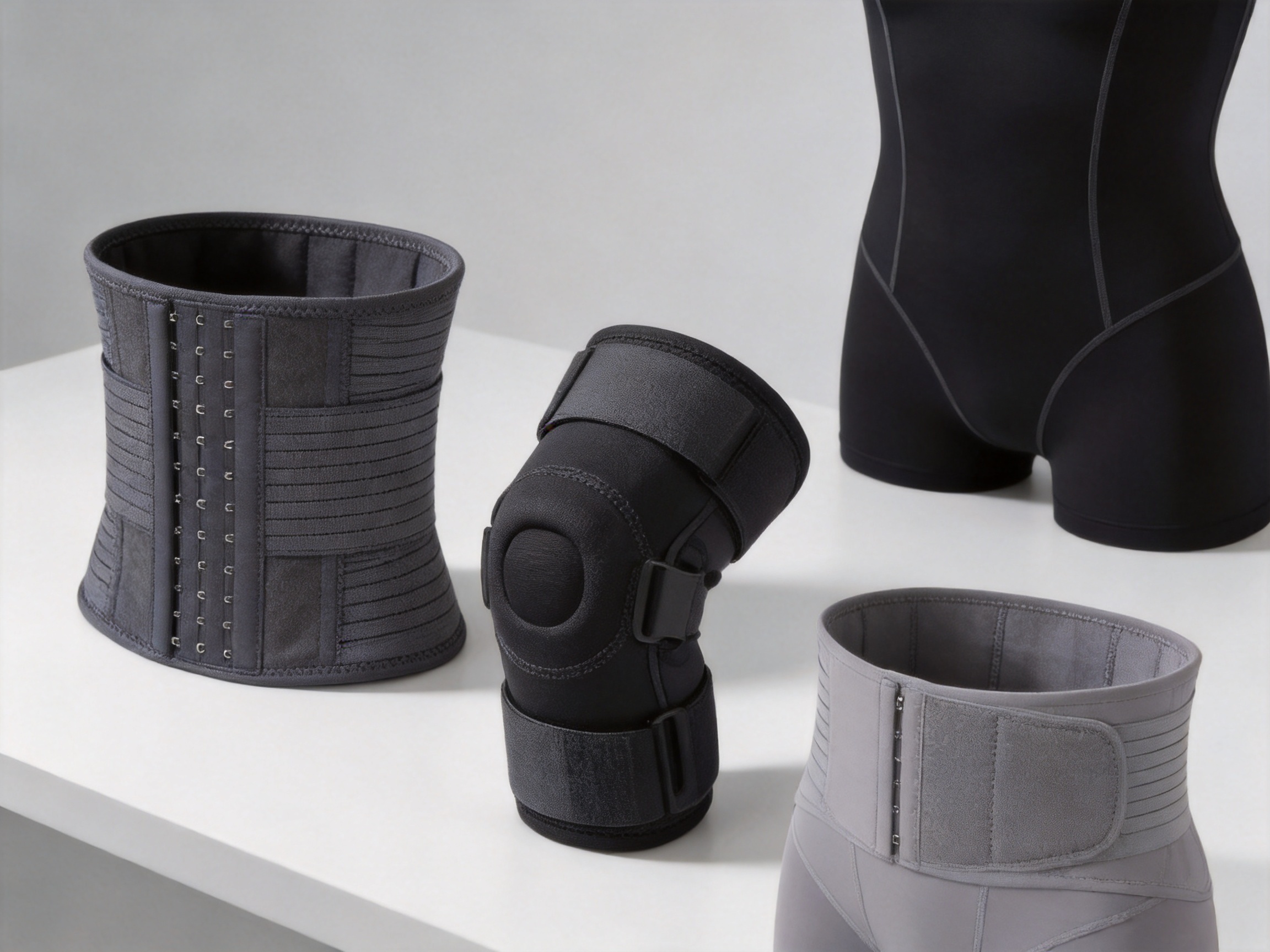
Wide elastic panels are especially relevant to medical protective equipment and orthopedic supports because these products often require a combination of stability, adjustability, and comfort. A 7 cm panel may be incorporated into abdominal binders, lumbar supports, post-operative garments, orthopedic braces, rehabilitation products, and other supportive assemblies.
In an abdominal binder, the panel can help create a secure wrap around the torso. Its width may distribute compression more evenly than a narrow band, while its elasticity allows the product to accommodate normal movement and changes in body position. The finished binder must be carefully designed so that the level of compression is appropriate for its intended use.
In orthopedic braces, the panel may act as a retaining or stabilizing component. It can help keep a brace in position while allowing controlled adjustment. The success of the final product depends on the interaction between the elastic, hook and loop fasteners, padding, fabric, seams, and anatomical design.
Medical applications require especially careful material evaluation. Manufacturers should confirm the required elasticity, width tolerance, recovery, colorfastness, skin-contact suitability, cleaning resistance, and other specifications before production. A webbing component should be selected as part of a complete product validation process rather than treated as an independent guarantee of medical performance.
The manufacturer’s ISO 13485 certification is relevant to the company’s focus on medical protective equipment and orthopedic support products. This quality-management framework reflects an organized approach to processes associated with medical devices and related manufacturing activities. Customers should still review current certification scope, technical documentation, and product-specific compliance requirements for their intended market.
Applications in Sports and Activewear
Sports products require materials that can follow movement while helping maintain a stable fit. The 7 cm woven elastic panel may be applied to athletic supports, training garments, protective sleeves, rehabilitation wear, and performance apparel. Its broad structure can provide a secure connection without relying on excessive tightness.
During exercise, garments may experience repeated stretching, perspiration, friction, and frequent washing. A stable woven elastic panel can help the garment maintain its intended shape under these conditions. It may be used in waist sections, support zones, compression products, and adjustable closures.
In activewear, appearance is also important. Dark grey can complement technical fabrics and create a modern, restrained finish. It may be concealed within the construction or used as a visible trim. Designers can select the placement based on whether the panel’s primary purpose is support, fit control, reinforcement, or styling.
Sports applications should be evaluated through movement testing. A panel that performs well in a static sample may behave differently when exposed to running, bending, rotation, sweat, and repeated laundering. Appropriate testing helps determine whether the width, stretch, recovery, and sewing configuration are suitable for the intended activity.
Applications in Shapewear and Apparel
Shapewear and supportive apparel often require broad elastic components that create a smooth, secure fit. A 7 cm panel may be used in waistbands, torso sections, garment openings, or transition areas between panels with different levels of stretch.
The broad profile can help prevent the material from forming a narrow pressure line. It may also contribute to a smooth visual outline beneath outer clothing. When properly selected and installed, the panel can help a garment stay in position without excessive movement or rolling.
For underwear and intimate apparel, hand feel and edge treatment are particularly important. Designers should evaluate how the panel interacts with lining fabrics, binding, stitching, and skin contact. The right sewing method can help preserve comfort and avoid unnecessary bulk.
For casual apparel and fashion garments, dark grey offers flexibility in color coordination. It can be used in garments with dark neutral palettes or combined with contrasting fabrics for a technical or contemporary effect. Because the panel is woven, it may also provide a more structured visual quality than very soft narrow elastic.
Advantages Compared with Narrow or Less Structured Elastic
Every elastic product has a suitable application, but a 7 cm woven panel offers specific benefits when compared with narrow or less structured alternatives. Its most obvious advantage is coverage. A wide panel can distribute load over a greater area and may provide a more stable fit in waist, torso, and support applications.
Its second advantage is structural control. Narrow elastic may twist, fold, or concentrate tension when used in a broad support application. The wider woven construction is more suitable when the designer wants a defined panel that remains relatively stable during use.
The third advantage is potential production efficiency. A single wide panel may replace multiple narrow pieces, reducing component count and simplifying pattern construction. This can make assembly more straightforward, although the final benefit depends on the product design and sewing equipment.
The fourth advantage is visual consistency. A woven panel can provide a clean, even surface across the full width. This may be useful in premium apparel, medical supports, sports products, and other items where a finished appearance matters.
Compared with rigid reinforcement, elastic webbing provides movement. It can support retention and compression without completely restricting body motion. This balance is valuable in products that must remain secure while accommodating normal activity.
Manufacturing Expertise and Production Capabilities
The manufacturer has operated in the webbing industry since 2005 and focuses on elastic and non-elastic webbing, especially for sports supports and orthopedic braces. More than two decades of industry experience can contribute to practical understanding of material selection, loom operation, finishing, quality control, and application requirements.
The company uses production equipment that includes warping machines, knitting machines, woven machines, and packaging machines. Each stage supports a different part of the manufacturing process. Warping prepares yarns in an organized arrangement, while weaving equipment forms the stable panel structure. Knitting equipment can support the production of other elastic or textile constructions within a broader product portfolio.
Modern production equipment can improve repeatability when supported by appropriate process control. Consistent yarn preparation, machine settings, tension management, and inspection help reduce variation in width, surface appearance, elasticity, and overall construction. For customers purchasing material for large-scale production, repeatability is often as important as the performance of an individual sample.
The company reports monthly production capacity reaching millions of meters of elastic and non-elastic webbing. This scale can be valuable for customers that need regular supply, larger orders, or coordinated production schedules. Capacity alone does not determine quality, so it should be considered together with inspection systems, material traceability, production planning, and customer service.
Advanced equipment also supports product development. A manufacturer with several machine types may be able to adjust structure, texture, color, width, and elasticity more efficiently than a supplier limited to one construction method. This flexibility is important when customers require a panel tailored to a specific garment, support, or industrial assembly.
Quality Control from Material Sourcing to Packing
Quality control begins before weaving. Yarn selection influences strength, surface feel, color, stretch, and recovery. Consistent incoming materials make it easier to maintain stable production. The manufacturer states that it applies quality control throughout material sourcing, processing, testing, and packing.
During processing, operators and quality personnel may monitor machine conditions, yarn tension, width, surface structure, and visible defects. A stable process can help prevent problems such as uneven edges, inconsistent density, broken yarns, abnormal color variation, or irregular elasticity.
Testing should be matched to the intended application. Relevant evaluations may include width measurement, stretch measurement, recovery assessment, tensile performance, appearance inspection, colorfastness, washing resistance, and dimensional stability. The specific test method and acceptance criteria should be agreed upon between supplier and customer according to the final product requirements.
Inspection during packing is also important. Correct roll length, labeling, packaging protection, and order identification help reduce handling errors after production. Proper packaging can protect the panels from dust, moisture, compression, and unnecessary damage during storage and transportation.
For customers in regulated industries, documentation is an essential part of quality assurance. Material specifications, inspection reports, certification information, lot identification, and approved samples can support incoming inspection and production traceability. A professional supplier should be able to communicate clearly about the available documentation for the selected product.
Certifications and Responsible Supply
The company has obtained OEKO-TEX Standard 100 and ISO 13485 certifications. OEKO-TEX Standard 100 is associated with testing textile products for selected harmful substances. This can be relevant when elastic webbing is used in garments, supports, and products that may have close or prolonged contact with the skin.
ISO 13485 is a quality-management standard connected with medical devices. Its presence reflects the company’s orientation toward medical and orthopedic product manufacturing. Customers should verify the current validity, scope, and applicability of any certification when evaluating materials for a specific market or regulated product.
Responsible supply also includes stable communication, accurate order handling, realistic delivery planning, and attention to customer requirements. Certifications are valuable, but they work best alongside consistent production practices and transparent technical communication.
The manufacturer describes its approach as focused on quality, innovation, sustainability, and long-term cooperation. In practical terms, customers may evaluate these objectives through sample consistency, responsiveness, production documentation, packaging quality, defect handling, and the ability to support repeat orders.
Customization for Different Product Requirements
Although the featured product is a 7 cm dark grey woven elastic panel, webbing requirements can vary considerably between applications. One customer may need a softer hand feel for apparel, while another may require stronger recovery for a medical brace. A sports support may need a different balance of stretch and retention than a waistband.
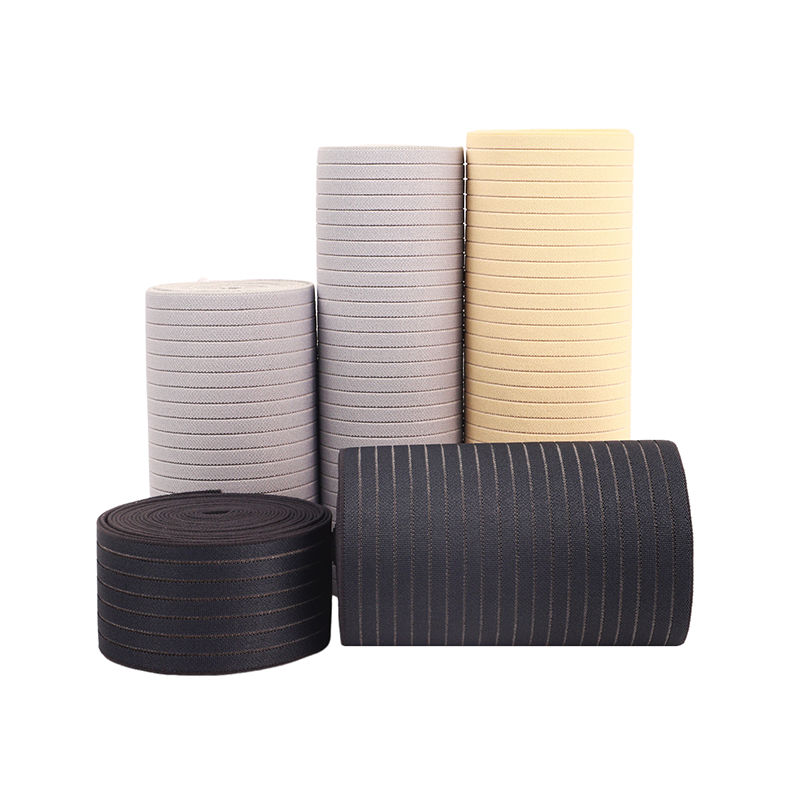
The company offers customization of elasticity, texture, and color. This allows customers to discuss adjustments based on product function and appearance. Customization may include the selection of suitable yarn combinations, structural settings, finishing treatment, color matching, and width or length arrangements where technically feasible.
Color customization can support brand collections, uniform programs, medical product identification, or coordinated garment design. Texture customization may influence grip, surface feel, visual appearance, and interaction with adjacent materials. Elasticity customization can help achieve the desired balance between comfort, compression, and retention.
Customers should provide as much application information as possible during development. Useful details include target width, required stretch range, recovery expectations, load conditions, contact with skin, washing method, environmental exposure, sewing process, packaging format, and forecast quantity. Clear specifications help the manufacturer recommend a more appropriate construction.
Sampling is an important part of customization. A sample should be sewn into a representative assembly and evaluated under realistic conditions. Testing only the loose webbing may not reveal how it behaves after stitching, folding, tensioning, laundering, or integration with hook and loop fasteners.
Design and Sewing Considerations
Designers should consider the direction of stretch when placing the panel. The elastic should normally work in the direction required by the product rather than being unintentionally twisted or constrained. Pattern design should account for the panel’s relaxed dimensions, operating stretch, seam allowance, and attachment method.
Sewing settings should be selected to preserve elasticity. Excessive thread tension, unsuitable stitch length, or overly dense stitching may restrict the panel and create stress concentrations. A test seam can help determine whether the selected thread, needle, stitch, and machine settings are appropriate.
Edges may be enclosed, bound, folded, or attached directly, depending on the design. The best method will depend on comfort requirements, appearance, panel thickness, and the strength of the surrounding fabric. In skin-contact products, the seam should be evaluated for irritation, bulk, and pressure.
When the panel is used with hook and loop fasteners, the attachment area should be designed to withstand repeated opening and closing. Reinforcement may be required where the fastener creates concentrated pulling force. The panel and fastener should be tested together because their combined performance may differ from the performance of either component alone.
Cutting should be carried out with equipment and methods suitable for woven elastic. Poor cutting can damage edges or cause excessive unraveling. Production teams should confirm the best cutting method through trials, particularly when panels are cut into shorter sections or shaped pieces.
Storage, Handling, and Care
Elastic webbing should be stored in a clean, dry environment away from excessive heat, direct sunlight, moisture, and chemicals that may affect textile fibers or elastic components. Rolls should be supported properly to avoid crushing, distortion, or unnecessary compression.
During handling, workers should avoid dragging rolls across rough surfaces or placing heavy objects on top of them. Material should remain identified by lot or order number whenever traceability is required. Before production, the webbing should be checked for visible damage, color variation, width consistency, and other agreed specifications.
Care instructions for a finished product should be based on testing. Washing temperature, detergent, drying method, ironing, exposure to bleach, and mechanical agitation may influence elastic recovery and color. Customers should evaluate the complete finished item rather than assuming that the webbing’s performance is unaffected by all care conditions.
For medical and sports products, repeated-use testing can be particularly valuable. Samples may be stretched, washed, dried, and inspected at intervals to identify changes in appearance, width, recovery, and seam integrity. These evaluations help manufacturers establish practical care recommendations.
Why Work with an Experienced Webbing Manufacturer?
Buying elastic webbing is more than selecting a width and color. The material must work with the customer’s production process, finished-product requirements, quality system, and supply schedule. An experienced webbing manufacturer can contribute knowledge at each of these stages.
Industry experience may help the supplier identify potential problems before mass production. For example, the supplier may recommend a different structure when a customer needs stronger recovery, a softer surface, improved color matching, or better compatibility with a sewing process. Early technical communication can reduce costly revisions later.
A manufacturer with elastic and non-elastic product capabilities may also help customers coordinate several components. This can be useful for companies producing complete support systems, medical braces, sports accessories, or apparel collections that require different types of webbing.
OEM and ODM support provides additional flexibility. Under an OEM arrangement, the supplier may produce according to the customer’s established specifications. Under an ODM arrangement, the supplier may contribute more actively to structure development and product design. The appropriate model depends on the customer’s technical resources, market strategy, and development schedule.
Reliable supply is another important consideration. Consistent equipment, organized production planning, appropriate packaging, and responsive communication can help customers manage recurring orders. These factors are especially important when webbing is a critical component and a shortage could delay the production of finished goods.
Recommended Customer Evaluation Process
A customer evaluating the 7 cm dark grey woven elastic panel should first define the intended application. A waistband, abdominal binder, orthopedic brace, and industrial assembly may all require different performance characteristics. The same width and color do not automatically make one construction suitable for every use.
The next step is to request a technical sample and confirm basic specifications. These may include width, thickness, stretch range, recovery, color, roll length, edge appearance, and any applicable certification or test information.
The sample should then be integrated into a representative prototype. The prototype should be evaluated for comfort, fit, sewing performance, visual appearance, and interaction with adjacent materials. If the product will be washed, exposed to sweat, or used repeatedly, those conditions should be included in the evaluation.
For larger projects, customers should establish an approved sample or specification sheet. This document can identify the accepted color, construction, width tolerance, stretch requirement, packaging format, and inspection standard. Maintaining an approved reference can improve consistency across repeat orders.
Finally, customers should discuss forecast quantities, minimum order requirements, lead time, packaging, shipping, customization, and quality documentation. Clear commercial and technical communication helps both parties prepare for efficient production.
Frequently Asked Questions
What is a 7 cm woven elastic panel?
It is a wide elastic webbing component measuring approximately 7 cm in width and produced with a woven structure. It is designed to provide controlled stretch, support, and dimensional stability for garments, medical supports, sports products, and other sewn applications.
What makes the dark grey color practical?
Dark grey is a neutral color that can coordinate with many fabrics. It offers a discreet appearance in dark garments and a professional contrast in lighter products. It is suitable for apparel, medical supports, sports equipment, workwear, and DIY projects.
Is the panel suitable for abdominal binders?
It may be suitable for abdominal binders when its stretch, recovery, width, comfort, and construction meet the requirements of the finished product. The complete binder should be tested for fit, compression, seam strength, comfort, and repeated use before production.
Can it be used in orthopedic braces?
Yes, wide woven elastic panels are commonly considered for retaining, stabilizing, or adjustable sections of orthopedic braces. The panel must be evaluated together with padding, fasteners, fabric, stitching, and the anatomical design of the brace.
How does it compare with narrow elastic?
The 7 cm format provides broader coverage and may distribute tension more evenly. It can offer greater stability and reduce the need to position several narrow strips side by side. Narrow elastic remains useful for smaller openings, straps, and applications requiring localized stretch.
Can the elasticity be customized?
The manufacturer offers customized elasticity for suitable projects. Customers should provide information about the desired stretch, recovery, load, use conditions, and finished-product design so that an appropriate construction can be developed.
Can the color or texture be customized?
Color and texture may be customized according to technical feasibility and order requirements. Color matching should be confirmed using an approved physical sample, particularly when the panel will be visible in the finished product.
Is the product suitable for direct skin contact?
Potential skin-contact use should be assessed according to the selected construction, finishing, certification, and final product requirements. Customers should request relevant documentation and conduct their own product-specific evaluation before commercial use.
What certifications are associated with the manufacturer?
The company reports OEKO-TEX Standard 100 and ISO 13485 certifications. Customers should verify current certificates, validity dates, and scope before using the product in a regulated or specialized application.
What production equipment does the manufacturer use?
The company has introduced and updated warping machines, knitting machines, woven machines, and packaging machines. These equipment groups support yarn preparation, textile construction, product manufacturing, and final packing.
Can the panel be ordered for OEM or ODM projects?
OEM and ODM orders are welcomed. The customer may provide an existing specification, or the manufacturer may assist with development involving elasticity, texture, color, and other webbing characteristics.
How should buyers test the panel?
Buyers should examine the loose material and sew it into a representative prototype. Testing may include stretch and recovery, width stability, seam performance, comfort, washing resistance, colorfastness, and repeated-use behavior, depending on the intended application.
What information should be included in an inquiry?
An inquiry should include the intended use, width, color, desired elasticity, estimated quantity, roll or packing preference, sewing method, skin-contact requirements, testing expectations, delivery destination, and any required certification or documentation.
Conclusion
The 7 cm dark grey woven elastic panel is a versatile material that combines broad coverage, stable elasticity, durable woven construction, and a practical neutral appearance. It can support the development of abdominal binders, orthopedic braces, sports supports, activewear, shapewear, waistbands, industrial sewing products, and customized projects.
Its advantages over narrower or less structured elastic include more even tension distribution, improved stability, reduced component complexity, and a clean woven appearance. These benefits make it a useful option when a product requires support without completely restricting movement.
The manufacturer strengthens the product offering through long-term webbing experience, modern warping, weaving, knitting, and packaging equipment, large-scale production capability, quality control, customization, OEM and ODM support, and certifications associated with textile safety and medical-device quality management.
For the best results, customers should evaluate the panel as part of the complete finished product. Application-specific testing, clear specifications, approved samples, and ongoing communication are essential for confirming suitability. With the right design and manufacturing process, this 7 cm woven elastic panel can contribute to comfortable, durable, and professionally finished products.
References
1. Textile elastic webbing construction and performance principles, professional textile engineering reference materials.
2. General guidelines for testing textile dimensional stability, stretch recovery, tensile performance, and colorfastness.
3. OEKO-TEX Standard 100, textile product safety and harmful-substance testing framework.
4. ISO 13485, quality-management systems for organizations associated with medical devices.
5. Industrial sewing and apparel production references covering elastic attachment, seam construction, and garment fit.
6. Sports-support and orthopedic-brace design references concerning material selection, retention, comfort, and repeated-use evaluation.