
 en
en
 English
 русский
 Français
 Español
 Português
 Tiếng Việt
Content
- 1 Product Overview
- 2 Why a Wide Woven Elastic Panel Is Valuable
- 3 Comparison with Other Elastic Materials
- 4 Applications in Garment Manufacturing
- 5 Material and Construction Advantages
- 6 Manufacturing Capabilities
- 7 Quality Control and Certifications
- 8 Customization for Different Product Requirements
- 9 Production Integration and Sewing Guidance
- 10 Benefits for Buyers and Product Developers
- 11 Recommended Evaluation Process
- 12 Care, Handling, and Product Life
- 13 Q&A
- 13.1 What is an 8cm dark grey woven elastic panel?
- 13.2 What are the main uses of this panel?
- 13.3 How does it differ from a narrow elastic band?
- 13.4 Is the panel suitable for medical products?
- 13.5 Can the color be customized?
- 13.6 Can the elasticity be customized?
- 13.7 Does the panel resist curling?
- 13.8 What certifications does the manufacturer have?
- 13.9 Can the product be used in high-volume manufacturing?
- 13.10 What information should be provided when requesting a quotation?
- 13.11 How should the panel be tested before bulk production?
- 14 Conclusion
- 15 References
- 16 Product: 8cm Dark Grey Woven Elastic Panels
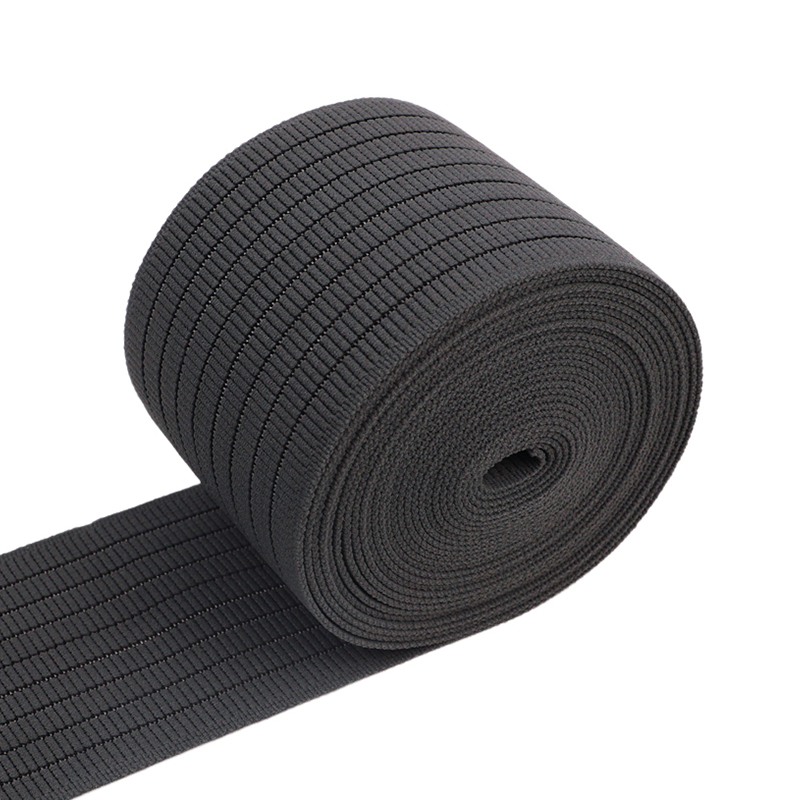
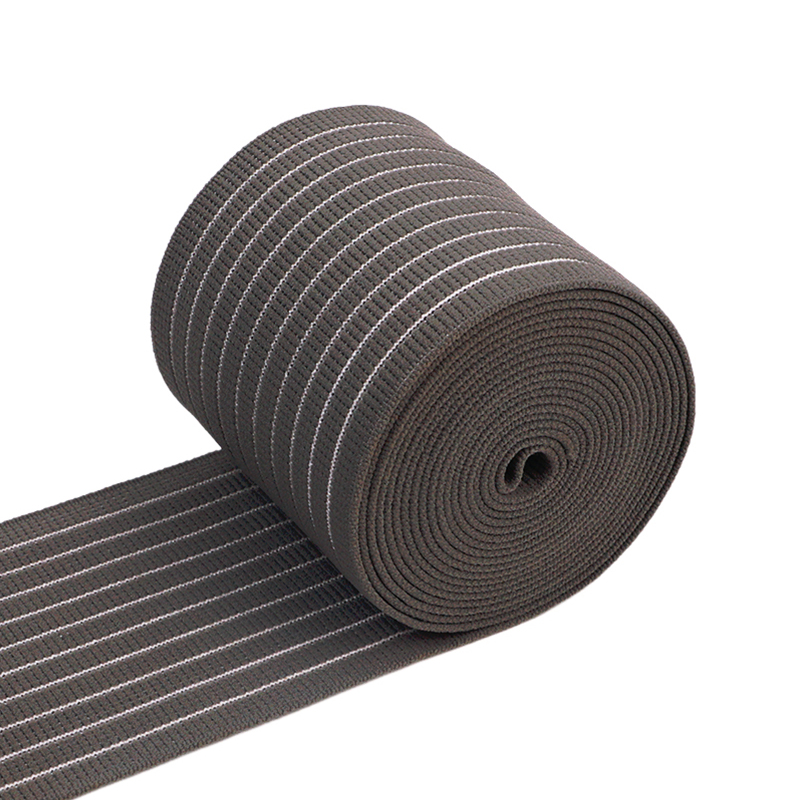
Elastic panels are important functional components in garments and protective products where controlled stretch, stable recovery, comfortable pressure, and dependable long-term performance are required. The 8cm dark grey woven elastic panel combines a broad working width with a durable woven construction to provide balanced support for waistbands, activewear, sports garments, orthopedic products, medical supports, uniforms, and other applications that require consistent elasticity.
Unlike narrow elastic bands that concentrate tension in a small area, a wide woven panel distributes force across a larger surface. This helps improve wearing comfort while supporting a cleaner, more stable garment structure. The 8cm width also provides useful coverage for applications where a narrow strip would not offer enough support or where multiple bands would create unnecessary seams and overlapping layers.
Manufactured by Jinhu Hengxiang Webbing Co., Ltd., the product reflects the company’s experience in elastic webbing and non-elastic webbing production. Since its establishment in 2005, the company has developed specialized capabilities in warping, knitting, weaving, processing, testing, and packaging. Its production experience is particularly relevant to sports supports, orthopedic braces, medical protective equipment, and other products that depend on precise webbing performance.
The dark grey color gives the panel a contemporary and versatile appearance. It can be used as a visible design feature or incorporated discreetly into garments where a neutral, professional tone is preferred. Beyond appearance, the panel is designed to maintain its structure under repeated use, helping manufacturers create products that look consistent and perform reliably over time.
8cm Dark Grey Woven Elastic Panels
Product Overview
The 8cm dark grey woven elastic panel is a wide elastic textile manufactured through a woven construction. Its structure is designed to combine firmness with controlled flexibility. The panel stretches when tension is applied and is intended to recover toward its original dimensions after the load is released. This balance allows it to support movement without becoming excessively loose or unstable.
The product has a nominal width of 8cm, making it suitable for applications that need broad contact and even tension. Its dark grey shade is adaptable to sportswear, medical products, casual garments, workwear, and fashion accessories. Depending on the final product design, the panel may be used as a waistband component, support section, side insert, reinforcement area, fastening base, or integrated stretch feature.
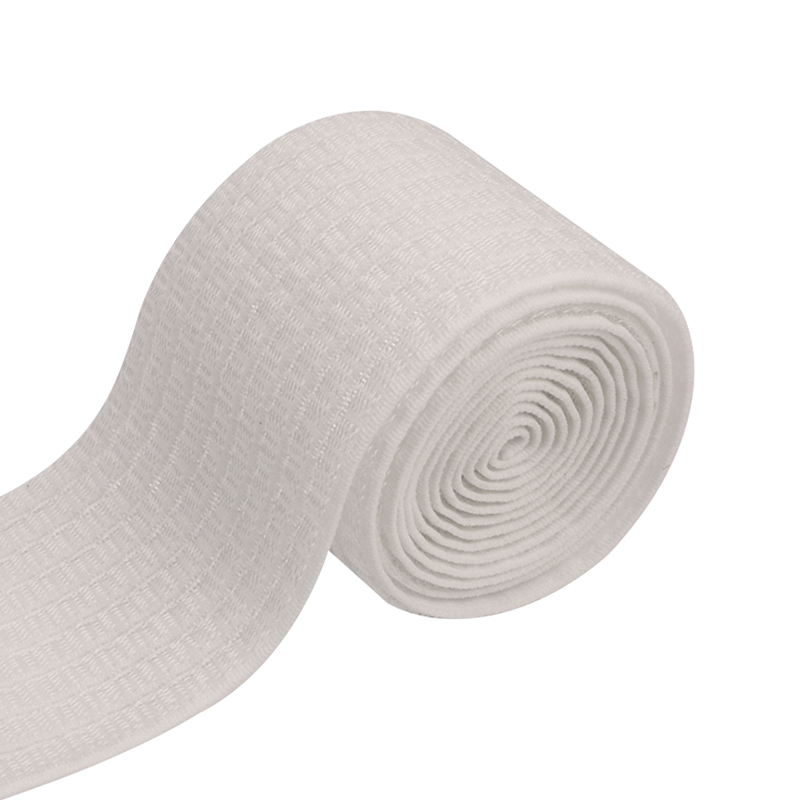
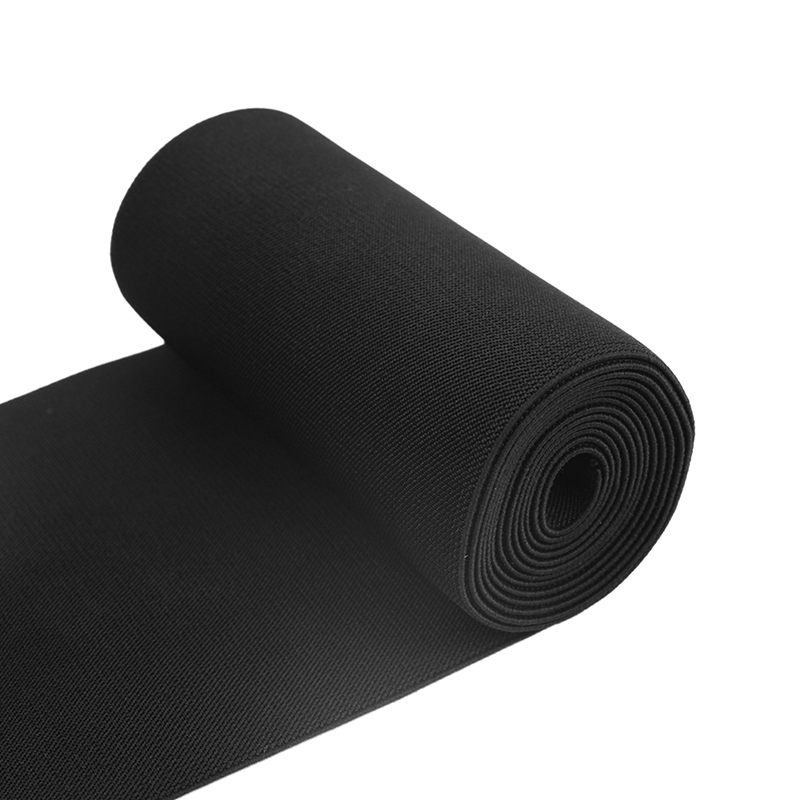
Woven elastic panels are produced by interlacing yarn systems in a controlled pattern. Compared with a simple narrow elastic strip, a woven panel can provide a more structured surface and improved dimensional stability. The woven construction also helps the panel maintain a defined width during handling, sewing, and use. This is especially valuable in wide applications where curling, folding, or uneven elongation could affect both appearance and function.
| Product Attribute | Specification or Benefit |
|---|---|
| Product type | Woven elastic panel |
| Nominal width | 8cm |
| Color | Dark grey |
| Construction | Durable woven structure |
| Main performance characteristics | Firm support, stable elasticity, shape retention, and resistance to curling |
| Typical applications | Waistbands, activewear, sports supports, orthopedic products, medical protective equipment, and garment components |
| Customization possibilities | Elasticity, texture, color, width, and application-specific construction may be discussed with the manufacturer |
The panel’s description as an 8cm dark grey woven elastic product identifies its principal design features, but the final performance of any elastic component also depends on how it is sewn, loaded, washed, and integrated into a finished article. Manufacturers can therefore work with the supplier to select a suitable construction and test the panel under the expected conditions of use.
Why a Wide Woven Elastic Panel Is Valuable
A wide elastic panel performs a different function from a narrow elastic band. Narrow bands are useful for localized retention, edging, loops, cuffs, and compact fastening systems. A wide panel is more appropriate when tension must be spread across a broader area. This is common in waist supports, abdominal garments, compression sections, sports braces, and fitted clothing.
The 8cm width can reduce the concentration of pressure at individual points. When an elastic component is too narrow for the application, it may dig into the skin, create visible lines, or cause the garment to shift. A wider panel can distribute contact more evenly, supporting a more comfortable fit when properly designed with appropriate tension and garment construction.
The width also helps simplify product construction. Instead of sewing several narrow bands side by side, a manufacturer may be able to use one integrated panel. This can reduce the number of seams and minimize alignment issues during production. A single wide component can also produce a cleaner visual result, particularly in waistbands and support garments where a smooth appearance is important.
Another advantage is structural stability. Wide elastic materials can be vulnerable to edge curling, folding, or uneven recovery if their construction is not carefully controlled. The woven structure of this panel is intended to resist curling and maintain a more stable profile. That makes it easier to cut, position, sew, and incorporate into finished products.
Balanced Support and Flexibility
Support products need enough firmness to maintain their position and provide a controlled fit, but they also need flexibility so the wearer can move naturally. An elastic panel that is too rigid may feel restrictive, while one that is too soft may fail to provide adequate retention. The 8cm woven panel is designed to offer a practical middle ground: firm support combined with controlled elasticity.
This balance is useful in activewear and sports protection. During exercise, the body moves continuously, and the garment must accommodate bending, stretching, and changes in posture. A stable elastic panel can help the garment remain in place without requiring excessive tightness. For orthopedic and medical support products, predictable elasticity can contribute to a more consistent fit when the product is correctly specified and applied.
Shape Retention During Repeated Use
Elastic components are often exposed to repeated stretching and recovery. If the material loses its original shape too quickly, the finished garment may become loose, distorted, or less effective. The woven structure of this panel is intended to offer excellent shape retention, helping the component remain more consistent during repeated use.
Shape retention benefits both manufacturers and end users. Manufacturers can achieve more consistent dimensions during cutting and sewing, while users can expect the finished product to maintain its intended appearance for a longer period when it is used and cared for correctly. This characteristic is particularly important in garments that are worn frequently or washed regularly.
Resistance to Curling
Edge curling can create difficulties during production and affect the appearance of a finished garment. A curled panel may be harder to feed through sewing equipment, more difficult to align, and more likely to form uncomfortable ridges. The broad woven construction of the 8cm panel is designed to resist curling during use, supporting a flatter and more orderly appearance.
Reduced curling can also improve sewing efficiency. When the panel remains stable on the worktable and under the presser foot, operators can achieve better positioning and more uniform seams. This may be especially useful for high-volume garment production, where small handling problems can become significant when repeated across thousands of units.
Comparison with Other Elastic Materials
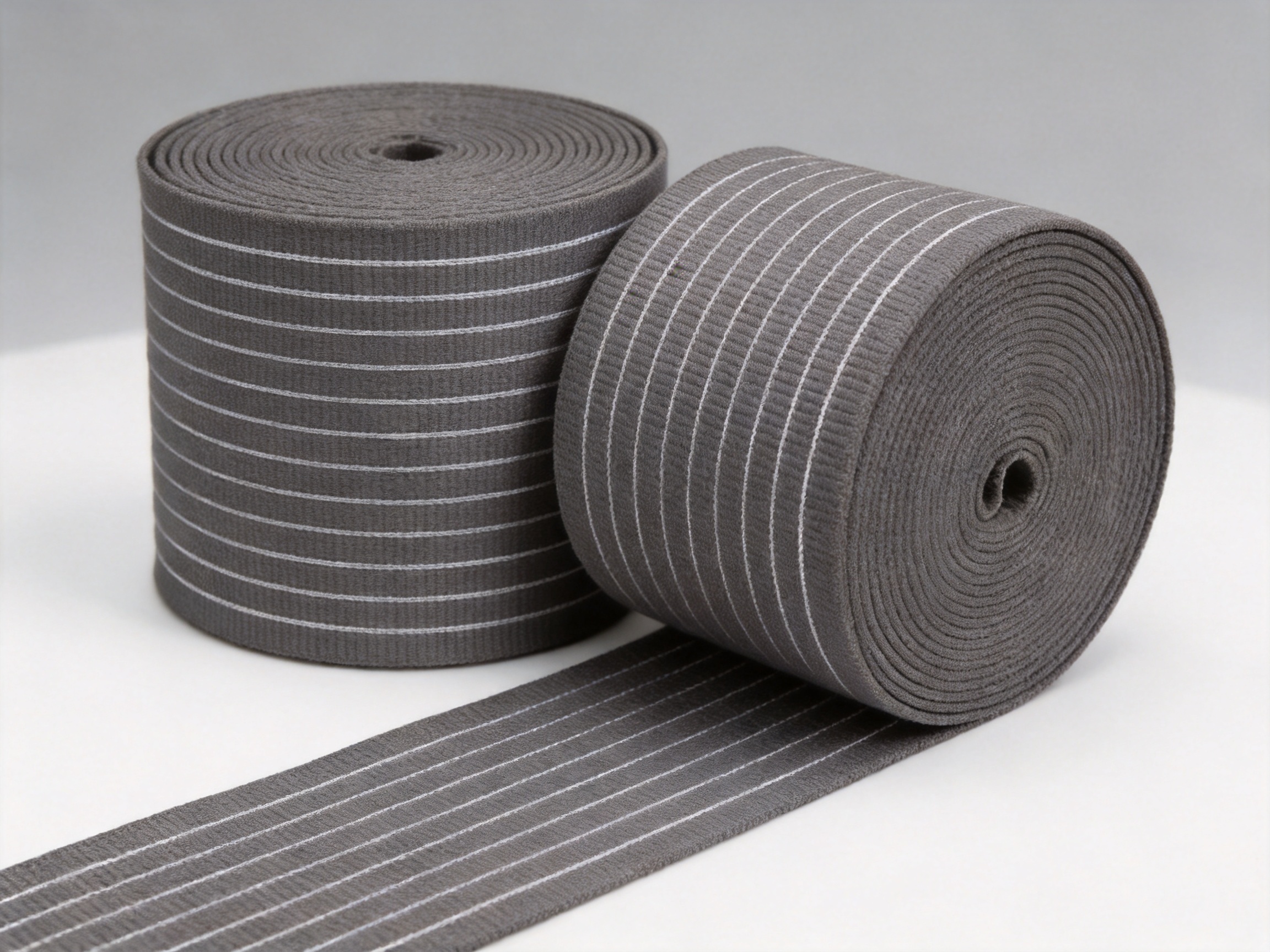
Different elastic products are suited to different purposes. The 8cm dark grey woven elastic panel offers several advantages when compared with narrower elastic bands, some knitted elastic materials, and improvised combinations of multiple strips. The best selection still depends on the application, but the following differences explain why a wide woven panel can be a strong choice for structured garments and support products.
Compared with Narrow Elastic Bands
Narrow elastic bands are efficient for small openings, cuffs, straps, underwear edges, and localized retention. However, they are not always suitable for broad support areas. Using multiple narrow bands to cover the same area can create parallel ridges, uneven pressure, additional seams, and more complicated assembly.
An 8cm panel provides broad coverage in one component. This can improve the visual continuity of a waistband or support section and reduce the need to align several strips. It may also help create a more consistent tension profile across the product. For manufacturers, the wider format can simplify material planning and reduce handling steps.
Compared with Lightweight Knitted Elastic
Knitted elastic is often selected for softness, flexibility, and applications where a light stretch element is required. It can be appropriate for lingerie, light apparel, and gentle edging. In contrast, a woven elastic panel generally offers a more structured feel and can be better suited to applications requiring firm support and dimensional stability.
The choice between woven and knitted construction should be based on the intended pressure, stretch range, recovery requirement, surface feel, and sewing method. For products such as activewear waist sections, orthopedic braces, and support garments, the structured nature of a woven panel may provide useful advantages over a lighter knitted alternative.
Compared with Unreinforced Fabric Inserts
Some garment manufacturers use ordinary fabric inserts in areas where stretch and support are needed. While fabric inserts can contribute to design and coverage, they may not provide the controlled recovery associated with a purpose-made elastic material. The 8cm woven elastic panel is specifically developed to stretch and recover, making it a more functional choice when the product must accommodate body movement while retaining a fitted structure.
Compared with Multiple Overlapping Components
Combining several components can increase the number of seams, layers, and potential failure points. Overlapping strips may also produce variable thickness and make the product less comfortable. A single wide panel can create a more streamlined assembly, particularly when the desired result is a continuous support zone.
For buyers comparing suppliers, the main competitive advantages of this product are its useful 8cm width, durable woven structure, stable elasticity, resistance to curling, shape retention, and neutral dark grey appearance. These features support both manufacturing efficiency and finished-product performance.
Applications in Garment Manufacturing
The 8cm dark grey woven elastic panel can be applied to a broad range of garments and textile products. Its exact use depends on the required stretch, tension, sewing pattern, and product dimensions. The following applications illustrate where its characteristics may be valuable.
Waistbands
Waistbands are one of the most direct applications for a wide elastic panel. The 8cm width can create a substantial waistband with a clean, stable profile. It may be used in skirts, trousers, leggings, training garments, casual clothing, uniforms, and specialized support garments.
A wide waistband can help maintain the garment’s position while reducing the need for a narrow, highly tensioned strip. The dark grey color can be concealed inside the garment or used as part of an exterior design. When used in activewear, it can provide a visually strong contrast with lighter fabrics or blend with black, charcoal, navy, and other neutral colors.
Activewear and Sportswear
Activewear must accommodate movement while retaining its shape. Activities such as running, cycling, training, yoga, fitness, and court sports can cause garments to shift if the waistband or support section lacks sufficient stability. A woven elastic panel can help keep the garment securely positioned while allowing controlled movement.
The panel may be used in waistbands, torso sections, side panels, sports tops, training shorts, compression-inspired garments, and protective clothing. Its broad width is suitable for designs where support is distributed across the midsection rather than concentrated in a narrow line.
The dark grey shade is also practical for sports products because it presents a modern technical appearance and can coordinate with performance fabrics. Designers may use it as a visible structural element or place it between fabric layers for a concealed support function.
Sports Supports and Protective Equipment
Sports supports often require materials that can maintain position during repeated movement. Elastic webbing can be used in knee supports, elbow supports, wrist products, back supports, waist supports, and other protective equipment. The 8cm panel is especially relevant where a broad stabilizing section is preferred.
Because support products may be subject to frequent stretching, sweat, friction, and laundering, material selection should include application-specific testing. The panel’s durable woven structure and shape retention provide a useful foundation, while the final product design must determine the appropriate tension, lining, closures, and stitching method.
Orthopedic Braces
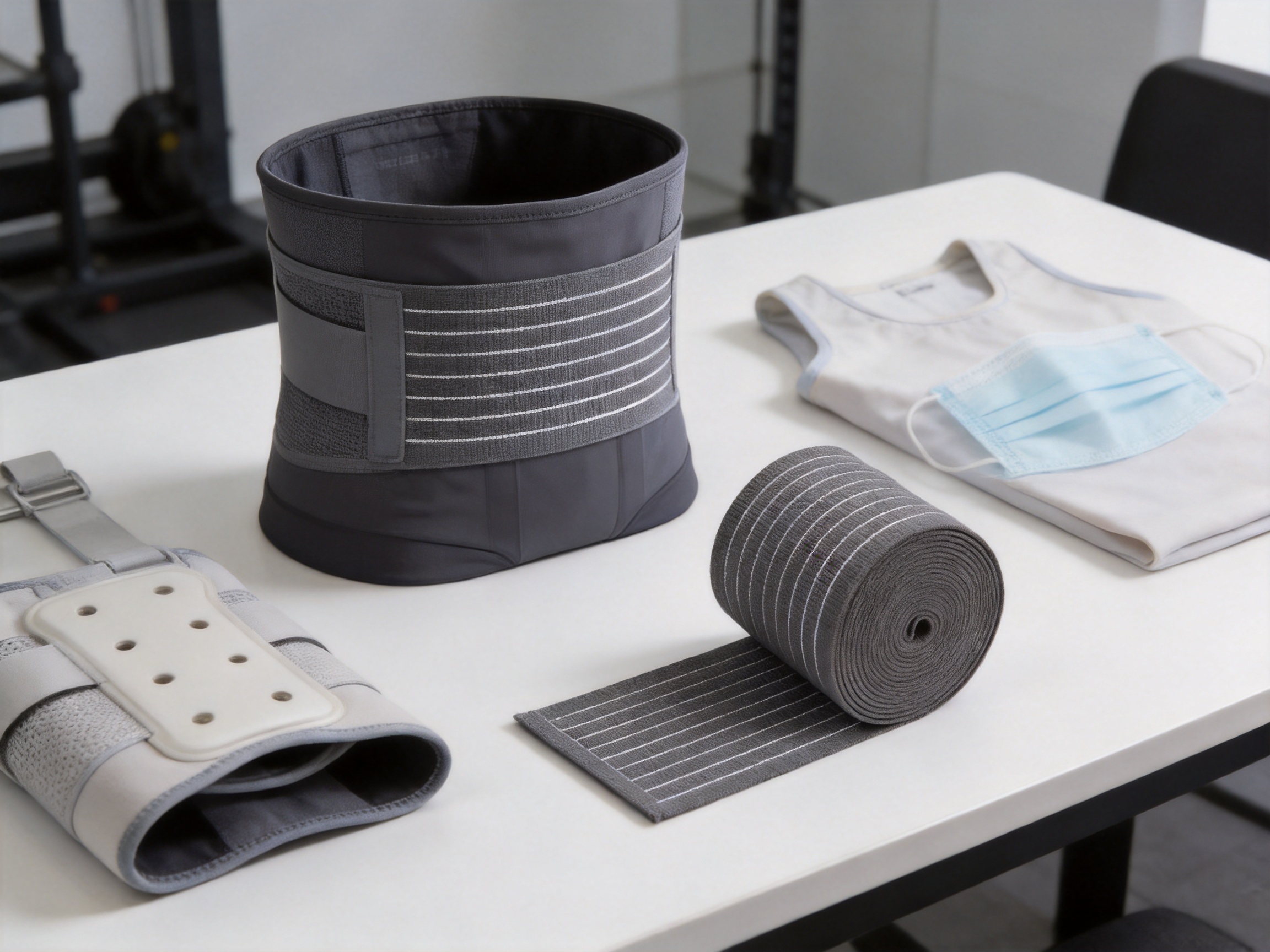
Orthopedic braces commonly combine elastic webbing, non-elastic webbing, foam, hook and loop closures, molded components, and textile covers. The 8cm woven elastic panel can serve as a flexible support zone within a brace, helping accommodate body contours and movement.
In an orthopedic product, the elastic panel may be positioned around the waist, limb, shoulder, or joint area. It can provide controlled tension while working with other components that deliver structural stabilization. Since brace performance depends on the complete system, manufacturers should evaluate the panel together with the selected fabric, fastening method, stitching pattern, and intended wear conditions.
Medical Protective Equipment
Medical protective products often require consistent materials, reliable manufacturing, and traceable quality control. Wide elastic webbing may be used in support garments, protective belts, medical braces, positioning products, and related textile equipment. The 8cm format offers broad contact and can be adapted to products where a stable fit is needed.
For medical applications, buyers should define applicable technical requirements before production. Important considerations may include skin contact, cleaning methods, sterilization exposure if relevant, colorfastness, tensile performance, elongation, recovery, seam strength, and packaging conditions. The supplier’s experience in sports supports and orthopedic braces provides a relevant manufacturing background for these discussions.
Workwear and Uniforms
Workwear often requires robust components that can withstand frequent movement and repeated cleaning. A wide woven elastic panel may be integrated into waist areas, utility garments, protective clothing, and uniforms that require a flexible but stable fit. Dark grey is a practical color for industrial, service, transportation, and technical clothing because it is less visually sensitive to ordinary handling and can complement a professional uniform palette.
Material and Construction Advantages
The performance of an elastic panel is influenced by its yarn selection, woven pattern, width control, finishing, and inspection procedures. A durable woven structure provides a stable base for the elastic function. It helps the panel maintain a defined form while allowing the required degree of elongation.
For a wide product, construction uniformity is particularly important. Slight variations in width, density, or tension can become more visible across a broad surface. Consistent weaving helps reduce uneven areas and supports predictable behavior during sewing and use.
Firmness for Functional Products
Many support garments need more than decorative stretch. They require a material that contributes to retention, stabilization, or controlled compression. The 8cm panel is described as offering firm support, making it appropriate for applications where the elastic component has a functional role rather than simply providing light flexibility.
Firmness must always be matched to the product design. Excessive tension may affect comfort, while insufficient tension may reduce support. Manufacturers can evaluate the panel in sample garments and adjust the pattern, attachment length, and sewing method to achieve the desired result.
Stable Elasticity
Stable elasticity means that the panel can provide a more predictable response when stretched. Predictability is valuable during production because it helps operators and designers establish repeatable dimensions. It is also important in finished products where the user expects the garment to remain secure without continuous adjustment.
Stable elasticity can contribute to improved fit consistency between production batches. When the material behaves in a repeatable manner, manufacturers can more easily control pattern dimensions, seam placement, and final garment measurements.
Long-Term Shape Retention
Shape retention is a major consideration in products that are worn repeatedly. A panel that becomes permanently elongated can cause sagging, poor fit, or an untidy appearance. The woven elastic construction is intended to help the material retain its shape, supporting longer service performance when appropriate care and design conditions are followed.
Modern Dark Grey Appearance
Color is both a design and production consideration. Dark grey is more distinctive than plain white or standard black while remaining easy to coordinate with many fabrics. It can be used in minimalist fashion, technical apparel, sportswear, medical supports, and industrial garments.
The neutral color may also help manufacturers develop multiple product lines around one common material. It can be combined with black for a low-contrast technical appearance, paired with bright colors for sports styling, or concealed beneath an outer fabric layer.
Manufacturing Capabilities
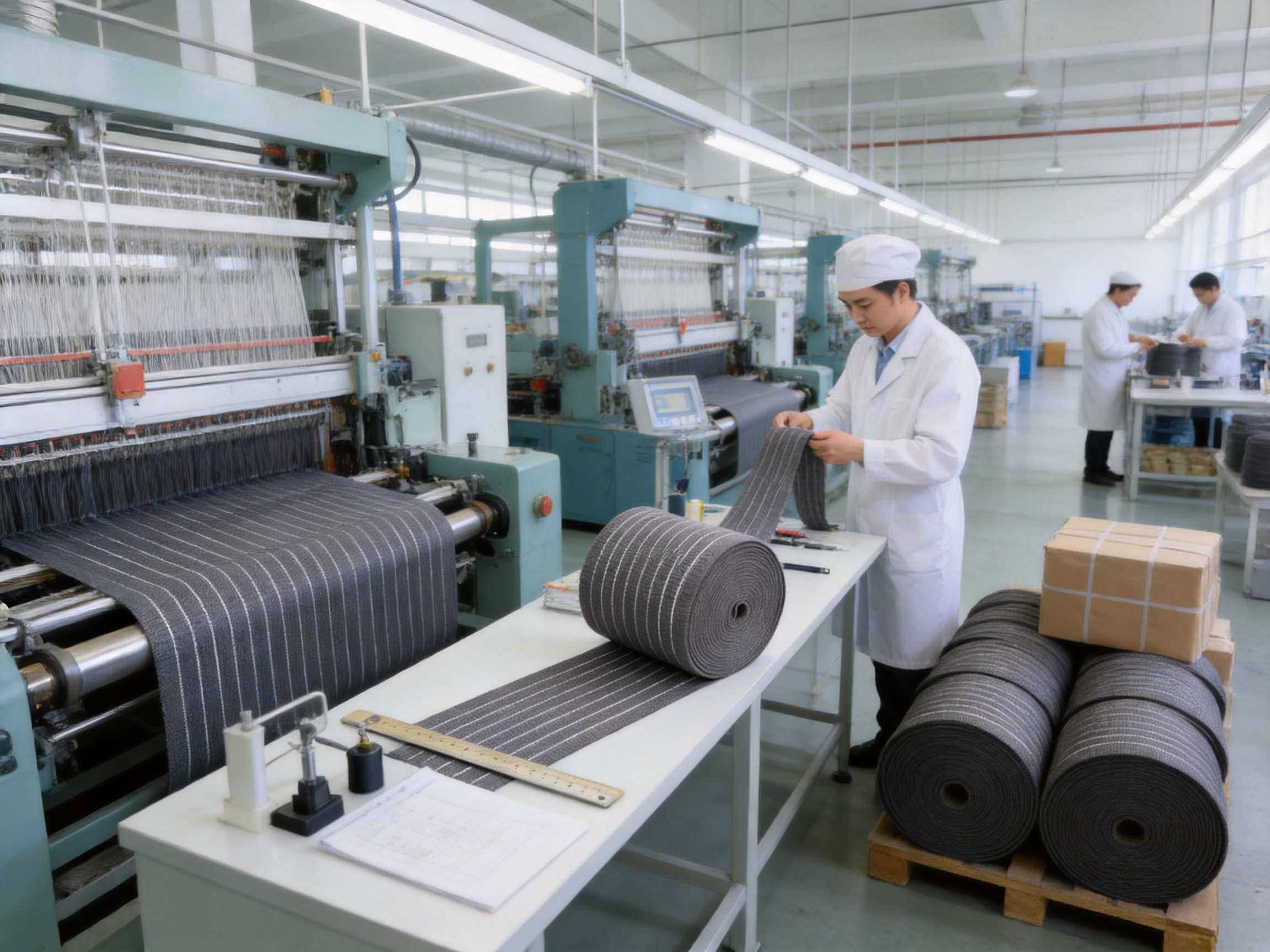
Jinhu Hengxiang Webbing Co., Ltd. is a professional manufacturer of elastic webbing and non-elastic webbing located in Jinhu County, Huai’an City, Jiangsu Province, China. Established in 2005, the company has developed more than two decades of production experience in webbing for sports supports, orthopedic braces, medical protective equipment, and related applications.
The company’s manufacturing capabilities cover research and development, production, sales, service, quality control, and product customization. This integrated approach allows customers to discuss material requirements, product specifications, sampling, testing, packaging, and delivery with one experienced supplier.
Warping Operations
Warping is an important preparation stage in woven textile production. It organizes yarns into a controlled arrangement before they enter the weaving process. Accurate warping helps establish consistent yarn tension and supports the uniformity of the finished webbing.
For a wide elastic panel, properly controlled warping is particularly valuable because the yarn arrangement must remain stable across the full width. Variations introduced at the preparation stage can affect density, appearance, edge quality, and elasticity. Advanced warping machines help the manufacturer manage this stage with greater consistency and production efficiency.
Woven Production
Woven machines interlace yarn systems according to a planned construction. The weaving process determines much of the panel’s surface appearance, firmness, dimensional stability, and functional behavior. Modern equipment can support more precise control of width, pattern, tension, and production speed.
For the 8cm dark grey woven elastic panel, the weaving process is central to achieving a broad, stable structure. The manufacturer’s experience with woven machines supports the production of panels intended to resist curling and maintain a defined shape during subsequent processing.
Knitting and Complementary Production
Although this product is a woven elastic panel, the company also operates knitting equipment and produces different categories of elastic webbing. This broader capability is useful for customers whose product ranges include woven elastic, knitted elastic, narrow elastic bands, elastic hook and loop straps, non-elastic webbing, and medical elastic bandages.
Working with a supplier that understands multiple webbing constructions can help buyers compare materials more effectively. The supplier may recommend a woven, knitted, or non-elastic solution according to the application rather than limiting the customer to one production method.
Packaging and Order Preparation
Packaging affects how elastic panels are stored, transported, and introduced into production. Proper packaging helps protect the material from contamination, unnecessary compression, moisture exposure, and handling damage. The company has invested in packaging machines as part of its production development, supporting more organized order preparation.
For international buyers, packaging discussions may include roll length, carton configuration, labeling, palletization, protection requirements, and documentation. These details can be coordinated according to the customer’s production and warehouse systems.
Quality Control and Certifications
Quality control is important for elastic webbing because performance depends on multiple characteristics rather than appearance alone. Width, color, elasticity, recovery, tensile strength, edge stability, surface consistency, and packaging condition may all affect the suitability of a panel for its intended use.
Jinhu Hengxiang Webbing Co., Ltd. applies quality control throughout material sourcing, processing, testing, and packing. This whole-process approach is intended to reduce variation and support reliable product delivery. Inspection procedures can be adapted to customer requirements and application conditions.
Material Sourcing and Process Monitoring
Material sourcing establishes the foundation for finished-product quality. Yarn and elastic components should be selected according to the required performance, color, texture, and end use. During processing, production parameters must be monitored so the panel maintains consistent width and construction.
Process monitoring can help identify deviations before large quantities are completed. This is particularly useful for custom orders where a specific width, color, texture, or elasticity must be maintained throughout the production run.
Testing Considerations
Testing for an elastic panel may include width measurement, elongation measurement, recovery assessment, tensile testing, appearance inspection, color evaluation, seam behavior, and repeated-stretch testing. The appropriate test method depends on the customer’s technical standard and the product’s intended use.
For support and medical products, testing may also consider skin-contact requirements, laundering, perspiration, friction, and exposure to cleaning agents. The finished garment should be tested as a complete assembly because stitching, lining, closures, and pattern dimensions can influence actual performance.
Oeko-Tex and ISO 13485
The company has obtained Oeko-Tex Standard 100 and ISO 13485 certificates. Oeko-Tex Standard 100 is associated with testing textile products for certain harmful substances. ISO 13485 is a quality management standard associated with medical devices and related quality systems. These certifications reflect the company’s attention to controlled production and applications connected with medical protective products.
Certification requirements can vary according to market, product classification, and customer specification. Buyers should confirm the current certificate scope and the documentation required for their specific project. Nevertheless, the company’s certification background provides a useful basis for customers seeking a more structured and quality-focused webbing supplier.
Customization for Different Product Requirements
Not every garment requires the same elastic response. A casual waistband may need moderate stretch and a soft hand, while an orthopedic brace may require firmer support and more controlled recovery. For this reason, customization is an important part of professional webbing supply.
Jinhu Hengxiang Webbing Co., Ltd. provides customized webbing with tailored elasticity, texture, and color. Customers can discuss the width, construction, surface feel, stretch behavior, recovery, visual appearance, and packaging format needed for their products.
Elasticity Customization
Elasticity can be selected according to the intended fit and support level. A product designed for everyday comfort may require a different elongation profile from a sports support or medical brace. Buyers should provide information about the application, target user, garment dimensions, attachment length, and expected loading conditions.
Sampling is a practical way to evaluate whether the material performs correctly in a prototype. The sample should be sewn into the intended product or a representative test piece, then assessed during stretching, movement, laundering, and repeated use.
Color and Texture Customization
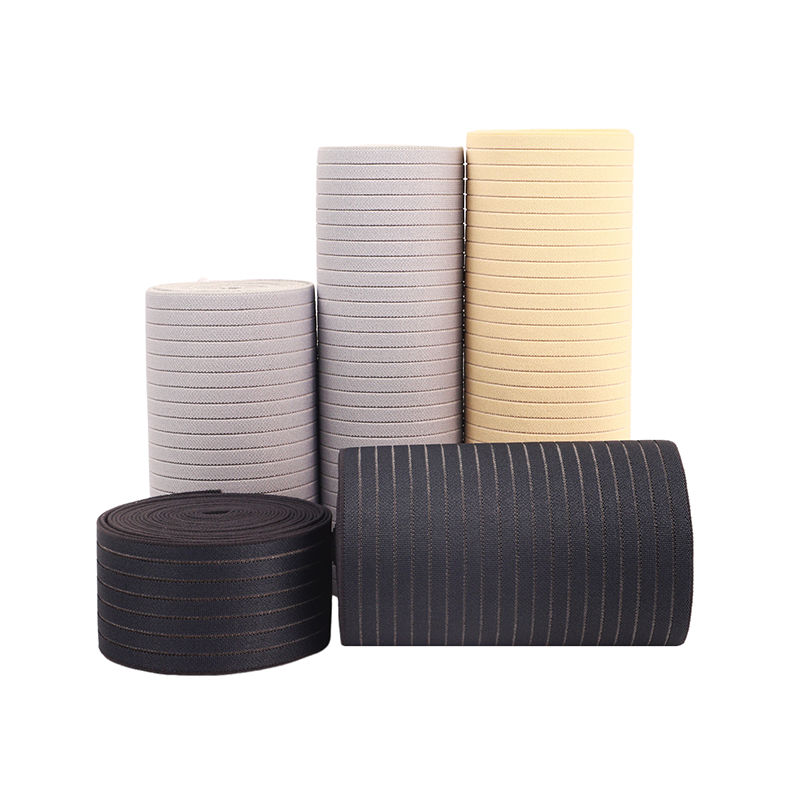
The standard dark grey color offers a versatile option for many applications, but some customers may require a different shade. Color customization can help match brand collections, uniforms, medical product ranges, or fashion designs. Texture may also be adjusted to achieve a particular hand feel, surface appearance, or interaction with adjacent fabrics.
Color approval should be based on physical samples or an agreed color standard because screen images and digital references may not accurately represent the final textile shade. Production lots should also be managed carefully to reduce visible variation between batches.
Width and Construction Requirements
The 8cm width is suitable for broad support areas, but customers may need other dimensions for specific product patterns. Width tolerance, edge condition, density, and construction should be discussed before bulk production. A clear technical specification helps both parties confirm expectations and reduce misunderstandings.
Production Integration and Sewing Guidance
Successful use of an elastic panel requires attention to cutting, feeding, tension, stitching, and finishing. The panel should be stored and handled in a way that prevents unnecessary stretching before it reaches the sewing line. Rolls should be protected from excessive pressure, moisture, and contamination.
During cutting, manufacturers should use accurate measurements and maintain consistent orientation. If the panel is integrated into a waistband, the attachment length should be calculated according to the required finished circumference and stretch level. Different garments may require different gathering or extension methods.
When sewing, the selected stitch type and thread should be compatible with the panel and the outer fabric. Excessive needle damage, overly tight stitching, or insufficient seam reinforcement can reduce the performance of the complete assembly. Operators should evaluate whether the panel is sewn flat, stretched during attachment, or joined with another elastic component.
For wide panels, even feeding is essential. Uneven feeding may create wrinkles, puckering, or variable tension across the garment. Guides, fixtures, and appropriate machine settings can help maintain alignment. Production teams should conduct trial sewing before beginning large-scale orders, especially when the panel is used in a new garment design.
Benefits for Buyers and Product Developers
Choosing a specialized woven elastic supplier can provide advantages beyond the material itself. Product developers can access technical experience, customization support, production equipment, quality procedures, and packaging coordination from one source.
The company produces millions of meters of elastic and non-elastic webbing every month, demonstrating substantial production capacity. This may be valuable to customers that need repeat orders, stable supply, or support for expanding product lines. Capacity should always be matched with confirmed specifications, lead times, and quality requirements, but established production capability can help reduce supply uncertainty.
OEM and ODM orders are welcome. OEM cooperation allows customers to manufacture products according to their own specifications, while ODM cooperation may involve greater support in developing a suitable webbing solution. These models can be useful for apparel manufacturers, sports-support brands, medical product companies, distributors, and wholesalers.
Competitive pricing is another stated company strength. Cost competitiveness should be evaluated together with product consistency, service, delivery reliability, testing, and total production efficiency. A lower unit price is not necessarily economical if the material produces high waste, sewing difficulties, or inconsistent finished garments. A stable woven panel can support value by reducing handling problems and improving production repeatability.
Supply for International Markets
The company’s products are sold across China and exported to North America, Eastern Europe, the Middle East, South Asia, and other regions. Experience with international customers can support communication about specifications, packaging, documentation, shipping arrangements, and regional expectations.
International buyers should provide complete product information at the quotation stage. Useful details include required width, color, estimated quantity, application, stretch requirement, roll length, packaging preference, destination, and applicable certifications. Clear information helps the supplier prepare a more accurate proposal.
Recommended Evaluation Process
Before placing a bulk order, buyers should assess the 8cm dark grey woven elastic panel against the actual requirements of the finished product. A structured evaluation process can reduce risk and support better purchasing decisions.
Step One: Define the Application
Identify whether the panel will be used in a waistband, sports support, orthopedic brace, medical garment, uniform, or another product. Describe the expected movement, contact area, support level, and wear frequency. The application determines the most important performance characteristics.
Step Two: Confirm Dimensions
Confirm the required width, thickness or profile, roll length, edge condition, and dimensional tolerances. The nominal width of this product is 8cm, but the final specification should be agreed before production.
Step Three: Establish Stretch Requirements
Define the desired elongation, recovery, firmness, and finished tension. If possible, provide a test method or reference sample. Terms such as “firm,” “medium,” and “soft” can mean different things to different buyers, so measurable criteria are preferable.
Step Four: Review Color and Appearance
Approve the dark grey color using a physical sample or recognized color reference. Inspect the surface, edges, weaving consistency, and overall appearance. If the product will be visible on the finished garment, evaluate it alongside the selected fabric.
Step Five: Conduct Prototype Testing
Sew the panel into a prototype and test the complete product. Check comfort, fit, recovery, edge behavior, seam security, appearance, and movement performance. Where relevant, include laundering, perspiration, friction, and repeated-stretch testing.
Step Six: Confirm Production and Packaging
After the sample is approved, confirm the final specification, production quantity, delivery schedule, inspection arrangements, labeling, roll length, carton format, and other packaging details. Written confirmation helps ensure that future repeat orders are consistent.
Care, Handling, and Product Life
The service life of an elastic panel depends on the material, product design, usage frequency, washing conditions, exposure to heat and chemicals, and quality of assembly. The panel is designed for durable performance, but no elastic textile should be exposed to conditions beyond its specified limits.
Finished garments should be washed according to the care instructions established by the product manufacturer. Excessive heat, harsh chemicals, prolonged sunlight, and aggressive mechanical treatment may affect elastic recovery and color. Medical and sports products should be evaluated under the cleaning routines expected in their target market.
During warehouse storage, rolls should be kept in a clean, dry environment away from direct sunlight and extreme heat. Heavy objects should not be placed on top of the rolls for extended periods. Proper storage helps preserve the panel’s shape and prevents unnecessary deformation before production.
Q&A
What is an 8cm dark grey woven elastic panel?
It is a broad elastic textile component with a nominal width of 8cm, a dark grey color, and a woven construction. It is designed to provide firm support, stable elasticity, shape retention, and resistance to curling for garment and protective-product applications.
What are the main uses of this panel?
Common uses include waistbands, activewear, sports supports, orthopedic braces, medical protective equipment, workwear, uniforms, and other garments requiring a wide, stable stretch component.
How does it differ from a narrow elastic band?
The 8cm panel covers a broader area and can distribute tension more evenly. It may reduce the need to combine several narrow strips and can provide a cleaner, more stable support section in the finished product.
Is the panel suitable for medical products?
It may be suitable for medical protective products, orthopedic braces, and support garments when the material is correctly specified and tested for the intended application. The complete medical product must meet all applicable technical, regulatory, and safety requirements.
Can the color be customized?
The standard product is dark grey, but the manufacturer provides customized webbing with tailored color options. Customers should submit a color reference or approve a physical sample before bulk production.
Can the elasticity be customized?
Yes. Elasticity, firmness, texture, and other construction characteristics may be discussed according to the intended use. Application details and performance targets should be supplied so the manufacturer can recommend an appropriate specification.
Does the panel resist curling?
The wide woven design is intended to resist curling during use. Actual edge behavior can also be influenced by sewing tension, fabric compatibility, laundering, and the design of the finished product.
What certifications does the manufacturer have?
The company has obtained Oeko-Tex Standard 100 and ISO 13485 certificates. Buyers should confirm the current validity and scope of certification for their particular project and market.
Can the product be used in high-volume manufacturing?
The manufacturer produces millions of meters of elastic and non-elastic webbing every month and has developed advanced warping, knitting, weaving, and packaging capabilities. This production background supports OEM, ODM, wholesale, and repeat-order cooperation, subject to confirmed specifications and capacity planning.
What information should be provided when requesting a quotation?
Buyers should provide the required width, color, quantity, application, elasticity or firmness target, roll length, packaging preference, destination, testing requirements, and any certification or compliance needs. Detailed information allows the supplier to prepare a more accurate quotation and sample proposal.
How should the panel be tested before bulk production?
The panel should be sewn into a representative prototype and assessed for fit, stretch, recovery, support, appearance, seam performance, edge stability, laundering, and repeated use. The testing program should reflect the actual conditions expected in the finished product.
Conclusion
The 8cm dark grey woven elastic panel is a practical solution for products that require broad coverage, stable stretch, firm support, and reliable shape retention. Its durable woven structure offers advantages over narrow elastic strips and less structured materials when the application requires a continuous, stable support zone.
The panel’s 8cm width can improve tension distribution, simplify assembly, reduce the need for overlapping components, and create a clean visual profile. Its dark grey color provides design flexibility, while resistance to curling supports easier handling and a more orderly finished appearance.
Jinhu Hengxiang Webbing Co., Ltd. strengthens this product offering through specialized manufacturing equipment, established quality procedures, customization capabilities, international supply experience, and production expertise in sports supports, orthopedic braces, and medical protective equipment. The company’s warping, weaving, knitting, testing, and packaging resources enable it to support both standard and customized webbing requirements.
For apparel manufacturers, sports-support brands, medical product companies, and distributors, the product can serve as a reliable component for waistbands, activewear, protective garments, and structured elastic assemblies. Proper specification, sampling, sewing trials, and application-specific testing will help buyers achieve the best results from this wide woven elastic panel.
References
1. Jinhu Hengxiang Webbing Co., Ltd. Product information for 8cm dark grey woven elastic panels.
2. Jinhu Hengxiang Webbing Co., Ltd. Company information and manufacturing capability profile.
3. Oeko-Tex Association. Standard 100 principles for textile testing and harmful-substance evaluation.
4. International Organization for Standardization. ISO 13485 quality management principles for medical devices.
5. Textile Institute. General principles of woven textile construction, elastic materials, and fabric performance.
6. Apparel manufacturing technical practice. Guidance on elastic component selection, sewing integration, dimensional control, and product testing.