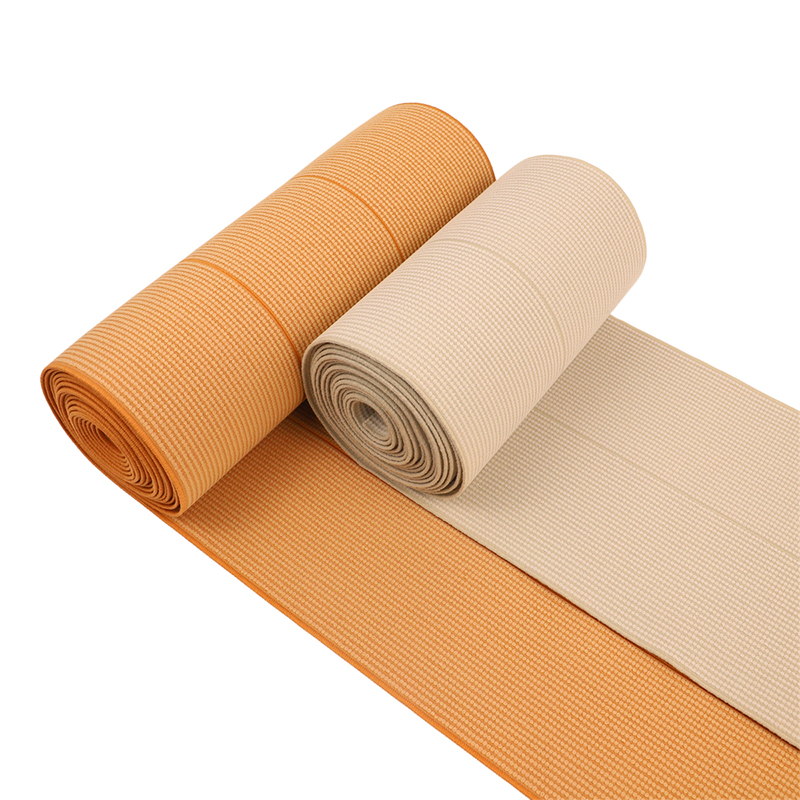

 en
en
 English
 русский
 Français
 Español
 Português
 Tiếng Việt
Content
- 1 Product Overview
- 2 Key Product Specifications
- 3 Construction Designed for Adjustable Support
- 4 Advantages Compared with Conventional Elastic Materials
- 5 Application Areas
- 6 Manufacturing Capabilities and Process Strengths
- 7 Customization for OEM and ODM Programs
- 8 Why Work with an Experienced Webbing Manufacturer?
- 9 Product Development and Quality Evaluation
- 10 Sewing and Integration Considerations
- 11 Benefits for Finished-Product Brands
- 12 Responsible and Long-Term Manufacturing
- 13 Recommended Purchasing Process
- 14 Q&A
- 14.1 What is a three-panel elastic webbing with one-side loop?
- 14.2 What materials are used?
- 14.3 What widths are available?
- 14.4 Which side should face the wearer?
- 14.5 How does the loop side work?
- 14.6 Can the product be customized?
- 14.7 Is the material suitable for postoperative products?
- 14.8 What makes this product different from narrow elastic tape?
- 14.9 What quality documents may customers request?
- 14.10 How should customers begin a development project?
- 15 Conclusion
- 16 References
- 17 Product: 3 Panels Elastic W 1 Side Loop
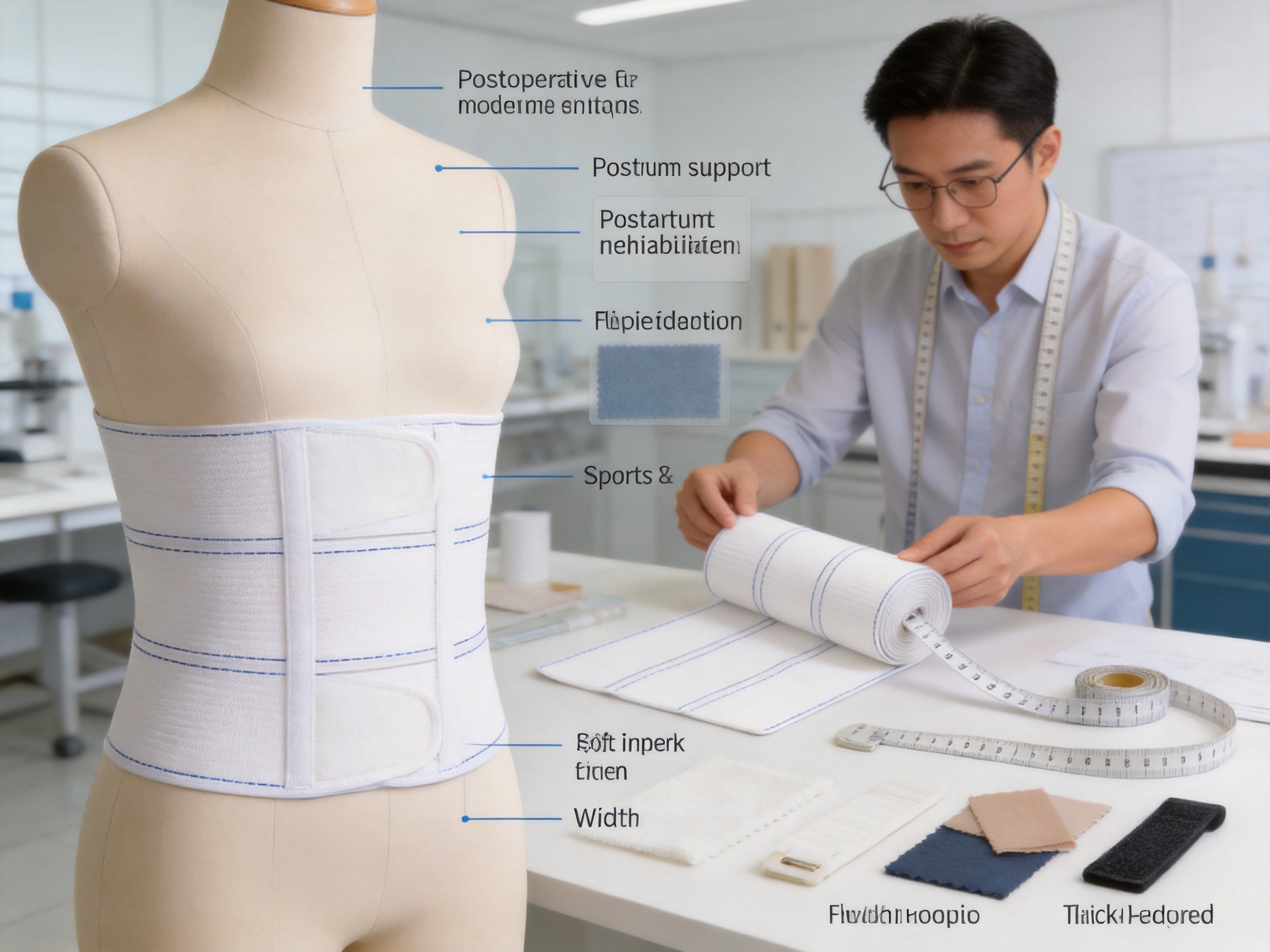
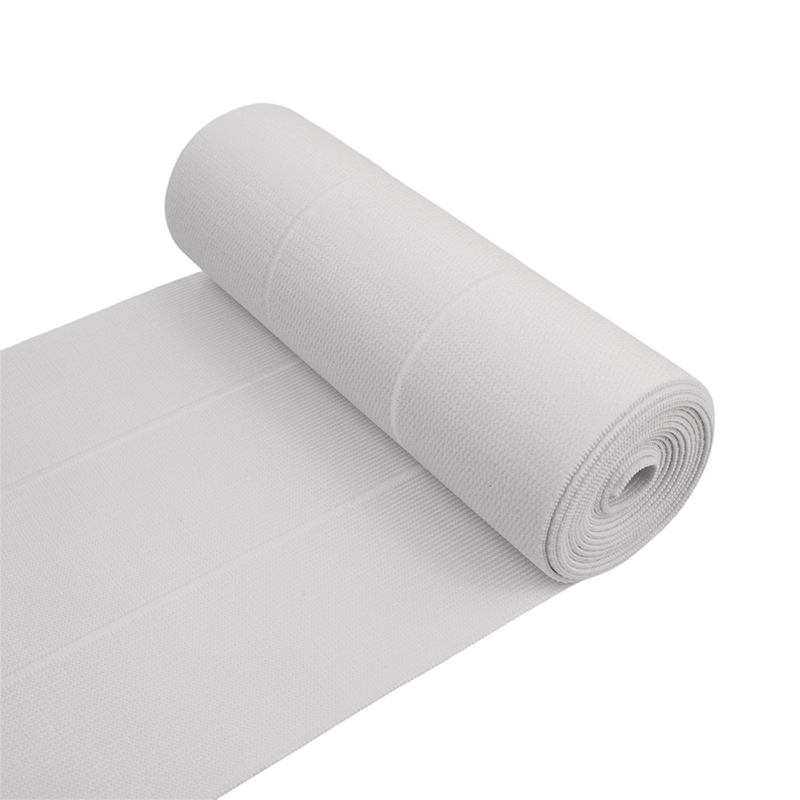
Abdominal support products depend on more than simple stretch. They must combine controlled elasticity, comfortable contact, reliable fastening, and stable construction so that the finished binder can remain secure during movement. The three-panel elastic webbing with one-side loop is designed for manufacturers of abdominal binders, postoperative support products, maternity support systems, rehabilitation equipment, and related medical protective equipment. Its construction brings together a flexible elastic base, a soft plush surface, and a loop-compatible fastening side in one practical webbing component.
This product is manufactured by Jinhu Hengxiang Webbing Co., Ltd., a Chinese webbing manufacturer with experience in elastic and non-elastic textile products. The company develops webbing for sports protection, orthopedic braces, abdominal supports, and other applications requiring dependable textile performance. Its production capabilities include warping, knitting, weaving, testing, finishing, and packaging, allowing customers to source customized webbing from one experienced supplier.
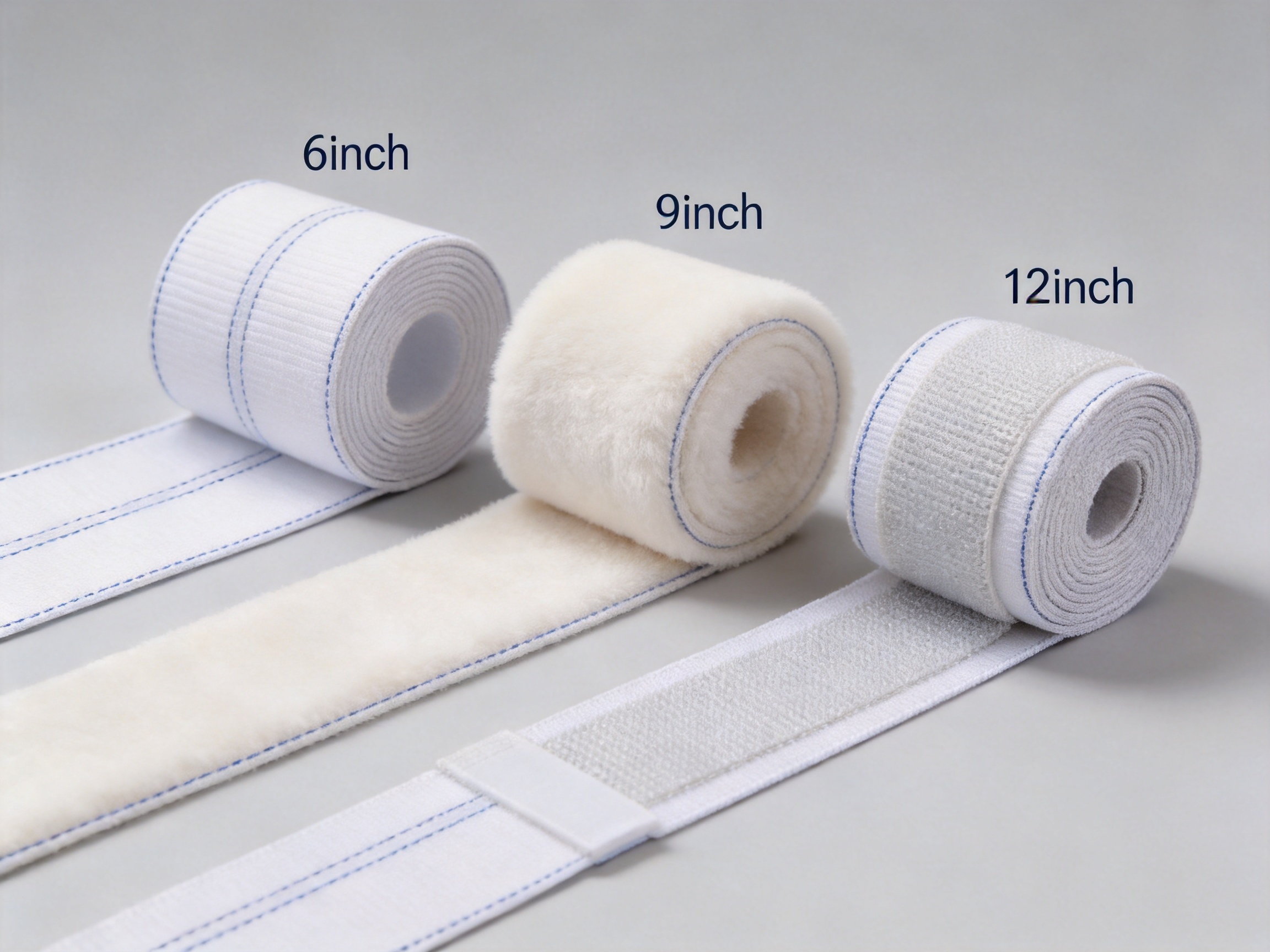
The product is available in 6-inch, 9-inch, and 12-inch widths. These options help manufacturers select the appropriate coverage for different abdominal binder designs, body sizes, support requirements, and finished-product specifications. The material composition may be developed with polyester, nylon, and spandex, while the latex-free design uses synthetic fibers instead of natural rubber latex. This makes the webbing suitable for applications where latex avoidance is an important purchasing or product-development consideration.
For manufacturers seeking a flexible, comfortable, and adjustable closure component, this three-panel construction offers a practical alternative to assembling several separate textile layers. The integrated design can simplify product construction, support consistent production, and give finished abdominal binders a clean and functional fastening system.
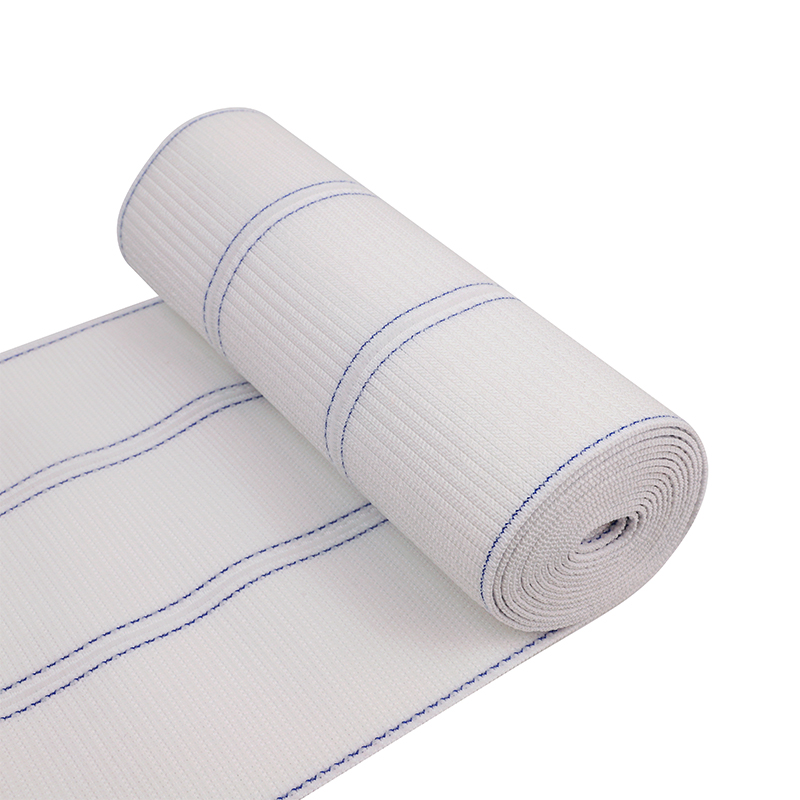
3 Panels Elastic W 1 Side Loop
Product Overview
The three-panel elastic webbing with one-side loop is a specialized elastic material created for abdominal binder applications. It is identified by three main characteristics: a multi-panel elastic structure, a soft side for user contact, and a loop surface that accepts a hook fastening component. Together, these features allow the finished binder to provide adjustable compression and a more adaptable fit.
The webbing is elastic across its working direction, enabling it to follow the contours of the abdomen and accommodate changes in body movement. Rather than functioning as a rigid belt, it is designed to stretch and recover as the wearer sits, stands, walks, bends, or changes position. This flexibility is especially useful in support products that need to remain close to the body while allowing ordinary mobility.
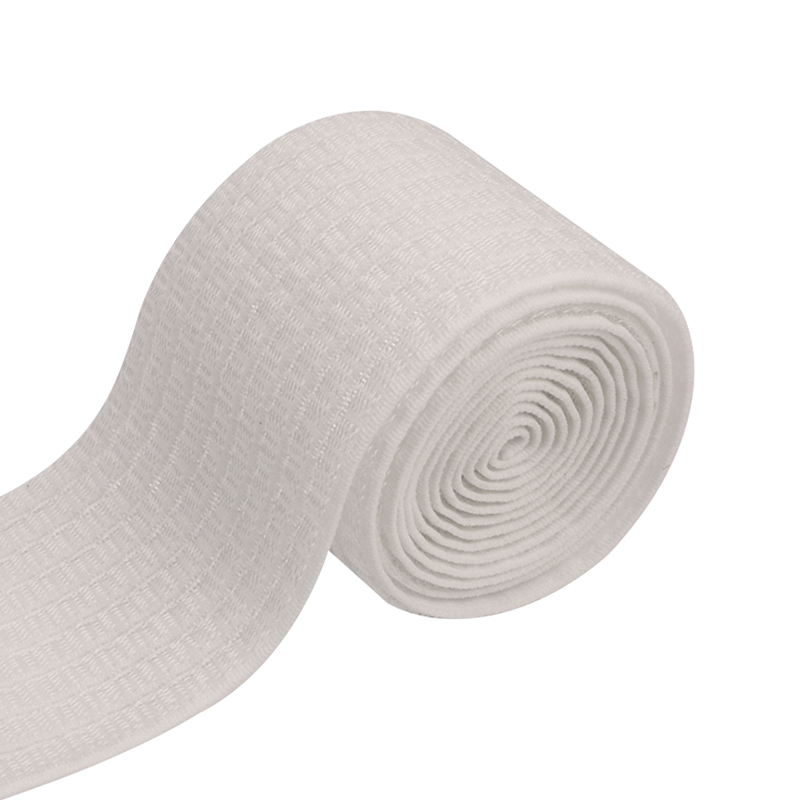
One side is flat, creating a stable and practical surface for integration into the finished product. The opposite side has a plush, soft-touch texture that can improve the feel of the material against clothing or skin, depending on the construction of the finished binder. The loop side is intended to engage with a hook component, enabling the manufacturer to create an adjustable closure. The hook can be positioned at different points on the loop surface, allowing the wearer or healthcare provider to modify the fit.
The three-panel format also contributes to a broader and more stable support area than a narrow elastic band. A wide, multi-panel construction can distribute tension over a larger section of the abdomen, reducing the concentration of force at a single narrow line. For product designers, this can support the development of abdominal binders that balance coverage, flexibility, and adjustability.
Key Product Specifications
| Specification | Available Information | Product Development Significance |
|---|---|---|
| Product type | Three-panel elastic webbing with one-side loop | Provides elastic support and adjustable hook-and-loop fastening |
| Primary category | Abdominal binder elastic | Suitable for abdominal support products and related medical protective equipment |
| Material options | Polyester, nylon, and spandex | Supports flexibility, durability, recovery, and textile customization |
| Latex status | Latex-free synthetic construction | Useful for products designed to avoid natural rubber latex |
| Width options | 6 inches, 9 inches, and 12 inches | Allows different coverage levels and finished-product designs |
| Surface construction | One side flat; opposite side plush and soft touch | Combines manufacturing practicality with improved contact comfort |
| Fastening compatibility | Loop surface for hook engagement | Enables adjustable closure positioning |
| Typical applications | Abdominal binders, postoperative support, maternity support, rehabilitation products, and protective equipment | Supports several medical and wellness product categories |
Specific performance values, such as stretch percentage, recovery rate, tensile strength, colorfastness, and dimensional tolerance, can be established according to the customer’s finished-product requirements. Manufacturers may request development samples and define inspection criteria before mass production. This approach is important because the ideal elastic behavior for a postoperative binder may differ from the requirements of a sports support or a general-purpose abdominal belt.
Construction Designed for Adjustable Support
Three-Panel Elastic Structure
The three-panel structure is one of the main functional advantages of this webbing. A wider support component can cover more of the abdominal area than a narrow elastic strip, while the panel arrangement helps the material adapt to body contours. It can be incorporated into a binder as a central support section, a broad closure area, or a structural belt component depending on the customer’s pattern and sewing method.
In practical product development, a three-panel construction may help designers manage the relationship between stretch and coverage. A narrow band often creates a concentrated line of pressure. A broader section distributes the same general fastening tension over a larger surface. This does not mean that the webbing automatically provides a clinically appropriate level of compression; rather, it gives manufacturers a textile foundation from which they can engineer the final product.
The panel format can also make the finished binder appear more substantial and professionally constructed. It may reduce the need to combine multiple narrow strips side by side, which can create visible seams, uneven tension, or additional assembly steps. By using a wider integrated material, manufacturers may streamline cutting and sewing operations while maintaining a consistent visual appearance.
Soft Plush Contact Surface
Comfort is a major consideration in any abdominal support product. A binder may be worn for extended periods, and the user may be recovering from surgery, childbirth, injury, or another condition that makes pressure and friction especially noticeable. The plush side of this webbing provides a softer textile surface than a plain rigid woven tape or an unprocessed elastic strip.
The soft-touch surface can help reduce the harsh feel sometimes associated with direct contact between elastic materials and clothing or skin. It may also help the finished product feel warmer and more textile-like. Designers can choose whether the plush side should face inward toward the body, contact an inner lining, or be integrated into a layered construction. The final comfort result will depend on the complete binder design, including lining, seams, edge finishing, hook placement, and the amount of applied tension.
For manufacturers, the plush surface offers a further design advantage because it can reduce the need for additional comfort layers in certain constructions. In some products, a separate lining may still be appropriate, particularly where hygiene, moisture management, or skin sensitivity requirements call for a dedicated inner fabric. However, the built-in soft surface gives designers another option for balancing comfort and production efficiency.
One-Side Loop Fastening
The loop surface is intended to work with a hook component. This allows the closure to be positioned at different points, making the finished abdominal binder adjustable rather than fixed at one circumference. Adjustable hook-and-loop fastening is widely used in support products because it allows the wearer, caregiver, or healthcare professional to make incremental fit changes.
An adjustable loop surface can also simplify sizing strategies. Instead of producing a very large number of circumference-specific models, a manufacturer may be able to use a broader adjustment range within selected size groups. The actual range will depend on the product pattern, hook length, elastic recovery, panel width, and intended user population. Careful prototype testing is still required to determine whether a particular size provides sufficient adjustment without excessive overlap or insufficient engagement.
Compared with a fixed sewn closure, the one-side loop construction gives finished-product designers more flexibility. It may support a wraparound design, a front closure, a side closure, or a configuration in which the hook component is attached to a separate extension. The loop side can be incorporated into different sewing patterns, giving OEM and ODM customers room to create differentiated products.
Advantages Compared with Conventional Elastic Materials
Abdominal binder manufacturers can choose from many materials, including narrow elastic bands, wide knitted elastic, woven elastic panels, laminated fabrics, and hook-and-loop assemblies. The three-panel elastic webbing with one-side loop is not intended to replace every material in every design. Its value comes from combining several useful functions in one component.
Integrated Elasticity and Fastening Compatibility
A conventional elastic band may provide stretch but require separate fabric panels and a separately attached closure system. A standard hook-and-loop tape may provide fastening but lack the width, softness, and body-conforming elasticity required for a comfortable abdominal binder. This product combines a broad elastic foundation with a loop surface, reducing the need to source and coordinate unrelated materials.
Integration can help reduce assembly complexity. When materials have different stretch behaviors, sewing them together may create puckering, uneven tension, or local stress. A purpose-developed elastic webbing can give the designer a more consistent starting point. The hook element will still need to be selected and attached correctly, but the loop-compatible surface is already part of the webbing construction.
Broader Coverage than Narrow Elastic Tape
Narrow elastic tape is useful for hems, garment edges, small supports, and localized restraint. However, it may not provide enough coverage for a full abdominal binder. A wide, three-panel material offers a larger contact area and can support a more substantial finished product. The available 6-inch, 9-inch, and 12-inch widths allow manufacturers to develop different coverage levels without changing the basic product concept.
Broader coverage can also contribute to visual balance. A wide abdominal binder generally requires a material that looks and feels proportionate to its intended function. Using several narrow bands may create visible gaps or a segmented appearance. The three-panel design provides a more unified surface that can be incorporated into a professional medical support product.
Softness Compared with Plain Structural Webbing
Some structural webbings are designed primarily for strength and load retention. They may be durable but can feel coarse or firm when placed near the body. The plush side of this product is intended to offer a softer contact experience. This is particularly valuable in products worn during recovery, when the user may be sensitive to rubbing and pressure.
Softness must always be evaluated together with durability and hygiene. A comfortable surface should maintain its useful texture after handling, sewing, and normal product care. Manufacturers can assess the plush side during sample evaluation and establish appropriate washing, abrasion, and appearance requirements for the final application.
Latex-Free Material Selection
The use of synthetic fibers such as polyester, nylon, and spandex supports a latex-free product direction. Natural rubber latex is not required for the basic elasticity of this webbing. For manufacturers developing products for healthcare channels, latex-free construction can be a valuable specification because it helps address concerns related to natural rubber latex exposure.
Latex-free status does not by itself guarantee that a finished product is suitable for every user or regulatory market. All components, adhesives, coatings, dyes, and packaging materials should be reviewed within the customer’s compliance program. Nevertheless, starting with a latex-free elastic webbing can make material selection more straightforward for brands that require synthetic alternatives.
Application Areas
Postoperative Abdominal Binders
Abdominal binders are commonly developed for use following abdominal procedures, including hernia surgery and cesarean section. They may also be used after other operations where a clinician recommends external support. The purpose of a binder can include helping stabilize the abdominal area, supporting comfort during movement, and giving the user a sense of security during recovery.
This webbing can be incorporated into postoperative binder designs that require broad coverage, adjustable tension, and a soft contact surface. The finished product should be designed carefully so that it does not create excessive pressure, interfere with breathing, restrict circulation, or irritate an incision. Product instructions should make clear that users should follow advice from a qualified healthcare professional.
Maternity and Postpartum Support
Pregnancy and the postpartum period can involve substantial changes in abdominal shape and comfort needs. An adjustable support product may be designed to accommodate changing measurements within an intended size range. The loop surface provides flexibility for fit adjustment, while the elastic construction can follow body movement.
Postpartum products require particularly thoughtful design. The product should use smooth edges, appropriate pressure distribution, breathable layers where needed, and a closure system that is easy to adjust. The webbing’s width options allow manufacturers to develop lighter or more comprehensive support styles, subject to user testing and professional product guidance.
Abdominal Injury and Rehabilitation Supports
Some rehabilitation products are designed to provide external support around the torso during a period of reduced activity or physical recovery. The three-panel webbing may be used as part of a rehabilitation belt or support garment where adjustability and broad coverage are important. As with postoperative products, the finished design must be evaluated for comfort, movement, pressure, and safe use.
The elastic recovery of the material can help the support remain close to the body as the wearer changes position. However, manufacturers should not assume that a particular stretch level is suitable for every rehabilitation application. The finished product needs application-specific testing, and any medical performance claims should be supported by appropriate evidence.
Sports Protection and Orthopedic Products
Although the product is categorized as abdominal binder elastic, the same material concept may be useful in sports protection and orthopedic brace development. Athletes and active users may require broad support around the lower back or abdomen, especially in designs intended to remain adjustable during movement. The plush surface can improve comfort, while the loop closure can help users make fit changes before or during activity.
For sports applications, manufacturers may prioritize stretch recovery, sweat-handling, abrasion resistance, and repeated fastening performance. These requirements should be stated during development so that the material can be evaluated under realistic conditions. A medical support material and a high-intensity sports material may share a construction concept while requiring different performance specifications.
Manufacturing Capabilities and Process Strengths
The performance of elastic webbing depends heavily on manufacturing control. Fiber selection alone does not determine the quality of the finished material. Yarn preparation, machine settings, tension control, weaving or knitting parameters, surface formation, inspection, and packaging all influence the final result. Jinhu Hengxiang Webbing Co., Ltd. operates production capabilities covering several of these stages, supporting coordinated manufacturing from raw-material preparation through shipment.
Material Sourcing and Preparation
The production process begins with the selection and preparation of textile materials. Polyester, nylon, and spandex each contribute different characteristics. Polyester is commonly valued for dimensional stability and resistance to everyday wear. Nylon is known for strength and flexibility. Spandex supplies stretch and recovery. The final performance depends on the blend, yarn construction, processing conditions, and intended end use.
Material sourcing should be managed with consistency in mind. Variations in yarn count, elasticity, color, surface finish, and moisture content can affect production behavior. A professional manufacturer evaluates incoming materials and maintains production records so that similar orders can be repeated more reliably. For medical protective equipment, traceability and documentation are particularly important because customers may need to demonstrate control over supplied components.
Warping and Yarn Arrangement
Warping prepares yarns for the weaving or related textile process by arranging them in an orderly and controlled configuration. Accurate yarn arrangement is essential for stable width, even structure, and consistent tension. If yarn tension varies significantly during preparation, the finished webbing may show irregular stretch, edge distortion, or uneven visual appearance.
Advanced warping equipment helps manufacturers manage yarn placement and production repeatability. The appropriate settings depend on the selected fiber, yarn specification, webbing width, and construction. For a broad three-panel elastic product, stable preparation is especially important because the material must maintain consistent behavior across its full width.
Weaving and Knitting Technology
Hengxiang has introduced and updated weaving and knitting machines as part of its production development. Different textile structures offer different balances of stretch, stability, texture, and appearance. Weaving can provide a controlled and structured webbing foundation, while knitting can create flexible constructions with distinctive surface characteristics. The choice depends on the product design and customer requirements.
For this three-panel elastic webbing, machine settings must coordinate the elastic yarns, structural yarns, panel configuration, and loop surface. The flat side and plush side require controlled formation so that the two surfaces perform their intended functions. Consistent machine operation helps reduce variation between production batches and supports more predictable sewing behavior for the customer.
Surface Formation and Finishing
The plush surface is an important part of the product’s user-facing character. Surface finishing must be controlled so that the material feels soft without becoming unstable or excessively prone to shedding. The flat side must remain suitable for handling, cutting, and attachment within the finished binder. Finishing conditions can influence color, hand feel, shrinkage, edge stability, and dimensional behavior.
Manufacturers may assess the webbing after finishing for appearance, width, elasticity, surface uniformity, and edge condition. Any customer-specific requirements, such as color matching or special hand feel, should be defined before production. A clear specification allows the manufacturer to balance softness with durability and production efficiency.
Inspection and Quality Control
Quality control should take place throughout the manufacturing process rather than only at the final packing stage. Incoming materials can be checked before use, machine output can be monitored during production, and finished rolls can be inspected before release. Typical inspection points may include width, color, surface appearance, elastic extension, recovery, tensile behavior, edge quality, and packaging condition.
For medical and protective applications, customers may also request batch identification, production records, test reports, and samples retained for reference. The exact inspection program should reflect the product’s market, risk level, and intended claims. A manufacturer with established quality procedures can help customers identify which tests are most relevant to their finished product.
The company states that it maintains strict quality control across material sourcing, processing, testing, and packing. It has obtained Oeko-Tex Standard 100 and ISO 13485 certificates. These certifications are valuable indicators of structured quality and product-safety management, although customers should review the scope, validity, and applicability of any certification to the specific product and order.
Packaging and Shipment Preparation
Elastic webbing can be affected by improper storage, compression, moisture, dust, and rough handling. Packaging therefore plays an important role in preserving the material from the factory to the customer. Rolls or packages should be protected against contamination and marked clearly with product information, lot details, quantity, and handling instructions as required by the buyer.
Organized packaging also supports warehouse efficiency. Customers may need webbing in standard rolls, specified lengths, or customized packing units. By discussing packaging requirements during the quotation stage, manufacturers can prepare the material in a way that fits the customer’s cutting, sewing, and inventory systems.
Customization for OEM and ODM Programs
Abdominal binder brands often require more than an off-the-shelf material. They may need a specific color, width, stretch level, surface texture, hook engagement, roll length, or packaging format. Hengxiang welcomes OEM and ODM orders and can work with customers to develop elastic and non-elastic webbing for specific applications.
Width Customization
The standard width options of 6 inches, 9 inches, and 12 inches cover several common design needs. A 6-inch width may suit a more compact support or a narrower body area. A 9-inch width can provide a balanced combination of coverage and flexibility. A 12-inch width may be selected for a broad abdominal panel or a product intended to provide more extensive coverage.
These descriptions are general design considerations rather than fixed medical indications. The correct width depends on the finished pattern, user measurements, closure placement, and intended function. Customers can provide technical drawings or sample products so that the supplier can recommend a practical development direction.
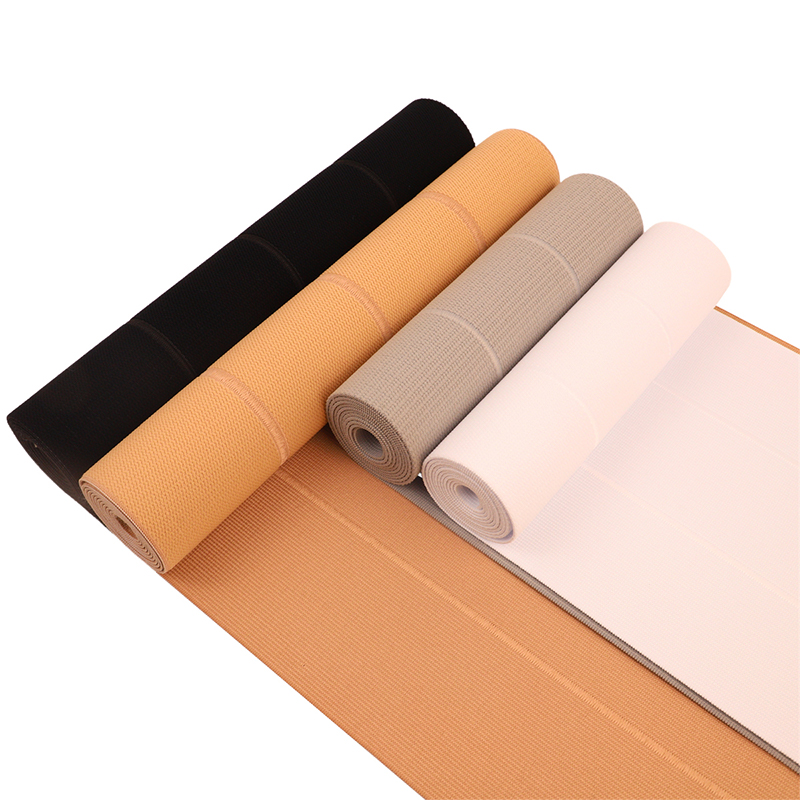
Color and Appearance
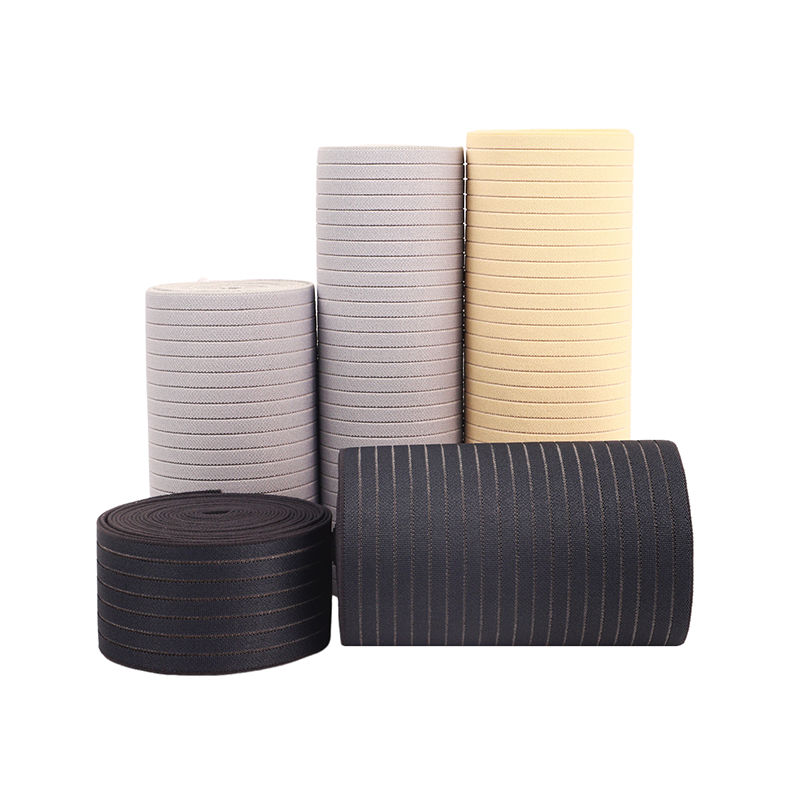
Color can contribute to brand identity and product coordination. Medical support products are often produced in neutral colors, but sports and lifestyle products may use more varied color systems. Customized dyeing or color matching should be evaluated for shade consistency, colorfastness, and compatibility with the customer’s other materials.
Appearance consistency is especially important when the webbing is visible on the outside of the finished binder. Customers may request approval samples before bulk production. Sample approval helps confirm color, texture, width, elasticity, and overall visual effect before the order enters full production.
Elasticity and Recovery
Elasticity is not a single universal specification. Some binders require gentle flexibility, while others require stronger recovery to maintain a close fit. A customer should specify how the material will be used, how much it will be stretched during application, and how long it may remain under tension.
Testing may include extension under a defined load, recovery after a set period, repeated stretch cycles, and dimensional change after laundering or environmental exposure. Establishing these requirements early helps prevent misunderstandings. The supplier can then select suitable yarns and production settings for the intended performance range.
Texture and Hand Feel
The difference between the flat side and plush side gives customers an opportunity to specify how the material should interact with the finished product. Some applications may place the plush surface toward the body, while others may use a separate liner and position the plush side within a layered construction. The desired hand feel can range from soft and cushioned to firmer and more structured.
Hand feel should be evaluated on actual samples rather than described only with general terms. Product developers can compare samples for softness, surface density, flexibility, friction, and sewing behavior. This process helps align the webbing with the overall user experience of the finished binder.
Why Work with an Experienced Webbing Manufacturer?
Purchasing webbing from a specialized manufacturer can provide advantages over sourcing individual textile components from unrelated suppliers. A dedicated webbing company understands the interaction between yarns, machine settings, width, elasticity, surface texture, and finishing. This technical experience can reduce development time and help customers solve issues before mass production.
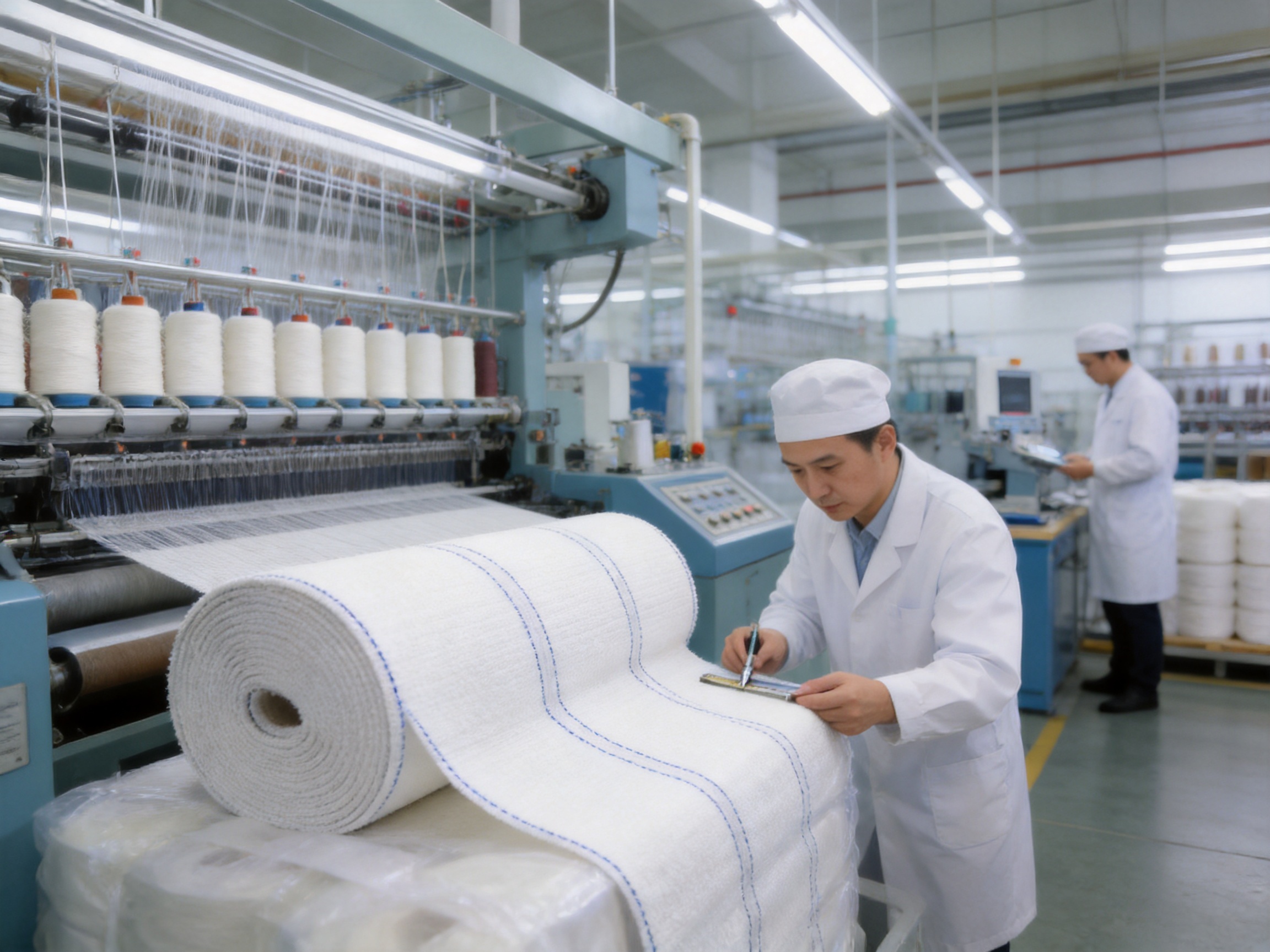
Hengxiang was established in 2005 and has developed more than two decades of production experience. Its product range includes elastic webbing and non-elastic webbing for sports supports, orthopedic braces, medical protective equipment, and related applications. The company reports monthly production capacity of millions of meters, supported by warping, knitting, weaving, and packaging equipment.
Scale can be useful for customers that require stable supply across repeated orders. However, production volume is only valuable when accompanied by quality control and communication. Customers should evaluate sample consistency, lead time, inspection documentation, responsiveness, and the supplier’s ability to maintain specifications from one batch to the next.
The company’s location in Jinhu County, Huai’an City, Jiangsu Province, places it within a major Chinese manufacturing environment with access to textile resources, equipment, labor, logistics, and supporting industries. Its export experience includes North America, Eastern Europe, the Middle East, South Asia, and other regions. This international exposure can help the company understand different packaging, communication, and product-development expectations.
Hengxiang also emphasizes competitive pricing, timely delivery, reliable quality, and customized texture, elasticity, and color. These strengths are particularly relevant to OEM and ODM customers that need a balance between technical performance and commercial practicality.
Product Development and Quality Evaluation
Before using the webbing in a commercial abdominal binder, manufacturers should conduct a structured evaluation. The first stage is visual and dimensional inspection. The sample should be checked for width, edge quality, color uniformity, flat-side construction, plush texture, and loop-surface consistency.
The second stage is functional testing. The manufacturer should evaluate how the webbing stretches, how it recovers, how it behaves when sewn, and how reliably the hook component engages with the loop surface. Testing should use the actual hook material and sewing method planned for production because different hook constructions can produce different engagement strength.
The third stage is finished-product testing. The webbing should be incorporated into a prototype binder and evaluated during application, adjustment, movement, sitting, standing, and removal. Designers should observe whether the material rolls, folds, shifts, puckers, or creates uncomfortable pressure. The closure should be tested repeatedly to determine whether it remains secure after normal use.
Care testing is also important. If the finished binder will be washed, the webbing should be evaluated after the intended washing and drying process. Tests may examine shrinkage, color change, surface wear, elastic recovery, loop condition, and seam performance. Customers should define care instructions based on evidence from their own finished product rather than relying only on general textile assumptions.
For products marketed as medical devices or protective equipment, regulatory requirements may apply. The buyer is responsible for determining the requirements of the destination market and ensuring that the finished product is properly documented. The webbing supplier can provide material information and relevant quality documents, but the final product manufacturer must assess the complete system.
Sewing and Integration Considerations
Wide elastic webbing should be integrated with care to preserve its intended behavior. Stitch density, thread selection, seam placement, needle size, and sewing tension can all affect performance. Excessively tight stitching may restrict elasticity, while insufficient stitching may lead to separation during repeated use.
When attaching the hook component, the manufacturer should ensure that the hook is aligned with the loop surface and that the stitching does not create sharp or uncomfortable edges. The hook should engage securely without requiring excessive force from the user. The closure should also be positioned so that it does not place concentrated pressure over sensitive areas or interfere with the wearer’s movement.
Edge finishing can improve the appearance and comfort of the completed binder. Depending on the design, the webbing may be enclosed by fabric, bound at the edge, sewn to a panel, or integrated into a molded or laminated assembly. Prototype testing will show whether additional reinforcement is needed at high-stress attachment points.
Cutting methods should also be selected carefully. Heat cutting may seal synthetic fibers but can alter the edge hand feel or create a hardened edge. Mechanical cutting may require additional edge finishing to control fraying. The most suitable process depends on the material construction, production volume, equipment, and customer quality standard.
Benefits for Finished-Product Brands
For brands developing abdominal binders, the product offers a combination of functional and commercial benefits. The integrated elastic and loop construction can help reduce the number of separate components in the bill of materials. The broad widths support several product designs, while the soft side can contribute to a more comfortable user experience.
The material can also support product differentiation. A brand may develop a light abdominal support using a narrower width, a broader postoperative binder using a larger width, or a specialized design using customized color and stretch. The same supplier relationship can potentially support several related products, reducing the need to qualify multiple webbing sources.
Consistent supply is another important consideration. A supplier with established machinery and documented processes may be better positioned to support repeat orders and product expansion. OEM and ODM cooperation can allow a brand to move from concept samples to production while maintaining communication with the same technical partner.
Cost control must be considered alongside performance. A lower-cost material may create hidden expenses if it causes sewing problems, inconsistent fit, frequent returns, or premature replacement. A webbing that combines several useful functions may help reduce assembly time and simplify inventory, although the overall economic benefit should be confirmed through the customer’s own production analysis.
Responsible and Long-Term Manufacturing
Modern buyers increasingly evaluate suppliers according to quality, safety, delivery, customization, and responsible manufacturing practices. The use of durable synthetic fibers, efficient production equipment, and controlled processes can support more predictable material use. Customers may also request information about restricted substances, packaging materials, production waste, and energy-management practices.
Oeko-Tex Standard 100 certification is relevant to textile safety evaluation because it addresses harmful substances in certified textile products. ISO 13485 is associated with quality management systems for medical devices. These certifications can support customer confidence, but they should be reviewed in context. Buyers should confirm the certification scope, current validity, and whether it covers the relevant factory, product category, and production process.
Long-term sustainability also depends on product durability. A webbing that maintains its performance through the intended service life can reduce premature replacement. Manufacturers should therefore balance softness, elasticity, recovery, abrasion resistance, wash durability, and production efficiency rather than optimizing only one feature.
Recommended Purchasing Process
A successful purchasing project usually begins with a clear technical brief. The buyer should provide the intended application, finished-product dimensions, target market, desired width, material preferences, color, estimated annual volume, closure design, and required certifications or documents.
The supplier can then recommend a suitable sample configuration. The buyer should review the sample for appearance, texture, width, stretch, recovery, hook engagement, sewing performance, and finished-product comfort. Any changes should be documented so that the approved sample becomes the reference for bulk production.
Before mass production, the parties should confirm packaging, roll length, tolerances, inspection standards, lead time, payment terms, shipping arrangements, and procedures for handling nonconforming goods. Written specifications reduce ambiguity and help both sides maintain consistent expectations.
For recurring orders, buyers should compare production lots against the approved reference sample. Periodic testing can confirm that width, elasticity, surface condition, and color remain within the agreed range. This is particularly important for medical and protective products, where material variation can influence the fit and performance of the finished item.
Q&A
What is a three-panel elastic webbing with one-side loop?
It is a broad elastic textile component designed with a three-panel structure, a flat side, a soft plush side, and a loop surface that can engage with a hook fastening element. It is intended primarily for abdominal binders and related adjustable support products.
What materials are used?
The listed material options are polyester, nylon, and spandex. The product is designed as a latex-free elastic material using synthetic fibers. The exact blend and construction can be discussed according to the required stretch, recovery, softness, strength, and application.
What widths are available?
The standard listed widths are 6 inches, 9 inches, and 12 inches. These options allow manufacturers to develop different levels of abdominal coverage and different finished-product patterns.
Which side should face the wearer?
The plush, soft-touch side is generally the more suitable side for contact with clothing or skin, depending on the complete binder construction. The final orientation should be confirmed through prototype testing, especially if the product includes a separate lining or inner panel.
How does the loop side work?
The loop side is designed to receive a hook component. When the hook is pressed onto the loop surface, it creates an adjustable fastening point. The hook can be repositioned within the usable loop area to adjust the fit of the finished binder.
Can the product be customized?
Customization may include width, color, elasticity, texture, packaging, and other technical characteristics. OEM and ODM customers should provide application details and drawings or samples so the manufacturer can evaluate the best construction.
Is the material suitable for postoperative products?
It is designed for use in abdominal binders that may be used in postoperative, postpartum, injury-support, and rehabilitation applications. However, the finished product must be properly designed and tested. Users should follow healthcare-professional guidance, and manufacturers should avoid unsupported medical claims.
What makes this product different from narrow elastic tape?
It provides broader coverage and combines elastic support with a loop-compatible fastening surface. It also includes a plush side for a softer textile feel. Narrow elastic tape may still be appropriate for smaller or more localized applications, but this product is intended for broader abdominal support designs.
What quality documents may customers request?
Customers may request material specifications, inspection records, test reports, batch information, and applicable certification documents. The company reports Oeko-Tex Standard 100 and ISO 13485 certifications. Buyers should confirm the current certification scope and the documents needed for their market.
How should customers begin a development project?
Customers should provide the intended application, target dimensions, width preference, color, stretch requirements, estimated quantity, finished-product drawings, and compliance needs. The manufacturer can then prepare samples for evaluation before bulk production.
Conclusion
The three-panel elastic webbing with one-side loop is a practical material solution for abdominal binders and related adjustable support products. Its broad construction, latex-free synthetic fiber options, plush soft-touch surface, and hook-compatible loop side combine several important functions in one component. The available 6-inch, 9-inch, and 12-inch widths give product designers flexibility when developing different levels of coverage and support.
Compared with basic narrow elastic or separate closure tapes, this webbing can simplify product construction while supporting a more integrated and adjustable finished design. Its value is especially clear in applications where broad coverage, soft contact, controlled stretch, and flexible fastening are required together.
Jinhu Hengxiang Webbing Co., Ltd. supports this product with experience in elastic and non-elastic webbing manufacturing, updated warping, knitting, weaving, and packaging equipment, and quality procedures covering material sourcing, processing, testing, and packing. Its OEM and ODM capabilities allow customers to request customized width, color, texture, elasticity, and packaging for specific product programs.
For the best result, buyers should evaluate samples in the actual finished binder, define technical specifications clearly, and conduct application-specific testing before production. When properly selected and integrated, this elastic webbing can help brands create abdominal support products that are adjustable, comfortable, manufacturable, and suitable for diverse medical, rehabilitation, maternity, and protective-equipment markets.
References
1. Product specification information supplied for three-panel elastic webbing with one-side loop, including materials, widths, surface construction, and intended applications.
2. Company information supplied for Jinhu Hengxiang Webbing Co., Ltd., including manufacturing history, equipment, export markets, customization capabilities, and quality-management statements.
3. General textile manufacturing principles concerning warping, weaving, knitting, elastic yarn integration, surface finishing, inspection, and packaging.
4. General product-development principles for adjustable abdominal binders, hook-and-loop fastening systems, textile comfort, and prototype evaluation.
5. Oeko-Tex Standard 100 textile safety framework and related product-safety considerations.
6. ISO 13485 quality-management principles for organizations involved in medical-device-related products and components.