
 en
en
 English
 русский
 Français
 Español
 Português
 Tiếng Việt
Content
- 1 Introduction
- 2 Understanding the 7.5 cm Black Woven Elastic Panel
- 3 Construction and Performance Advantages
- 4 Advantages Over Narrow Elastic Bands
- 5 Advantages Over Lightweight Knitted Elastic
- 6 Advantages Over Inconsistent Low-Cost Alternatives
- 7 Applications in Garment and Textile Production
- 8 Manufacturing Expertise and Production Capability
- 9 Quality Certifications and Responsible Production
- 10 Customization and OEM or ODM Services
- 11 Production and Sewing Considerations
- 12 Recommended Evaluation and Testing
- 13 Packaging, Storage, and Transportation
- 14 Why Choose an Experienced Webbing Manufacturer?
- 15 Comparison of Product Options
- 16 Purchasing Guidance for International Buyers
- 17 Maintenance of Long-Term Supplier Performance
- 18 Frequently Asked Questions
- 18.1 What is a 7.5 cm black woven elastic panel?
- 18.2 What garments commonly use this elastic panel?
- 18.3 How is woven elastic different from knitted elastic?
- 18.4 Can the panel be used for medical products?
- 18.5 Is the panel suitable for direct skin contact?
- 18.6 Can the elasticity be customized?
- 18.7 Can the color or texture be customized?
- 18.8 How should the elastic panel be tested before mass production?
- 18.9 How can manufacturers prevent sewing problems?
- 18.10 What certifications does the manufacturer have?
- 18.11 What is the company’s production capacity?
- 18.12 Does the company accept OEM and ODM orders?
- 18.13 How should the product be stored?
- 18.14 What information should be included in a quotation request?
- 19 Conclusion
- 20 References
- 21 Product: 7.5cm Black Woven Elastic Panels
Introduction
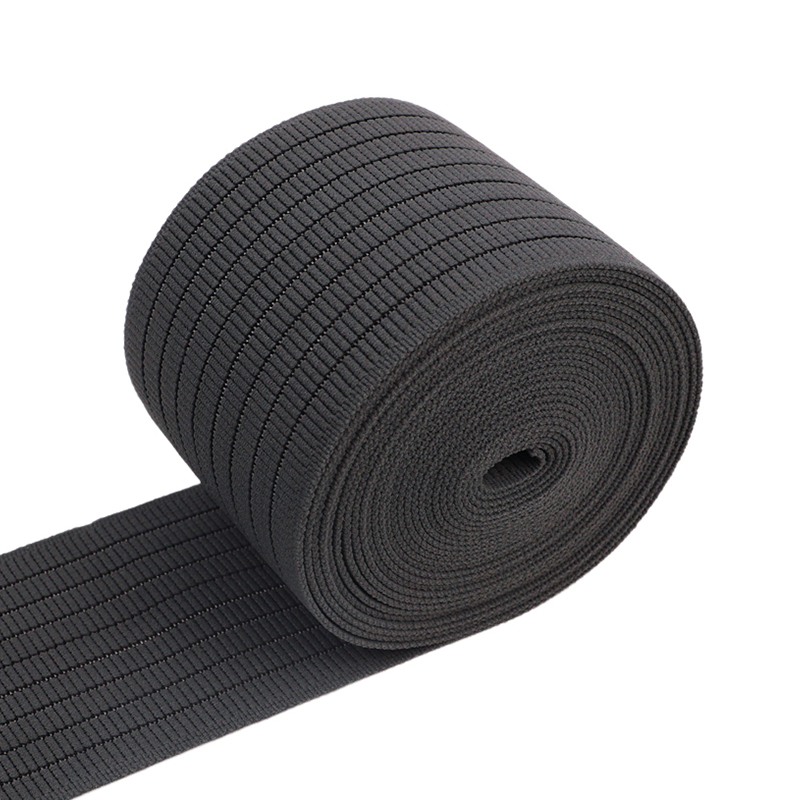
Elastic materials play an essential role in the performance, comfort, and appearance of modern garments. They help clothing maintain its shape, improve fit, support body movement, and create a secure yet flexible connection between different sections of a product. Among the many forms of elastic materials available to manufacturers, woven elastic panels are valued for their stability, strength, and controlled stretch. The 7.5 cm black woven elastic panel is designed to meet these requirements in a wide range of apparel, textile, medical, and industrial applications.
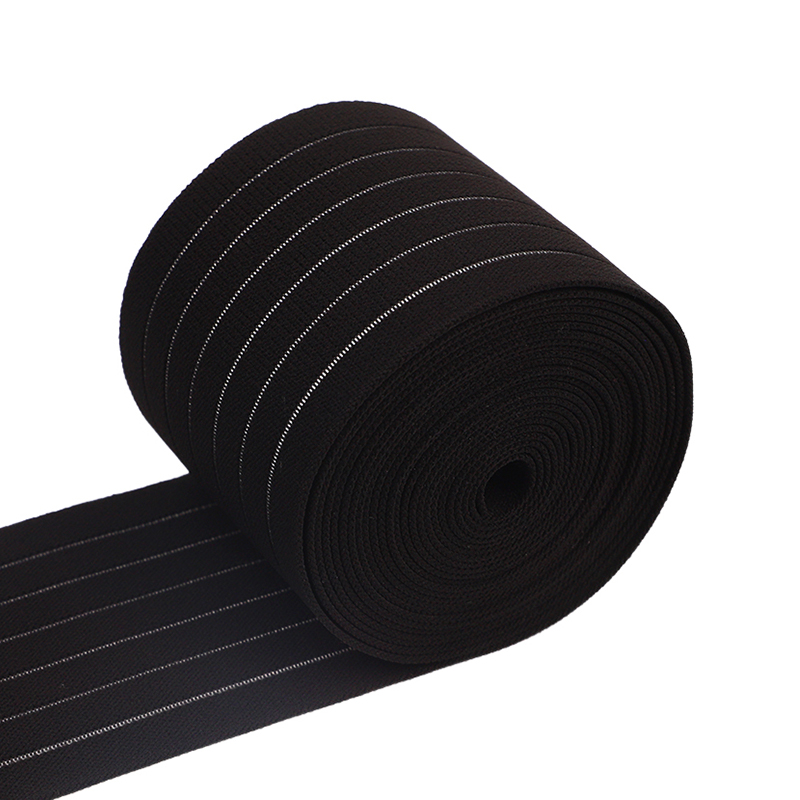
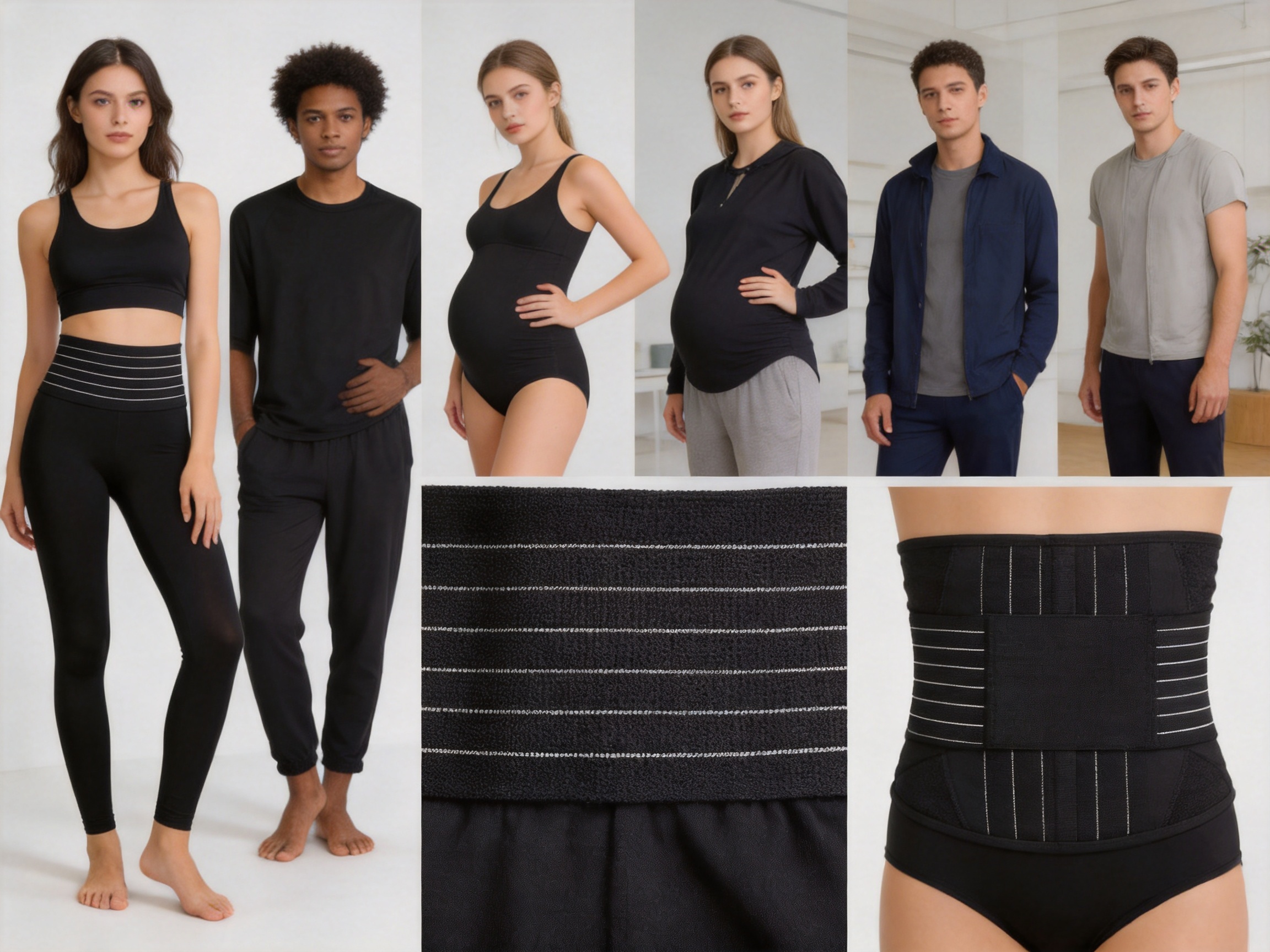
With its broad 7.5 cm width, black appearance, and firm woven construction, this elastic panel provides more coverage and support than narrow elastic bands. It can be incorporated into waistbands, cuffs, hemlines, support garments, shapewear, maternity clothing, sportswear, underwear, and many other products. Its structure is particularly suitable for designs that require elasticity across a wider area rather than a concentrated line of stretch.
The product is manufactured by Jinhu Hengxiang Webbing Co., Ltd., a professional Chinese producer of elastic and non-elastic webbing. Established in 2005, the company has developed considerable experience in the research, production, testing, packaging, and customization of webbing products. Its manufacturing capabilities include warping, knitting, weaving, finishing, inspection, and packaging, supported by modern production equipment and quality management systems.
This article examines the construction, performance, advantages, applications, manufacturing process, customization possibilities, quality control, and purchasing considerations associated with the 7.5 cm black woven elastic panel. It also explains why a purpose-built woven panel can offer important benefits over ordinary narrow elastic, low-stability knitted elastic, or inconsistent low-cost alternatives.
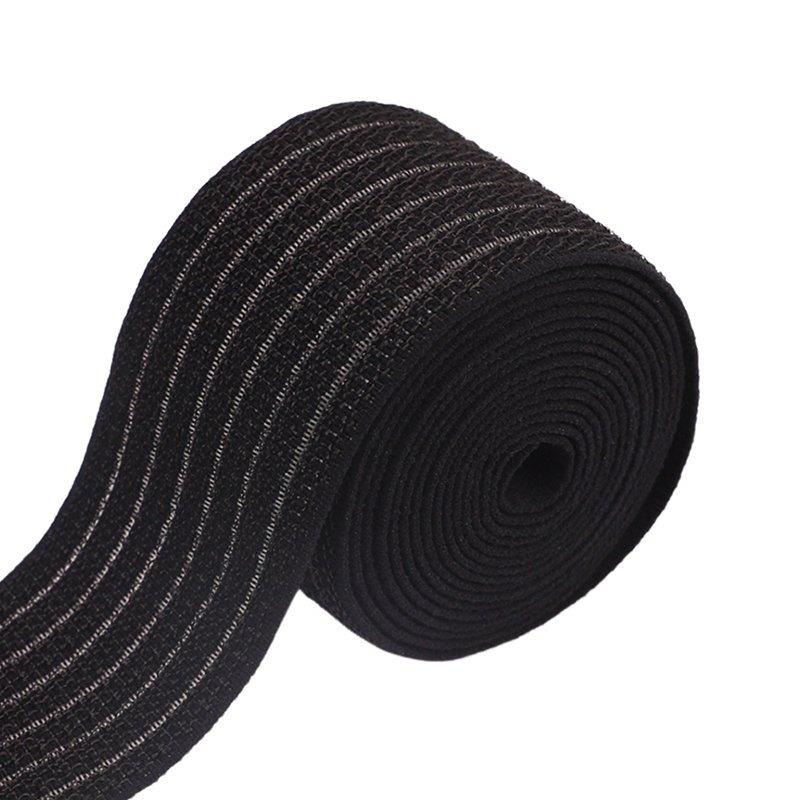
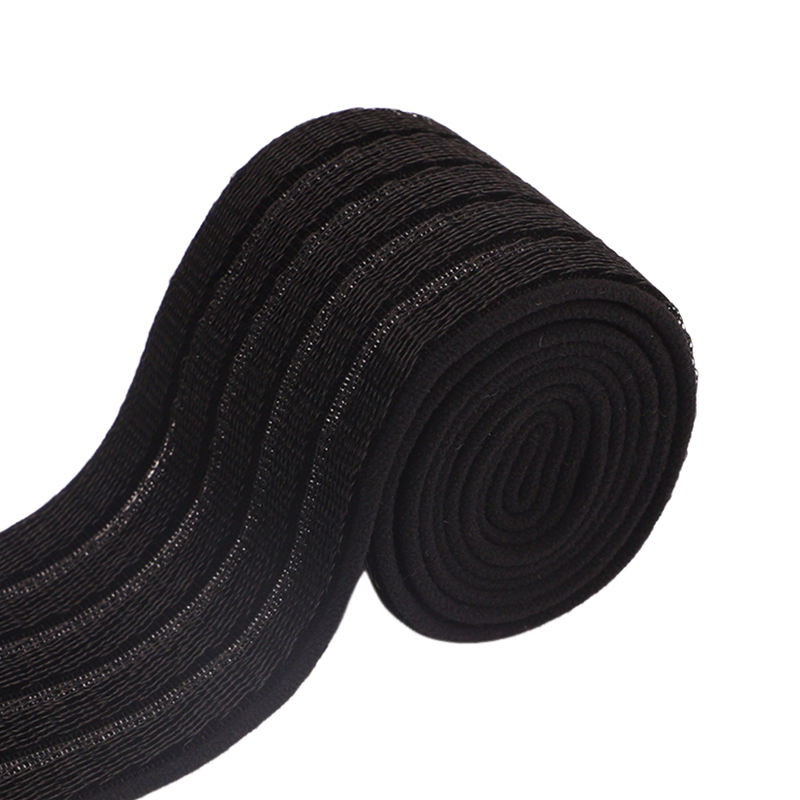
7.5cm Black Woven Elastic Panels
Understanding the 7.5 cm Black Woven Elastic Panel
The 7.5 cm black woven elastic panel is a wide elastic textile designed to combine controlled stretch with dependable recovery. Unlike a simple strip of elastic tape, a panel is intended to distribute tension over a broader surface. This makes it suitable for garments and textile products where comfort, support, and dimensional stability must work together.
Woven elastic is produced by interlacing lengthwise and crosswise yarn systems. Elastic components are integrated into the structure during the weaving process, allowing the finished material to stretch and recover while retaining a relatively firm body. The woven construction gives the panel a stable surface and helps reduce unwanted distortion during cutting, sewing, repeated wear, and washing.
The 7.5 cm width provides a useful balance between coverage and flexibility. It is broad enough to support larger garment sections, yet narrow enough to be easily incorporated into conventional sewing and industrial garment assembly processes. Designers can use it as a visible structural element, conceal it inside a garment, or combine it with fabric layers to create a reinforced section.
Black is one of the most widely used colors in apparel manufacturing. It coordinates easily with dark, neutral, and contrasting fabrics, and it is commonly selected for sportswear, underwear, shapewear, uniforms, workwear, and support products. A black panel can be used for both functional and aesthetic purposes, especially in garments where a clean, professional, or slimming appearance is desired.
The product is suitable for manufacturers that need a dependable elastic component rather than a decorative ribbon or a lightweight trim. Its primary purpose is to provide practical stretch, firm support, and long-term service performance.
Key Product Characteristics
The panel combines several characteristics that contribute to its versatility. These include a broad 7.5 cm format, woven structural stability, elastic recovery, a firm hand feel, a black finish, and compatibility with different garment construction methods.
Because the panel is woven, its edges and surface can provide a more controlled sewing experience than some loosely structured elastic materials. The panel can be cut into sections, stitched into seams, layered with fabric, or used as part of a larger support system. Depending on the final garment design, it may be applied as a waistband component, side panel, reinforcement section, or adjustable support area.
The actual performance of any elastic panel depends on factors such as yarn selection, elastic content, tension during production, finishing conditions, width tolerance, and the intended application. For this reason, buyers should confirm technical specifications and conduct sample testing before placing a large production order.
Construction and Performance Advantages
Stable Woven Structure
One of the main advantages of this product is its woven construction. Woven elastic is generally recognized for having a firmer and more stable body than many lightweight knitted alternatives. The interlaced yarn structure helps the panel resist excessive twisting and rolling, which can be important when it is used in waistbands, support garments, and broad garment sections.
A stable panel can also make garment assembly more predictable. When an elastic material maintains its width and shape during sewing, operators may find it easier to align the product with fabric edges and seam lines. Consistent positioning helps reduce production variation and supports a more uniform appearance in the finished garment.
Broad Support Area
A 7.5 cm panel distributes pressure over a wider area than a narrow elastic band. This can be useful in applications where concentrated pressure may be uncomfortable or where a broader stabilizing section is required. For example, a waistband can use the panel to provide a more secure fit around the body, while a maternity or support garment can use it to create a reinforced zone.
Wide elastic does not automatically replace a specialized medical support component, and the final suitability depends on the garment design and intended level of support. However, the broad format offers designers more freedom to create products that balance stretch, coverage, and structural reinforcement.
Controlled Elastic Recovery
Elastic recovery refers to the ability of a material to return toward its original dimensions after being stretched. Reliable recovery is important in clothing because it helps the garment retain its intended fit after movement, dressing, and repeated use. A well-produced woven elastic panel can provide controlled stretch while minimizing permanent deformation under normal conditions.
Good recovery contributes to a more stable garment over time. Waistbands are less likely to become loose prematurely, cuffs can maintain their grip, and support sections can continue to perform as designed. The exact recovery level should be matched to the application: activewear may require dynamic flexibility, while shapewear or support products may require firmer resistance.
Resistance to Deformation
Elastic products may experience repeated stretching, folding, friction, laundering, and exposure to perspiration. A robust woven panel is designed to handle these routine stresses more effectively than a fragile or poorly constructed material. Its structural stability helps it resist excessive distortion, particularly when the product is correctly sewn and used within its intended operating conditions.
Resistance to deformation is especially valuable in industrial garment manufacturing. If an elastic panel changes shape unpredictably during assembly, it can lead to uneven seams, incorrect garment measurements, or inconsistent tension. A stable product supports better process control and may reduce the need for rework.
Comfort and Wearability
Although firm support is important, an elastic panel must also be suitable for contact with clothing layers and, in some products, direct or near-direct contact with the skin. The woven surface can be incorporated into garments with soft lining fabrics, binding, or protective layers. Designers can adjust the final comfort level through fabric selection, seam placement, garment tension, and finishing details.
For underwear, maternity wear, loungewear, and sportswear, the material should be tested in the complete garment rather than evaluated in isolation. Comfort depends not only on the panel but also on pressure distribution, edge treatment, stitch type, garment pattern, and the duration of wear.
Professional Black Appearance
Black elastic panels are practical for products that require a discreet or coordinated appearance. Black can conceal minor marks associated with normal use and works well with many fabric colors. In sportswear and shapewear, it can also contribute to a clean, streamlined visual effect.
For manufacturers producing large collections, black is often an efficient stock color because it can be used across multiple product lines. It may reduce the need to maintain numerous color-specific elastic inventories, although exact shade requirements should always be confirmed when color matching is important.
Advantages Over Narrow Elastic Bands
Narrow elastic bands remain useful for small openings, straps, sleeve edges, underwear leg openings, and other applications where limited width is appropriate. However, they may not be sufficient when a garment requires broader support. A narrow band concentrates its force along a small line, while a 7.5 cm panel can spread tension across a larger section.
The wider format can help designers create a more secure waistband or reinforced area without using multiple narrow strips. Using one broad component may simplify cutting, positioning, and sewing. It can also reduce the number of parallel seams or overlapping pieces required in the garment construction.
Another advantage is visual continuity. Multiple narrow bands may create ridges, gaps, or irregular tension if they are not aligned precisely. A single wide panel can provide a cleaner structural surface, especially when it is covered by a fabric layer or used as a prominent design feature.
Nevertheless, the best choice depends on the product. Narrow elastic may be preferable for lightweight garments or small openings, while the 7.5 cm panel is more suitable for broad support, waist shaping, reinforcement, and applications that benefit from a substantial elastic foundation.
Advantages Over Lightweight Knitted Elastic
Knitted elastic is often selected for its softness, flexibility, and economical production. It can be appropriate for delicate clothing and applications where a light, comfortable stretch is required. However, knitted structures may not always provide the same level of firmness and dimensional stability as woven panels.
The 7.5 cm woven elastic panel is advantageous when the product must maintain a more stable width and resist rolling or curling. It can provide a firmer response under tension, which is useful in support garments, sportswear, workwear, and structured waistbands. Its woven body may also provide better resistance to distortion during sewing and repeated wear.
Manufacturers should not assume that woven elastic is universally superior to knitted elastic. Each construction has a suitable role. The benefit of the woven panel is its alignment with applications that prioritize support, stability, and durability over an extremely soft or lightweight hand feel.
Advantages Over Inconsistent Low-Cost Alternatives
Price is an important purchasing factor, but the lowest initial unit cost does not always represent the lowest total production cost. Inconsistent elastic may create problems such as uneven width, variable stretch, poor recovery, color variation, frayed edges, or premature loss of performance. These issues can lead to production interruptions, rejected garments, customer complaints, and higher replacement expenses.
A professional manufacturer with controlled production and inspection procedures can help reduce these risks. Consistency is particularly important when elastic panels are used in high-volume production. When each roll behaves in a similar way, cutting and sewing settings can be standardized more effectively.
Reliable technical communication is another advantage. A qualified supplier should be able to discuss width, stretch, recovery, color, packaging, application requirements, and sample approval. This gives buyers an opportunity to verify suitability before committing to a full order.
Jinhu Hengxiang Webbing Co., Ltd. supports OEM and ODM production, allowing customers to request tailored elasticity, texture, and color. This capability can be more valuable than selecting a generic product that does not fully match the intended garment.
Applications in Garment and Textile Production
Waistbands
Waistbands are one of the most suitable applications for wide woven elastic. The 7.5 cm width can provide a firm foundation for trousers, skirts, shorts, leggings, uniforms, and casual garments. It may be inserted inside a fabric casing, stitched directly to the garment, or combined with additional layers depending on the design.
In activewear and sportswear, the waistband must move with the wearer while maintaining a secure fit. The elastic panel can help reduce slipping during exercise and provide a stable transition between the garment body and the waist area. Pattern designers should evaluate the panel together with the fabric stretch to prevent excessive compression or insufficient hold.
In loungewear and casual garments, a wide panel can support comfort by distributing tension across the waist rather than concentrating it along a narrow edge. The final result depends on the elastic tension selected and the garment circumference.
Activewear and Sportswear
Sportswear requires materials that can tolerate frequent movement and repeated laundering. Elastic panels may be used in training shorts, athletic leggings, compression-inspired garments, warm-up clothing, sports bras, and protective apparel. The product can help garments remain close to the body during running, stretching, cycling, gym training, and other activities.
For sports applications, designers should consider sweat, friction, body movement, and temperature changes. Testing should include repeated stretching, laundering, and wear simulation. Seam strength is also important because the panel can place significant loads on the surrounding fabric and stitching.
Underwear and Intimate Apparel
Wide woven elastic can be used in underwear and related garments when the design requires a stable waistband or reinforced section. Black is a popular option for both practical and aesthetic reasons. The panel can be covered with a soft fabric, finished with a comfort layer, or integrated into a multi-layer construction.
For intimate apparel, attention should be given to edge comfort, seam bulk, and contact with the skin. The elastic itself should be evaluated alongside the lining and finishing materials. A technically strong panel must still be incorporated in a way that does not create uncomfortable pressure points.
Shapewear
Shapewear depends on controlled tension and stable garment construction. A broad woven elastic panel can serve as a shaping or anchoring section in waist garments, body-contouring products, and support-oriented clothing. Its firm structure may help the garment maintain its position during movement.
Shapewear products require careful testing because excessive tension can negatively affect comfort, mobility, and wearability. Manufacturers should determine the appropriate stretch ratio and recovery level through prototypes and user evaluations. The panel can be combined with stretch fabrics, power mesh, lining, hooks, zippers, or adjustable components.
Maternity Wear
Maternity garments often need flexible support as the body changes. A wide elastic panel may be used in maternity trousers, skirts, support belts, and adjustable waist sections. Its broad coverage can help distribute tension over the abdomen or waist area when used in an appropriate design.
Maternity applications demand particular attention to comfort and pressure. The panel should be integrated with soft fabrics and carefully positioned to avoid unnecessary restriction. Different product versions may require different elastic strengths, so customized specifications and sample testing are recommended.
Loungewear and Casual Clothing
Loungewear combines relaxed comfort with practical fit retention. Wide elastic panels can be used in sweatpants, pajama bottoms, casual shorts, and relaxed skirts. They offer a straightforward way to create a secure waistband without relying entirely on drawcords or complex fastening systems.
Because loungewear is often washed frequently, durability and recovery are important. A panel that loses its tension quickly can reduce the usable life of the garment. Proper care-label instructions and washing tests should be developed for the finished product.
Industrial and Work Garments
Industrial clothing may require reinforced waist areas, adjustable sections, or flexible closures. The 7.5 cm panel can be incorporated into work trousers, protective clothing, uniforms, and utility garments. Its firm structure is useful where the garment must remain secure during active work.
Industrial applications may expose the material to oils, dust, abrasion, repeated washing, or demanding movement. The suitability of the elastic should be confirmed through application-specific testing. If the garment is used for safety protection, the elastic panel should be considered one part of a complete certified design rather than treated as a standalone safety component.
Medical and Orthopedic Support Products
Webbing and elastic materials are commonly used in sports supports, orthopedic braces, rehabilitation products, and medical protective equipment. A wide woven panel may help create adjustable or supportive sections in these products. Its controlled elasticity can contribute to fit and positioning when combined with suitable closures, padding, fabric, and structural elements.
Medical applications require a higher level of technical evaluation than ordinary apparel. Buyers should verify biocompatibility considerations, skin-contact requirements, cleaning methods, product standards, and the intended clinical use. The manufacturer reports ISO 13485 certification, which reflects a quality management framework associated with medical device production. Even so, the finished medical product must be independently evaluated and certified according to the regulations of its target market.
Manufacturing Expertise and Production Capability
Company Background
Jinhu Hengxiang Webbing Co., Ltd. was established in 2005 and is located in Jinhu County, Huai’an City, Jiangsu Province, China. The company specializes in elastic webbing and non-elastic webbing, with particular experience in sports supports, orthopedic braces, and medical protective equipment.
Over more than two decades of operation, the company has developed capabilities covering research and development, material sourcing, production, testing, packaging, sales, and customer service. This integrated experience is valuable for customers that require more than a standard catalog product.
The company serves customers in China and exports to North America, Eastern Europe, the Middle East, South Asia, and other markets. Its international experience can support communication related to specifications, packaging, production scheduling, and export requirements.
Advanced Equipment
The manufacturer has introduced and updated production equipment including warping machines, knitting machines, woven machines, and packaging machines. Each stage contributes to the final quality of an elastic panel.
Warping equipment prepares yarns in an organized and controlled arrangement before weaving or other textile processes. Accurate warping supports stable production by helping maintain the intended yarn distribution and tension.
Woven machines interlace the yarns to create the panel structure. Production settings influence width, density, texture, elasticity, and surface appearance. Modern machinery can help improve repeatability and reduce variation between production runs.
Knitting equipment supports the company’s broader product range and demonstrates its ability to manufacture multiple webbing constructions. This is useful for customers that require woven, knitted, narrow, wide, elastic, and non-elastic materials from one experienced supplier.
Packaging machines help protect the finished material and prepare it for storage, transport, and factory use. Proper packaging can reduce contamination, moisture exposure, handling damage, and confusion between product batches.
Material Sourcing and Preparation
Material quality begins before the weaving process. Yarns and elastic components must be selected according to the intended performance of the final product. Relevant considerations may include tensile behavior, elasticity, color, surface feel, resistance to repeated movement, and compatibility with garment production.
Incoming materials should be checked for visible defects, incorrect specifications, contamination, and packaging damage. Organized material preparation helps prevent unsuitable components from entering production. It also supports traceability when customers require batch records or repeat orders.
For customized products, material selection becomes even more important. A customer may require a softer surface, firmer stretch, higher recovery, specific color, or a different texture. These requirements should be converted into measurable specifications before production begins.
Controlled Weaving Process
The weaving process determines much of the panel’s structural character. Yarn tension, machine settings, weaving density, elastic integration, and production speed must be managed carefully. Excessive variation can affect width, stretch, recovery, and appearance.
For a 7.5 cm panel, width control is especially important because the material is intended for broad garment sections. If the width varies significantly, it may create difficulties during cutting, sewing, or fabric alignment. A consistent weaving process helps the panel perform predictably across the roll.
Production operators and technical personnel monitor the process to identify problems such as broken yarns, uneven surfaces, open structure, excessive tightness, or irregular elasticity. Early correction can reduce material waste and improve finished-roll quality.
Finishing and Surface Treatment
After weaving, elastic panels may undergo finishing operations to stabilize, clean, or improve their surface. Finishing conditions must be selected carefully because excessive heat, tension, or chemical exposure can influence elastic performance.
The black finish should be evaluated for shade consistency, surface uniformity, and resistance to ordinary handling. When the panel is used in visible garment areas, appearance can be as important as mechanical performance. Buyers with strict color requirements should request a physical sample or approved color standard.
Inspection and Testing
Quality control is described by the company as covering material sourcing, processing, testing, and packing. This full-process approach is important because final inspection alone cannot correct every problem created during earlier stages.
Typical evaluation areas for woven elastic may include width, thickness, appearance, stretch behavior, recovery, tensile performance, color, edge condition, and roll length. The exact testing program should be matched to customer requirements and product application.
Testing can be conducted on samples from production batches, while visual inspection may be used to identify surface defects and irregularities. For medical or support applications, additional documentation and validation may be necessary.
Quality Certifications and Responsible Production
The company has obtained Oeko-Tex Standard 100 and ISO 13485 certificates. Oeko-Tex Standard 100 is widely associated with testing textiles for harmful substances according to the requirements of the applicable certification system. This can be relevant to apparel and products that may come into contact with skin.
ISO 13485 is a quality management standard associated with organizations involved in medical devices. Its relevance is particularly notable for a manufacturer serving sports protection, orthopedic support, and medical protective equipment markets. Certification does not replace product-specific testing, but it demonstrates that the company has established quality management procedures designed for regulated applications.
Responsible production also involves efficient material use, process control, packaging management, and continuous improvement. Stable production can reduce unnecessary waste caused by defective or inconsistent materials. Customers may also discuss packaging reduction, recyclable packaging options, and production planning with the supplier when sustainability is a priority.
Environmental expectations vary by market and customer. Therefore, buyers should request current certification documents, test reports, material declarations, and relevant compliance information for the specific product and order.
Customization and OEM or ODM Services
Different garments require different levels of elasticity, firmness, texture, color, and width. A standard 7.5 cm black woven elastic panel may be suitable for many applications, but customized production can provide a closer match to the customer’s product design.
Jinhu Hengxiang Webbing Co., Ltd. welcomes OEM and ODM orders. Its customization services can include tailored elasticity, texture, and color. Depending on the project, buyers may also discuss packaging format, roll length, labeling, edge treatment, and production tolerances.
Elasticity Customization
Elasticity should be selected based on the garment’s intended fit and use. A waistband for relaxed loungewear may need a different stretch response from a sports support or shapewear product. If the elastic is too firm, the garment may become uncomfortable or difficult to put on. If it is too soft, the garment may not remain securely positioned.
Customers should provide practical information such as the fabric type, garment circumference, target stretch percentage, expected recovery, application area, and laundering conditions. The supplier can then develop samples for evaluation.
Texture and Hand Feel
Texture affects both appearance and comfort. A customer may request a smoother surface for intimate apparel, a firmer hand for support products, or a particular structure for visible fashion applications. Texture is influenced by yarn selection, weaving density, finishing, and surface treatment.
Physical samples are essential because terms such as soft, firm, smooth, or textured may be interpreted differently by different organizations. A written specification combined with an approved reference sample offers better production control.
Color Options
Black is the standard color described for this product, but customized colors may be possible depending on order quantity, material availability, and production requirements. Color matching should be assessed under agreed lighting conditions and compared with an approved standard.
For hidden garment components, exact color matching may be less important. For visible waistbands, exposed panels, uniforms, or coordinated collections, color consistency becomes a higher priority.
Sampling and Approval
A strong sampling process can prevent misunderstandings before mass production. Buyers should examine the sample in the actual garment or a representative test fixture. Important evaluations include stretch, recovery, sewing behavior, seam security, comfort, color, surface appearance, and washing performance.
Once a sample is approved, the confirmed specifications should be documented. This may include product name, width, color, stretch range, recovery requirement, roll length, packaging, tolerance, and inspection method. Clear records make repeat orders more consistent.
Production and Sewing Considerations
The performance of an elastic panel depends partly on how it is incorporated into the garment. Sewing tension, stitch selection, seam allowance, fabric compatibility, and panel placement can all influence the final result.
Manufacturers should test whether the panel is best applied with a coverstitch, lockstitch, zigzag stitch, elastic attachment machine, or another suitable method. The correct method depends on the garment structure and whether the elastic is enclosed, exposed, layered, or directly attached.
Cutting should be performed with equipment that produces clean edges and minimizes fraying or distortion. If the panel is cut under excessive tension, it may shorten after cutting and create inaccurate dimensions. Operators should follow standardized procedures for roll handling and cutting orientation.
During sewing, the panel should be stretched according to the approved garment pattern and production instructions. Excessive stretching can create uncomfortable compression or distorted seams. Insufficient stretching may result in a loose garment or poor recovery of the finished product.
The surrounding fabric must be strong enough to support the elastic. A durable panel attached to weak fabric may cause fabric tearing, seam failure, or puckering. For this reason, product development should evaluate the complete assembly rather than focusing on the elastic alone.
Recommended Evaluation and Testing
Before selecting the material for a large order, buyers should establish a testing plan. The plan should reflect the final application, expected service conditions, and requirements of the destination market.
| Evaluation Area | Purpose | Why It Matters |
|---|---|---|
| Width and thickness | Confirm dimensional consistency | Supports accurate cutting, alignment, and garment fit |
| Stretch behavior | Measure extension under controlled tension | Helps match the panel to the intended level of flexibility |
| Elastic recovery | Assess return toward original dimensions | Indicates potential for maintaining fit after repeated use |
| Appearance | Check color, surface, edges, and weaving uniformity | Reduces visible defects and batch variation |
| Wash testing | Evaluate performance after laundering | Shows how the panel behaves in realistic care conditions |
| Sewing compatibility | Test attachment methods and seam performance | Helps prevent production problems and seam failure |
| Skin-contact suitability | Review applicable material and safety requirements | Important for underwear, medical products, and close-fitting garments |
| Batch consistency | Compare samples from different production sections | Supports reliable high-volume manufacturing |
Testing should be performed using consistent equipment, conditioning, sample dimensions, and procedures. Results should be recorded so that future production can be compared against the approved standard.
For garments intended for demanding use, testing may include repeated extension cycles, abrasion, perspiration exposure, elevated temperature, and extended laundering. Medical products may require additional validation based on their specific function and regulatory classification.
Packaging, Storage, and Transportation
Elastic panels should be packaged in a way that protects them from dirt, moisture, compression, and unnecessary tension. Rolls should be clearly labeled with product information, batch details, color, width, and quantity where required.
During storage, the material should generally be kept in a clean, dry, and well-ventilated area away from direct sunlight, excessive heat, strong chemicals, and sharp objects. Long-term exposure to unsuitable conditions may affect color, elasticity, or surface quality.
Warehouses should avoid placing excessive weight on elastic rolls. Compression can deform the roll or complicate later unwinding. A first-in, first-out inventory method may be useful, particularly when the material has a recommended storage period or when multiple production batches are held.
During transportation, packaging should prevent shifting and contact with moisture. International shipments should be prepared according to the customer’s logistics requirements and destination regulations. Buyers should confirm whether cartons, woven bags, pallets, labels, or moisture-protection measures are required.
Why Choose an Experienced Webbing Manufacturer?
Choosing an experienced manufacturer provides benefits beyond access to a single product. A supplier with knowledge of elastic webbing can help customers compare woven, knitted, narrow, wide, and non-elastic constructions according to the actual application.
Jinhu Hengxiang Webbing Co., Ltd. has a product range that includes abdominal binder elastic, woven wide elastic, wide knitted elastic, narrow elastic band, woven elastic panels, elastic hook and loop straps, and medical elastic bandages. This broad product base gives the company an understanding of different support and fastening requirements.
Experience in sports protection and orthopedic braces is particularly relevant to customers seeking elastic materials with reliable tension and structural performance. Such applications require attention to fit, recovery, durability, and user comfort, all of which are also important in advanced apparel manufacturing.
The company’s monthly output reaches millions of meters of elastic and non-elastic webbing. This production capacity can be advantageous for customers that need stable supply, repeat orders, or large-volume manufacturing. Capacity should still be confirmed for each specific specification, since customized products may require development time, special materials, or dedicated production arrangements.
Customer service is another important factor. Effective communication about samples, specifications, quality requirements, packaging, delivery schedules, and documentation can reduce risk throughout the purchasing process. OEM and ODM support is useful when the customer has a unique garment design or needs a material developed around a particular performance target.
Comparison of Product Options
| Material Type | Typical Strength | Common Limitation | Suitable Use |
|---|---|---|---|
| 7.5 cm woven elastic panel | Broad support, stable structure, controlled recovery | May be too firm for very delicate garments | Waistbands, support garments, shapewear, sportswear |
| Narrow elastic band | Easy to apply in small openings and straps | Concentrates tension over a narrow line | Cuffs, underwear openings, small closures |
| Wide knitted elastic | Soft hand feel and flexible stretch | May provide less structural stability | Comfort-focused apparel and lightweight garments |
| Non-elastic webbing | High dimensional stability and load support | Does not provide stretch | Straps, reinforcement, fixed attachments |
| Elastic hook and loop strap | Adjustability and repeated fastening | More complex and thicker construction | Braces, supports, adjustable equipment |
| Medical elastic bandage | Designed for wrapping and support functions | Not intended to replace every garment elastic | Medical and rehabilitation applications |
This comparison shows that the 7.5 cm woven elastic panel is most valuable when broad, firm, and stable elasticity is required. It should be selected according to the functional needs of the product rather than simply by width or price.
Purchasing Guidance for International Buyers
Before requesting a quotation, buyers should prepare a clear technical brief. The brief should identify the required width, color, target application, estimated annual volume, preferred roll length, packaging method, delivery destination, and any applicable compliance requirements.
It is also useful to explain whether the panel will be visible or concealed, whether it will contact the skin, whether it will be exposed to frequent washing, and whether it will be used in a regulated medical product. These details help the manufacturer recommend an appropriate construction.
Buyers should request product samples and compare them with their own fabric and sewing process. A panel that performs well in a laboratory test may behave differently when joined to a particular fabric or sewn under factory conditions.
Quotation comparisons should consider more than unit price. Important factors include minimum order quantity, sample fees, development costs, testing documents, production lead time, packaging, shipping terms, payment conditions, quality tolerances, and after-sales support.
For repeat production, buyers should establish a written approval standard. This prevents later disagreements about color, stretch, width, texture, and appearance. It is also recommended that both parties retain reference samples from the approved batch.
Maintenance of Long-Term Supplier Performance
Long-term cooperation works best when performance data is shared regularly. Buyers can provide feedback on sewing efficiency, garment returns, wash-test results, user comfort, and any changes in production conditions. This information helps the supplier understand how the panel performs in real applications.
When a garment design changes, the elastic should be reviewed again. A change in fabric composition, garment circumference, seam construction, washing method, or target market may affect the suitability of the existing panel. Requalification may be necessary when the application becomes more demanding.
Suppliers should communicate changes in raw materials, production methods, equipment, packaging, or quality standards that could affect product performance. Clear change management supports consistency and protects the buyer’s manufacturing process.
Jinhu Hengxiang Webbing Co., Ltd. emphasizes quality, innovation, sustainability, competitive pricing, timely delivery, and reliable service. These goals are most effective when supported by documented specifications, regular communication, and practical testing between the supplier and customer.
Frequently Asked Questions
What is a 7.5 cm black woven elastic panel?
It is a broad elastic textile measuring approximately 7.5 cm in width and produced with a woven construction. The product is designed to provide controlled stretch, firm support, and dimensional stability for garment and textile applications.
What garments commonly use this elastic panel?
Common applications include activewear, underwear, sportswear, shapewear, maternity wear, loungewear, casual clothing, uniforms, workwear, and support garments. It may also be used in industrial textile products and DIY sewing projects.
How is woven elastic different from knitted elastic?
Woven elastic is formed by interlacing yarn systems and generally offers a firmer, more stable structure. Knitted elastic is often softer and more flexible. The appropriate choice depends on whether the garment prioritizes broad support and stability or lightweight softness and flexibility.
Can the panel be used for medical products?
It may be considered for medical or orthopedic products when its specifications meet the requirements of the complete design. The manufacturer reports ISO 13485 certification, but buyers must conduct product-specific testing and confirm all regulatory obligations in the target market.
Is the panel suitable for direct skin contact?
Suitability depends on the materials, finish, garment design, and applicable safety requirements. Buyers should request relevant compliance information and test the panel in the finished product, particularly for underwear, maternity garments, braces, and medical equipment.
Can the elasticity be customized?
Customized elasticity is available for OEM and ODM projects. Customers should provide information about the intended application, stretch target, recovery requirement, fabric type, garment dimensions, and expected service conditions.
Can the color or texture be customized?
The standard product is black, while customized color and texture may be discussed according to project requirements, order volume, and production feasibility. An approved physical sample or color standard is recommended for repeat manufacturing.
How should the elastic panel be tested before mass production?
Testing should include width, thickness, stretch, recovery, appearance, wash performance, sewing compatibility, and seam strength. The panel should also be evaluated in the actual garment or in a representative prototype.
How can manufacturers prevent sewing problems?
Manufacturers should control cutting tension, use suitable stitching equipment, match the panel with a sufficiently strong fabric, and follow approved stretch ratios during assembly. Operator training and production samples can help maintain consistent results.
What certifications does the manufacturer have?
The company has obtained Oeko-Tex Standard 100 and ISO 13485 certificates. Buyers should request current documentation and confirm whether the certification scope and test results apply to the specific product and intended market.
What is the company’s production capacity?
The company reports production of millions of meters of elastic and non-elastic webbing each month. Specific capacity, lead time, and minimum order quantity should be confirmed for the requested width, color, construction, and customization level.
Does the company accept OEM and ODM orders?
Yes. OEM and ODM orders are welcome, with customization available for characteristics such as elasticity, texture, and color. Buyers should begin with a detailed technical brief and sample approval process.
How should the product be stored?
The panel should be stored in a clean, dry, well-ventilated area away from direct sunlight, excessive heat, moisture, chemicals, and sharp objects. Rolls should not be compressed under excessive weight, and inventory should be managed systematically.
What information should be included in a quotation request?
A quotation request should include width, color, application, estimated quantity, roll length, packaging requirements, destination, target delivery date, customization needs, and relevant compliance or testing requirements.
Conclusion
The 7.5 cm black woven elastic panel is a practical solution for garment and textile products that require broad coverage, reliable stretch, firm support, and stable construction. Its woven structure offers advantages in applications where narrow elastic or lightweight knitted elastic may not provide sufficient control. The 7.5 cm width allows tension to be distributed across a wider area, making the panel suitable for waistbands, activewear, underwear, shapewear, maternity wear, sports supports, loungewear, and industrial garments.
The product’s value depends not only on its basic construction but also on the consistency of its manufacturing. Jinhu Hengxiang Webbing Co., Ltd. brings experience dating back to 2005, modern warping, weaving, knitting, and packaging equipment, full-process quality control, international supply experience, and OEM or ODM development capabilities. Its Oeko-Tex Standard 100 and ISO 13485 certifications provide additional reference points for customers evaluating textile safety and quality management.
For the best results, buyers should select the panel according to the complete garment design, conduct sample and wash testing, confirm sewing methods, and establish clear technical specifications. When these steps are followed, the 7.5 cm black woven elastic panel can contribute to better fit retention, improved support, efficient production, and longer-lasting garment performance.
References
1. Jinhu Hengxiang Webbing Co., Ltd. Product and company information supplied for technical and commercial evaluation.
2. Oeko-Tex Association. Standard 100 principles for testing textiles for harmful substances.
3. International Organization for Standardization. ISO 13485 quality management systems for medical devices.
4. Textile Institute. General principles of woven and knitted textile structures.
5. Apparel manufacturing guidance on elastic material selection, sewing, dimensional stability, and garment performance testing.
6. General textile testing practices for stretch, recovery, colorfastness, laundering, and seam performance.