
 en
en
 English
 русский
 Français
 Español
 Português
 Tiếng Việt
Content
- 1 Understanding the Construction of 8cm White Velcro Elastic Panels
- 2 Key Product Advantages
- 3 Comparison with Common Alternative Fastening Materials
- 4 Applications in Medical and Orthopedic Supports
- 5 Applications in Sports Protection and Performance Garments
- 6 Applications in Maternity Wear and Adjustable Clothing
- 7 Manufacturing Strengths and Production Capabilities
- 8 Customization Options for Commercial Buyers
- 9 Recommended Design and Sewing Practices
- 10 Quality and Performance Evaluation for Buyers
- 11 Supply Chain and Export Advantages
- 12 Sustainability and Long-Term Product Value
- 13 How to Select the Right Specification
- 14 Questions and Answers
- 14.1 What is an 8cm White Velcro Elastic Panel?
- 14.2 What makes it different from ordinary hook-and-loop tape?
- 14.3 Is the panel suitable for medical products?
- 14.4 Can it be used in sports supports?
- 14.5 Why is the 8cm width useful?
- 14.6 Can the panel be customized?
- 14.7 How should the panel be sewn into a finished product?
- 14.8 Can the hook side touch the skin?
- 14.9 Is white the only available color?
- 14.10 How can a buyer verify product quality?
- 14.11 What industries can use this product?
- 14.12 Does the manufacturer support OEM and ODM orders?
- 15 Conclusion
- 16 References
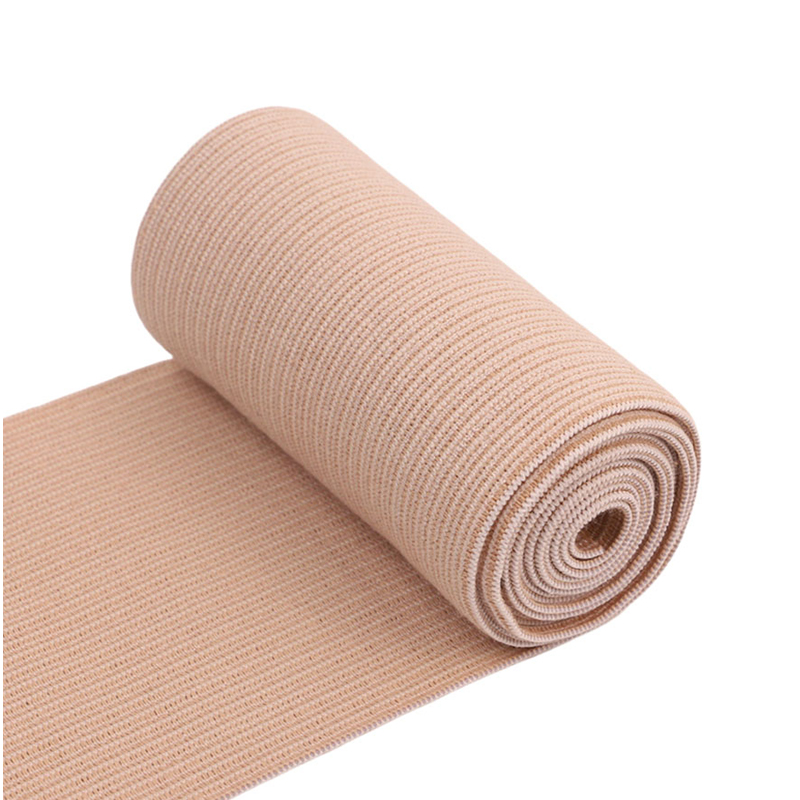
- 17 Product: 8cm White Velcro Elastic Panels
In garments, medical supports, sports protection products, maternity wear, and many do-it-yourself projects, the fastening material often determines whether the finished product feels secure, comfortable, and practical. A fastening system must hold firmly during movement, tolerate repeated adjustment, and remain comfortable against the body or over clothing. It must also be easy to manufacture, simple to use, and adaptable to different product designs. The 8cm White Velcro Elastic Panels are developed to meet these needs by combining wide elastic webbing with a hook-and-loop fastening system.
This product brings together two important performance characteristics: controlled stretch and adjustable fastening. The elastic structure helps the panel conform to the user’s body or to a changing product shape, while the hook-and-loop closure permits quick opening, closing, and tension adjustment. With an 8cm width, the panel distributes pressure over a broader area than narrow elastic bands, helping improve stability and reduce concentrated tension. Its clean white appearance also allows it to coordinate easily with medical fabrics, sportswear textiles, maternity garments, protective equipment, and general sewing projects.
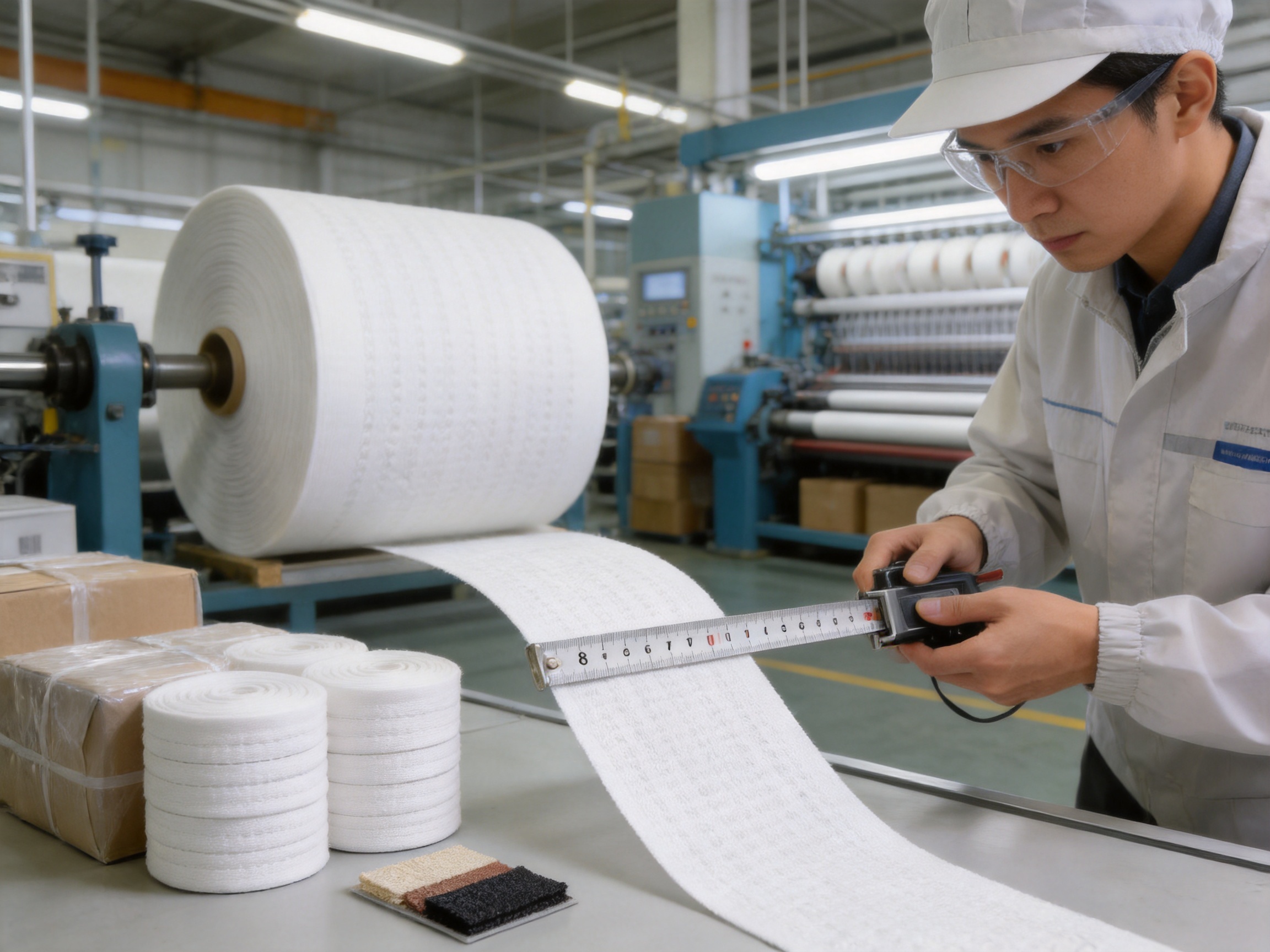
Manufactured by Jinhu Hengxiang Webbing Co., Ltd., the 8cm White Velcro Elastic Panels are part of a wider product range that includes abdominal binder elastic, woven wide elastic, wide knitted elastic, narrow elastic bands, woven elastic panels, elastic hook-and-loop straps, and medical elastic bandages. The manufacturer specializes in elastic and non-elastic webbing for sports protection, medical protective equipment, orthopedic braces, and related applications. Its production capabilities, quality systems, material control, and customization services support buyers that require consistent performance at commercial scale.
Understanding the Construction of 8cm White Velcro Elastic Panels
An elastic hook-and-loop panel is more than a simple strip of fabric with a closure attached to it. Its performance depends on the relationship between the elastic base, the fastening components, the stitching or joining method, the finished edges, and the intended application. The 8cm White Velcro Elastic Panels are designed as a broad, flexible fastening component that can be integrated into products requiring both support and adjustability.
The elastic base provides controlled extension. When the panel is stretched, it can accommodate body movement, changes in posture, or variations in the dimensions of a garment. Once the applied force is released, the elastic returns toward its original form. This recovery helps the product maintain contact and support without relying entirely on rigid straps or fixed-size closures.
The hook-and-loop system provides the adjustable fastening function. One surface contains small hooks, while the corresponding surface contains loops. When pressed together, the two surfaces engage and create a secure closure. When pulled apart, they can be separated and repositioned. This makes the panel especially useful where the user may need to change tightness, where different wearers require different settings, or where a garment must be opened and closed frequently.
The 8cm width is an important design characteristic. Compared with a narrow elastic band, a wide panel can spread holding force across a larger contact area. This can improve wearing comfort and help reduce pressure points. A wide panel may also provide better lateral stability in abdominal binders, orthopedic supports, sports braces, and maternity garments. The specific level of support depends on the complete product design, including the elastic construction, hook-and-loop arrangement, stitching, garment pattern, and applied tension.
The white color offers a neutral appearance. It can be used with white or light-colored fabrics, hidden inside a garment, or incorporated into a clean medical and sportswear design. White also provides a visually consistent base for products where a simple, hygienic, and professional appearance is preferred.
Key Product Advantages
Adjustable and Secure Fastening
The most direct advantage of the panel is the ability to adjust the fastening position. A fixed-length strap may provide only one or two practical settings, while hook-and-loop fastening allows the user or product designer to select a more suitable level of tightness. This is valuable in products that must fit different body shapes, changing body conditions, or different layers of clothing.
When the hook and loop surfaces are properly aligned and pressed together, they create a firm connection. The elastic base then works with the closure to maintain contact during normal movement. This combination is more adaptable than a rigid buckle or a non-adjustable sewn strap. It enables quick fitting and removal without complicated hardware, tools, or time-consuming tying.
For manufacturers, adjustability can also simplify product development. A single panel design may be suitable for a range of sizes, reducing the need to create numerous fixed-length components. For end users, the closure is easy to understand and operate. It can generally be opened and repositioned with one or both hands, depending on the product design.
Broad Pressure Distribution
At 8cm wide, the panel has a broad contact area that can help distribute tension more evenly. Narrow straps can concentrate force along a small line, which may lead to discomfort when the strap is tightened or worn for an extended period. A wider elastic panel can provide a more balanced feeling, particularly when used across the abdomen, lower back, waist, shoulder, or other larger body areas.
Broad pressure distribution is especially relevant to medical support and sports protection products. Although the panel itself is not a complete medical device, it can serve as an important component in a support system. The final level of pressure, compression, and stabilization must always be determined by the complete product design and, where applicable, professional medical guidance.
Comfort and Flexibility
Elasticity allows the panel to move with the body rather than resisting every change in posture. This can be helpful when a wearer walks, bends, sits, stretches, or performs repetitive activities. A flexible fastening component may also reduce the feeling of rigidity associated with metal hardware, fixed plastic closures, or non-stretch straps.
Comfort depends on several factors, including the softness of the textile, the edge finish, the amount of tension, the placement of the panel, and the design of the garment. The 8cm White Velcro Elastic Panels are intended to support a comfortable fit when correctly selected and integrated. Designers should consider whether the hook side will contact skin directly or whether it should be positioned against the loop side, a fabric cover, or another protective layer.
Durability for Repeated Use
Fastening materials used in sportswear, medical supports, and maternity wear may be opened and closed many times. A dependable panel must resist premature loss of elasticity, fraying, separation, and fastening degradation. The product combines strong elastic material with hook-and-loop components designed for repeated engagement and release.
Durability is influenced by the operating environment. Excessive tension, sharp edges, incompatible washing procedures, contamination, high heat, and incorrect sewing can shorten service life. Even so, the panel’s integrated construction offers a practical basis for products that require routine adjustment and continued use.
For industrial buyers, durability also affects product returns, customer satisfaction, maintenance requirements, and brand reputation. Selecting a webbing supplier with established production controls can help reduce variation between batches and support more reliable finished-product performance.
Wide Application Range
The panel can be used in sportswear, medical supports, orthopedic braces, maternity wear, abdominal binders, protective equipment, adjustable clothing, rehabilitation products, and creative sewing projects. It may also be suitable for packaging, light-duty securing applications, and specialty textile assemblies where a combination of elasticity and adjustable closure is needed.
Its versatility comes from the interaction of width, elasticity, and hook-and-loop fastening. A buyer may use the same basic component in different product families while adapting the sewing pattern, overlap length, reinforcement, or closure orientation. This can help streamline material sourcing and product development.
Clean and Versatile White Appearance
White is widely used in medical and personal-care products because it conveys cleanliness and simplicity. It also blends well with cotton fabrics, technical textiles, mesh, laminated materials, and light-colored sportswear. A white panel can be concealed within a garment or used as a visible design element.
For companies producing multiple colorways, white may serve as a neutral base for sampling and standard product lines. If a different color, texture, or finish is required, customization can be discussed with the manufacturer according to the intended application and production quantity.
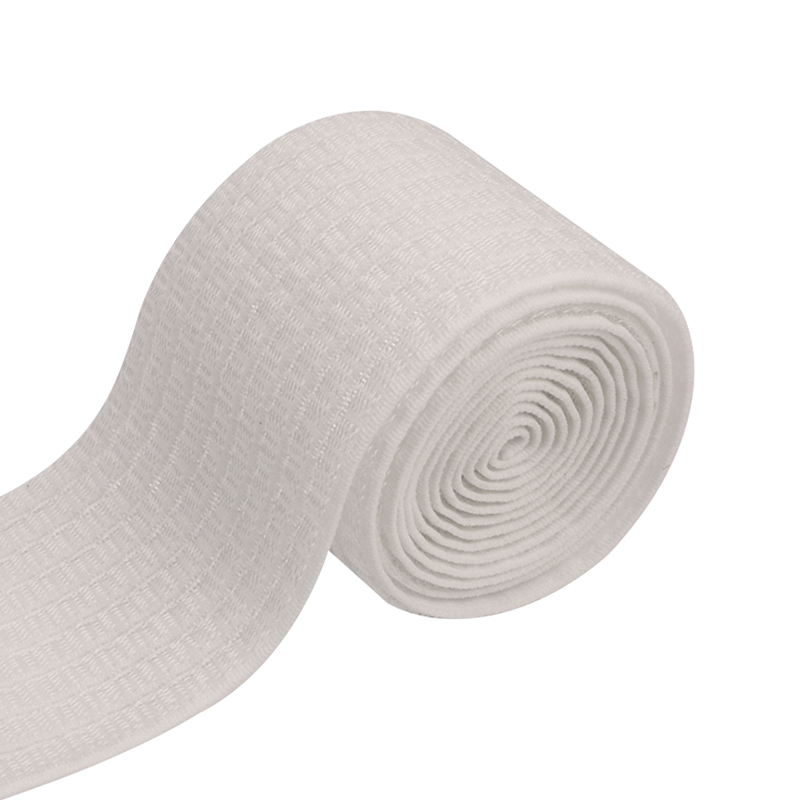
8cm White Velcro Elastic Panels
Comparison with Common Alternative Fastening Materials
Choosing a fastening material requires balancing support, adjustability, comfort, durability, appearance, and manufacturing practicality. The 8cm White Velcro Elastic Panels offer a combination that is not available in every alternative. The following comparison provides a general guide; actual performance depends on the construction and use conditions of each product.
| Fastening material | Main advantages | Common limitations | Position of the 8cm elastic panel |
| Fixed woven webbing | High dimensional stability and straightforward sewing | Limited stretch and little adjustment unless combined with hardware | Adds elasticity and hook-and-loop adjustability to a wider support area |
| Narrow elastic band | Flexible, lightweight, and economical for edging or light retention | May concentrate pressure and provide limited lateral stability | Provides a broader support surface for adjustable applications |
| Rigid buckle strap | Positive mechanical closure and strong holding ability | Can add bulk, require two-hand operation, and offer limited fine adjustment | Offers quick repositioning with a flexible textile construction |
| Drawstring | Simple, lightweight, and suitable for gathering | Can loosen, twist, or create uneven tension | Provides a flatter and more controlled closure surface |
| Non-elastic hook-and-loop tape | Easy adjustment and broad availability | Does not accommodate body movement through stretch | Combines hook-and-loop adjustment with elastic flexibility |
| Metal hook or snap fastener | Compact and familiar closure method | Less flexible, potentially uncomfortable, and dependent on precise positioning | Offers a soft textile-based alternative with variable adjustment |
Compared with a fixed woven strap, the elastic panel can adapt more effectively to movement and changing tension. Compared with a narrow elastic band, its 8cm width can support broader contact and improved stability. Compared with a rigid buckle, it may offer a lower-profile and more flexible solution. Compared with non-elastic hook-and-loop tape, it adds a degree of stretch that can improve comfort and fit.
These advantages do not mean that the panel replaces every other fastening material. Rigid buckles may be appropriate for heavy-load applications, while narrow elastic can be ideal for underwear edges or compact garment areas. Product designers should select the material according to load requirements, skin contact, laundering conditions, dimensional tolerances, and regulatory expectations. The value of the 8cm White Velcro Elastic Panels lies in its balanced performance for adjustable, textile-based support systems.
Applications in Medical and Orthopedic Supports
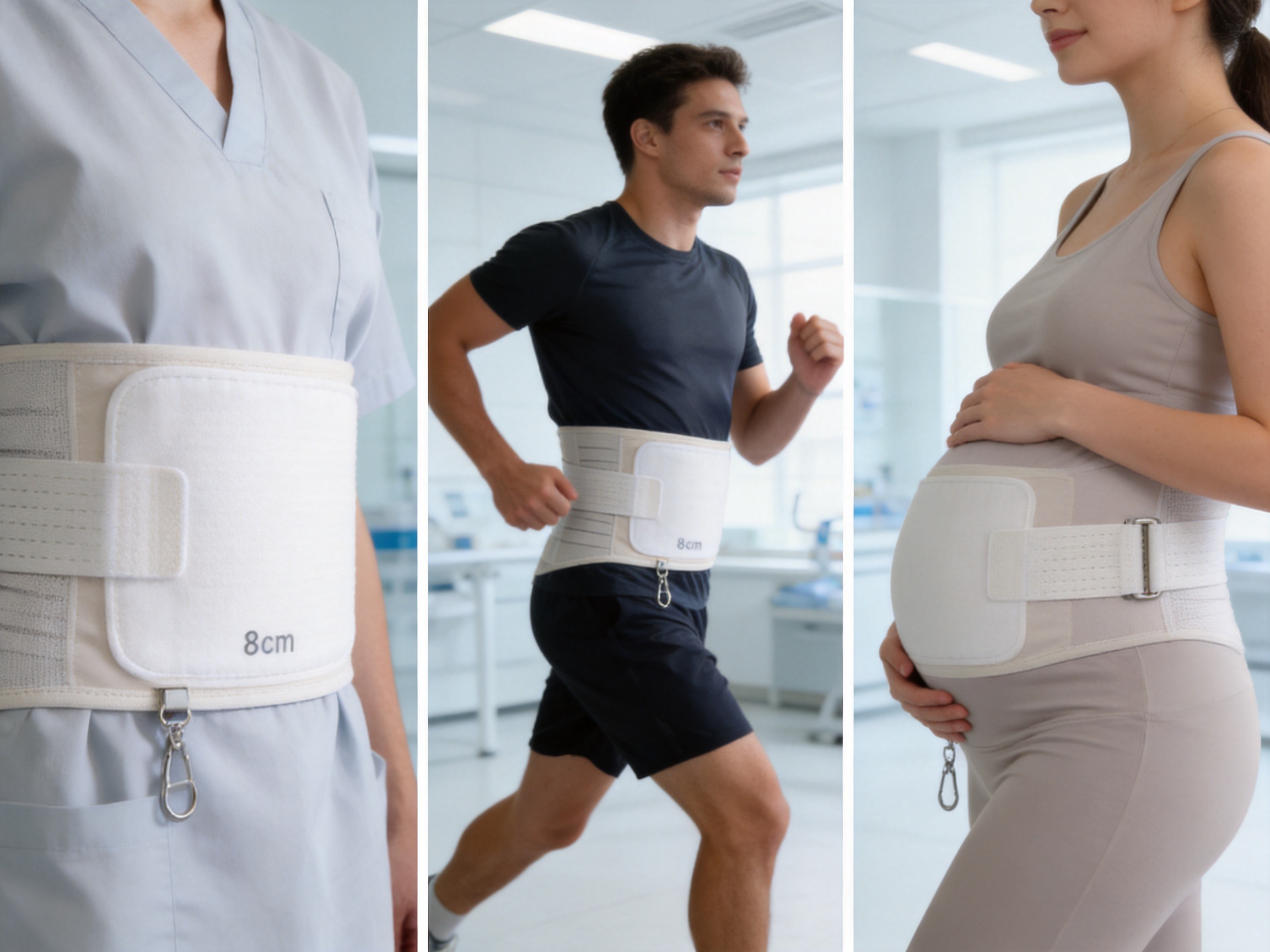
Medical supports often need to stabilize a body area while allowing the wearer to adjust the fit. Abdominal binders, lumbar supports, postoperative belts, orthopedic braces, and rehabilitation products may use elastic components to help maintain contact with the body. The 8cm White Velcro Elastic Panels can serve as a fastening or adjustment section within these products.
In an abdominal binder, the panel may help secure the binder around the waist or abdomen. Its broad construction can contribute to even tension, while the hook-and-loop closure allows the wearer or caregiver to adjust the fit. This can be useful when the wearer’s body shape changes during recovery or when the product is used over different layers of clothing.
In a lumbar or orthopedic support, the panel may be used as a secondary adjustment strap or as part of a broader belt system. Designers can position it to assist compression, alignment, or retention. Additional reinforcement may be required where high pulling forces are expected. Stitching patterns, bar tacks, edge binding, and load-bearing layers should be designed according to the finished product’s intended use.
For medical applications, the textile component should be evaluated as part of the complete medical product. Material selection, biocompatibility considerations, skin-contact requirements, cleaning instructions, labeling, and applicable regulatory standards must be addressed by the product manufacturer. The panel can support these designs, but it does not by itself establish a medical claim or a clinical outcome.
The manufacturer’s ISO 13485 certification is relevant to buyers seeking a supplier familiar with quality management principles associated with medical devices. Certification does not eliminate the need for the buyer to conduct its own validation, but it can provide additional confidence in the supplier’s documented processes and quality-oriented production environment.
Applications in Sports Protection and Performance Garments
Sports supports need to remain secure while the wearer moves repeatedly. A loose fastening can reduce protection and cause distraction, while an overly rigid closure may restrict movement. Elastic hook-and-loop panels help address this balance by combining flexibility with adjustability.
The panel can be incorporated into knee, elbow, wrist, shoulder, waist, and back support products, provided that the dimensions and strength are suitable for the application. It may also be used in protective sleeves, training belts, compression garments, and equipment that must be adjusted quickly between activities.
For sportswear manufacturers, the white panel can be integrated into both visible and concealed designs. It may be sewn beneath an outer shell, covered with a soft lining, or used as a functional accent. Product developers can choose different overlap lengths to control the adjustment range. They can also combine the panel with mesh, foam, spacer fabric, woven webbing, or knitted elastic to create a layered support structure.
Sports products are often exposed to sweat, friction, repeated washing, and high movement frequency. These conditions make material consistency important. Buyers should confirm the appropriate care method and test the complete assembly under realistic conditions. A laboratory or production trial can evaluate seam strength, closure retention, elongation, recovery, wash stability, and comfort.
Applications in Maternity Wear and Adjustable Clothing
Maternity products must accommodate changing body dimensions without sacrificing comfort or appearance. Elastic hook-and-loop panels can provide an adjustable solution for maternity belts, support garments, waist extensions, and other products that need to change with the wearer.
The 8cm width can help distribute support around the waist or abdomen, while the elastic construction allows the product to follow body movement. The closure can be repositioned as the garment fit changes. This makes the panel more adaptable than a fixed-length fastening sewn permanently into one position.
In adjustable clothing, the panel may be placed inside a waistband, side seam, back section, or removable support layer. Designers should ensure that the hook surface is protected from direct skin contact where necessary. A soft lining or loop-facing construction can improve comfort and reduce the risk of snagging nearby fabrics.
Appearance is also important in maternity wear and lifestyle products. The white color can be hidden under light-colored fabrics or used in a clean, minimal design. The panel can be covered by decorative textile layers when the fastening should remain invisible.
Manufacturing Strengths and Production Capabilities
Product performance depends not only on the design but also on manufacturing consistency. Jinhu Hengxiang Webbing Co., Ltd. was established in 2005 and has developed experience in the research, development, production, sale, and service of elastic and non-elastic webbing. The company focuses particularly on materials used in sports supports, orthopedic braces, medical protective equipment, and related textile products.
The company has introduced and updated production equipment including warping machines, knitting machines, woven machines, and packaging machines. Each type of equipment supports a different stage or construction method in webbing production. Warping equipment prepares yarns in an organized arrangement for subsequent processing. Knitting machines create flexible structures with controlled elasticity and texture. Woven machines produce stable webbing structures with specified width and density. Packaging equipment helps standardize finished-roll preparation and shipment handling.
This combination of equipment supports a broad product portfolio rather than a single narrow material category. It also allows the manufacturer to work with different constructions, widths, textures, elasticity levels, and finishing requirements. For buyers developing a new hook-and-loop elastic panel, access to multiple production technologies can make it easier to coordinate the elastic base with related webbing products.
Monthly production capacity is described as millions of meters of elastic and non-elastic webbing. Large-scale capacity can be valuable for buyers that need stable supply, repeat orders, and coordinated production schedules. Capacity alone does not guarantee quality, so it must be supported by process control, testing, traceability, and communication. However, a substantial production base can provide a stronger foundation for commercial supply than a small workshop with limited equipment.
Material and Process Control
Quality begins with material selection. Yarn type, elastic fiber content, hook-and-loop component quality, backing material, and finishing agents can all influence the final product. Consistent incoming materials help reduce changes in stretch, recovery, width, color, surface feel, and fastening performance.
During production, process settings must be controlled carefully. Changes in machine tension, knitting density, weaving pattern, temperature, speed, or finishing conditions may affect elasticity and dimensional stability. A professional manufacturer can establish operating parameters and inspection procedures to maintain consistency across production lots.
For an 8cm panel, width control is especially important. A width variation can affect the overlap area, the appearance of the finished garment, and the distribution of tension. Edge quality is also important because loose yarns, uneven trimming, or rough finishing may cause sewing difficulties or discomfort.
Testing and Inspection Considerations
Typical evaluation may include width measurement, thickness measurement, elongation testing, recovery testing, tensile strength testing, hook-and-loop peel performance, shear holding performance, seam compatibility, color consistency, and visual inspection. The exact test methods should be selected according to the buyer’s specification and the final application.
For medical and sports support products, repeated-use testing can be particularly useful. A panel may be opened and closed a defined number of times, stretched repeatedly, washed according to the intended care method, and inspected for damage or performance loss. Such testing helps the buyer understand how the component behaves in practical conditions.
Testing should not be limited to the raw panel. The panel must also be evaluated after being sewn into the intended product. Stitch density, thread type, needle size, seam allowance, reinforcement, and fabric compatibility can significantly influence performance. A high-quality panel can still fail if it is attached with weak stitching or placed under excessive stress.
Quality Certifications and Responsible Supply
Jinhu Hengxiang Webbing Co., Ltd. has obtained Oeko-Tex Standard 100 and ISO 13485 certificates. Oeko-Tex Standard 100 is associated with testing textiles for certain harmful substances, while ISO 13485 concerns quality management systems for organizations involved in medical devices and related products. Buyers should confirm the scope, validity, and applicability of current certificates for the specific order and intended market.
These certifications can support purchasing decisions by demonstrating that the supplier has established quality and product-safety procedures. They should be considered alongside product testing, technical documentation, factory communication, sample approval, and the buyer’s own compliance responsibilities.
Customization Options for Commercial Buyers
Different finished products require different levels of stretch, support, softness, closure strength, and visual treatment. For this reason, customization is an important advantage when purchasing elastic webbing directly from an experienced manufacturer.
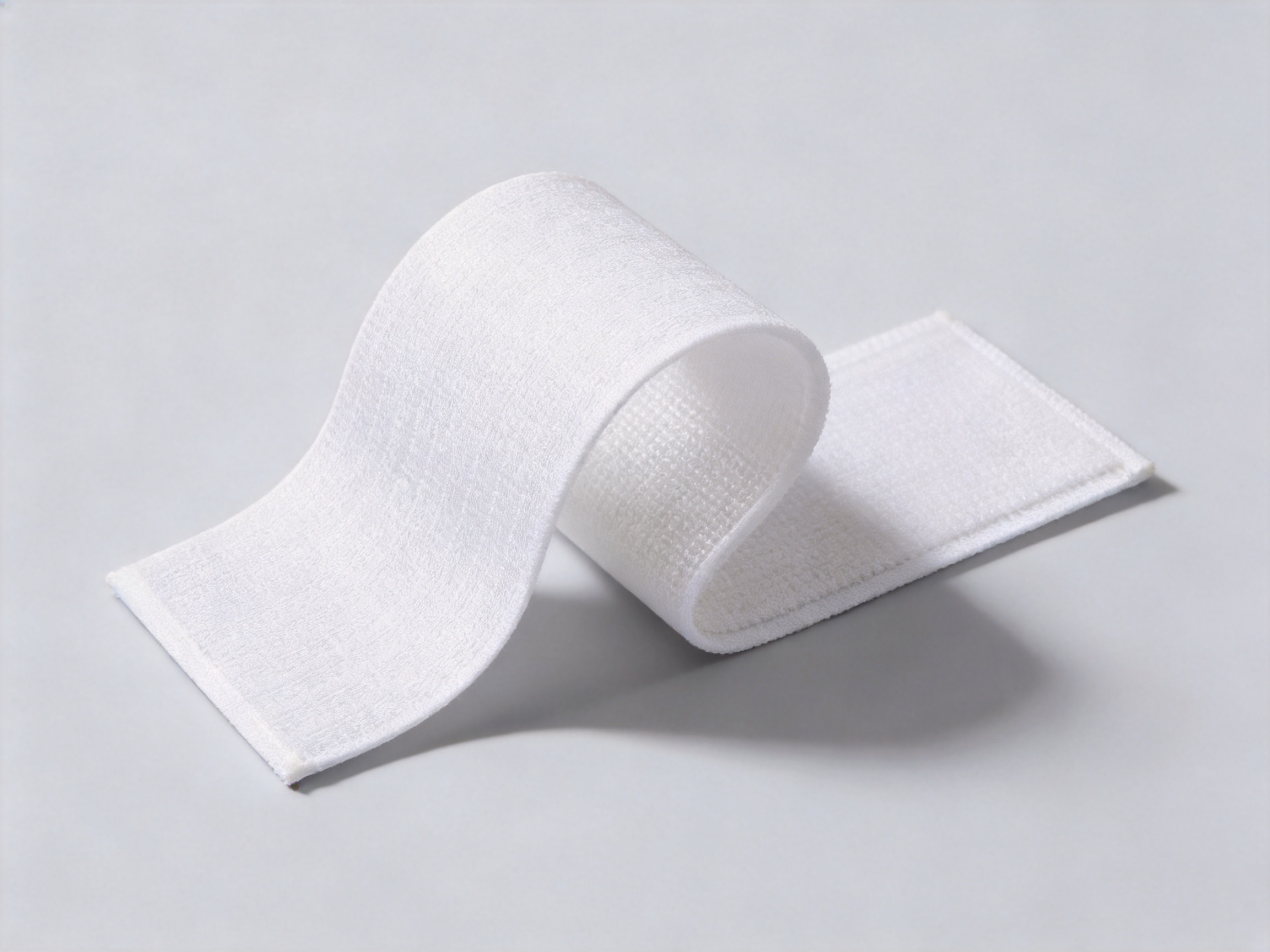
Hengxiang provides customized webbing with tailored elasticity, texture, and color. Buyers may discuss the desired width, elastic behavior, surface structure, hook-and-loop configuration, roll length, packaging, and application requirements. The standard product described here is white and 8cm wide, but project-specific changes may be possible after technical review and sampling.
Elasticity should be specified clearly. A buyer may need a panel that stretches easily for comfort, or one that offers stronger resistance for support. The target elongation, recovery behavior, tension at a specified extension, and acceptable tolerance should be discussed using measurable values rather than general terms such as “soft” or “strong.”
Texture and hand feel also influence the finished product. A soft surface may be preferred for skin-adjacent applications, while a firmer construction may be selected for braces or support belts. If the hook-and-loop section will be exposed, the buyer should consider snag resistance and compatibility with nearby fabrics.
Color matching can be important for branded sportswear, medical uniforms, and fashion products. White may be the preferred standard, but other shades may be considered according to minimum order quantities, dyeing capabilities, and color approval procedures. A physical sample or approved color standard can help prevent misunderstanding between the buyer and supplier.
Packaging customization may include roll size, label information, carton configuration, moisture protection, and barcode requirements. Proper packaging helps prevent contamination, crushing, tangling, and damage during transportation. It also supports efficient receiving and inventory management at the buyer’s facility.
Recommended Design and Sewing Practices
The panel should be integrated into the finished product with attention to force direction. If tension is applied across the width, the sewing pattern should distribute the load through a suitable reinforcement layer. If the panel is folded around an edge, the bend radius and seam construction should be checked to prevent excessive stress.
Bar tacks, box stitches, zigzag stitching, or multiple parallel rows may be suitable depending on the application. The correct choice depends on the fabric, thread, machine, load, and required appearance. A test sample should be pulled or cycled before mass production begins.
The hook-and-loop area should have sufficient overlap. Too little overlap may reduce holding strength, while excessive overlap may make adjustment difficult or create unnecessary bulk. Designers should allow enough space for the user to grasp and separate the closure without damaging the elastic base.
The orientation of the hook and loop should be planned carefully. In products worn close to the body, the hook side should generally be prevented from rubbing directly against sensitive skin. A lining, cover, or folding structure may be used to keep the hook surface in the intended position.
Edges should be inspected for fraying, roughness, and loose fibers. If the panel is cut during production, the cutting method should be compatible with the material. Some applications may require edge sealing, binding, folding, or additional stitching to maintain a clean appearance and prevent unraveling.
Care labeling should reflect the complete garment rather than the panel alone. Washing temperature, detergent selection, drying method, ironing restrictions, and closure handling can affect the life of the hook-and-loop system and elastic structure. Closing the hook-and-loop surfaces before washing may help prevent snagging and contamination of other fabrics.
Quality and Performance Evaluation for Buyers
Before placing a large order, buyers should request samples and define the acceptance criteria. Samples allow the product developer to evaluate appearance, width, feel, stretch, recovery, closure behavior, sewing performance, and compatibility with the intended fabric.
A basic evaluation plan can include the following stages. First, inspect the sample visually for even width, clean edges, consistent color, and surface defects. Second, measure the width and thickness at several points. Third, evaluate elongation and recovery using a consistent method. Fourth, test hook-and-loop engagement and separation. Fifth, sew the panel into the intended product and examine the seam under realistic load.
For repeated-use products, cycling tests should be included. The panel can be stretched and relaxed repeatedly, opened and closed many times, and exposed to the planned cleaning process. After testing, the buyer should inspect the panel for loss of recovery, deformation, fraying, changes in surface feel, and reduced fastening performance.
Environmental conditions should also be considered. Products used in sports may encounter perspiration and frequent washing. Medical supports may require disinfecting or laundering. Maternity garments may be worn for long periods and exposed to body oils, lotions, and repeated adjustment. The selected test conditions should represent actual or reasonably foreseeable use.
Documentation is another important part of quality management. Buyers may request a product specification sheet, inspection report, certificate information, packaging details, material declarations, and batch identification. Clear documentation improves communication and helps both parties investigate any future quality concern.
Supply Chain and Export Advantages
For international buyers, supplier reliability includes more than product quality. It also includes communication, production scheduling, packaging, export preparation, and after-sales service. Hengxiang serves customers across China and exports to North America, Eastern Europe, the Middle East, South Asia, and other regions. Experience with different markets can help the supplier understand varied packaging, documentation, and product expectations.
OEM and ODM orders are welcome. OEM production allows a buyer to provide specifications for a product manufactured under the buyer’s own brand or design. ODM cooperation may involve the supplier contributing technical knowledge, construction suggestions, or development support. These models can be useful for companies that want customized webbing without establishing their own textile production line.
Timely delivery is especially important for seasonal sportswear, medical supply programs, maternity product launches, and production schedules involving multiple components. A supplier with established equipment and capacity may be better positioned to coordinate raw materials, manufacturing, inspection, and packing. Buyers should still confirm lead times, order quantities, sample approval procedures, and shipping terms before placing an order.
Competitive pricing is another benefit of direct manufacturing. However, the lowest unit price does not always represent the best total value. Buyers should consider consistency, usable yield, defect rates, testing support, delivery reliability, packaging, and product life. A slightly higher-quality component may reduce sewing problems, returns, and replacement costs.
Sustainability and Long-Term Product Value
Sustainability in textile components involves material selection, product life, production efficiency, packaging, and responsible use. A durable elastic panel that remains functional through repeated adjustment may reduce the need for frequent replacement. Longer-lasting products can help lower material consumption over the product’s useful life.
Efficient production equipment and organized manufacturing processes can also contribute to better resource management. Consistent production reduces rejected material and supports more predictable use of yarns, elastic components, packaging, and labor. Buyers can further improve sustainability by selecting appropriate roll lengths, minimizing cutting waste, and designing products for repair or replacement where practical.
Oeko-Tex Standard 100 certification may be relevant to buyers concerned about certain harmful substances in textile products. The certification should be reviewed according to its current scope and the specific material supplied. Sustainability claims should be based on verifiable information rather than general marketing language.
Product designers can also consider end-of-life issues. A panel made from multiple materials may be difficult to recycle, but repairable or replaceable construction can extend the useful life of the finished product. Clear care instructions may help users maintain performance and avoid premature disposal.
How to Select the Right Specification
When selecting an 8cm White Velcro Elastic Panel for a project, buyers should begin with the intended function. Is the panel designed to provide light retention, moderate support, compression adjustment, or structural stabilization? The answer will influence the preferred elasticity, closure strength, reinforcement, and sewing method.
Next, define the physical requirements. These may include finished width, length, thickness, elongation, recovery, color, surface feel, hook-and-loop overlap, roll length, and packaging. Written specifications reduce the risk of different interpretations between the buyer and supplier.
The application environment should also be recorded. Consider whether the product will be worn next to skin, over clothing, indoors, outdoors, during exercise, in a medical setting, or under repeated washing. Temperature, moisture, perspiration, cleaning chemicals, and friction can all affect material selection.
Finally, identify the applicable compliance requirements. Medical products, protective equipment, children’s products, and garments sold in different markets may have different testing and labeling expectations. The webbing supplier can provide relevant technical information, but the finished-product manufacturer remains responsible for confirming compliance with the laws and standards applicable to its product.
Questions and Answers
What is an 8cm White Velcro Elastic Panel?
It is a wide elastic webbing component that incorporates hook-and-loop fastening. The 8cm width provides a broad support area, while the elastic structure adds flexibility and the hook-and-loop closure enables adjustable fastening. The standard color described here is white.
What makes it different from ordinary hook-and-loop tape?
Ordinary hook-and-loop tape may provide adjustable fastening but may not offer the same elastic movement. The 8cm panel combines hook-and-loop adjustment with an elastic base, allowing the fastening area to accommodate movement and changing tension.
Is the panel suitable for medical products?
It can be used as a component in medical supports, abdominal binders, orthopedic braces, and related products when its specifications are appropriate. The complete medical product must be designed, tested, labeled, and validated according to the requirements of the target market. The panel alone does not establish a medical claim.
Can it be used in sports supports?
Yes. Its adjustable closure and elastic construction make it suitable for many sports protection and support designs. Buyers should evaluate strength, recovery, seam construction, washing resistance, and comfort based on the specific sport and product type.
Why is the 8cm width useful?
The wider format can distribute tension across a larger area than a narrow band. This may improve stability and reduce concentrated pressure. The final result depends on how the panel is positioned, how tightly it is applied, and how it is integrated into the complete product.
Can the panel be customized?
Customization may be available for elasticity, texture, color, construction, packaging, and other technical requirements. Buyers should provide a written specification and request samples before confirming mass production.
How should the panel be sewn into a finished product?
The sewing method should match the expected load and fabric structure. Reinforced stitching, box stitches, bar tacks, or multiple rows may be considered. A production sample should be tested before large-scale manufacturing to confirm seam strength and user comfort.
Can the hook side touch the skin?
Direct contact may be uncomfortable for some users. In skin-adjacent products, designers should consider placing the hook surface away from the body or covering it with a soft lining, fabric flap, or other protective construction.
Is white the only available color?
White is the standard color described for this product. Other colors may be possible through customization, subject to production capability, minimum quantities, color approval, and application requirements.
How can a buyer verify product quality?
The buyer can request samples, technical specifications, certification information, inspection records, and batch details. The panel should also be sewn into the intended product and tested for stretch, recovery, closure retention, washing performance, appearance, and seam strength.
What industries can use this product?
Potential industries include medical supports, orthopedic products, sportswear, protective equipment, maternity wear, rehabilitation garments, adjustable clothing, sewing supplies, and specialty textile manufacturing.
Does the manufacturer support OEM and ODM orders?
Yes. OEM and ODM orders are welcomed. Buyers can discuss customized elasticity, texture, color, packaging, and other requirements with the manufacturer’s technical and sales teams.
Conclusion
The 8cm White Velcro Elastic Panels provide a practical combination of broad elastic support and adjustable hook-and-loop fastening. Their main advantages include flexible fit, secure closure, wide pressure distribution, comfortable movement, repeated-use convenience, and broad application potential. These characteristics make the panel a useful component for abdominal binders, orthopedic braces, sports supports, maternity wear, protective garments, and other adjustable textile products.
Compared with fixed webbing, narrow elastic, rigid buckles, drawstrings, and non-elastic hook-and-loop tape, the panel offers a balanced solution for products that require both movement and control. Its white appearance supports clean medical, sportswear, and general textile designs. Its 8cm width can help create a more stable and comfortable support structure when correctly integrated.
The manufacturer’s experience since 2005, broad equipment base, large-scale production capability, quality certifications, export experience, and OEM and ODM services provide important advantages for commercial buyers. Warping, knitting, weaving, packaging, inspection, and customization capabilities support a complete manufacturing process rather than a single isolated product operation.
For the best result, buyers should define the required elasticity, closure performance, dimensions, color, application environment, care method, compliance needs, and packaging requirements. Sample testing and complete-product validation remain essential. With appropriate specification and design, the 8cm White Velcro Elastic Panels can contribute to secure, comfortable, durable, and adaptable finished products.
References
1. Textile Research and Application Principles for Elastic Webbing and Narrow Fabrics.
2. General Guidance for Hook-and-Loop Fastener Design, Engagement, and Repeated-Use Testing.
3. Quality Management Systems for Medical Devices, ISO 13485 Principles.
4. Oeko-Tex Standard 100, Textile Product Safety and Harmful Substance Assessment Principles.
5. Product Development Practices for Sports Supports, Orthopedic Braces, and Adjustable Garments.
6. Textile Testing Methods for Width, Tensile Strength, Elongation, Recovery, Color, and Dimensional Stability.
7. Sewing and Reinforcement Guidelines for Load-Bearing Textile Assemblies.