
 en
en
 English
 русский
 Français
 Español
 Português
 Tiếng Việt
Content
- 1 Product Overview
- 2 Main Advantages of the 7.5cm Woven Construction
- 3 Applications Across Garment and Textile Industries
- 4 Advantages Compared with Narrow or Lightweight Elastic
- 5 Manufacturing Process and Quality Control
- 6 Advanced Manufacturing Strengths
- 7 Customization Options for Different Projects
- 8 Guidelines for Product Selection
- 9 Sewing and Integration Considerations
- 10 Why Supplier Capability Matters
- 11 Quality, Sustainability, and Responsible Production
- 12 Recommended Customer Evaluation Process
- 13 Q&A
- 13.1 What is a 7.5cm black woven elastic panel?
- 13.2 What products commonly use this elastic panel?
- 13.3 How is woven elastic different from knitted elastic?
- 13.4 Is the panel suitable for medical products?
- 13.5 Can the panel be customized?
- 13.6 Is black the only available color?
- 13.7 Can it be used directly against the skin?
- 13.8 How should buyers test the product?
- 13.9 What information should be included in an inquiry?
- 13.10 What manufacturing equipment supports production?
- 13.11 Does the manufacturer support OEM and ODM projects?
- 13.12 Where is the manufacturer located?
- 14 Conclusion
- 15 References
- 16 Product: 7.5cm Black Woven Elastic Panels
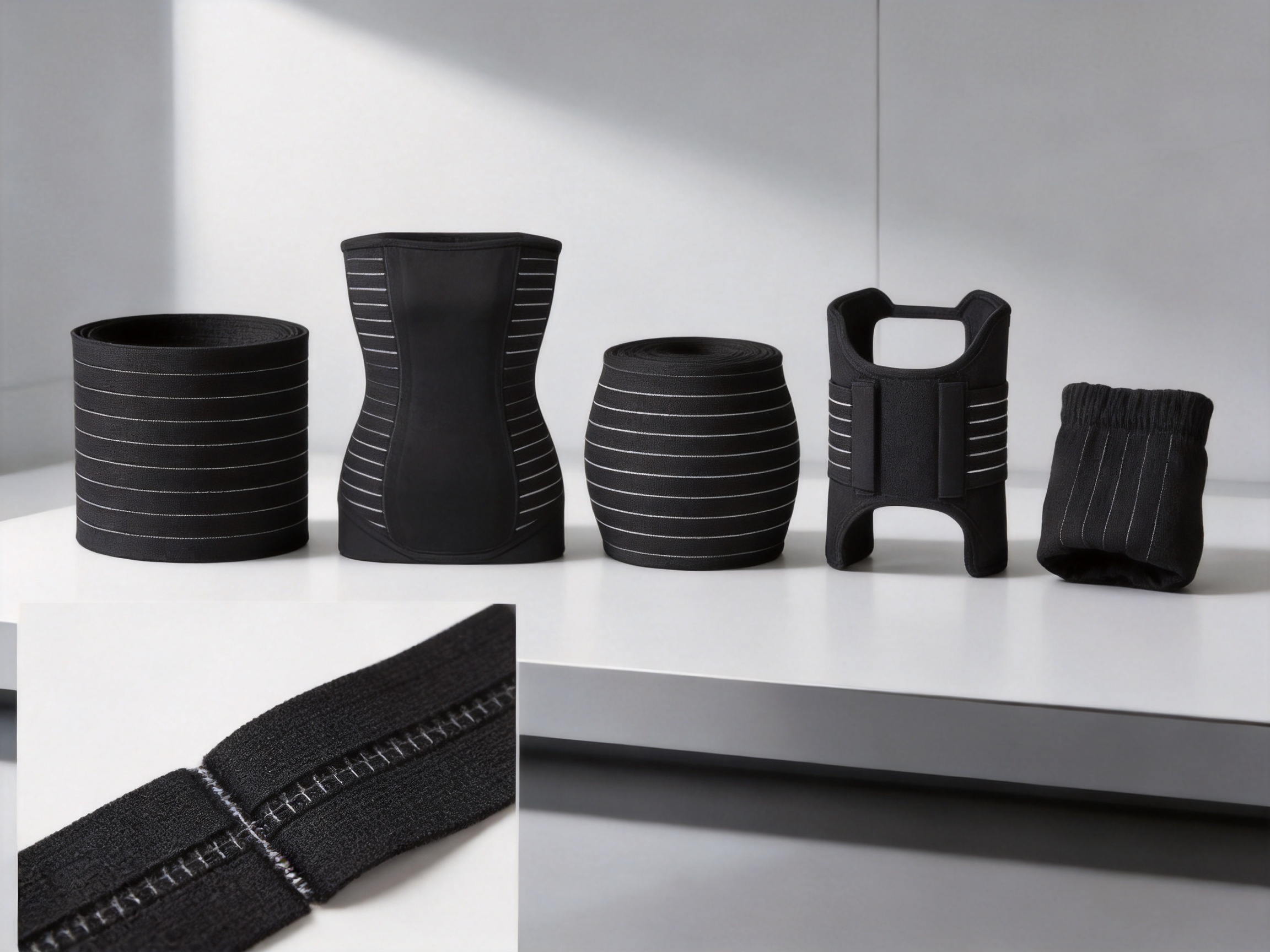
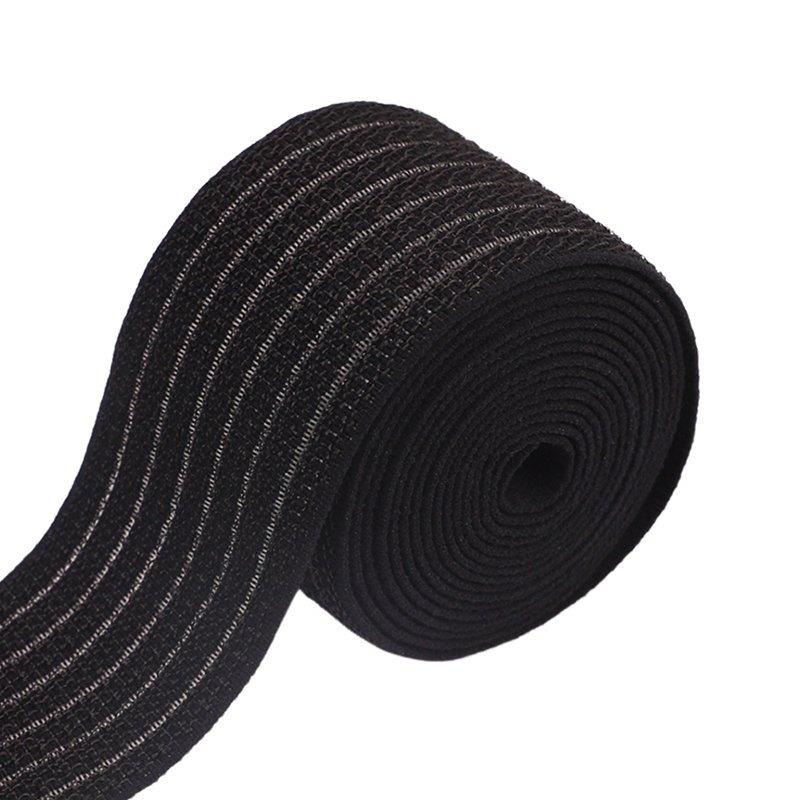
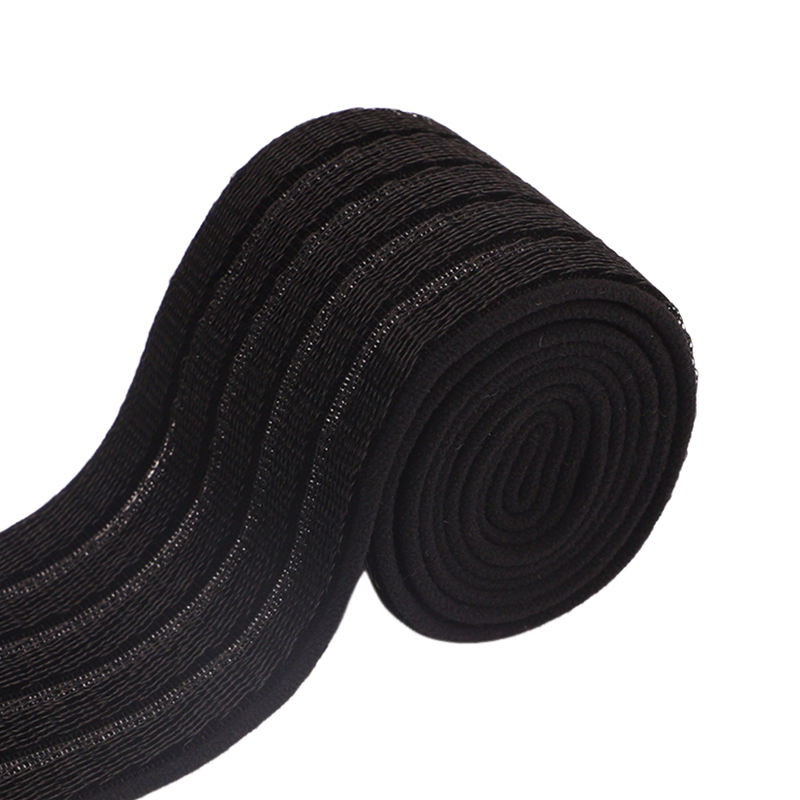
The 7.5cm black woven elastic panel is a versatile textile component developed for garments and products that require dependable stretch, firm support, a clean appearance, and long-term performance. With its wide construction and black finish, this elastic panel combines practical functionality with a professional visual effect. It can be incorporated into waistbands, cuffs, hemlines, support garments, sportswear, underwear, shapewear, maternity wear, loungewear, and many other sewn products.
Unlike narrow elastic bands that provide concentrated tension over a limited area, a 7.5cm-wide woven panel distributes pressure across a broader surface. This feature can improve comfort, stability, and garment structure when a product needs controlled compression or reliable retention. The panel is also suitable for industrial garment production and smaller-scale sewing projects because it can be cut, sewn, layered, and integrated into different construction methods.
Woven elastic panels are valued by manufacturers because they offer a useful balance between flexibility and structural stability. The elastic yarns provide stretch and recovery, while the woven construction helps the material maintain its shape during repeated use. This makes the product suitable for applications where ordinary trim or lightweight elastic may not provide enough support.
Produced by an experienced webbing manufacturer with modern warping, weaving, knitting, testing, and packaging equipment, this black elastic panel is designed for customers seeking consistent quality and adaptable production support. Customization options can also be discussed for projects requiring different elasticity, textures, dimensions, or colors.
Product Overview
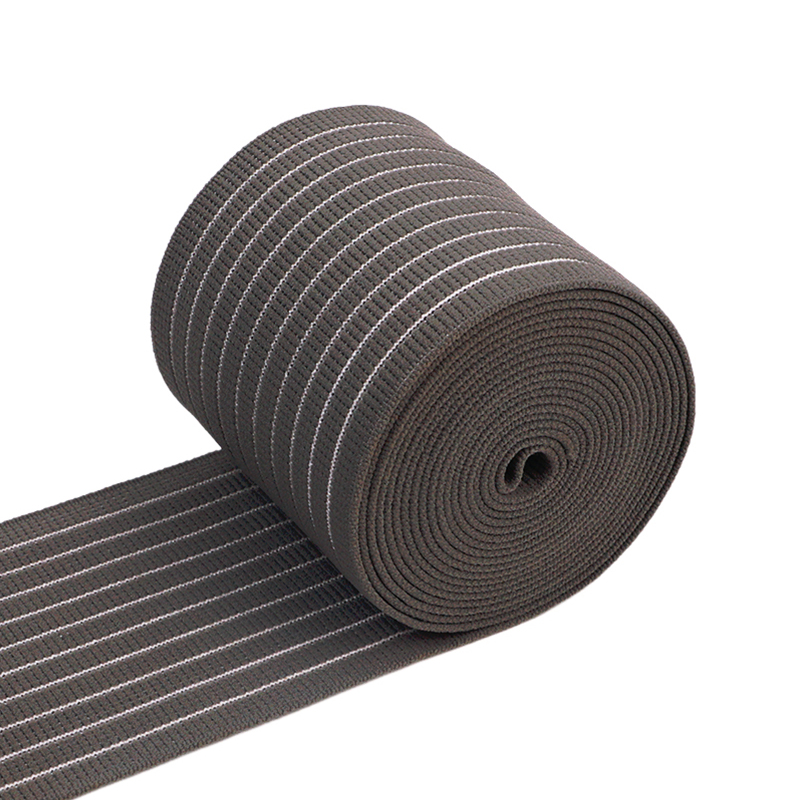
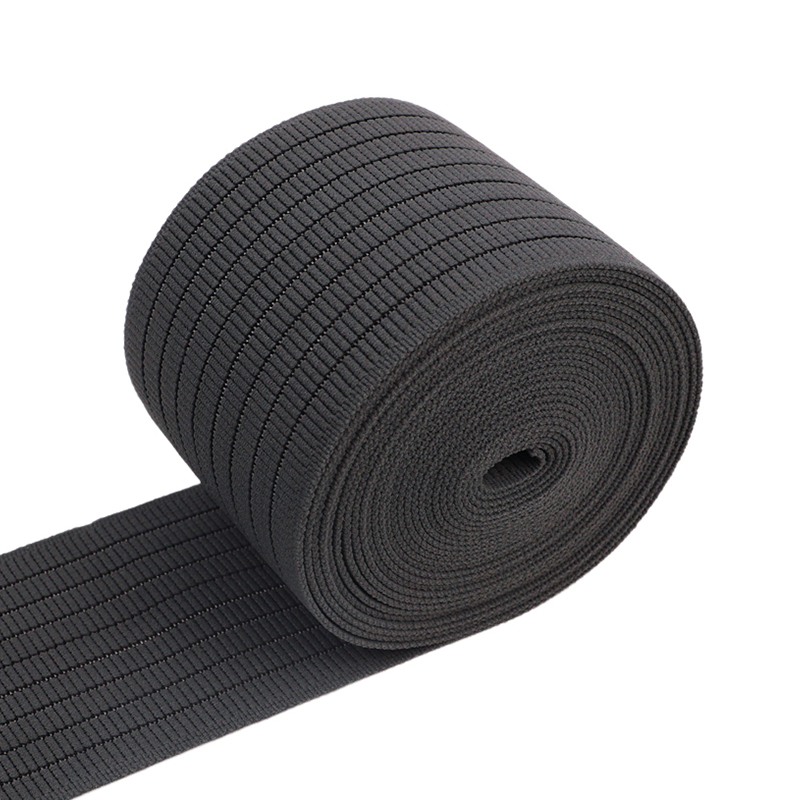
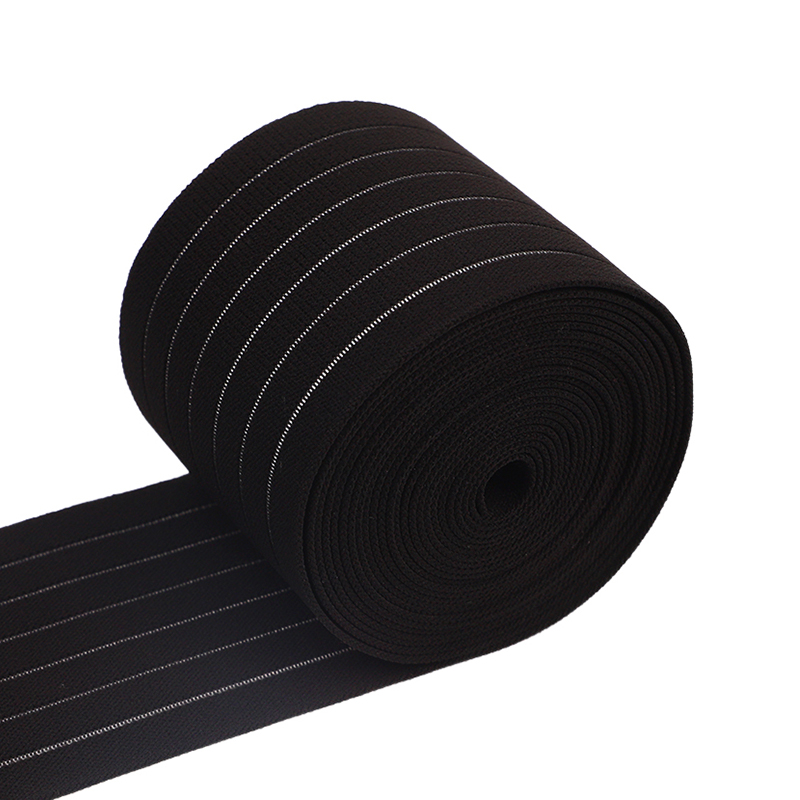
The 7.5cm black woven elastic panel is a wide elastic webbing product intended for integration into sewn textile goods. Its standard width is 7.5cm, making it wider than ordinary waistband elastic and more suitable for applications that need broader coverage. The black color offers a neutral, widely compatible appearance that can coordinate with dark garments, sportswear, underwear, medical support products, and industrial textile assemblies.
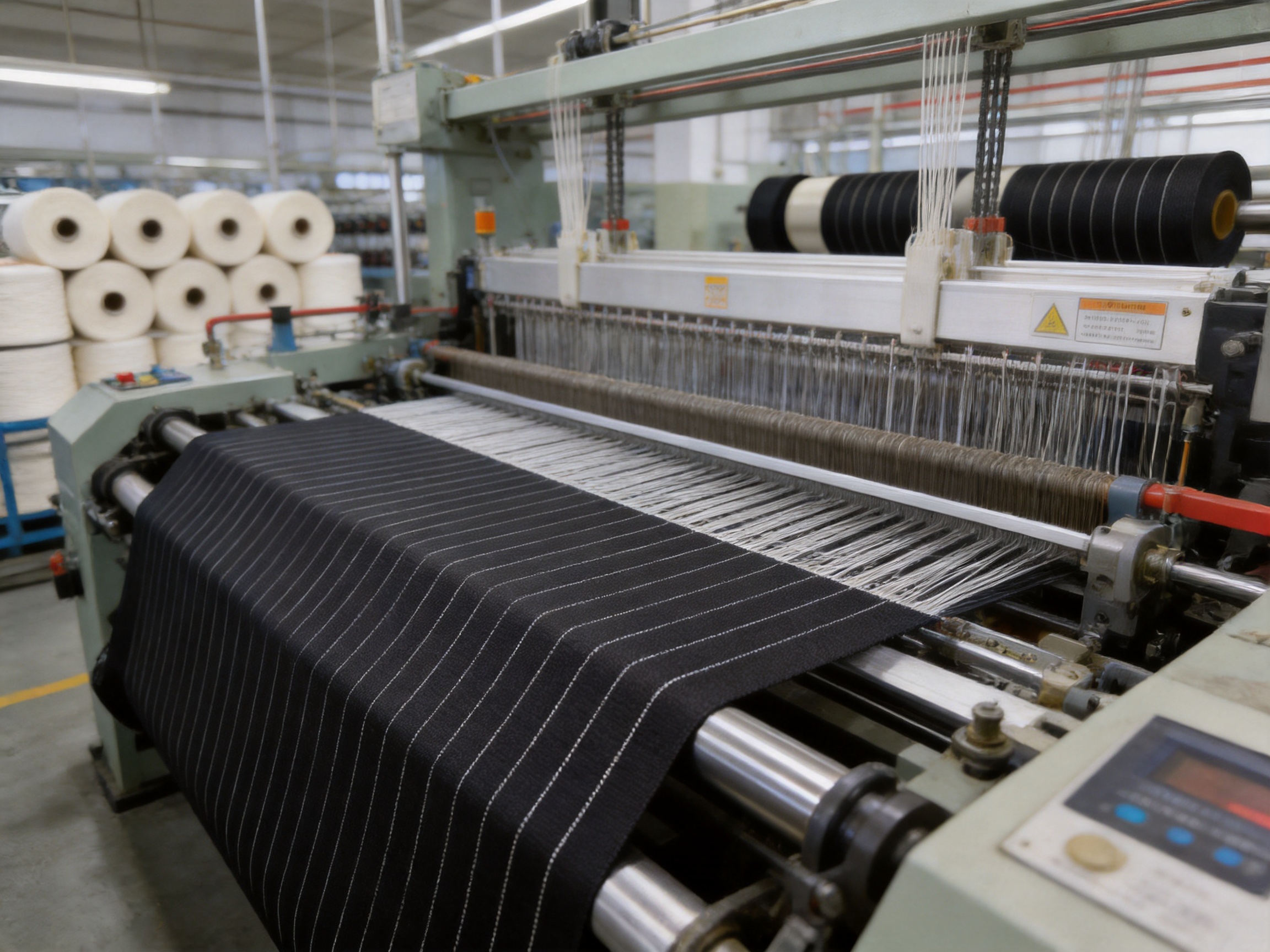
The panel is manufactured through a woven process in which longitudinal and transverse yarn systems are arranged to create a stable textile structure. Elastic yarns are incorporated into the webbing to provide controlled extension and recovery. The final performance of the panel depends on the selection of raw materials, yarn arrangement, weaving parameters, finishing methods, width control, and quality inspection.
As a textile component, the product can be sewn directly onto fabric or placed inside a garment channel. It may be used as an exposed structural detail, a concealed support layer, or a reinforcement element. Depending on the design, manufacturers can apply it in a continuous length, cut sections for individual garments, or combine it with hook and loop fasteners, fabric panels, labels, binding, and other accessories.
The black finish is particularly useful for products that require a restrained, durable, and commercially adaptable appearance. It can reduce the visual impact of minor surface marks during normal handling and can be coordinated with black, gray, navy, and other dark-colored fabrics. For fashion products, the panel can also function as a visible design element around the waist, torso, wrist, or leg opening.
Main Advantages of the 7.5cm Woven Construction
Broad and Even Support
The most important advantage of a wide elastic panel is the ability to distribute tension over a larger contact area. Narrow elastic may create a concentrated line of pressure, particularly when used in fitted garments. A 7.5cm panel can spread the holding force across the garment section, which may help improve stability and reduce the likelihood of a narrow band folding, twisting, or cutting into the fabric.
For waistbands and support garments, broad coverage can create a more secure fit. For cuffs and hemlines, the wider construction can help maintain the intended silhouette. In sportswear and shapewear, the panel can provide a stable transition between fabric sections while preserving the flexibility required for body movement.
Balanced Stretch and Recovery
A good elastic panel must do more than stretch. It must also recover toward its original length after extension. If recovery is weak, a waistband may become loose, a cuff may lose its shape, and a support garment may no longer fit as intended. The woven structure of this product is designed to provide consistent elasticity and dependable dimensional behavior when properly selected for the application.
Balanced stretch is important in garment engineering because excessive resistance may reduce comfort, while insufficient resistance may result in poor retention. The appropriate performance depends on the product design, body area, fabric combination, stitch type, and required compression level. A professional supplier can support customers in selecting a suitable specification instead of treating all elastic applications as identical.
Stable Woven Structure
Woven elastic panels generally offer greater structural stability than many lightweight knitted alternatives. The interlaced yarn arrangement helps the webbing retain its width and resist unwanted distortion. This is valuable when the panel is sewn under tension, subjected to repeated movement, or used as part of a garment that must maintain a neat appearance.
Stable construction can also simplify production. When the webbing maintains a predictable width, operators can position it more accurately, sewing machines can follow the intended seam line, and finished garments can achieve more consistent dimensions. For large-volume factories, this may help reduce adjustment time and material waste.
Durability for Repeated Use
Garments such as activewear, underwear, maternity wear, and loungewear are often washed, stretched, folded, and worn repeatedly. The elastic component must therefore tolerate regular mechanical stress. A durable woven panel can support longer product service life by maintaining its structure and useful elasticity through repeated handling.
Durability is also relevant to industrial and protective applications. Products used in demanding environments may experience friction, pulling, bending, and repeated fastening. A robust panel can provide a reliable base for these applications when it is combined with appropriate sewing methods and compatible fabrics.
Professional Black Appearance
Black remains one of the most widely used colors in garment production because it is easy to coordinate and suitable for both functional and fashion-oriented products. A black woven elastic panel can be integrated into dark garments without creating a distracting contrast. It can also be used as a deliberate contrasting trim on lighter colors.
The color is suitable for sports supports, underwear, shapewear, workwear, fashion garments, and home sewing projects. For brands developing several product lines, a standard black component can simplify sourcing and reduce the need to stock many color variations.
7.5cm Black Woven Elastic Panels
Applications Across Garment and Textile Industries
Waistbands
Wide woven elastic is commonly used in waistbands because it can provide both retention and structure. It may be sewn directly to the inside of a garment, enclosed in a fabric casing, or used as part of a layered waistband assembly. The 7.5cm width is suitable for designs that require a visibly broad waistband or enhanced support around the waist.
In trousers, skirts, shorts, leggings, and casual garments, the panel can help the garment remain positioned during movement. In lounge and maternity garments, a wide elastic section may be selected for a comfortable, flexible fit. The final result depends on the relationship between the elastic tension and the garment fabric. Designers should test the product with the actual body measurements and fabric weight used in production.
Activewear and Sportswear
Sportswear requires components that can move with the wearer while helping the garment retain its shape. The woven elastic panel can be used in training shorts, running apparel, cycling garments, sports tops, dancewear, performance leggings, and other active products.
In these applications, the panel may support a waistband, stabilize a torso section, or create a secure edge around an opening. Its broad construction can help prevent the garment from shifting during bending, stretching, jumping, or rapid movement. It can also be combined with moisture-managing fabrics, mesh, brushed materials, and reinforcement tapes.
Sportswear manufacturers should evaluate the elastic together with perspiration, laundering, body movement, and seam stress. A laboratory or production trial can help determine whether the selected tension and recovery characteristics are suitable for the intended performance level.
Underwear and Shapewear
Underwear and shapewear often require elastic components that are soft enough for regular contact with the body while still offering reliable retention. A wide panel can be applied to waist sections, torso areas, leg openings, or other locations where broader support is preferred.
For shapewear, the panel may be incorporated into a multi-layer construction that includes stretch fabric, lining, bonding materials, and targeted compression zones. The woven elastic does not replace the complete garment engineering process, but it can serve as an important support element within that system.
Manufacturers should consider edge comfort, seam placement, garment pressure, fabric recovery, and the intended wearing period. A panel that is suitable for an outer waistband may require different treatment when used directly against the skin. Testing with the finished garment is essential.
Maternity Wear
Maternity products need to accommodate changing body dimensions while maintaining comfort and garment stability. A wide woven elastic panel can be used in maternity trousers, skirts, support bands, adjustable waist sections, and layered belly panels.
The broad surface may help distribute tension more evenly than a narrow strip. It can also allow designers to create a supportive section without relying solely on a rigid waistband. Depending on the garment pattern, the panel may be placed at the front, back, or around the entire waist.
Because comfort requirements vary significantly during pregnancy, manufacturers should select the tension carefully and conduct wear trials with representative users. The product should be integrated with soft, breathable, and skin-compatible materials wherever direct body contact is expected.
Loungewear and Casual Garments
Loungewear is expected to be comfortable, easy to wear, and resistant to shape loss. A wide elastic panel can provide a clean waistband structure for pajamas, sweatpants, casual shorts, relaxed skirts, and home garments. The black finish is suitable for neutral, minimalist, and sport-inspired designs.
When combined with soft knitted fabrics, the panel can help the garment remain in place without requiring a bulky drawstring or rigid fastening system. It may also be used in adjustable designs where elastic is combined with buttons, cords, or concealed openings.
Cuffs and Hemlines
Although wide elastic is often associated with waistbands, the 7.5cm panel can also be used in cuffs and hemlines where a bold or supportive finish is required. It may be applied to sleeves, pant legs, shorts, skirts, and other openings.
In cuffs, the panel can help create a secure fit while allowing the wearer to move comfortably. At hemlines, it can provide shaping and visual definition. Designers can fold, layer, or partially conceal the elastic depending on the desired style.
Medical and Orthopedic Support Products
Elastic webbing is widely used in support products, braces, wraps, and protective equipment. A wide woven panel may serve as a structural component in abdominal support products, orthopedic braces, posture supports, sports protection, and other textile-based devices.
However, the suitability of any elastic for a medical or orthopedic product must be verified according to the complete device design and applicable regulatory requirements. The panel should not be described as a finished medical device by itself. Manufacturers must assess skin contact, pressure, fatigue, laundering, seam strength, chemical safety, and product-specific performance.
A supplier with experience in sports supports and orthopedic braces can provide useful manufacturing knowledge during product development. The final customer remains responsible for confirming that the finished product meets all applicable market and regulatory requirements.
Industrial Garments and DIY Sewing
The product is also suitable for industrial garment production, sample development, repair work, and personal sewing projects. Its standard width allows it to be incorporated into larger textile constructions without requiring multiple narrow strips.
For small workshops, the panel can be used in custom belts, costume garments, utility clothing, protective covers, bags, and reinforced textile assemblies. For industrial manufacturers, it can support repeatable production when supplied in consistent rolls and used with documented sewing specifications.
Advantages Compared with Narrow or Lightweight Elastic
Product selection should always be based on application requirements, but a 7.5cm woven elastic panel offers several potential advantages over narrow or lightweight elastic materials.
| Evaluation Area | 7.5cm Black Woven Elastic Panel | Narrow Elastic Band | Lightweight Knitted Elastic |
|---|---|---|---|
| Coverage | Broad surface coverage suitable for support zones and wide waistbands | Limited coverage concentrated along a narrow line | Moderate coverage, depending on the design |
| Structural stability | Stable woven construction supports shape retention | May twist or roll in some applications | Flexible but may be more prone to distortion under certain loads |
| Visual effect | Creates a substantial and professional wide-band appearance | Usually produces a narrow trim or concealed waistband | Often creates a softer, less structured appearance |
| Typical uses | Waistbands, support garments, sportswear, shapewear, maternity wear, cuffs, and hemlines | Small openings, light gathers, lingerie details, and narrow garment channels | Soft garments, light edging, and applications requiring high flexibility |
| Pressure distribution | Can distribute tension across a wider area | May create more concentrated pressure | Depends strongly on construction and tension |
| Production value | Can reduce the need to combine several narrow strips for broad support | May require multiple lines or layered components | May require additional reinforcement for structured products |
The comparison does not mean that wide woven elastic is suitable for every garment. Narrow elastic remains useful for small openings and lightweight products, while knitted elastic may offer advantages where softness and high flexibility are the primary objectives. The value of the 7.5cm panel is its combination of width, structure, support, and adaptable use.
For product developers, selecting a wider panel can simplify the construction of support zones. Instead of placing several narrow bands side by side, a single wide component may create a more uniform appearance and reduce alignment work. This can be particularly useful in waist sections and body-support products.
Manufacturing Process and Quality Control
Material Planning and Yarn Selection
Manufacturing begins with the selection and preparation of suitable yarns. The material combination affects stretch, recovery, surface appearance, strength, hand feel, and resistance to repeated use. A professional production process considers the intended end use before finalizing the yarn structure.
For a black woven elastic panel, color consistency is also important. Raw materials and finishing conditions must be controlled so that production lots maintain a stable visual appearance. When the product is supplied to garment factories, consistent color helps reduce differences between components and finished fabric.
Warping
Warping prepares the longitudinal yarns for the weaving process. The yarns are arranged according to the required width, density, and construction. Accurate warping is essential because uneven tension at this stage can lead to width variation, surface irregularities, or inconsistent elasticity later in production.
Modern warping equipment supports more precise yarn handling and helps production teams manage larger orders efficiently. The process must be monitored to ensure that yarn tension remains within the planned range. Proper preparation contributes to stable weaving and a more uniform final panel.
Woven Production
During weaving, the prepared warp yarns are interlaced with filling yarns to form the elastic panel. The machine settings determine the structure, density, width, and surface characteristics of the webbing. Elastic yarns must be integrated in a way that allows the panel to extend and recover while retaining sufficient stability.
Advanced woven machines can support repeatable production and more consistent construction across long rolls. Operators and technicians monitor machine performance, yarn movement, tension, and visible defects. If a problem is detected, adjustments can be made before a large quantity of material is affected.
For a 7.5cm product, width control is especially important. Excessive variation may cause problems during cutting, folding, sewing, or insertion into garment channels. Regular measurement helps maintain the dimensional accuracy required by customers.
Finishing and Inspection
After weaving, the panel may undergo finishing operations that help establish its final appearance and handling characteristics. Depending on the specification, finishing may involve cleaning, heat treatment, edge management, color treatment, rolling, or other controlled processes.
Inspection can include checking width, color, surface appearance, elasticity, recovery, tension, edge condition, roll quality, and packaging. The exact inspection program should be matched to the customer’s requirements and the intended application. Products designed for general garments may have different testing priorities from products intended for support or protective equipment.
Quality control should not be limited to the finished roll. Effective control begins with incoming raw materials and continues through processing, testing, packing, and shipment. This helps identify problems earlier and supports more consistent production results.
Packaging and Delivery Preparation
Correct packaging protects the elastic panel during storage and transportation. Rolls should be prepared to avoid unnecessary crushing, contamination, moisture exposure, and deformation. Labels and production records can help customers identify specifications, batches, quantities, and inspection information.
Reliable packing is particularly important for export orders because materials may pass through several handling stages before reaching the garment factory. Clear documentation can support receiving inspection and inventory management after delivery.
Advanced Manufacturing Strengths
The manufacturer behind this product has operated in the webbing industry since 2005 and has developed experience in the research, development, production, sales, and service of elastic and non-elastic webbing. This long-term industry experience supports a practical understanding of yarn selection, machine operation, webbing construction, customer specifications, and textile production challenges.
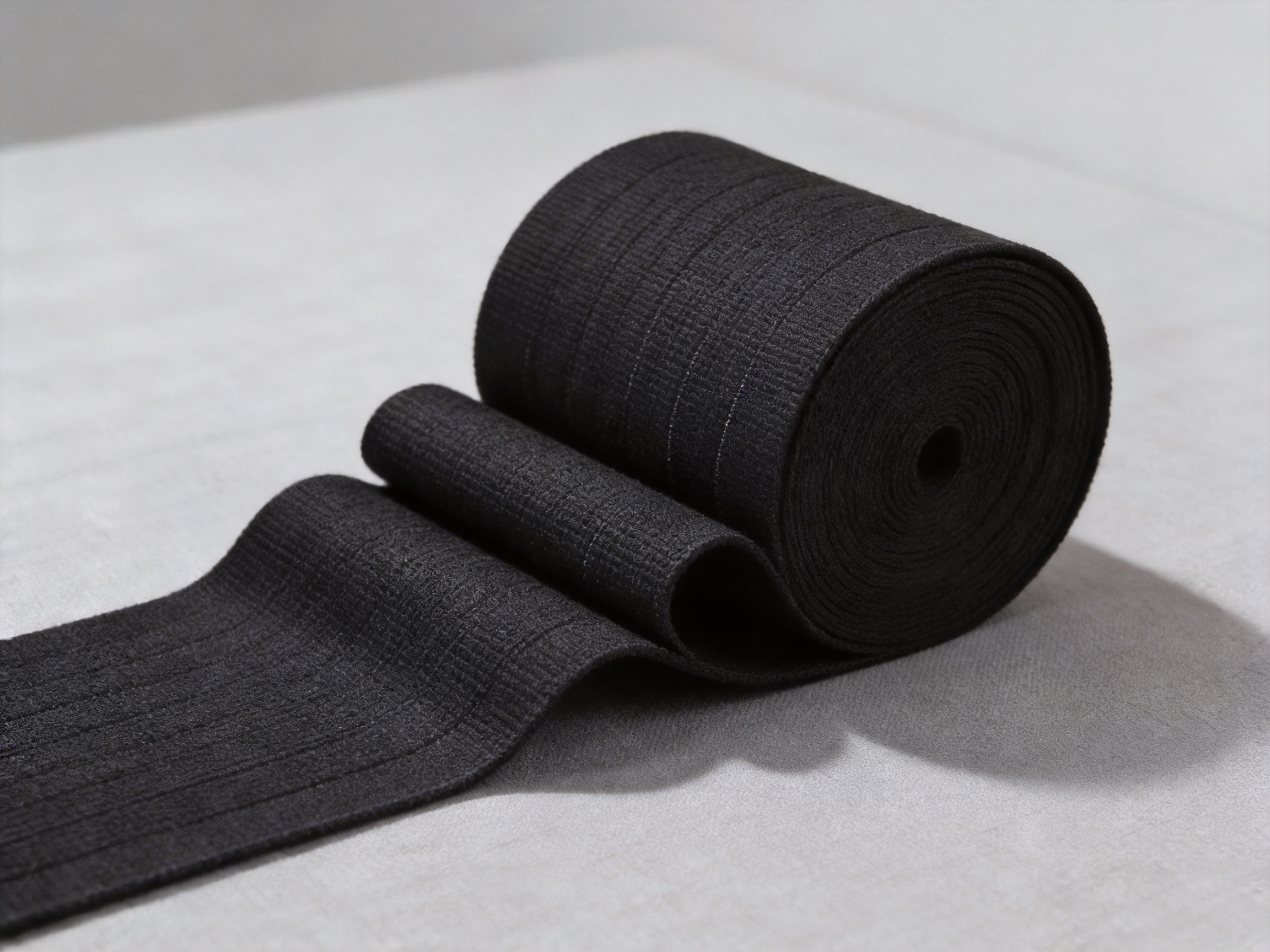
The company has introduced and updated production equipment including warping machines, knitting machines, woven machines, and packaging machines. This equipment base allows the manufacturer to produce different types of webbing and manage various construction requirements. It also supports coordinated control from yarn preparation through finished-product packaging.
Production capacity is described as millions of meters of elastic and non-elastic webbing per month. Capacity at this level can be valuable to apparel factories, distributors, and product brands that need repeat supply for ongoing production. However, customers should confirm available capacity, lead time, minimum order quantities, and production scheduling for each individual project.
One strength of an integrated webbing manufacturer is the ability to discuss product specifications directly with technical and production personnel. Instead of relying only on standard catalog items, customers may be able to request changes to elasticity, texture, color, width, and other characteristics. This can be important when the elastic must match a specific fabric, fit requirement, or production method.
The company has obtained Oeko-Tex Standard 100 and ISO 13485 certificates. Oeko-Tex Standard 100 relates to testing for harmful substances in certified textile products according to the applicable certification scope. ISO 13485 is a quality management standard associated with medical devices. Customers should request current certificates and verify the precise scope, validity, and applicability to the specific product before making regulatory or marketing claims.
These certifications and production systems can provide a stronger foundation for customers working in sports protection, orthopedic supports, medical protective equipment, and other quality-sensitive industries. Certification alone does not guarantee that every finished product meets every market requirement, but it demonstrates an established approach to quality management and controlled manufacturing.
Customization Options for Different Projects
Although the standard product is a 7.5cm black woven elastic panel, customers may require specifications that differ from the standard version. Customization can help align the material with a particular garment pattern, body-support requirement, machine setting, or brand design.
Elasticity and Recovery
Different garments require different levels of extension and recovery. A light loungewear waistband may need a softer hand, while a sports support may require greater resistance and stronger recovery. The suitable specification should be determined through application testing rather than selected only by width.
Customers can provide information about the required stretch percentage, relaxed length, working length, load, recovery period, and expected number of cycles. These details help the manufacturer evaluate the appropriate construction and testing method.
Texture and Hand Feel
Texture affects both comfort and appearance. A smooth surface may be preferred for garments worn against the skin, while a more structured surface may be useful for outer support products. The customer should describe whether the panel will be exposed, covered by fabric, sewn to a soft lining, or used within a multilayer assembly.
Color
Black is a practical standard color, but custom colors may be considered for coordinated collections or special designs. Color matching should be evaluated using physical samples because the appearance of webbing may vary according to yarn type, surface structure, lighting, and the surrounding fabric.
Width and Construction
The 7.5cm width is suitable for broad support applications, but some products may require a narrower or wider panel. Construction details such as edge treatment, yarn arrangement, surface pattern, and thickness may also be adjusted according to technical feasibility and order requirements.
Packaging and Order Support
Customers with regular production needs may request specific roll lengths, labeling systems, carton arrangements, inspection documents, and delivery schedules. Clear communication at the quotation and sampling stage helps prevent misunderstandings during mass production.
Guidelines for Product Selection
Before placing an order, garment manufacturers should define the role of the elastic panel in the finished product. Important questions include whether the panel will be exposed or concealed, whether it will touch the skin, how much stretch is needed, how often the garment will be washed, and whether the garment must meet specific performance or regulatory standards.
The fabric being used with the panel is equally important. A heavy woven fabric may require a stronger elastic construction than a lightweight jersey. A highly stretchable fabric may need a panel with different recovery behavior from a relatively stable fabric. Seam allowances, stitch density, needle selection, thread type, and sewing direction can all affect the final performance.
Sample testing should be conducted before mass production. A useful test process may include measuring the relaxed width and length, stretching the panel to the intended working length, checking recovery after a defined rest period, sewing it into the actual garment material, and evaluating the finished product after repeated extension and laundering.
For support or medical-related products, testing should be more comprehensive. The finished product may need assessments related to pressure, skin contact, fatigue, dimensional stability, washing, chemical exposure, and seam strength. The elastic panel is one component of the complete product and should be evaluated in that context.
Sewing and Integration Considerations
Wide elastic panels can be sewn using different construction methods. The panel may be attached with a cover stitch, lockstitch, zigzag stitch, multi-needle stitch, or another method selected for the garment design. The sewing approach should hold the panel securely without damaging the elastic yarns.
When elastic is sewn under tension, the operator or machine must maintain a consistent stretch level. Irregular tension can produce a waistband that gathers unevenly or a support product that applies pressure inconsistently. Production teams should establish clear work instructions and verify the result during the first production runs.
The panel should not be sharply folded unless the specification and application allow it. Excessive folding, twisting, or compression may affect its recovery and appearance. Cutting tools should be sharp and clean, and cut edges should be secured appropriately if the construction requires it.
For exposed applications, the panel’s edge appearance should be checked carefully. For concealed applications, the main concerns may be comfort, bulk, seam stability, and interaction with the covering fabric. In either case, the final sample should be inspected after normal movement and washing conditions.
Why Supplier Capability Matters
Choosing an elastic panel is not only a matter of comparing width and price. The consistency of the supplier’s raw materials, machinery, inspection procedures, technical communication, and delivery management can significantly affect the final result.
A supplier that manufactures both elastic and non-elastic webbing may be able to provide broader support for product development. Customers working on sports supports or orthopedic braces may need several webbing types in one product. Access to different construction capabilities can simplify sourcing and improve coordination.
Long-term production experience can also help identify practical issues before they become costly. For example, the supplier may advise on suitable elasticity, width tolerance, roll format, sewing behavior, and sample evaluation. This type of technical communication can reduce the risk of ordering a material that looks suitable in isolation but performs poorly in the finished product.
International customers may also benefit from established export experience. The manufacturer’s products are sold within China and exported to North America, Eastern Europe, the Middle East, South Asia, and other regions. Export experience can support communication regarding packaging, documentation, order schedules, and shipment preparation, although individual delivery terms must be confirmed for each order.
OEM and ODM orders are welcome, allowing customers to develop specifications for private-label products, customized garment components, sports protection products, and other applications. A successful customized project normally begins with a clear technical brief, sample approval, agreed testing criteria, and written production specifications.
Quality, Sustainability, and Responsible Production
Quality and sustainability are closely connected because a longer-lasting textile component may reduce replacement frequency and material waste. Durable elastic panels can contribute to garments that retain their fit and function for a longer period, provided the complete garment is also designed and manufactured effectively.
Responsible production includes careful raw material management, efficient equipment operation, controlled processing, appropriate packaging, and reduction of avoidable defects. Regular inspection helps prevent large quantities of unsuitable webbing from entering the supply chain. Stable processes may also improve material utilization and reduce rework.
Customers with environmental or compliance requirements should request specific information about the raw materials, dyes, finishes, packaging, testing, and certification scope. Sustainability claims should be based on documented evidence rather than general assumptions. The manufacturer’s stated commitment to quality, innovation, and sustainability provides a foundation for discussion, but project-specific requirements should be verified directly.
Recommended Customer Evaluation Process
A structured evaluation process helps buyers determine whether the 7.5cm black woven elastic panel is appropriate for their application.
Step One: Define the End Use
Identify the garment or textile product, intended users, body area, expected loading, frequency of use, washing conditions, and required appearance. A waistband for casual trousers and a support band for athletic protection may have very different performance requirements.
Step Two: Review Technical Requirements
Specify width, color, thickness, stretch, recovery, hand feel, edge construction, roll length, and packaging. If exact values are not known, provide drawings, reference samples, target garments, or application photographs so the manufacturer can make a more informed recommendation.
Step Three: Request Samples
Samples allow the customer to check appearance, texture, stretch, sewing behavior, and compatibility with the target fabric. Sample evaluation should include both the loose panel and a sewn prototype whenever possible.
Step Four: Approve Testing Criteria
Agree on the tests that will be used for production approval. These may include width measurement, stretch measurement, recovery, appearance inspection, color assessment, washing, and seam performance. For specialized products, additional tests may be necessary.
Step Five: Confirm Mass Production Details
Before placing a bulk order, confirm the approved sample, specification sheet, quantity, tolerance, packaging, labeling, lead time, payment terms, inspection arrangements, and shipping information. Written confirmation helps ensure that all parties are working from the same requirements.
Q&A
What is a 7.5cm black woven elastic panel?
It is a wide elastic webbing panel measuring approximately 7.5cm in width and produced with a woven construction. It is designed to provide stretch, recovery, broad coverage, and structural support in garments and textile products.
What products commonly use this elastic panel?
Common applications include waistbands, cuffs, hemlines, activewear, sportswear, underwear, shapewear, maternity wear, loungewear, sports supports, orthopedic braces, industrial garments, and DIY sewing projects.
How is woven elastic different from knitted elastic?
Woven elastic generally provides a more stable and structured construction, while knitted elastic is often selected for softness and flexibility. The correct choice depends on the required support, hand feel, stretch, recovery, garment design, and wearing conditions.
Is the panel suitable for medical products?
It may be considered as a component of certain medical, orthopedic, or protective textile products, but suitability must be verified for the complete finished device. Customers should evaluate pressure, skin contact, fatigue, washing, seam strength, and all applicable regulatory requirements.
Can the panel be customized?
Customization may be available for elasticity, texture, color, width, construction, packaging, and other specifications. Customers should provide technical requirements or samples so the manufacturer can evaluate feasibility and prepare a suitable proposal.
Is black the only available color?
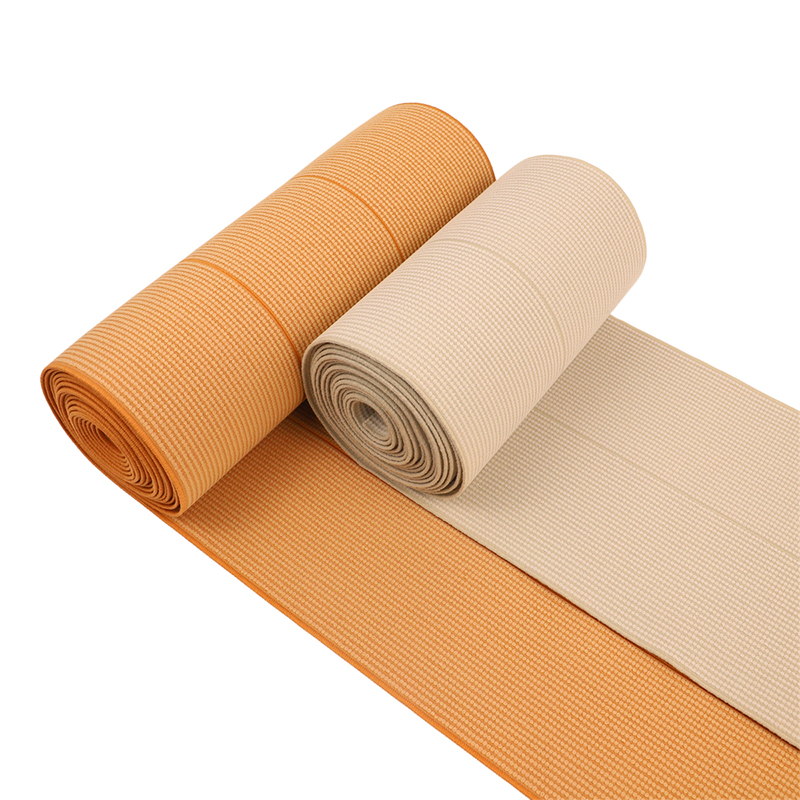
Black is the standard color described for this product. Other colors may be considered for customized orders, subject to material availability, color-matching requirements, minimum quantities, and production feasibility.
Can it be used directly against the skin?
It may be used in skin-contact applications if the surface, material selection, finishing, and complete garment design are appropriate. Customers should conduct comfort and skin-contact evaluations with the finished product rather than relying only on the appearance of the loose webbing.
How should buyers test the product?
Buyers should test the panel for width, stretch, recovery, appearance, sewing performance, and compatibility with the intended fabric. Repeated extension and laundering tests can provide additional information about long-term performance.
What information should be included in an inquiry?
An inquiry should include the application, required width, color, approximate quantity, target stretch, fabric type, sewing method, roll requirements, delivery destination, and any relevant compliance or certification needs. Reference samples and drawings are also helpful.
What manufacturing equipment supports production?
The manufacturer operates or has introduced equipment including warping machines, knitting machines, woven machines, and packaging machines. These capabilities support the production of different elastic and non-elastic webbing constructions.
Does the manufacturer support OEM and ODM projects?
Yes. OEM and ODM orders are welcome. Customized projects can be developed around requirements such as elasticity, texture, color, dimensions, packaging, and application-specific performance.
Where is the manufacturer located?
Jinhu Hengxiang Webbing Co., Ltd. is located in Jinhu County, Huai’an City, Jiangsu Province, China. Customers can contact the company directly for product samples, technical details, quotations, and order discussions.
Conclusion
The 7.5cm black woven elastic panel is a practical solution for textile products that require broad coverage, consistent stretch, structural stability, and a professional appearance. Its wide woven construction makes it particularly useful for waistbands, support zones, activewear, underwear, shapewear, maternity wear, sports protection, and other applications where narrow elastic may not provide sufficient coverage.
Its main advantages include balanced elasticity, dependable recovery, stable width, durable construction, flexible integration, and broad application potential. The black finish is easy to coordinate with many garment designs, while the 7.5cm width allows manufacturers to create a substantial support section without combining several narrow bands.
The manufacturer’s experience since 2005, modern warping, weaving, knitting, and packaging equipment, substantial production capacity, quality management approach, international market experience, and OEM and ODM support provide a strong foundation for both standard and customized orders. Certifications including Oeko-Tex Standard 100 and ISO 13485 may further support quality-sensitive projects, subject to verification of current validity and scope.
For the best result, buyers should evaluate the panel in the complete finished product. Clear specifications, sample approval, application testing, and communication about sewing and performance requirements can help ensure that the selected elastic meets the needs of the garment or textile assembly. With appropriate product selection and controlled manufacturing, this woven elastic panel can contribute to comfortable, durable, and commercially reliable textile products.
References
1. Textile Institute. Textile Terms and Definitions. General principles of textile construction, yarn systems, and fabric performance.
2. International Organization for Standardization. ISO 13485: Medical Devices—Quality Management Systems—Requirements for Regulatory Purposes.
3. OEKO-TEX Association. Standard 100: Testing for Harmful Substances in Textiles.
4. ASTM International. Standard methods for evaluating textile webbing, tensile behavior, dimensional stability, and elastic recovery.
5. International Organization for Standardization. General guidance on textile testing, color assessment, dimensional measurement, and quality management.
6. Manufacturer-provided product and company information for the 7.5cm black woven elastic panel, elastic webbing, non-elastic webbing, production equipment, certifications, applications, and customization capabilities.