
 en
en
 English
 русский
 Français
 Español
 Português
 Tiếng Việt
Content
- 1 Product Overview
- 2 Key Product Features
- 3 Advantages Compared with General-Purpose Elastic Materials
- 4 Applications of the 10cm Medical Elastic Bandage
- 5 Manufacturing Strengths
- 6 Quality Control and Certification Background
- 7 Manufacturing Process from Yarn to Finished Bandage
- 8 OEM and ODM Customization
- 9 Purchasing Considerations for Importers and Distributors
- 10 Storage, Handling, and Responsible Use
- 11 Why Work with an Experienced Chinese Webbing Manufacturer?
- 12 Product Comparison Table
- 13 Environmental and Operational Considerations
- 14 Frequently Asked Questions
- 14.1 What is the width of this medical elastic bandage?
- 14.2 What color is the bandage?
- 14.3 Is the bandage breathable?
- 14.4 Is it suitable for sensitive skin?
- 14.5 Can it be used for compression?
- 14.6 Will the bandage stay in place during movement?
- 14.7 Does the bandage fray or roll at the edges?
- 14.8 Can the color, width, or elasticity be customized?
- 14.9 What certifications does the manufacturer have?
- 14.10 Can the product be used in orthopedic braces?
- 14.11 Is this product reusable?
- 14.12 How should it be stored?
- 14.13 What information should be included in an inquiry?
- 14.14 How can buyers evaluate the product before a bulk order?
- 15 Conclusion
- 16 References
- 17 Product: 10cm Light Beige Medical Elastic Bandage
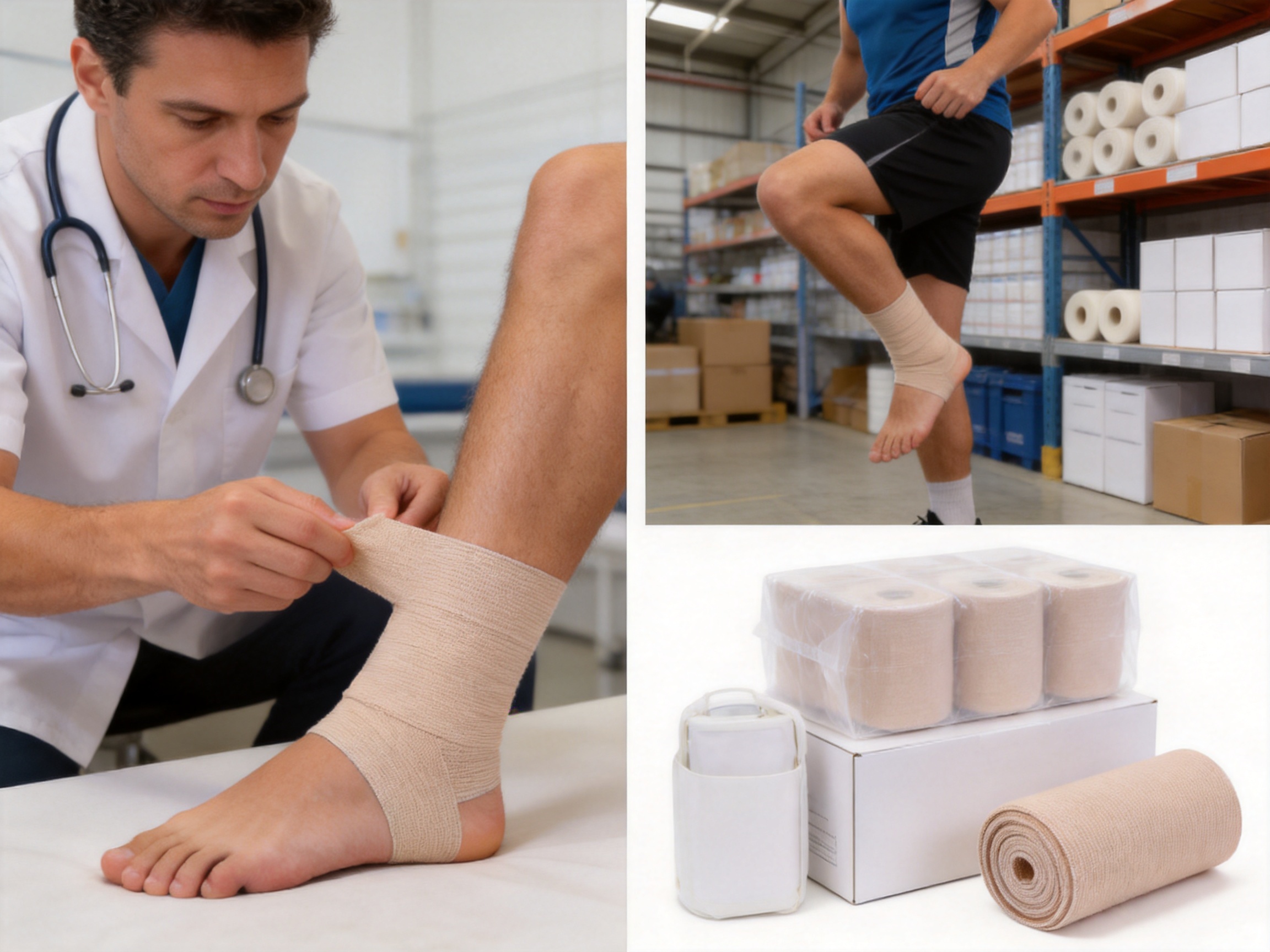
Medical elastic bandages are widely used in healthcare, rehabilitation, sports protection, first-aid care, and daily support applications. A well-designed bandage must provide more than stretch. It should offer controlled elasticity, comfortable contact with the skin, stable positioning, good breathability, clean edge finishing, and dependable performance during repeated use. The 10cm Light Beige Medical Elastic Bandage is developed around these practical requirements, combining a flexible textile structure with a discreet appearance and a width suitable for balanced coverage.
Manufactured by Jinhu Hengxiang Webbing Co., Ltd., this medical elastic bandage reflects the company’s long-term expertise in elastic webbing, non-elastic webbing, sports supports, and orthopedic brace components. The product is designed for customers that require a versatile elastic bandage with high elasticity, soft handling, close conformity, and a professional appearance. Its 10cm width provides a useful middle ground: it is wide enough to cover a practical area efficiently, yet manageable enough for controlled wrapping around many body contours.
This article examines the product’s structure, performance advantages, manufacturing background, quality considerations, application value, customization potential, and purchasing factors. It also explains how the bandage compares with less specialized alternatives and why material selection, weaving or knitting technology, edge treatment, inspection, and packaging all influence the final user experience.
Product Overview
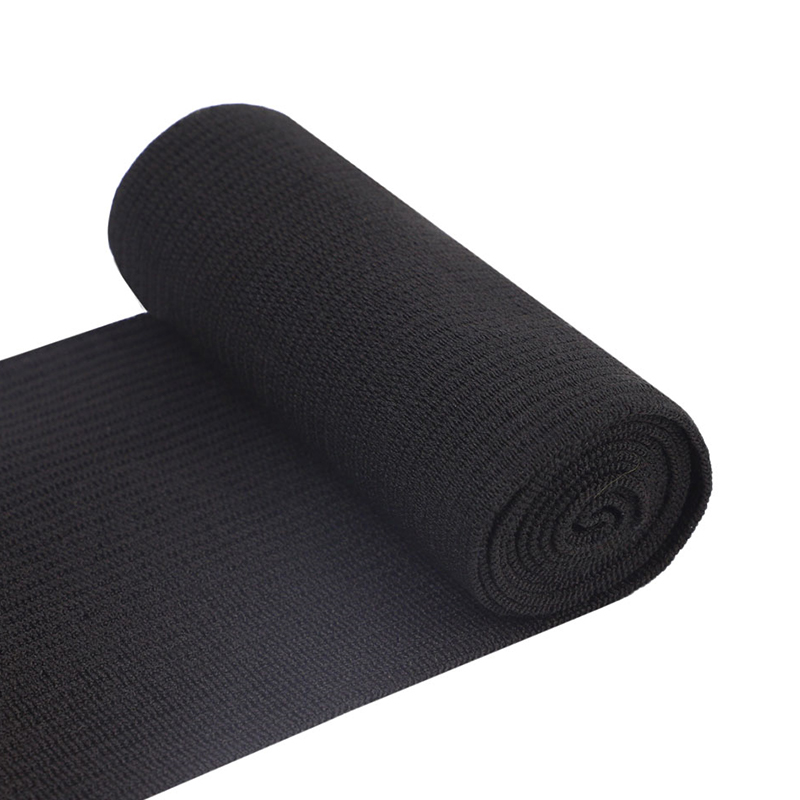
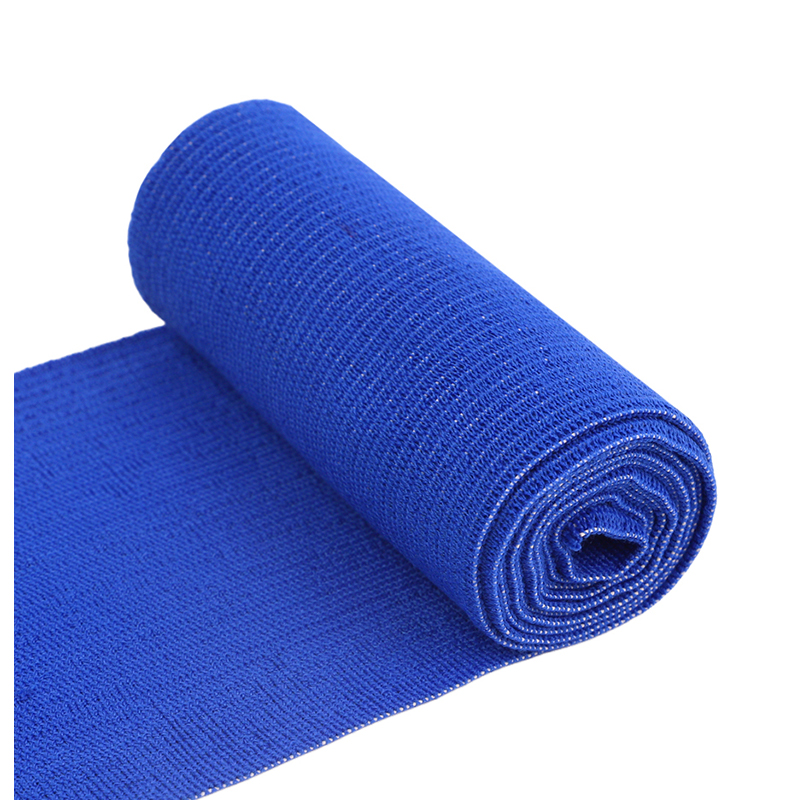
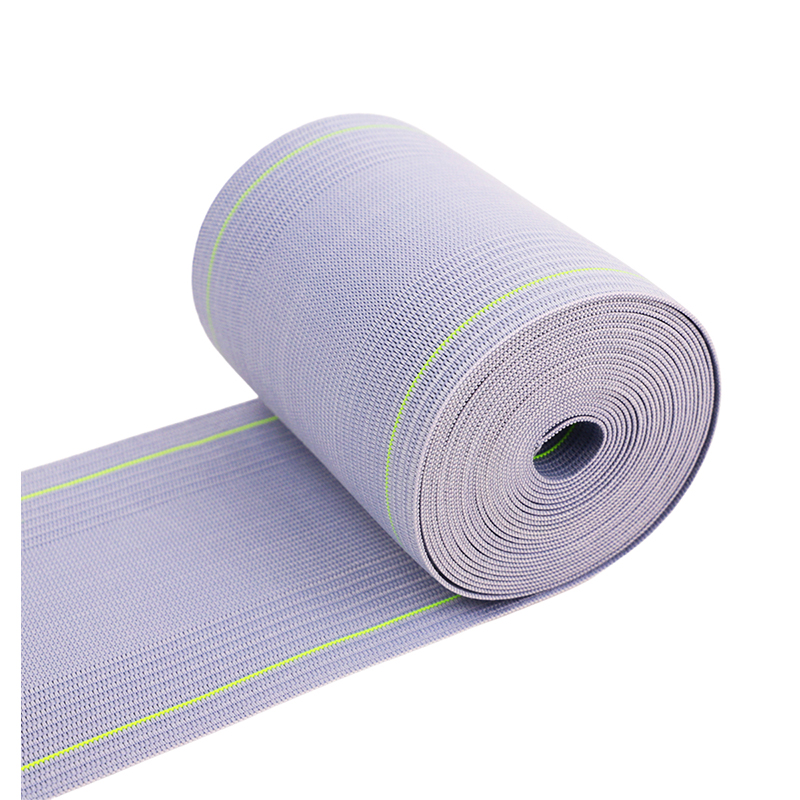
The 10cm Light Beige Medical Elastic Bandage is a flexible medical textile intended for wrapping, support, compression management, protective covering, and related applications. Its light beige color creates a natural and discreet appearance, making it suitable for environments where a neutral product is preferred. The bandage is designed to conform closely to body contours while remaining stable during normal movement.
The product’s principal characteristics include high elasticity, a soft and skin-friendly hand feel, breathable construction, a 10cm-wide format, good conformity, neat edge finishing, and a clean light beige color. These characteristics are not isolated features. They work together to determine whether a bandage is easy to apply, comfortable to wear, capable of maintaining its position, and suitable for professional or commercial distribution.
In practical use, the bandage can help provide flexible support and consistent wrapping. Its elasticity allows it to stretch around curved areas and accommodate moderate movement. Its width helps distribute wrapping pressure across a broader surface than a narrow elastic strip. Its soft construction is intended to reduce unnecessary discomfort, while the breathable structure helps reduce heat accumulation during use.
As with any medical or supportive textile, the correct method of application depends on the specific use, body area, desired level of support, and guidance provided by a qualified healthcare professional. The bandage should not be applied so tightly that it causes pain, numbness, discoloration, or restricted circulation. It should also be inspected regularly for signs of damage, contamination, excessive stretching, or loss of elasticity.
Key Product Features
High Elasticity for Flexible Support
Elasticity is one of the most important performance characteristics in a medical bandage. A bandage that stretches too little may be difficult to wrap around joints, limbs, or uneven contours. A bandage that stretches excessively without recovery may fail to provide stable support and may become loose during use. The 10cm Light Beige Medical Elastic Bandage is designed to balance stretchability with practical recovery, helping it remain flexible while supporting consistent wrapping.
High elasticity allows the bandage to follow the shape of the body rather than forming large gaps or rigid folds. This can make application more efficient and can help the material remain closer to the skin or to an underlying dressing. In support applications, the elastic structure can also accommodate ordinary changes in body movement without immediately losing contact with the wrapped area.
For distributors and manufacturers of medical supports, elasticity must be considered together with width, thickness, material composition, and application technique. The same nominal stretch percentage may produce different results when used in different constructions. Hengxiang’s experience in producing elastic webbing enables the company to control the relationship between yarn arrangement, textile structure, stretch behavior, and recovery.
Soft, Skin-Friendly Material
Comfort is essential when a bandage is used for extended periods or applied to sensitive areas. Rough fibers, hard edges, uneven surfaces, and excessive stiffness can create friction and irritation. The soft construction of this bandage is intended to provide a more comfortable contact experience and support smoother wrapping.
A soft bandage is also easier to handle. It can fold around contours without creating harsh creases, and it may be more suitable for applications where the textile must remain in close contact with the body. The product’s soft hand feel supports a more refined perception of quality for hospitals, rehabilitation centers, sports protection brands, and medical supply distributors.
Skin comfort does not depend on softness alone. Clean processing, stable coloration, suitable yarn selection, edge quality, breathability, and appropriate packaging are also important. For this reason, professional production requires attention throughout the complete manufacturing chain rather than focusing only on the final surface feel.
Breathable Construction
Heat and moisture buildup can affect the user’s comfort during prolonged wrapping. A breathable textile structure allows air movement through the material and can help reduce the enclosed, stuffy feeling associated with dense or poorly ventilated products. The breathable construction of the 10cm bandage is therefore an important advantage for users who require support while remaining active.
Breathability can also influence the perceived freshness of the product. When a textile permits better air circulation, it may feel less heavy and less oppressive against the skin. This is particularly useful in rehabilitation, sports support, occupational care, and warm climate applications.
Breathability must be balanced with structural stability. A material that is very open but lacks sufficient strength may deform during application. A professional elastic bandage should maintain a dependable textile structure while still allowing reasonable air exchange. The product is designed to combine these goals through its elastic textile construction.
10cm Width for Balanced Coverage
The 10cm width provides a practical balance between coverage and handling. Narrow bands may require more overlapping turns to cover a target area, increasing application time and potentially creating uneven layers. Very wide materials can be difficult to control around small joints or sharply curved areas. A 10cm format offers a versatile option for many general wrapping and support requirements.
The width also helps distribute contact over a broader area. When applied correctly, a wider bandage can reduce the concentration of wrapping force along a very narrow line. This does not eliminate the need for correct tension and professional guidance, but it can contribute to a more uniform wrapping experience.
For purchasing departments, a standard 10cm width can simplify product selection and inventory planning. It is a recognizable specification that can serve several product programs, especially when combined with different lengths, packaging formats, or customized labels.
Good Conformity and Stable Positioning
Body contours are rarely flat. Ankles, wrists, elbows, knees, shoulders, and other areas contain curves, transitions, and movement points. A bandage with good conformity can follow these shapes more effectively than a rigid or poorly recovering textile. This helps reduce unnecessary gaps and may help the bandage stay in place during normal movement.
Conformity is influenced by stretch in both the longitudinal and transverse directions, the textile’s flexibility, its recovery behavior, and the quality of edge finishing. The product is developed to remain flexible enough for close wrapping while preserving the stability needed for practical use.
Stable positioning is especially valuable for professional users who need efficient application. If a bandage continually slides, rolls, or loses contact, the user may need to reapply it frequently. Good conformity and neat edges help reduce these handling problems and contribute to a more dependable product experience.
Light Beige Appearance
Color is both a functional and commercial consideration. Light beige offers a neutral, natural appearance that can be less visually prominent than strong colors. It may be preferred for clinical settings, rehabilitation environments, sports support products, and private daily use.
A discreet appearance can improve user confidence, especially when the bandage is worn under clothing or in public. It can also provide a clean and professional visual identity for distributors and brands seeking a traditional medical textile appearance.
Color consistency is important in commercial production. Buyers generally expect different production lots to maintain a stable appearance within acceptable standards. This requires controlled dyeing or coloration procedures, proper material preparation, and inspection under suitable lighting conditions.
Neat Edge Finishing
Edge quality has a direct effect on product handling and service life. Unfinished or unstable edges may fray, roll, curl, or create uncomfortable contact points. The 10cm Light Beige Medical Elastic Bandage features neat edge finishing intended to help prevent fraying and rolling during normal handling and application.
A clean edge also improves the visual impression of the product. Medical supply buyers often evaluate textile products by examining the regularity of the edges, the uniformity of the width, and the consistency of the surface. A neat finish supports confidence that the bandage has been manufactured with attention to detail.
Edge finishing must be integrated into the production process. It cannot be treated as a cosmetic correction after the main textile has been produced. Yarn tension, machine settings, cutting methods, finishing procedures, and inspection standards all influence edge stability.
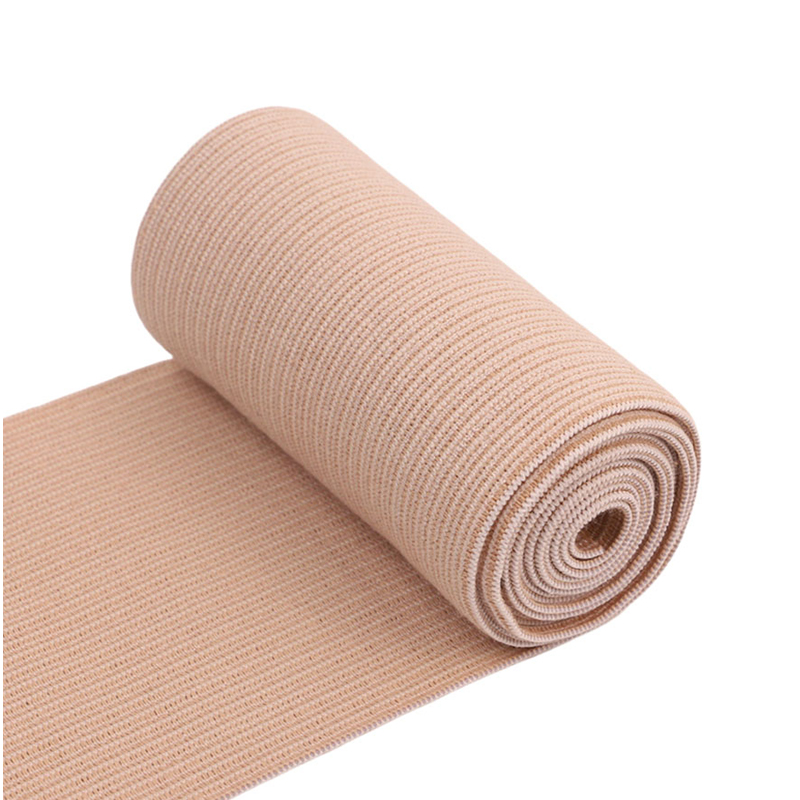
10cm Light Beige Medical Elastic Bandage
Advantages Compared with General-Purpose Elastic Materials
General-purpose elastic materials can be suitable for garments, packaging, craft projects, or light fastening tasks, but they are not always appropriate for medical support applications. A medical elastic bandage must meet more demanding expectations for comfort, conformity, handling, appearance, and repeatable performance.
One advantage of this product is its purpose-oriented construction. It is designed specifically around wrapping and support requirements rather than being adapted from an unrelated elastic strip. This helps align the width, stretch, softness, breathability, edge treatment, and color with the needs of medical and protective textile applications.
Another advantage is the 10cm-wide format. Some narrow elastic bands can create a concentrated line of pressure or require many overlapping layers. The wider format can make coverage more efficient and may contribute to a smoother, more even wrapping structure when applied correctly.
The product also provides a more balanced user experience than very rigid bandage materials. A rigid material may offer limited flexibility but can be uncomfortable around moving areas. The elastic construction allows greater adaptability while still providing supportive tension. Compared with very soft materials that lose shape rapidly, a properly engineered elastic bandage can offer better positioning and more consistent handling.
Neat edge finishing provides another distinction. Low-cost or poorly finished materials may roll at the edge, fray after cutting, or become difficult to manage during application. A carefully finished medical bandage is easier to unwind, place, overlap, and remove.
The light beige appearance may also provide a commercial advantage over brightly colored or visually inconsistent alternatives. Neutral coloring supports a professional presentation and can appeal to hospitals, clinics, sports protection brands, and private-label distributors.
These advantages should not be interpreted as a substitute for product testing or application-specific validation. Buyers should evaluate elasticity, recovery, width tolerance, color consistency, wash or reuse requirements, packaging, and relevant compliance documentation according to their intended market.
Applications of the 10cm Medical Elastic Bandage
Medical and Clinical Support
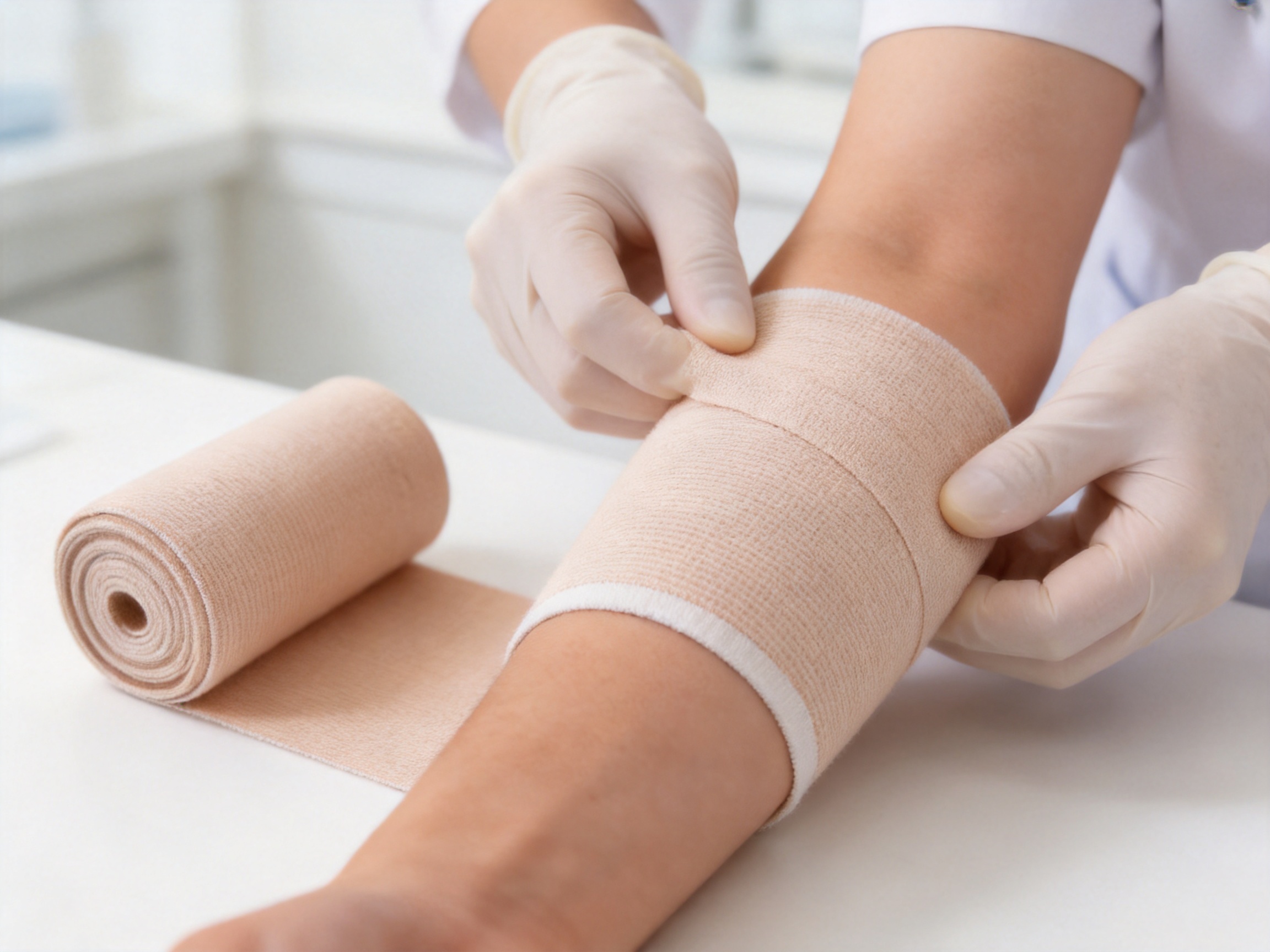
The bandage may be used in medical and clinical environments for general wrapping, support, protective coverage, and compression-related applications under appropriate professional guidance. Its width and flexibility make it suitable for situations where a textile must remain close to a body area while allowing reasonable movement.
Medical personnel may value a bandage that is easy to handle, simple to position, and stable after application. The soft construction can support user comfort, while the breathable structure can be beneficial when the bandage remains in place for a period of time.
Application procedures should always be determined by trained personnel. Different conditions require different levels of support, and the bandage should not be used to diagnose, treat, or prevent a medical condition without appropriate guidance. Product buyers may also need to establish cleaning, storage, and disposal procedures based on the intended use.
Sports Protection
Sports protection products often require flexibility, breathability, and secure positioning. Athletes may need support materials that accommodate movement without feeling excessively heavy or rigid. The 10cm bandage can serve as a component or standalone textile for sports support programs, depending on product design and application requirements.
Its elastic construction may help it adapt to active movement, while the breathable structure can improve comfort during exercise. The light beige color can also be used in products where a subtle, neutral appearance is preferred.
Sports brands may use the bandage in support kits, protective equipment, rehabilitation products, or private-label first-aid ranges. The company’s experience with sports supports and orthopedic braces allows it to understand the importance of combining textile performance with practical product design.
Rehabilitation and Orthopedic Support
Rehabilitation products frequently require materials that are comfortable, controllable, and capable of following body contours. Elastic bandages may be used as part of support routines, protective wrapping systems, or orthopedic product assemblies. The bandage’s conformity and width can make it suitable for areas where a stable but flexible wrap is needed.
For orthopedic brace manufacturers, the material may be evaluated as a component alongside hook and loop systems, woven elastic panels, narrow elastic bands, or other webbing structures. Its 10cm width can provide a broader support zone, while its elasticity can help accommodate movement and fitting adjustments.
First-Aid and Home-Care Kits
Medical elastic bandages are common components in first-aid and home-care kits. A neutral-colored, medium-width bandage can be easy for users to recognize and handle. Its flexible format can support general wrapping needs, provided that users follow suitable instructions and avoid excessive tension.
For kit assemblers, packaging efficiency and consistent roll dimensions are important. The product can be supplied for integration into retail kits, professional first-aid packages, rehabilitation kits, and institutional medical supply programs. Packaging and labeling can be adapted according to the customer’s requirements and target market.
Medical and Protective Equipment Manufacturing
Manufacturers of protective equipment may incorporate elastic bandages or elastic textile sections into wider product systems. These systems may include orthopedic braces, support sleeves, rehabilitation accessories, protective wraps, and adjustable fastening structures.
The material’s performance should be considered together with the other components used in the final product. Hook and loop straps, elastic panels, non-elastic webbing, buckles, padding, lining fabrics, and stitching methods can all affect the behavior of the completed item. Hengxiang’s broader product category includes abdominal binder elastic, woven wide elastic, wide knitted elastic, narrow elastic bands, woven elastic panels, elastic hook and loop straps, and medical elastic bandages, allowing customers to explore coordinated sourcing options.
Manufacturing Strengths
Long-Term Industry Experience
Jinhu Hengxiang Webbing Co., Ltd. was established in 2005 and has developed more than two decades of experience in elastic and non-elastic webbing production. This long-term involvement gives the company a practical understanding of textile materials, machine operation, production control, customer requirements, and application-specific performance.
Experience is valuable because webbing quality depends on many connected variables. Yarn type, yarn tension, machine speed, structure, density, finishing, cutting, inspection, and packaging must work together. A company that has produced webbing over many years can build process knowledge that is difficult to obtain through short-term manufacturing alone.
The company focuses especially on elastic webbing and non-elastic webbing used in sports supports and orthopedic braces. This application background is relevant to the medical elastic bandage because both fields require dependable stretch behavior, good recovery, comfort, stable positioning, and careful quality control.
Advanced Production Equipment
Hengxiang has introduced and updated production equipment including warping machines, knitting machines, woven machines, and packaging machines. Each equipment category contributes to a different stage of manufacturing.
Warping machines help prepare yarns in an organized and controlled arrangement before weaving or related processing. Proper warping can influence yarn alignment, tension consistency, and the stability of the final textile structure.
Knitting machines support the production of flexible textile structures with controlled stretch and surface characteristics. Knitted elastic materials can provide useful conformity and softness when engineered for the intended application.
Woven machines create structured webbing with organized yarn intersections and controlled dimensions. Woven construction can offer stable width, defined edges, and dependable mechanical behavior, depending on the selected yarns and machine settings.
Packaging machines help improve consistency during final preparation. Good packaging protects the product from dust, moisture, compression damage, and handling contamination. It can also support uniform roll formation, labeling, counting, and shipment efficiency.
Integrated Production Capability
An integrated manufacturing capability can improve communication between development, production, inspection, and packaging teams. Instead of treating each stage as an isolated activity, the company can evaluate how changes in one process influence the final product.
For example, a change in yarn selection may affect elasticity, softness, width recovery, and color appearance. A change in machine tension may affect both the surface and the edge. A change in finishing may influence hand feel, breathability, and dimensional stability. Integrated production experience helps manufacturers assess these relationships more effectively.
This capability is particularly useful for OEM and ODM customers. Buyers may have requirements that differ from standard products, such as a specific color, elasticity level, width, thickness, texture, roll length, label, or packaging format. A manufacturer with multiple production resources can respond more efficiently to these requirements.
Production Capacity
The company produces millions of meters of elastic and non-elastic webbing every month. This production capacity supports both regular orders and larger commercial programs. Capacity alone does not guarantee quality, but it can help customers plan supply more confidently when supported by proper process control and production scheduling.
Large-scale production can also support material efficiency and cost management. When production is organized effectively, customers may benefit from competitive pricing, stable output, and more predictable delivery planning. The company’s stated focus on timely delivery and reliable quality is supported by its production infrastructure and experience.
For buyers, capacity should be evaluated together with minimum order quantities, sampling procedures, lead times, quality documentation, packaging standards, and the supplier’s ability to maintain consistent specifications across repeated orders.
Quality Control and Certification Background
Quality control is essential for medical elastic bandages because the product’s performance depends on consistency. A bandage that varies significantly in width, elasticity, color, or edge condition may create difficulties during application and may not meet a buyer’s internal standards.
Hengxiang applies quality control throughout material sourcing, processing, testing, and packing. This whole-process approach is stronger than relying only on a final visual inspection. Early control helps identify problems before they become embedded in large quantities of finished goods.
Material sourcing may include the review of yarn characteristics, color requirements, and supplier consistency. During processing, machine settings and production conditions can be monitored to maintain stable dimensions and textile structure. Testing can help evaluate relevant performance characteristics, while packing inspection can confirm the condition and quantity of the finished rolls.
The company has obtained Oeko-Tex Standard 100 and ISO 13485 certificates. Oeko-Tex Standard 100 is associated with testing textiles for certain harmful substances according to the applicable certification requirements. ISO 13485 is a quality management standard specifically associated with medical devices and related regulatory expectations. Buyers should request current certificate details and confirm that the certificate scope applies to the products and markets involved.
Certification should be viewed as part of a broader quality system rather than as the only measure of product suitability. Customers may also require their own testing, technical files, product specifications, traceability records, packaging reviews, or market-specific documentation.
Important Quality Parameters
When evaluating the 10cm Light Beige Medical Elastic Bandage, buyers may consider the following parameters:
| Parameter | Why It Matters | Typical Evaluation Approach |
|---|---|---|
| Width | Influences coverage, application control, and product consistency. | Measure samples at multiple points and compare with the agreed tolerance. |
| Elasticity | Determines how easily the bandage stretches during wrapping. | Use an agreed test method and specified extension length. |
| Recovery | Influences the ability to retain shape after stretching. | Measure extension and recovery after a defined time and cycle. |
| Edge condition | Affects handling, comfort, fraying resistance, and appearance. | Inspect edges visually and after simulated handling. |
| Color consistency | Supports a professional appearance and lot-to-lot uniformity. | Compare against an approved color standard under controlled lighting. |
| Surface feel | Influences comfort and perceived quality. | Perform hand evaluation and, when required, laboratory assessment. |
| Breathability | Contributes to comfort during extended wear. | Use an agreed air-permeability or moisture-management test. |
| Packaging integrity | Protects the bandage during storage and transportation. | Inspect rolls, labels, cartons, seals, and shipping protection. |
Testing requirements should be agreed before production begins. Different markets, applications, and customers may use different test methods. A clear technical specification helps avoid misunderstandings and provides a reliable reference for production approval.
Manufacturing Process from Yarn to Finished Bandage
Material Selection
The manufacturing process begins with the selection of suitable textile materials. The material must support the required balance of elasticity, softness, strength, breathability, color, and processing stability. The exact yarn composition and structure should be confirmed according to the customer’s technical requirements and intended application.
Material selection is not based only on price. Low-cost materials may create problems in recovery, surface feel, coloration, or dimensional stability. A carefully selected material can improve production efficiency and reduce the risk of defects during knitting, weaving, finishing, and packaging.
Warping and Yarn Preparation
Warping organizes yarns before they enter the main textile-forming process. Correct yarn alignment and tension support uniform production. If yarns are improperly prepared, the finished bandage may show irregular density, uneven width, inconsistent stretch, or visible surface defects.
Modern warping equipment helps production teams manage yarn placement and tension more accurately. Operators can use established settings and inspection procedures to maintain repeatability between batches.
Knitting or Weaving
Depending on the selected construction, the bandage may be produced through knitting, weaving, or a related elastic textile process. Knitting can provide flexibility and conformability, while weaving can provide organized structure and stable edges. The appropriate method depends on the required performance profile.
During this stage, machine speed, yarn tension, density, width, and structural settings must be controlled. Small changes can affect stretch, recovery, surface appearance, and comfort. Experienced operators and well-maintained machinery are therefore important to product consistency.
Color and Finishing Control
The light beige color must be produced and maintained according to an approved standard. Color control includes the preparation of materials, processing conditions, inspection lighting, and comparison with an agreed sample or color reference.
Finishing may influence softness, surface feel, dimensional stability, and edge behavior. The finishing process should enhance the intended performance without damaging elasticity or reducing breathability. The final material should retain a clean appearance and remain suitable for cutting, rolling, packaging, and application.
Inspection and Testing
Inspection may take place at several stages rather than only after completion. Operators and quality personnel can examine the textile for width variation, broken yarns, holes, surface irregularities, color differences, edge defects, and contamination.
Performance testing can be arranged according to the product specification. Relevant evaluations may include elasticity, recovery, tensile behavior, width, thickness, colorfastness, air permeability, and resistance to repeated handling. The exact tests should reflect the final application and customer expectations.
Rolling and Packaging
After inspection, the bandage is prepared in rolls or other agreed formats. Uniform rolling helps reduce creasing, tangling, and handling difficulties. Packaging should protect the product throughout storage and shipment while preserving labels and traceability information.
Professional packaging also supports efficient distribution. Hospitals, distributors, and kit assemblers need clear identification of product type, width, color, batch information, quantity, and other agreed details. Packaging formats can be discussed for OEM and ODM programs.
OEM and ODM Customization
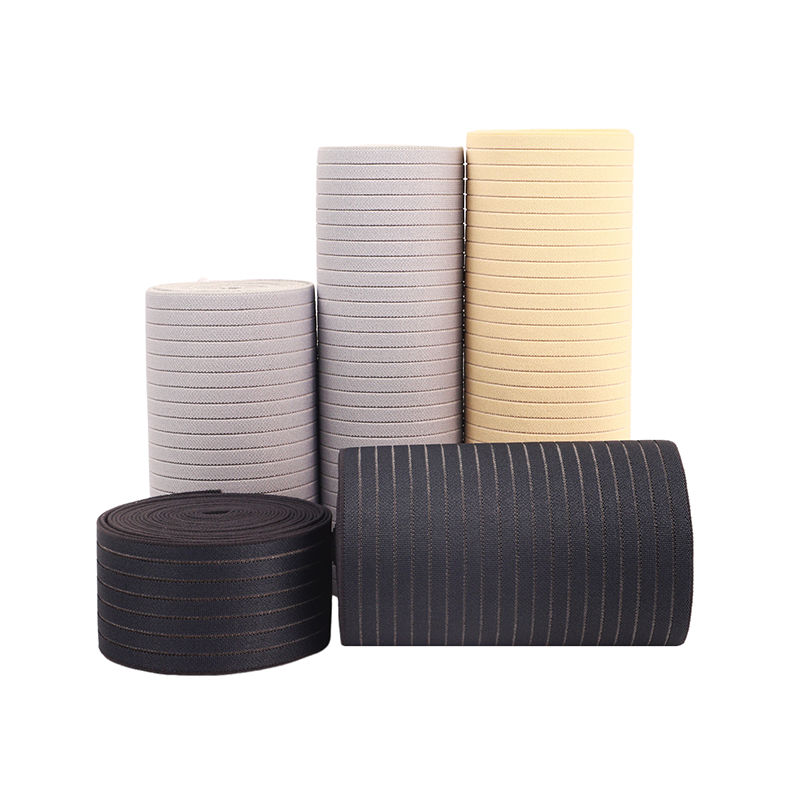
Medical textile customers often require more than a standard product. They may need a specific width, elasticity, texture, color, roll length, label, carton design, or packaging method. Hengxiang welcomes OEM and ODM orders and provides customized webbing with tailored elasticity, texture, and color.
Customization should begin with a clear technical brief. The buyer should describe the intended application, target market, expected wear conditions, desired support level, packaging format, and any applicable compliance requirements. A physical sample or reference product can help the manufacturer understand the desired hand feel, stretch, width, and appearance.
Sampling is an important stage in the development process. It allows both parties to review the product before mass production. A sample approval should identify the agreed color, dimensions, construction, edge finish, packaging, and test requirements. This reduces the risk of disagreement after production begins.
Customized elasticity can be valuable for brands that serve different user groups. A rehabilitation product may require a different balance of stretch and recovery than a sports support product. An orthopedic brace component may require a particular width or surface structure to work with stitching, hook and loop, or padding.
Customized color can support brand coordination or product classification. Although light beige is a discreet and widely applicable option, buyers may request other colors for different product lines. Color development should include approval standards and reasonable tolerance expectations.
Customized texture can influence comfort, grip, appearance, and compatibility with other components. The selected texture should be tested in the complete product rather than evaluated only as a separate strip. Stitching, lamination, folding, and fastening may alter the way the elastic material performs.
Purchasing Considerations for Importers and Distributors
When purchasing medical elastic bandages, buyers should evaluate the complete supply proposition rather than focusing only on unit price. Product quality, documentation, production consistency, delivery capability, communication, packaging, and after-sales support all influence the total commercial value.
Technical Specification
A purchasing specification should identify the product name, width, color, roll length, elasticity requirements, construction, edge finish, packaging, and tolerances. If the bandage will be used in a regulated product, the buyer should also define the required documentation and testing responsibilities.
Sample Approval
Before placing a large order, buyers should request samples and compare them with their intended application. The sample should be tested for unwinding, stretching, wrapping, recovery, edge stability, comfort, and visual appearance. If the bandage will be sewn or assembled into another product, it should also be tested in that finished configuration.
Production Consistency
Repeated orders should match the approved sample within agreed tolerances. Buyers may ask how the supplier manages batch records, raw material control, machine settings, inspection reports, and nonconforming products. A documented quality process helps support reliable repeat purchasing.
Packaging and Logistics
Packaging should be suitable for the expected shipping route, climate, warehouse conditions, and handling process. Buyers should confirm whether individual rolls, inner boxes, master cartons, pallets, labels, barcodes, and private-label packaging are available.
Delivery planning should consider production capacity, raw material availability, sampling time, order quantity, customization, inspection, and transportation. Clear communication at the quotation stage can help avoid delays later.
Supplier Communication
Effective communication is especially important for customized medical textiles. The supplier should be able to discuss technical requirements, production feasibility, testing, packaging, and expected lead times. Hengxiang emphasizes thoughtful customer service and full customer satisfaction, supporting cooperation with domestic and international buyers.
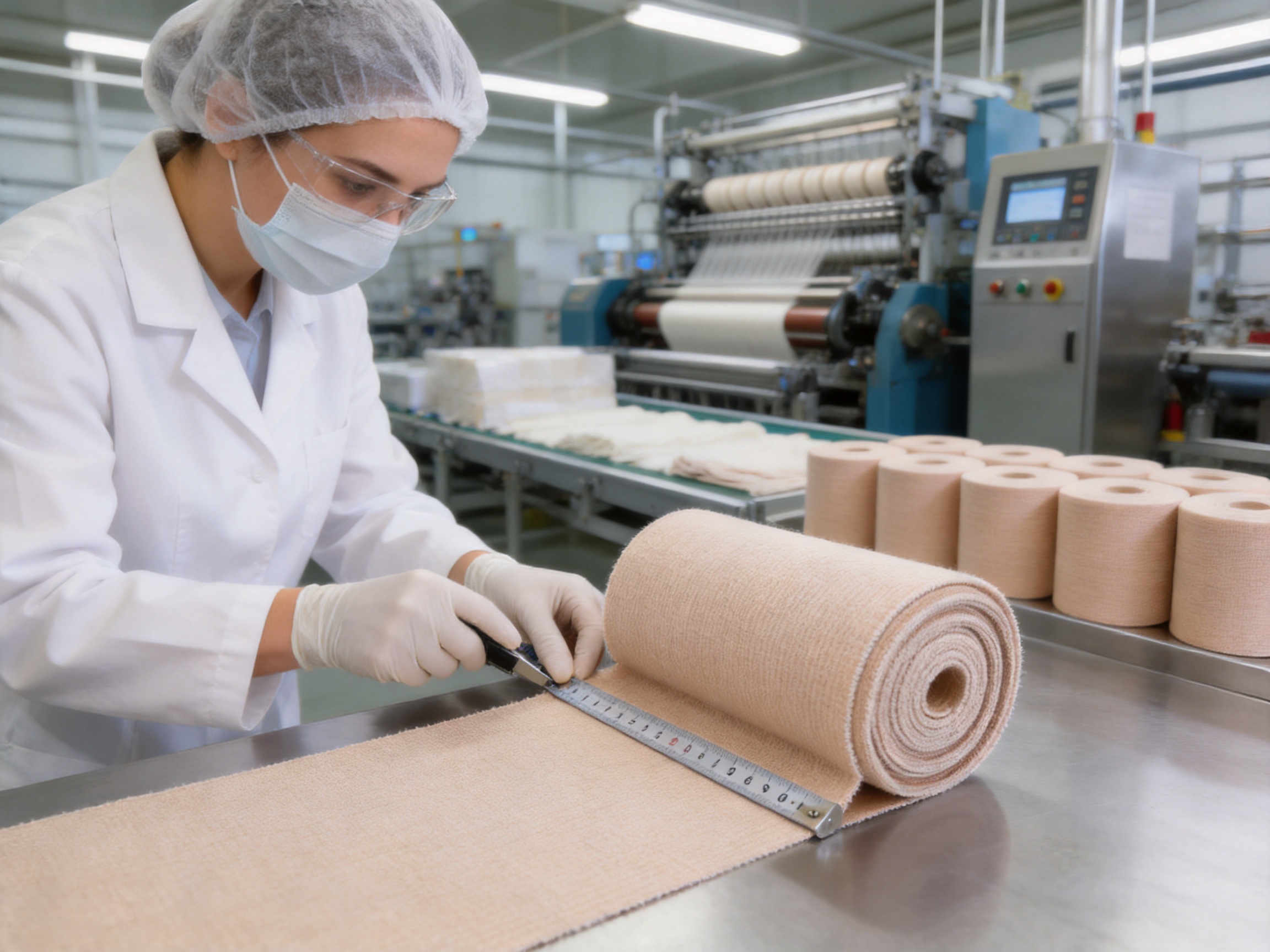
Storage, Handling, and Responsible Use
Elastic bandages should be stored in a clean, dry, and well-ventilated environment. Direct sunlight, excessive heat, moisture, chemicals, sharp objects, and heavy compression may affect textile performance or packaging integrity. Rolls should remain protected until use.
During handling, users should avoid dragging the bandage across rough surfaces or exposing it to unnecessary contamination. The material should be checked before application for holes, broken edges, stains, or other visible damage.
Application tension should be controlled carefully. The bandage should provide the intended support without causing discomfort or restricting circulation. If the user experiences pain, numbness, tingling, unusual swelling, coldness, or discoloration, the bandage should be loosened or removed and professional advice should be sought.
Cleaning and reuse instructions depend on the specific product construction and customer requirements. Buyers should not assume that every elastic medical bandage has the same washing, drying, or sterilization properties. If repeated use is intended, the manufacturer and healthcare professional should establish appropriate procedures and performance expectations.
Why Work with an Experienced Chinese Webbing Manufacturer?
China has a broad textile manufacturing base, but supplier selection remains important. An experienced manufacturer can offer better process knowledge, broader equipment resources, more efficient sourcing, and stronger customization support than a trading company with limited production control.
Jinhu Hengxiang Webbing Co., Ltd. combines manufacturing experience with equipment for warping, knitting, weaving, and packaging. This allows the company to participate in the product process from yarn preparation through final packing. Direct manufacturing capability can also improve communication when customers need to adjust construction, color, elasticity, texture, or packaging.
The company serves customers in China and exports to North America, Eastern Europe, the Middle East, South Asia, and other regions. International experience can help a supplier understand the importance of documentation, packaging, production scheduling, shipping coordination, and market-specific expectations.
OEM and ODM support is another important advantage. Customers can develop products under their own brand while using the manufacturer’s technical and production resources. This may be useful for medical supply companies, sports protection brands, orthopedic product manufacturers, rehabilitation distributors, and first-aid kit assemblers.
The company’s focus on quality, innovation, sustainability, and customer satisfaction provides a foundation for long-term cooperation. Buyers should still conduct their own supplier qualification, sample approval, testing, and compliance review, but an established manufacturing background can make this process more efficient.
Product Comparison Table
| Feature | 10cm Light Beige Medical Elastic Bandage | Basic Narrow Elastic Band | Rigid Non-Elastic Webbing |
|---|---|---|---|
| Primary purpose | Flexible wrapping, support, and compression-related textile applications. | Localized fastening, garment, or light support applications. | Fixed reinforcement, restraint, or structural support applications. |
| Width advantage | Provides balanced coverage for many general wrapping areas. | May require more overlapping turns for broad coverage. | Width can vary, but material does not provide elastic conformity. |
| Flexibility | High flexibility with body-conforming behavior. | Flexible but often intended for narrower applications. | Limited stretch and less adaptable to movement. |
| Comfort potential | Soft, skin-friendly construction and breathable structure. | Depends heavily on the specific material and finish. | May feel firmer or less comfortable during movement. |
| Edge performance | Neat edge finishing helps reduce fraying and rolling. | Varies by product and manufacturing quality. | Often designed for structural stability rather than skin contact. |
| Appearance | Light beige, discreet, and professionally neutral. | Available in many colors and appearances. | Usually selected for function rather than discreet wear. |
| Customization | Elasticity, texture, color, width, roll length, and packaging can be discussed. | Customization depends on supplier capability. | Customization often focuses on strength and structure. |
This comparison is intended as a general guide. The correct material depends on the final application, required performance, applicable regulations, and professional evaluation.
Environmental and Operational Considerations
Sustainability in textile manufacturing involves material efficiency, equipment efficiency, product durability, packaging management, and responsible production planning. A product that maintains its performance and appearance through appropriate handling can help reduce premature replacement. Buyers may also ask about packaging materials, waste reduction, production efficiency, and responsible sourcing.
Hengxiang identifies sustainability as part of its long-term company commitment. Customers with specific environmental requirements should communicate them during product development. These requirements may include recycled content, restricted substances, packaging reduction, carton materials, production waste management, or documentation for particular markets.
Operational efficiency is also important. The company’s production of millions of meters per month and its use of updated machinery can support organized manufacturing and resource planning. Efficient production may help reduce unnecessary material waste and improve delivery performance, although actual environmental outcomes depend on the specific order and production conditions.
Frequently Asked Questions
What is the width of this medical elastic bandage?
The product has a nominal width of 10cm. Buyers should confirm the acceptable width tolerance, roll length, and packaging configuration with the manufacturer before ordering.
What color is the bandage?
The bandage is light beige. This neutral color provides a discreet and natural appearance suitable for many medical, rehabilitation, sports, and protective applications.
Is the bandage breathable?
Yes. The product features a breathable construction intended to improve air circulation and minimize heat buildup. Actual breathability performance should be confirmed according to the applicable test method and technical specification.
Is it suitable for sensitive skin?
The bandage uses a soft, skin-friendly construction designed to enhance comfort and reduce the possibility of unnecessary irritation. Individual skin sensitivity varies, so users should follow professional guidance and discontinue use if discomfort or an adverse reaction occurs.
Can it be used for compression?
The bandage can be used in compression-related applications when selected and applied appropriately. Compression level depends on the material’s elasticity, the wrapping method, the number of layers, and the tension applied. Medical professionals should determine whether it is suitable for a specific condition or user.
Will the bandage stay in place during movement?
Its high elasticity, good conformity, and neat edge finishing are designed to support stable positioning during normal movement. Performance also depends on the body area, application technique, underlying clothing or dressing, activity level, and correct tension.
Does the bandage fray or roll at the edges?
The product features neat edge finishing intended to prevent fraying and rolling during normal handling and application. Buyers should still inspect the product after cutting, repeated use, washing, or exposure to demanding conditions.
Can the color, width, or elasticity be customized?
Hengxiang provides customized webbing with tailored elasticity, texture, and color. Buyers can discuss width, roll length, packaging, labeling, and other requirements during the OEM or ODM development process.
What certifications does the manufacturer have?
The company has obtained Oeko-Tex Standard 100 and ISO 13485 certificates. Customers should request current certification documents and verify their scope, validity, and relevance to the intended product and market.
Can the product be used in orthopedic braces?
The bandage may be considered for orthopedic brace components or related support products. Its compatibility should be assessed with the complete brace design, including stitching, padding, hook and loop systems, non-elastic webbing, and other components.
Is this product reusable?
Reuse depends on the exact construction, cleaning method, application, and product specification. Buyers should request formal care and reuse information before marketing the bandage as reusable or washable.
How should it be stored?
Store the bandage in a clean, dry, well-ventilated environment away from direct sunlight, excessive heat, moisture, chemicals, and sharp objects. Keep it in its protective packaging until use whenever possible.
What information should be included in an inquiry?
A useful inquiry should include the required width, color, elasticity, roll length, quantity, intended application, packaging, labeling, target market, testing requirements, and desired delivery schedule. Providing a sample or technical drawing can improve quotation accuracy.
How can buyers evaluate the product before a bulk order?
Buyers can request samples, review the technical specification, test width and elasticity, inspect the edges, evaluate comfort and conformity, assess packaging, and test the material in the intended finished product. A documented sample approval is recommended before mass production.
Conclusion
The 10cm Light Beige Medical Elastic Bandage is a practical, flexible textile solution for medical support, rehabilitation, sports protection, first-aid, home-care, and protective equipment applications. Its high elasticity helps provide flexible support, while its soft construction improves comfort and its breathable structure helps reduce heat buildup. The 10cm width supports balanced coverage, good conformity helps the bandage follow body contours, and neat edge finishing helps reduce fraying and rolling.
Compared with ordinary narrow elastic bands, rigid non-elastic webbing, or poorly finished general-purpose materials, this product offers a more application-focused combination of coverage, flexibility, comfort, appearance, and handling convenience. Its light beige color delivers a discreet and professional visual effect that can suit both institutional and consumer-oriented products.
The product is supported by Jinhu Hengxiang Webbing Co., Ltd.’s experience in elastic and non-elastic webbing manufacturing. Since its establishment in 2005, the company has developed production capabilities covering warping, knitting, weaving, packaging, quality control, OEM, and ODM service. Its focus on sports supports and orthopedic braces provides relevant technical experience for medical elastic bandage development.
With millions of meters of monthly production capacity, updated equipment, international export experience, Oeko-Tex Standard 100 and ISO 13485 certification background, and a commitment to quality and customer service, Hengxiang is positioned to support both standard product purchasing and customized webbing programs.
For buyers seeking a reliable medical elastic bandage supplier, the most effective next step is to provide a clear technical brief and request samples for evaluation. By reviewing elasticity, recovery, width, color, edge condition, breathability, packaging, and intended-use performance, customers can determine whether the 10cm Light Beige Medical Elastic Bandage is the right fit for their product or supply program.
References
1. Jinhu Hengxiang Webbing Co., Ltd. Product Information for 10cm Light Beige Medical Elastic Bandage.
2. Jinhu Hengxiang Webbing Co., Ltd. Company Profile and Manufacturing Capability Information.
3. ISO 13485, Medical Devices—Quality Management Systems—Requirements for Regulatory Purposes.
4. Oeko-Tex Standard 100, Textile Product Safety and Harmful Substance Testing Requirements.
5. General principles of textile testing for width, elasticity, recovery, color consistency, air permeability, and dimensional stability.
6. Professional guidance on the safe application and monitoring of elastic support bandages.