
 en
en
 English
 русский
 Français
 Español
 Português
 Tiếng Việt
Content
- 1 What Is Three-Panel Elastic Webbing with One-Side Plush?
- 2 Core Material Structure and Performance
- 3 Design Advantages of the Three-Panel Construction
- 4 One-Side Plush Surface and User Comfort
- 5 Applications in Abdominal Binders
- 6 Post-Surgical Recovery Applications
- 7 Medical Support and Rehabilitation
- 8 Abdominal Injury Protection
- 9 Sports Support and Protective Gear
- 10 Advantages Compared with Conventional Elastic Materials
- 11 Manufacturing Strengths and Production Capabilities
- 12 Quality Control from Materials to Shipment
- 13 Certifications and Management Standards
- 14 Customization for OEM and ODM Projects
- 15 Production Scale and Supply Reliability
- 16 How Manufacturers Can Select the Correct Width
- 17 Sewing and Assembly Considerations
- 18 Breathability, Moisture, and Daily Wear
- 19 Skin Comfort and Sensitive-Skin Considerations
- 20 Durability and Repeated Elastic Recovery
- 21 Company Experience and Industry Focus
- 22 Sustainability and Responsible Manufacturing
- 23 Recommended Product Development Process
- 24 Quality Questions for Buyers
- 25 Q&A
- 25.1 What is the main purpose of this elastic webbing?
- 25.2 What materials are used?
- 25.3 What does “one-side plush” mean?
- 25.4 Can the plush side be used with hook-and-loop fastening?
- 25.5 What widths are available?
- 25.6 Is the material latex-free?
- 25.7 Is the webbing suitable for direct skin contact?
- 25.8 Can the product be customized?
- 25.9 Can it be used for a medical device?
- 25.10 How should customers evaluate durability?
- 25.11 What manufacturing equipment does the supplier use?
- 25.12 What certifications does the company have?
- 25.13 Where does the company supply its products?
- 25.14 Why choose a three-panel webbing instead of a narrow elastic band?
- 26 Conclusion
- 27 References
- 28 Product: 3 Panels Elastic W 1 Side Plush
Abdominal support products must balance compression, flexibility, comfort, durability, and ease of use. A support that is too rigid may restrict movement, while one that is too soft may fail to provide adequate stabilization. The 3 Panels Elastic W 1 Side Plush is designed to address these needs through a structured three-panel construction, dependable elastic recovery, and a soft plush surface that improves comfort during extended wear.
Manufactured from a polyester, nylon, and spandex blend, this elastic webbing is intended for abdominal binders, post-surgical recovery supports, rehabilitation products, protective equipment, and sports support applications. Its combination of stretch performance, breathability, skin-friendly construction, and adaptable width options makes it suitable for manufacturers seeking a versatile material for medical and protective products.
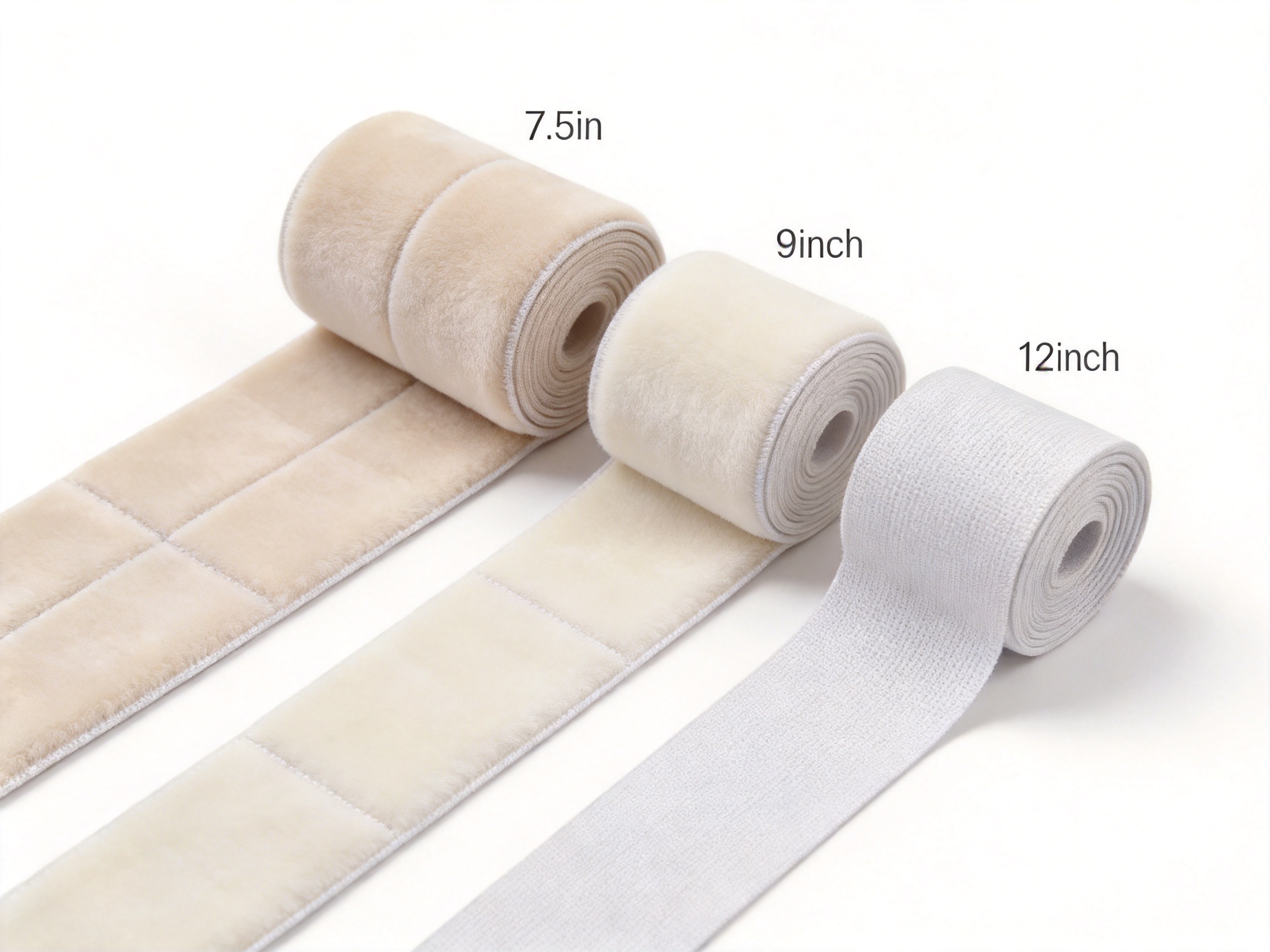
The product is available in widths of 7.5 inches, 9 inches, and 12 inches. These options allow designers and manufacturers to select a suitable coverage area according to the intended product, body region, compression requirement, and wearer profile. The webbing can be incorporated into finished abdominal binders or used as a component in customized support systems.
What Is Three-Panel Elastic Webbing with One-Side Plush?
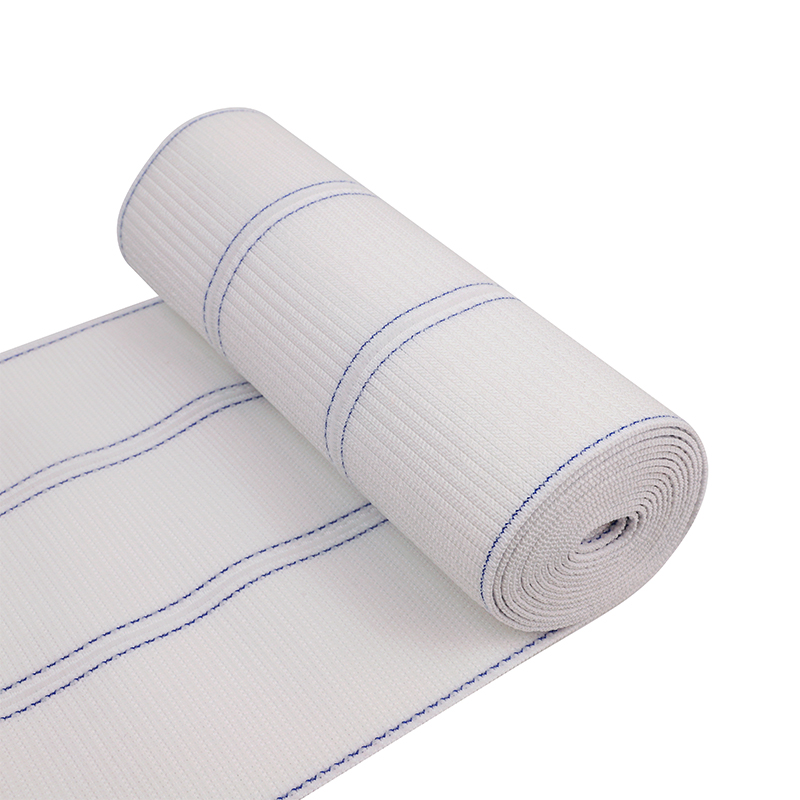
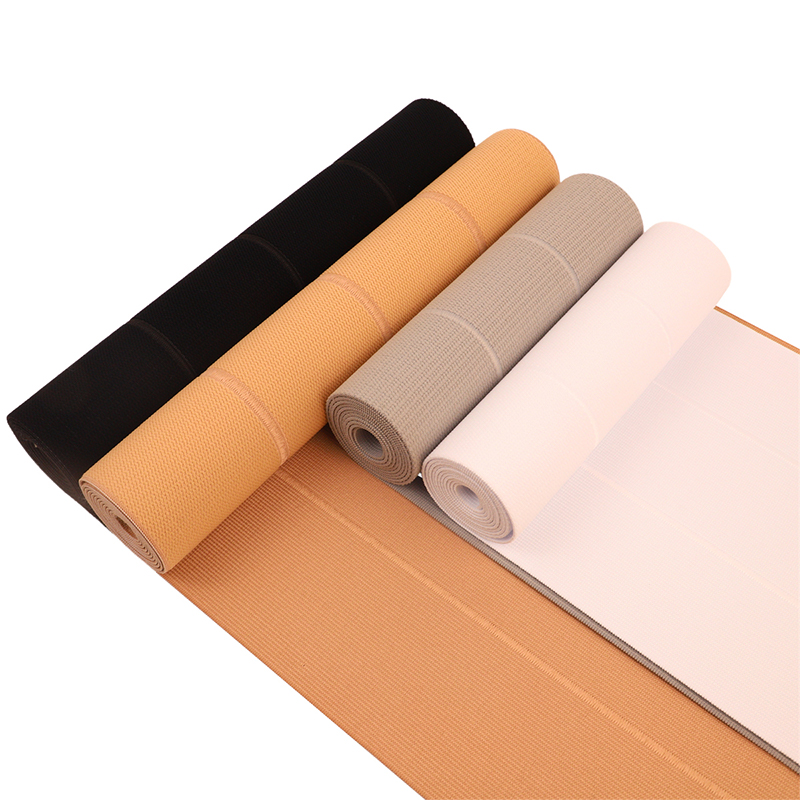
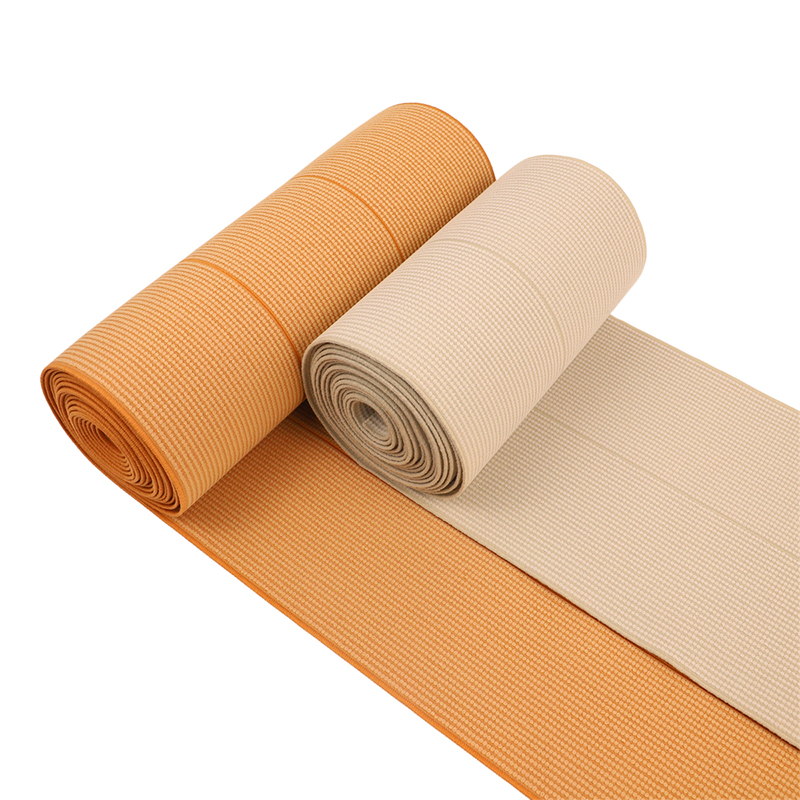
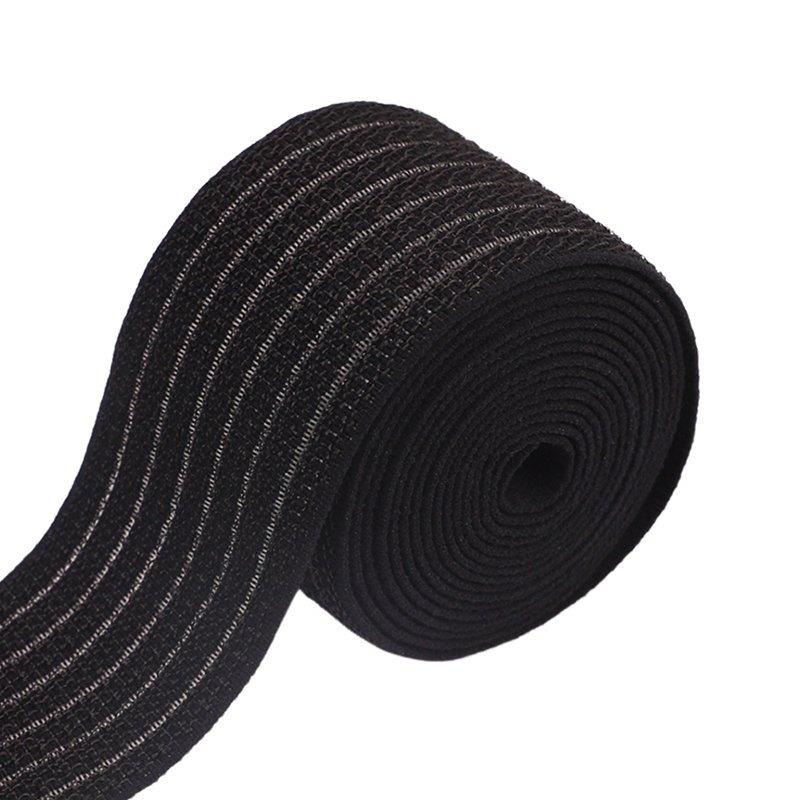
Three-panel elastic webbing with one-side plush is a wide elastic support material formed from three connected panels. One side has a smooth elastic surface, while the opposite side contains a plush, velvet-like finish. This dual-surface construction is particularly useful in products that need both reliable structural performance and a softer contact or fastening interface.
The elastic body provides controlled stretch and recovery. It can expand to accommodate body movement and changes in abdominal circumference while returning toward its original dimensions after tension is released. This helps a binder maintain consistent support without becoming excessively restrictive when the user sits, stands, walks, bends, or performs light activity.
The plush side adds a softer tactile quality than a standard plain elastic surface. Depending on the product design, it may face the body for improved comfort or interact with a hook fastening system to create a secure adjustable closure. The smooth side can provide a clean, stable outer surface that is suitable for sewing, lamination, or integration with other components.
Unlike narrow elastic bands, a three-panel construction distributes tension across a wider area. This is important for abdominal support, where concentrated pressure may create discomfort or uneven compression. A wide webbing format can help spread the load across the torso and provide a more balanced support profile.
The material is latex-free, making it a practical option for products intended for users who may be sensitive to natural rubber latex. Although individual product testing and medical-use validation remain necessary, latex-free construction can help manufacturers reduce one potential source of skin irritation or allergic response.
Core Material Structure and Performance
The product uses a blend of polyester, nylon, and spandex. Each fiber contributes different performance characteristics to the finished webbing.
Polyester Contribution
Polyester is widely used in technical textiles because of its strength, dimensional stability, and resistance to everyday wear. In an elastic support webbing, polyester can help maintain the shape of the fabric structure during repeated use. It also supports consistent appearance and helps the material withstand normal handling during cutting, sewing, packaging, and assembly.
Polyester fibers generally offer good resistance to moisture absorption compared with many natural fibers. This characteristic can help the webbing dry more readily after exposure to perspiration or routine cleaning, subject to the care instructions of the finished product. Polyester also contributes to a smooth, stable textile surface that can be useful in medical and protective equipment production.
Nylon Contribution
Nylon is known for its tensile strength, flexibility, abrasion resistance, and smooth hand feel. Within a wide elastic webbing, nylon can support the structural integrity of the panels and help the material tolerate repeated stretching. It may also improve the webbing’s resistance to friction during normal wear and contact with garment layers.
The strength and flexibility of nylon are valuable in abdominal support products because the webbing must follow body movement without losing its overall shape. A well-balanced nylon-containing construction can deliver a combination of softness and mechanical performance that is difficult to achieve with a single fiber type.
Spandex Contribution
Spandex provides the primary elastic component of the blend. Its high extensibility allows the webbing to stretch as the support is applied and as the wearer moves. Its recovery properties help the material return toward its original form when the load is reduced.
Spandex is particularly important in products that need a close, adaptive fit. Without sufficient elasticity, a wide abdominal support may feel rigid or may create excessive pressure in certain positions. With controlled elastic recovery, the support can accommodate moderate movement while maintaining a stable relationship with the body.
Combined Fiber Advantages
The polyester, nylon, and spandex combination creates a balanced material system. Polyester can contribute stability and durability, nylon can improve strength and flexibility, and spandex can provide stretch and recovery. Together, these fibers support the needs of a wide elastic material intended for medical support, rehabilitation, and protective applications.
The exact performance of the finished product depends on yarn selection, knitting or weaving parameters, panel construction, finishing processes, width, tension, and quality control. For this reason, the manufacturing process is as important as the nominal fiber composition. Consistent production conditions are necessary to achieve reliable elasticity and repeatable product quality from one batch to another.
Design Advantages of the Three-Panel Construction
The three-panel design offers several potential benefits compared with a narrow elastic band or a single-strip construction. The most important advantage is the ability to provide broad coverage while preserving a degree of flexibility between the panels.
Wider Support Distribution
A wide support material can distribute tension over a larger abdominal area. This may reduce the likelihood of localized pressure points that can occur when a narrow band is tightened to provide the same overall stabilizing effect. For post-surgical, rehabilitation, and protective products, broader pressure distribution can contribute to a more comfortable support experience.
The three-panel layout also gives product designers more control over the shape and behavior of the finished binder. Panels may be aligned to follow the body’s contours, or they may be integrated with different fastening and reinforcement components. This makes the webbing suitable for multiple product formats rather than a single standardized application.
Improved Conformability
The human torso is not a flat surface. It changes shape with posture, breathing, sitting, bending, and movement. A multi-panel elastic construction can conform more naturally than a rigid sheet or narrow high-tension band. The separate panel structure may help the product flex in response to movement while retaining an overall supportive profile.
Conformability is especially useful in abdominal binders designed for daily wear. Users may need to walk, sit at a desk, get in and out of bed, or perform light household activities. A material that moves with the body can be more acceptable for long-term use than one that feels stiff or inflexible.
Flexible Product Development
Manufacturers can use the same basic webbing platform in products with different overall dimensions, closures, sewing patterns, and reinforcement systems. The availability of 7.5-inch, 9-inch, and 12-inch widths allows product developers to match the material to different levels of coverage.
The narrower 7.5-inch option may be useful where moderate abdominal coverage and increased mobility are priorities. The 9-inch option can provide a balanced combination of coverage and flexibility. The 12-inch version may be appropriate for products requiring broader torso support. The final choice should be based on product testing, intended use, sizing, and clinical or ergonomic requirements.
One-Side Plush Surface and User Comfort
Comfort is a major factor in the success of any wearable support product. Even a technically effective binder may not be used consistently if it causes excessive friction, feels rough, or becomes uncomfortable during extended wear. The one-side plush construction is designed to address this concern.
The plush surface has a soft, velvet-like texture. Compared with a conventional smooth elastic surface, it can provide a gentler tactile feel when placed against the skin or used as part of an adjustable closure system. The softer surface may help reduce the sensation of rubbing as the user moves.
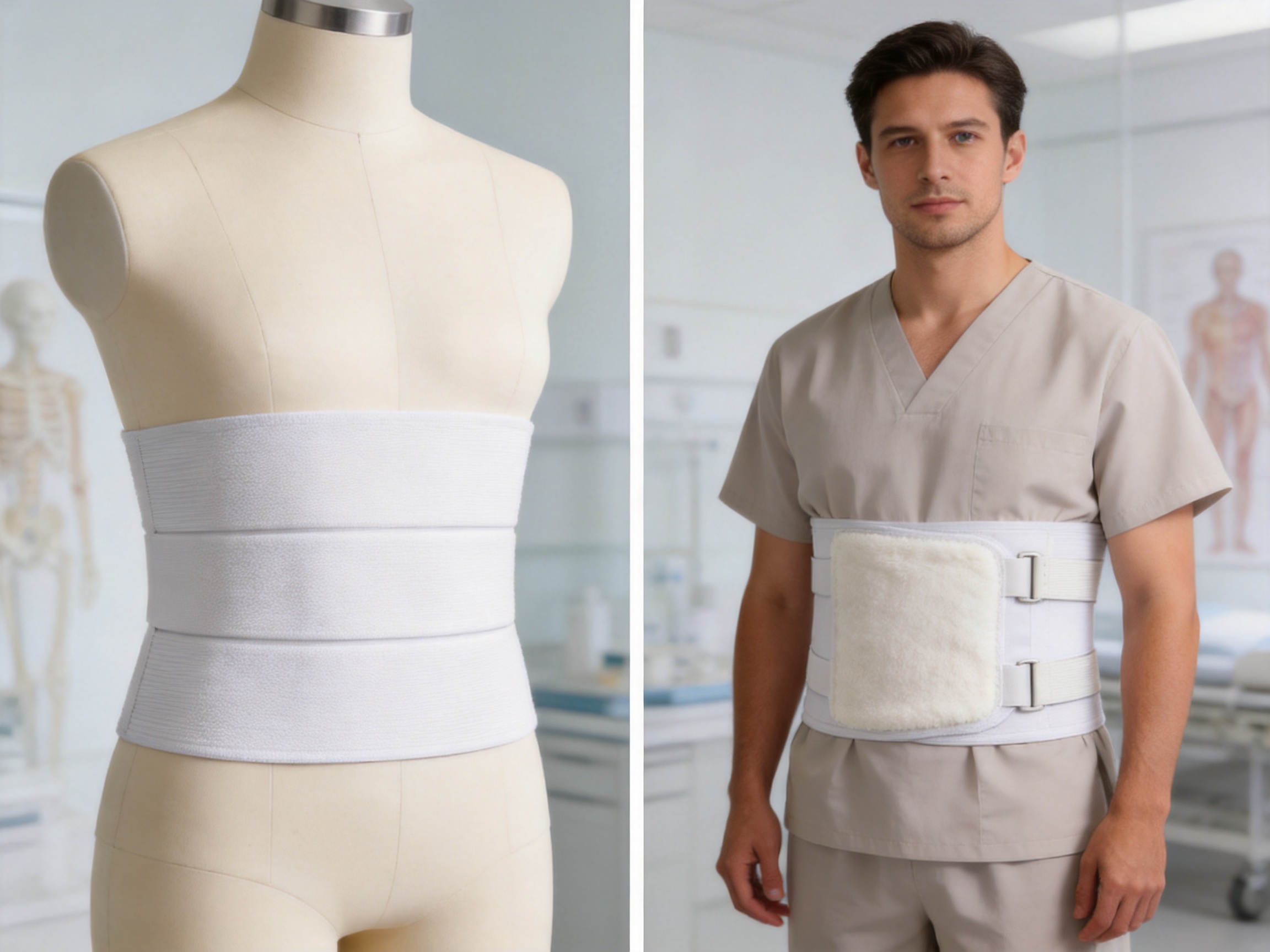
In a hook-and-loop abdominal binder, the plush side can serve as the loop-compatible surface. This allows the user or caregiver to adjust the fastening position according to the desired fit. The smooth elastic side can remain outward-facing, creating a clean appearance and a stable surface for product assembly.
The two-sided design provides manufacturers with greater flexibility than a single-surface elastic. It allows the same component to perform different functions depending on its orientation within the finished product. This can simplify material selection and support more efficient product development.
Softness alone does not determine whether a finished binder will be comfortable. Seam placement, edge finishing, garment design, closure force, compression level, product size, and wearing duration also influence the user experience. Nevertheless, a plush surface can be an important component in creating a more comfortable support system.
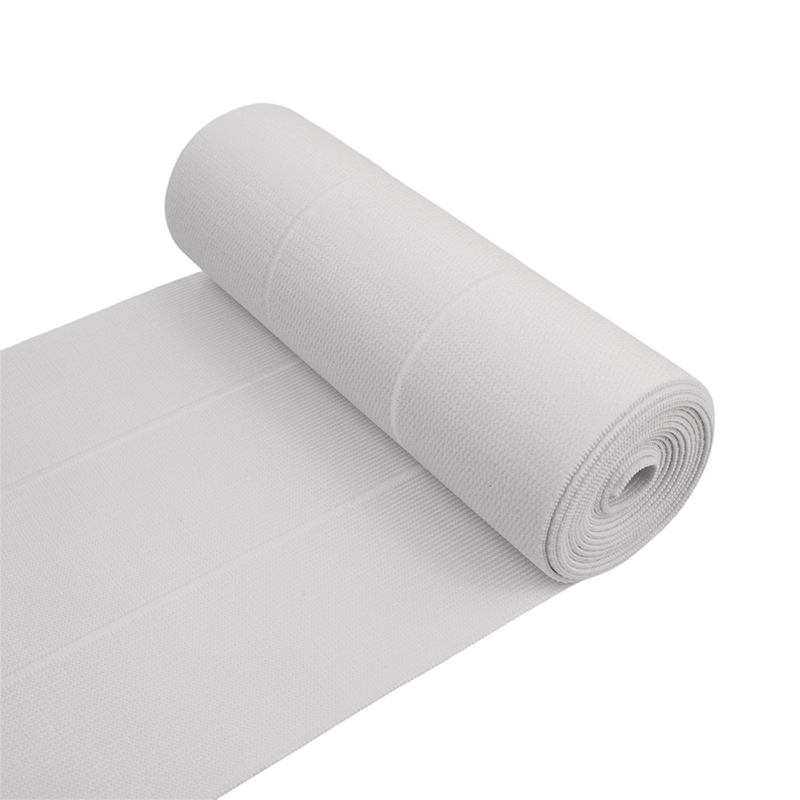
3 Panels Elastic W 1 Side Plush
Applications in Abdominal Binders
Abdominal binders are commonly designed to provide external support around the midsection. They may be used after certain medical procedures, during rehabilitation, for abdominal protection, or as part of a broader support product. Three-panel elastic webbing is well suited to this category because it combines broad coverage with controlled elasticity.
In an abdominal binder, the webbing may form the primary supportive section or may be integrated with fabric panels, hook-and-loop closures, edge bindings, labels, and reinforcement strips. The one-side plush surface can help create a soft inner layer or a fastening interface, depending on the assembly design.
The material can be cut and sewn into different binder configurations. Designers may develop products with front closures, side-adjustable closures, overlapping panels, or multi-stage fastening systems. The appropriate structure depends on the target user, required level of adjustment, product sizing, and manufacturing method.
Because abdominal binders are worn around a highly mobile area, the webbing should maintain adequate elasticity without creating excessive bulk. Its lightweight construction can help finished products remain easier to wear under clothing or during routine daily activities. Product developers should evaluate the balance between support, thickness, breathability, and appearance during prototype testing.
Post-Surgical Recovery Applications
Abdominal support products are often developed for post-surgical recovery, including support following hernia procedures, cesarean sections, and childbirth-related recovery. In these applications, the purpose of a binder may include providing gentle external support, helping the user feel more secure during movement, and protecting the abdominal region from incidental impact or strain.
The 3 Panels Elastic W 1 Side Plush is suitable as a material option for such products because it offers a wide contact area and adjustable elastic behavior. The soft surface may improve comfort for users who are sensitive to rough or abrasive materials. Its latex-free composition is also relevant when manufacturers are designing products for broad use.
It is important to distinguish between a material component and a clinically validated medical device. The webbing itself does not determine the medical suitability of a finished binder. Finished products must be designed, tested, labeled, and used according to applicable regulations, professional guidance, and intended-use requirements.
Manufacturers should consider pressure distribution, sizing accuracy, skin contact, fastening security, laundering, seam strength, and user instructions when developing post-surgical support products. They should also evaluate whether the chosen compression level is appropriate for the intended population and application.
Medical Support and Rehabilitation
Rehabilitation products frequently need to balance stabilization and mobility. Excessive restriction can interfere with normal movement, while insufficient support may reduce the user’s confidence in the product. A multi-panel elastic webbing can help designers create a support system that adapts to moderate movement.
For rehabilitation applications, the material may be incorporated into adjustable braces, recovery wraps, abdominal supports, or combined orthopedic products. Its width options allow the product architecture to be adapted to different body sizes and support objectives.
The elastic recovery of the spandex-containing blend can help maintain contact as the wearer changes position. The nylon and polyester components contribute to the webbing’s structural stability during repeated use. The plush surface may further improve comfort in products that remain in contact with the body for extended periods.
As with all rehabilitation equipment, the final product should be assessed by qualified professionals and tested under realistic use conditions. The webbing is a manufacturing material, and its performance must be considered together with the finished product’s pattern, closure, sewing, and clinical purpose.
Abdominal Injury Protection
Protective products for abdominal injury prevention or recovery may require a wide, flexible support component. The three-panel construction can help cover a larger area than a narrow band while allowing the product to remain comparatively lightweight.
In protective equipment, the webbing may be combined with padded materials, breathable textiles, reinforcement layers, or impact-reducing components. The elastic portion helps hold the protective assembly in position, while other layers provide additional protection according to the product design.
The material can also be useful in products intended to reduce unwanted movement during sports or physical activity. However, it should not be presented as a substitute for professional medical treatment or as a guarantee against injury. Performance claims should be based on testing of the complete finished product.
Sports Support and Protective Gear
Sports support products need to accommodate movement, perspiration, repeated stretching, and frequent handling. A wide elastic material with good recovery can provide a stable foundation for sports belts, protective wraps, and supportive garments.
The polyester and nylon fibers can contribute to durability during active use, while spandex provides the stretch needed for dynamic motion. The plush surface may help improve comfort where the support contacts clothing or skin. The lightweight structure is beneficial for products where excessive bulk could interfere with performance.
Sports equipment manufacturers can use the different width options to develop products for varied activities and wearer preferences. A narrower wide-elastic format may suit products emphasizing mobility, while a broader format may provide greater coverage and a more substantial support feel.
Sports product testing should include repeated stretch cycles, sweat exposure, washing, abrasion, seam durability, fastening performance, and fit retention. These evaluations help manufacturers determine whether the material is appropriate for the demands of the intended activity.
Advantages Compared with Conventional Elastic Materials
The product offers several design advantages when compared with ordinary narrow elastic, basic single-sided elastic, or less structured wide bands.
Compared with Narrow Elastic Bands
Narrow elastic bands are useful for edging, garment retention, small support zones, and localized fastening. However, they may not distribute abdominal pressure as effectively as a wider three-panel material. When a narrow band is tightened to achieve broad support, it may create concentrated pressure and may roll or shift during movement.
The three-panel webbing provides greater coverage and can be integrated into a product designed for more balanced support. It may also reduce the number of separate narrow bands required during assembly, potentially simplifying the construction of certain finished products.
Compared with Plain Single-Surface Elastic
Plain elastic with the same surface on both sides may not offer the same level of functional flexibility. One-side plush webbing provides a smooth side and a softer side, allowing product designers to assign each surface a specific role.
This dual-surface structure can improve the interface between the support and the body or fastening system. It may also reduce the need to add a separate plush loop panel in some product designs, depending on the required closure configuration.
Compared with Rigid Support Materials
Rigid materials can deliver strong stabilization but may restrict bending, sitting, and natural torso movement. Elastic webbing provides a more adaptive alternative for applications where controlled flexibility is important.
The three-panel format helps retain a broad support area without relying entirely on rigid reinforcement. This may improve wearability for products intended for daily use, rehabilitation, or moderate activity. The best solution depends on the application; rigid components may still be appropriate where high stabilization or impact protection is required.
Compared with Latex-Containing Elastic
Latex-free construction is a significant consideration for products intended for users with natural rubber latex sensitivity. By using polyester, nylon, and spandex instead of latex, the webbing can help manufacturers address one common material concern in medical and protective product development.
Manufacturers should still verify all raw materials, adhesives, dyes, coatings, labels, and finishing agents used in the complete product. A latex-free webbing does not automatically make an entire finished device latex-free unless every component has been evaluated.
Manufacturing Strengths and Production Capabilities
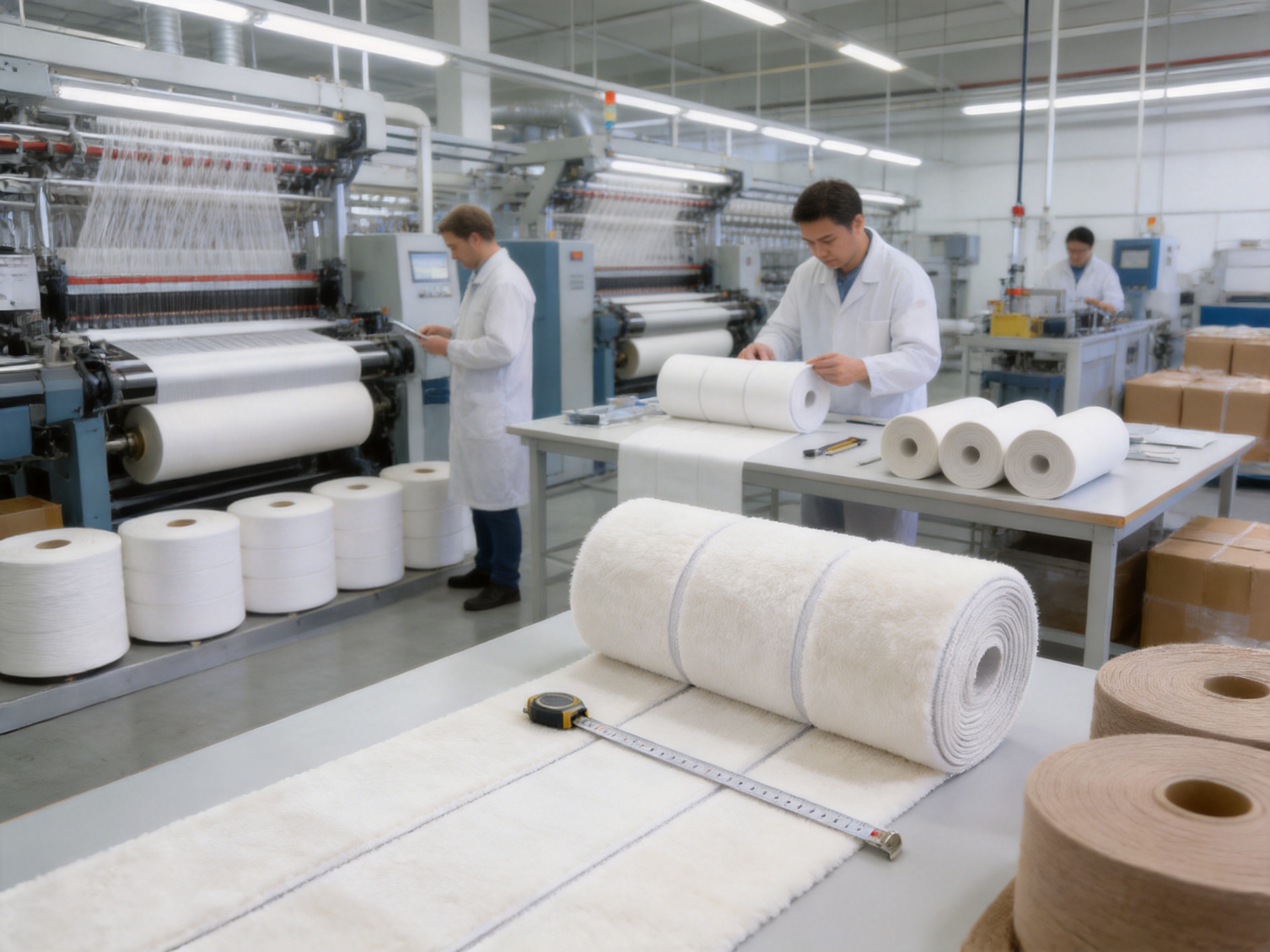
Jinhu Hengxiang Webbing Co., Ltd. was established in 2005 and is located in Jinhu County, Huai’an City, Jiangsu Province, China. The company specializes in the research, development, production, sale, and service of elastic and non-elastic webbing, with particular experience in sports supports and orthopedic braces.
The company’s production capabilities include advanced warping machines, knitting machines, woven machines, and packaging machines. These equipment categories support the complete production flow, from yarn preparation and fabric formation through finishing, inspection, and packing.
Warping and Yarn Preparation
Warping is an important preparation stage for woven and related textile structures. It involves arranging yarns in a controlled order and tension before they enter the next production process. Consistent warping helps establish the foundation for uniform width, stable construction, and predictable fabric behavior.
For elastic webbing, tension control is especially important. Inconsistent yarn tension can affect stretch, recovery, edge formation, density, and appearance. Modern warping equipment can help production teams manage these parameters more accurately and create a more stable starting point for subsequent processing.
Knitting and Woven Production
Knitting machines are used to form textile structures through interlooping yarns, while woven machines create structures by interlacing warp and weft yarns. The selection of process depends on the required elasticity, thickness, surface character, dimensional stability, and application.
For a product such as three-panel elastic webbing with one-side plush, production control must address both the elastic body and the different surface characteristics. The smooth side and plush side need to remain clearly defined, consistent, and suitable for integration into finished support products.
Machine settings, yarn quality, feeding control, needle or loom condition, and production speed can all influence the final material. Regular equipment maintenance and process monitoring help reduce variation and support reliable output.
Finishing and Surface Quality
Finishing processes may influence softness, appearance, hand feel, dimensional behavior, and usability. The plush side must provide a consistent soft texture, while the smooth side should remain even and suitable for sewing or fastening applications.
Finishing quality is particularly important for materials that may contact skin. Rough edges, inconsistent surface areas, loose fibers, or excessive stiffness can reduce user comfort and create assembly problems. A controlled finishing process helps manufacturers deliver webbing that is more suitable for medical and protective product applications.
Packaging and Order Preparation
Packaging equipment helps protect the webbing during storage and transportation. Proper rolling, labeling, measurement, and packing reduce the risk of tangling, contamination, deformation, or incorrect shipment.
For international customers, accurate packing information is essential. Product identification should include material, width, color where applicable, roll length, batch details, and any relevant inspection information. Clear packaging supports efficient receiving, inventory control, and production planning.
Quality Control from Materials to Shipment
Quality control is applied throughout the manufacturing process rather than only at the final inspection stage. Jinhu Hengxiang Webbing Co., Ltd. emphasizes control during material sourcing, processing, testing, and packing.
Raw material control begins with evaluating incoming polyester, nylon, spandex, and other production inputs. Consistent raw materials help reduce changes in stretch, color, texture, strength, and surface appearance. Documented supplier management and incoming inspection can help identify deviations before production begins.
During production, operators and quality personnel can monitor width, construction, surface condition, elasticity, recovery, and visual uniformity. Particular attention should be paid to the edges and panel connections because these areas affect sewing performance and finished-product stability.
Testing may include dimensional checks, stretch and recovery evaluation, tensile strength testing, abrasion assessment, color inspection, and surface examination. The selection of tests should reflect the customer’s product requirements and the intended use of the webbing.
Final inspection helps confirm that the correct product, width, quantity, and packaging have been prepared for shipment. A documented quality system can support traceability and make it easier to investigate issues or implement corrective actions when necessary.
Certifications and Management Standards
Jinhu Hengxiang Webbing Co., Ltd. has obtained Oeko-Tex Standard 100 and ISO 13485 certificates. These certifications are important indicators of the company’s commitment to controlled production and product responsibility.
Oeko-Tex Standard 100 relates to testing for harmful substances in textile products. For materials intended for clothing, medical supports, or skin-contact applications, this type of certification can provide additional confidence that the product has been evaluated against defined textile safety criteria.
ISO 13485 is a quality management standard associated with medical devices and related supply chains. It emphasizes documented processes, risk-based thinking, traceability, corrective action, and consistent quality management. Certification does not eliminate the need for customer validation, but it can support a more disciplined manufacturing and documentation framework.
Customers should confirm the current validity, scope, and applicable product coverage of any certificate during supplier qualification. They should also determine whether additional regulatory testing or documentation is required in their destination market.
Customization for OEM and ODM Projects
Medical support and sports protection manufacturers often require materials tailored to their own products. Standard specifications may not be sufficient when a customer needs a specific elasticity profile, surface texture, color, width, thickness, or packaging format.
Jinhu Hengxiang Webbing Co., Ltd. welcomes OEM and ODM orders. The company can customize webbing according to customer requirements, including tailored elasticity, texture, and color. This capability is valuable for brands and medical-product manufacturers developing proprietary support systems.
Customization generally begins with a review of the finished product requirements. Customers should provide information about the intended application, body area, desired stretch, recovery, fastening method, sewing process, washing conditions, target market, and expected order volume.
Sample development allows the customer and manufacturer to assess material behavior before mass production. Prototype evaluation may include fitting, comfort, closure compatibility, seam strength, dimensional stability, and repeated-use performance.
Clear technical communication is important during customization. Terms such as width, stretch percentage, recovery, tension, roll length, plush height, and surface direction should be defined consistently. Approved samples and written specifications can help minimize variation during future orders.
Production Scale and Supply Reliability
The company produces millions of meters of elastic and non-elastic webbing every month. This production scale can support both regular orders and larger supply programs, subject to product specifications, capacity scheduling, and raw material availability.
Large-scale production provides several potential benefits. It can support more consistent manufacturing routines, improve equipment utilization, and help the supplier maintain experience across multiple product categories. It may also allow customers to consolidate purchases of different webbing types through one manufacturing partner.
Supply reliability depends on more than production volume. It also requires accurate forecasting, material planning, equipment maintenance, quality control, packaging discipline, and communication regarding lead times. A capable supplier should be able to discuss sampling, production scheduling, inspection requirements, and shipment preparation in a clear and organized manner.
Jinhu Hengxiang Webbing Co., Ltd. serves customers in China and exports to North America, Eastern Europe, the Middle East, South Asia, and other regions. Experience with international customers can help support communication about product specifications, packaging, documentation, and export arrangements.
How Manufacturers Can Select the Correct Width
Choosing between 7.5 inches, 9 inches, and 12 inches requires consideration of the finished product’s coverage, intended compression, body size range, and design structure.
| Width | Potential Design Use | Main Considerations |
|---|---|---|
| 7.5 inches | Moderate abdominal coverage, lighter support products, designs emphasizing mobility | Check whether the coverage area is sufficient for the intended user and application |
| 9 inches | Balanced coverage for general abdominal binders and rehabilitation supports | Evaluate fit, compression distribution, closure overlap, and garment bulk |
| 12 inches | Broader torso coverage and products requiring a more substantial support area | Confirm breathability, edge comfort, movement allowance, and size adjustability |
The table provides general development guidance rather than a medical recommendation. A wider material is not automatically better for every user. The appropriate width must be determined through pattern development, user testing, and application-specific evaluation.
Width should also be considered alongside the finished binder’s length, closure position, overlap, edge binding, and panel shaping. A wide webbing may require a larger sewing machine throat, different handling procedures, or adjusted packaging dimensions. Early production trials can identify these issues before full-scale manufacturing.
Sewing and Assembly Considerations
When incorporating the webbing into a finished product, manufacturers should select thread, needle size, stitch type, seam allowance, and machine tension carefully. Elastic materials can contract or distort if they are sewn under inconsistent tension.
The sewing process should preserve the intended stretch behavior. Excessive stitching across the elastic may restrict extension, while insufficient reinforcement may reduce seam strength. High-stress areas, including closure ends and attachment points, may require additional stitching or reinforcement patches.
The plush side should be oriented consistently during assembly. If it is used as a loop-compatible surface, the direction and coverage should match the hook placement. If it is intended as a skin-contact layer, designers should ensure that seams, labels, and hard components do not create discomfort.
Cutting equipment should be maintained to produce clean edges. Fraying, uneven panel lengths, or inaccurate cutting can affect both appearance and function. Prototype assembly should include repeated opening and closing of the fastening system as well as stretching in multiple directions.
Breathability, Moisture, and Daily Wear
Breathability is an important consideration in abdominal supports because the product may cover a relatively large area of the torso. A material that traps excessive heat or moisture may become uncomfortable during prolonged wear.
The product description identifies the webbing as breathable and lightweight. These characteristics can contribute to a more wearable finished support, particularly when the product is combined with breathable lining materials and an appropriate panel design.
Actual breathability depends on the entire product structure. Fabric density, backing layers, seam construction, body coverage, compression level, and clothing worn over the binder all affect air movement and moisture management. Manufacturers should therefore test the complete product rather than relying only on the raw webbing specification.
Care instructions should be established according to the fiber blend, plush construction, dyes, closures, and finished-product assembly. Washing temperature, detergent type, drying method, and exposure to heat can affect elastic recovery and surface softness. Care testing helps manufacturers provide realistic instructions that protect product performance.
Skin Comfort and Sensitive-Skin Considerations
The product is described as latex-free and gentle on the skin. These properties make it suitable for consideration in products designed for long-term wear or for users who may have sensitive skin.
The plush side can help reduce the rough sensation associated with some technical elastic materials. A smooth surface on the opposite side may support clean handling and reduce friction against outer garments. However, comfort must be evaluated through the finished product because seams, adhesives, dyes, pressure, perspiration, and individual sensitivity may influence the result.
Manufacturers should conduct appropriate skin-contact assessments for their finished products. They should also review all components used in the support, including thread, hook-and-loop materials, labels, foam, coatings, printing inks, and packaging residues.
Durability and Repeated Elastic Recovery
Abdominal binders and sports supports are frequently stretched, fastened, removed, folded, and washed. Therefore, a material’s initial elasticity is only one part of its performance. Retention of stretch and recovery after repeated cycles is equally important.
The polyester and nylon components provide a structural foundation for repeated use, while spandex supports elastic extension and recovery. A stable three-panel construction can help the material maintain its overall form when integrated properly into a finished product.
Durability testing should simulate the intended use. Testing may include repeated stretch and release, cyclic fastening, laundering, abrasion against clothing, exposure to perspiration, and storage under different conditions. Results can guide product claims, care instructions, and replacement recommendations.
Customers purchasing the webbing for demanding applications should communicate their testing requirements before production. The manufacturer can then help determine whether a standard specification or customized construction is more appropriate.
Company Experience and Industry Focus
With more than 20 years of professional production experience, Jinhu Hengxiang Webbing Co., Ltd. has developed expertise in elastic and non-elastic webbing. Its product focus includes sports supports, orthopedic braces, medical protective equipment, and related applications.
This industry specialization is important because webbing for medical and protective products must satisfy requirements that differ from ordinary fashion or general-purpose trim. Consistent elasticity, controlled width, reliable surface quality, secure sewing performance, and documented production procedures all influence the usability of the finished product.
The company’s development, production, sales, and service capabilities provide customers with access to a single supplier for technical discussion, sampling, manufacturing, quality coordination, and order support. This can simplify communication compared with managing multiple suppliers for different stages of material development.
Its commitment to quality, innovation, sustainability, and continuous improvement supports long-term cooperation. Customers seeking a reliable supply partner can evaluate the company’s equipment, certifications, sample process, technical response, inspection system, and delivery performance during supplier qualification.
Sustainability and Responsible Manufacturing
Textile sustainability involves material selection, production efficiency, product durability, packaging, and end-of-life considerations. A durable support material may help extend the usable life of the finished product and reduce the frequency of replacement.
Efficient machinery and controlled production can also help reduce avoidable waste. Accurate warping, knitting, weaving, cutting, and packaging processes support better material utilization. Quality control reduces the number of defective rolls or finished components that require rework or disposal.
Customers should discuss sustainability requirements directly with the manufacturer. These may include recycled fiber options, restricted-substance documentation, packaging reduction, colorant requirements, production waste management, or environmental data. The appropriate solution depends on the customer’s product, market, and certification objectives.
Responsible manufacturing also includes worker safety, compliance with applicable regulations, transparent documentation, and continuous process improvement. These factors contribute to a stable supply relationship and support the broader goals of ethical textile production.
Recommended Product Development Process
A structured development process can help customers obtain the best results from the 3 Panels Elastic W 1 Side Plush.
Step One: Define the Finished Product
The customer should identify whether the webbing will be used in an abdominal binder, post-surgical support, rehabilitation product, sports belt, protective garment, or another application. The intended user group, wearing duration, movement level, and market requirements should also be documented.
Step Two: Establish Technical Requirements
Important requirements may include width, length, color, stretch range, recovery, thickness, plush texture, surface orientation, tensile strength, washing resistance, packaging, and allowable tolerances. Written specifications reduce ambiguity during sampling and production.
Step Three: Request Samples
Samples should be evaluated both as raw webbing and as part of a prototype. Raw-material inspection can identify differences in hand feel, width, surface uniformity, and elasticity. Prototype testing reveals how the webbing behaves when sewn, fastened, stretched, and worn.
Step Four: Test the Complete Product
Finished-product testing may include fit, comfort, support, pressure distribution, seam durability, closure performance, laundering, abrasion, and repeated-use evaluation. Medical or protective claims should be supported by appropriate evidence for the intended market.
Step Five: Approve a Reference Standard
Once the customer approves a sample, the approved material should be recorded as a reference standard. Production documents should identify the agreed construction, width, surface, color, packaging, and inspection criteria.
Step Six: Monitor Mass Production
During regular orders, customers should maintain communication regarding forecast volume, delivery timing, packaging, inspection, and any changes to the finished product. Consistent production records support repeatability and make future reorders more efficient.
Quality Questions for Buyers
Before purchasing, buyers should ask whether the material is suitable for the intended skin-contact application, whether the plush side is compatible with the chosen closure system, and whether the available width meets the product’s coverage requirements.
They should also request information about material composition, latex-free status, certification scope, test methods, roll length, tolerances, minimum order quantity, sample availability, production lead time, and packaging. These details help buyers compare suppliers on more than price alone.
Supplier comparison should include consistency, technical support, customization ability, quality documentation, production capacity, communication, and delivery reliability. A lower initial price may not represent the best value if the material produces sewing problems, inconsistent compression, high waste, or customer complaints.
Q&A
What is the main purpose of this elastic webbing?
The webbing is designed as a wide, flexible support material for abdominal binders, post-surgical recovery products, rehabilitation supports, abdominal protection, sports support, and related medical or protective equipment.
What materials are used?
The stated material composition is polyester, nylon, and spandex. Polyester and nylon contribute strength and stability, while spandex provides stretch and recovery.
What does “one-side plush” mean?
It means that one side of the webbing has a soft, plush, velvet-like surface, while the opposite side has a smoother elastic surface. The two surfaces can be assigned different roles in the finished product.
Can the plush side be used with hook-and-loop fastening?
It may be used as a loop-compatible surface when the product is designed for that purpose. Customers should confirm fastening compatibility through sample testing before mass production.
What widths are available?
The available widths are 7.5 inches, 9 inches, and 12 inches. The correct choice depends on coverage, fit, support requirements, and finished-product design.
Is the material latex-free?
The product is described as latex-free. Buyers should confirm the status of every component in the finished product if they intend to make a complete latex-free claim.
Is the webbing suitable for direct skin contact?
It is described as soft and skin-friendly, but suitability depends on the finished-product construction and the user. Manufacturers should perform appropriate skin-contact and finished-product evaluations.
Can the product be customized?
Yes. Customization can be discussed for characteristics such as elasticity, texture, color, width, packaging, and other technical requirements. OEM and ODM orders are welcome.
Can it be used for a medical device?
It can serve as a component in a medical support product, but the finished device must be designed, tested, labeled, and approved according to the requirements of the intended market. The webbing itself does not establish clinical effectiveness.
How should customers evaluate durability?
Customers should test stretch and recovery, repeated use, laundering, abrasion, seam performance, fastening cycles, and exposure to perspiration or other expected conditions. Testing should reflect the finished product and its intended environment.
What manufacturing equipment does the supplier use?
The company has introduced and updated warping machines, knitting machines, woven machines, and packaging machines. These support yarn preparation, fabric formation, production handling, and shipment preparation.
What certifications does the company have?
The company has obtained Oeko-Tex Standard 100 and ISO 13485 certificates. Customers should confirm the current validity and scope of the certificates during qualification.
Where does the company supply its products?
The company serves the Chinese market and exports to North America, Eastern Europe, the Middle East, South Asia, and other regions.
Why choose a three-panel webbing instead of a narrow elastic band?
A three-panel wide material can provide broader coverage and more distributed tension. It may offer better support for abdominal binders and protective products than a narrow band, although the final performance depends on the complete product design.
Conclusion
The 3 Panels Elastic W 1 Side Plush combines a wide three-panel structure with a dual-surface design, controlled elasticity, and a soft plush finish. Its polyester, nylon, and spandex construction supports flexibility, strength, recovery, and everyday durability. The latex-free design and comfortable surface make it a practical material option for products intended for extended wear or sensitive-skin applications.
Compared with narrow elastic bands, the product offers broader coverage and more balanced tension distribution. Compared with plain single-surface elastic, it provides greater functional flexibility through its smooth and plush sides. Compared with rigid support materials, it can offer a more adaptive solution for products that need both stabilization and movement.
The availability of 7.5-inch, 9-inch, and 12-inch widths supports different binder designs and coverage requirements. OEM and ODM customization allows customers to develop webbing with tailored elasticity, texture, color, and packaging. These capabilities are supported by modern warping, knitting, weaving, and packaging equipment, as well as quality control throughout material sourcing, processing, testing, and packing.
Jinhu Hengxiang Webbing Co., Ltd. brings more than 20 years of production experience to the elastic and non-elastic webbing sector. Its focus on sports supports, orthopedic braces, medical protective equipment, certifications, international supply, and customized manufacturing makes it a suitable partner for customers developing reliable support products.
For the best results, buyers should evaluate the webbing as part of a complete product-development process. Clear technical specifications, sample approval, prototype testing, finished-product validation, and documented quality requirements will help ensure that the selected material performs appropriately in its intended application.
References
1. Product specification information for 3 Panels Elastic W 1 Side Plush, including material composition, width options, surface construction, and intended applications.
2. Company information supplied for Jinhu Hengxiang Webbing Co., Ltd., including establishment history, production capabilities, export markets, OEM and ODM services, and quality-control practices.
3. Textile fiber performance principles relating to polyester, nylon, and spandex in elastic webbing and technical textile applications.
4. General quality-management principles for manufacturers of medical support components and protective textile products.
5. General textile safety and restricted-substance considerations for materials intended for skin-contact applications.
6. General product-development practices for elastic medical supports, abdominal binders, rehabilitation products, and sports protective equipment.