
 en
en
 English
 русский
 Français
 Español
 Português
 Tiếng Việt
Content
- 1 Understanding the 7.5cm Black Woven Elastic Panel
- 2 Key Product Advantages
- 3 Applications Across Garment and Textile Industries
- 4 Why Woven Elastic Can Outperform Ordinary Alternatives
- 5 Advanced Manufacturing Capabilities
- 6 Certifications, Compliance, and Responsible Production
- 7 Customization and Product Development
- 8 Technical Factors for Buyers and Designers
- 9 Supply and Service Strengths
- 10 Recommended Evaluation Process
- 11 Quality and Performance Comparison Table
- 12 Practical Advantages for Manufacturers
- 13 Long-Term Value of Reliable Webbing
- 14 Frequently Asked Questions
- 14.1 What is a 7.5cm black woven elastic panel?
- 14.2 What products can use this panel?
- 14.3 How is it different from narrow elastic?
- 14.4 Can the panel be customized?
- 14.5 Is the product suitable for medical applications?
- 14.6 Is black the only available color?
- 14.7 How should buyers test the panel?
- 14.8 What sewing method should be used?
- 14.9 Where is the manufacturer located?
- 14.10 Does the company accept OEM and ODM orders?
- 15 Conclusion
- 16 References
- 17 Product: 7.5cm Black Woven Elastic Panels
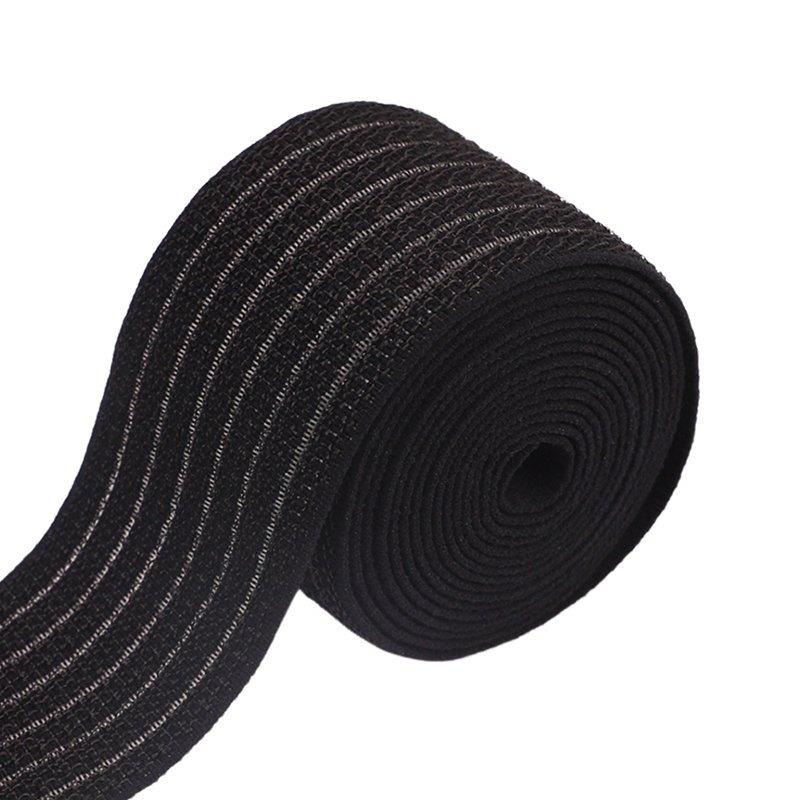
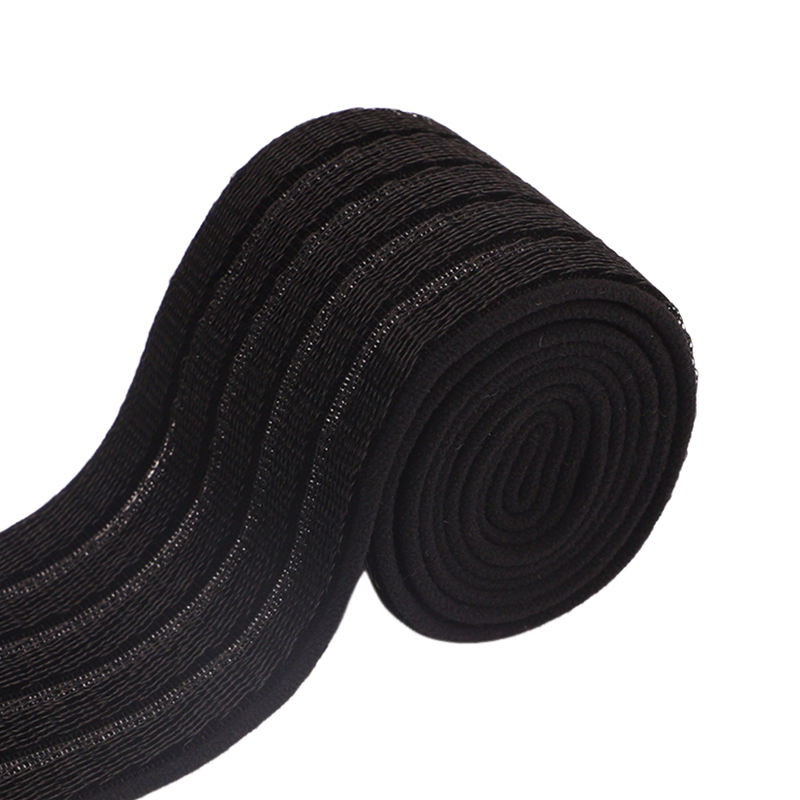
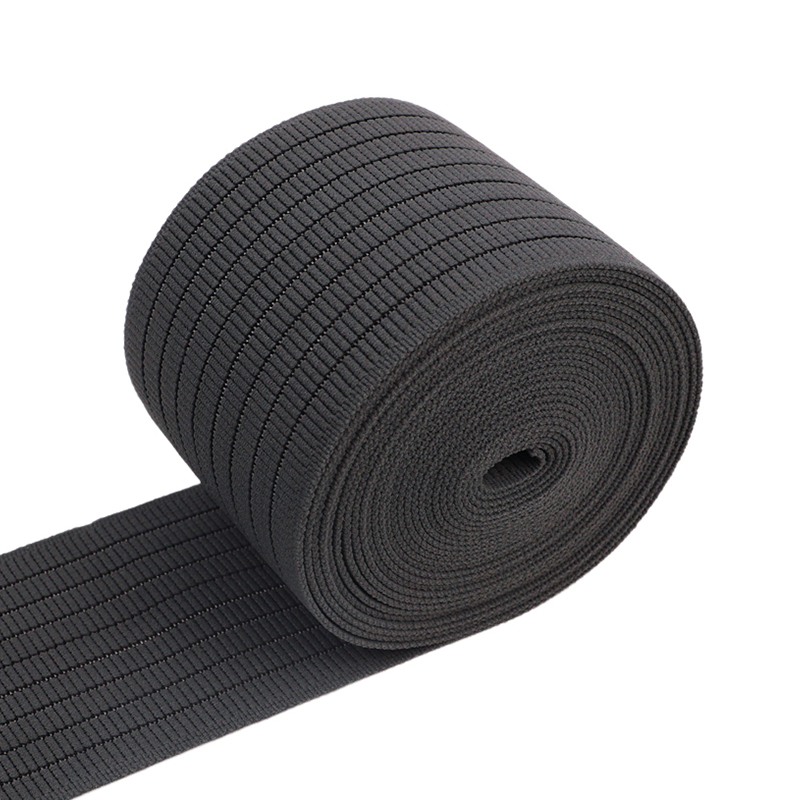
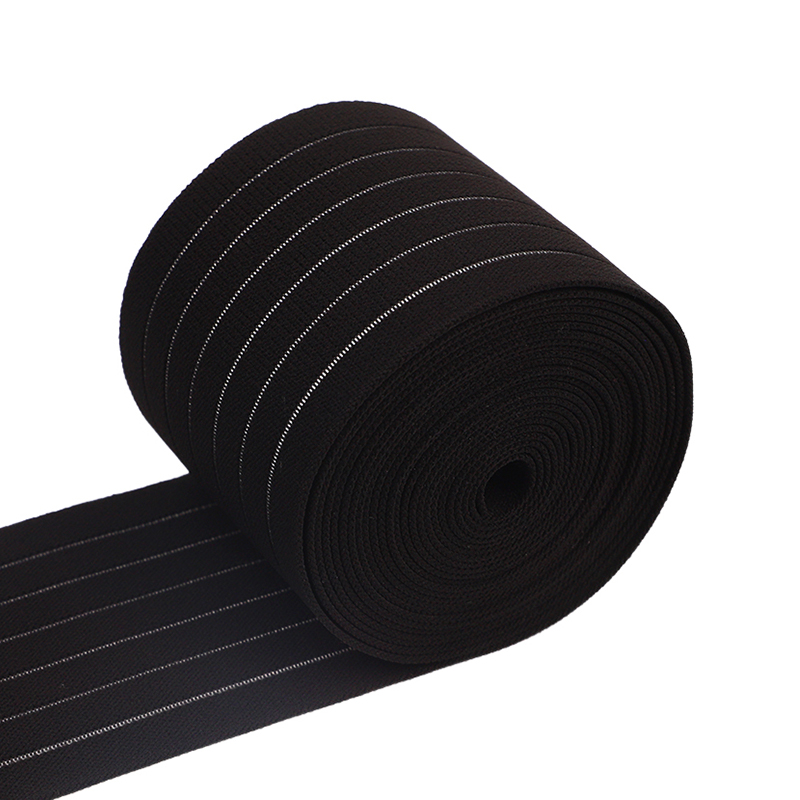
The 7.5cm black woven elastic panel is a wide, durable, and versatile textile component developed for garments and products that require dependable stretch, firm recovery, and a clean professional appearance. With a width of 7.5cm, it offers substantially more coverage than narrow elastic tape while remaining flexible enough for sewing, assembly, and product integration. Its black color provides a timeless appearance that coordinates easily with dark garments, technical fabrics, performance apparel, underwear, shapewear, medical supports, and industrial textile products.
Unlike ordinary narrow elastic bands that concentrate tension along a small line, a wide woven elastic panel distributes pressure over a broader surface. This construction can improve comfort, stability, and visual balance in waistbands, support garments, garment panels, cuffs, hems, and reinforcement zones. The panel is particularly suitable for applications in which consistent elasticity and long-term durability are more important than temporary stretch alone.
Manufactured by Jinhu Hengxiang Webbing Co., Ltd., the product reflects more than two decades of experience in elastic webbing and non-elastic webbing production. The company combines material selection, yarn preparation, warping, weaving, inspection, finishing, packaging, and customer-specific development to produce webbing for apparel, medical protection, sports supports, orthopedic braces, and other textile applications. Its experience with both elastic and non-elastic materials allows it to evaluate the relationship between stretch, structure, recovery, surface feel, and end-use performance.
Understanding the 7.5cm Black Woven Elastic Panel
A woven elastic panel is produced by interlacing lengthwise and crosswise yarn systems to create a stable textile structure. Elastic yarns or stretch-capable components are incorporated into the construction so that the panel can extend under tension and return toward its original dimensions after the load is released. The woven structure gives the material a controlled balance between flexibility and stability.
The 7.5cm width is one of the product’s defining characteristics. It creates a broad contact area that can support a garment section without requiring multiple narrow strips. For manufacturers, this can simplify pattern design and reduce the number of components needed in a finished product. For end users, broader coverage may help distribute pressure more evenly and reduce the uncomfortable concentrated pull that can occur with thin elastic tape.
The black finish is practical as well as visually appealing. Black is commonly used in activewear, underwear, shapewear, sportswear, maternity wear, loungewear, medical supports, and industrial garments. It can be exposed as a design feature, concealed inside a garment, or coordinated with black outer fabrics. Because black is less likely to show minor handling marks than lighter colors, it is also convenient for manufacturing, storage, and regular use.
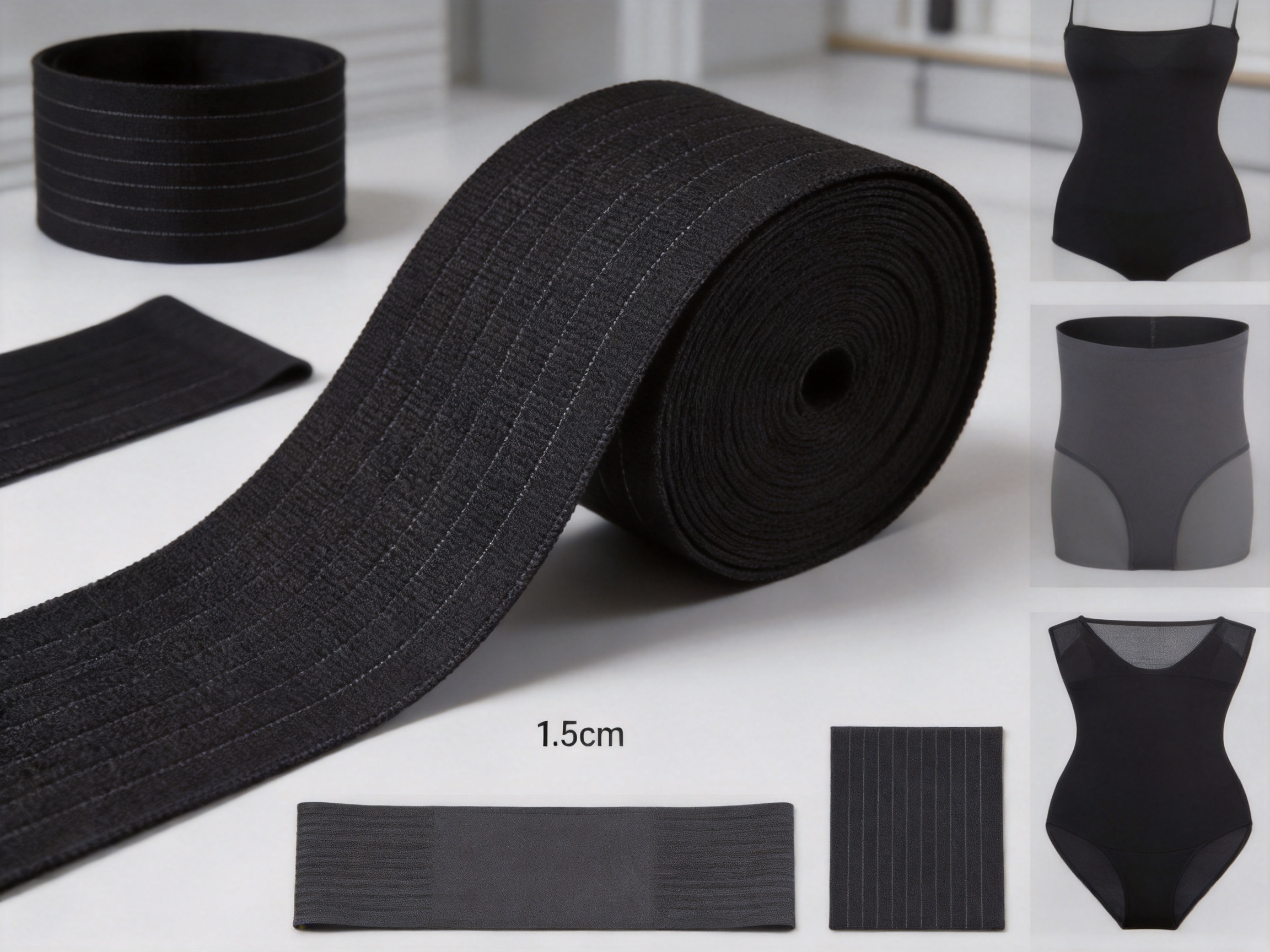
This panel is intended for applications that require firm support and reliable elasticity. It can be sewn into waistbands, used as a broad stabilizing section, applied to garment openings, or integrated into products that need controlled compression or retention. The appropriate performance will depend on the specific design, sewing method, applied load, and intended use. Buyers can also discuss customized elasticity, texture, and color requirements with the manufacturer.
Key Product Advantages
Wide Coverage and Balanced Pressure Distribution
The main advantage of a 7.5cm panel is its broad working area. A wide band can distribute tensile forces over a larger section of a garment instead of concentrating them at a narrow edge. This is useful for waistbands, support belts, abdominal garments, maternity garments, and sports products where stability and comfort must work together.
Wide coverage also supports cleaner garment construction. A designer may be able to create a stable waistband or support section with one continuous panel rather than combining several narrow elastics. Fewer joins can reduce bulk, simplify production, and create a more uniform appearance. In high-volume garment manufacturing, these benefits can contribute to improved consistency and more efficient assembly.
Firm and Consistent Elasticity
The woven structure is designed to provide controlled stretch rather than uncontrolled expansion. Consistent elasticity is important when a panel must hold a garment securely in place during movement. Activewear, sportswear, shapewear, and support garments often experience repeated tension, bending, and recovery. A panel with predictable stretch characteristics helps manufacturers design a product with a more reliable fit.
Compared with low-quality elastic that may feel loose in some sections and tight in others, a well-produced woven panel offers greater uniformity across its width and length. Consistency supports quality control because cutting, sewing, and fitting results are easier to repeat. It also helps customers understand how the material will behave when used in different production batches.
Durable Woven Construction
Woven construction creates an interlaced textile body that can resist the stresses associated with sewing, wearing, stretching, and repeated handling. The panel is suited to applications in which the material must remain functional over an extended service period. Its durability is especially valuable in sports supports, underwear, shapewear, industrial garments, and products that are washed or used frequently.
The strength of a woven panel comes from more than the elastic element alone. The arrangement of the yarns, the density of the construction, the quality of the raw materials, and the finishing process all affect performance. An experienced manufacturer can balance these variables to achieve a product that is supportive without becoming unnecessarily rigid or difficult to sew.
Professional Black Appearance
Black elastic panels are widely accepted across fashion, medical, athletic, and industrial markets. The color creates a modern and discreet appearance and can be incorporated into both visible and concealed garment areas. It is suitable for products that prioritize understated design, including black sports braces, dark underwear, compression garments, protective supports, and utility clothing.
For brands and contract manufacturers, a standard black option can reduce color-matching complexity in product development. It can also support a cohesive product range when different garments use the same dark trim or support component. If a project requires another shade, the manufacturer’s custom development capability can be discussed during sampling and specification review.
Compatibility with Multiple Sewing Applications
The panel can be integrated into many sewing constructions. It may be attached directly to fabric, enclosed inside a casing, layered with other textiles, or used as a structural section in a finished product. Its width allows designers to develop support zones without relying exclusively on rigid materials.
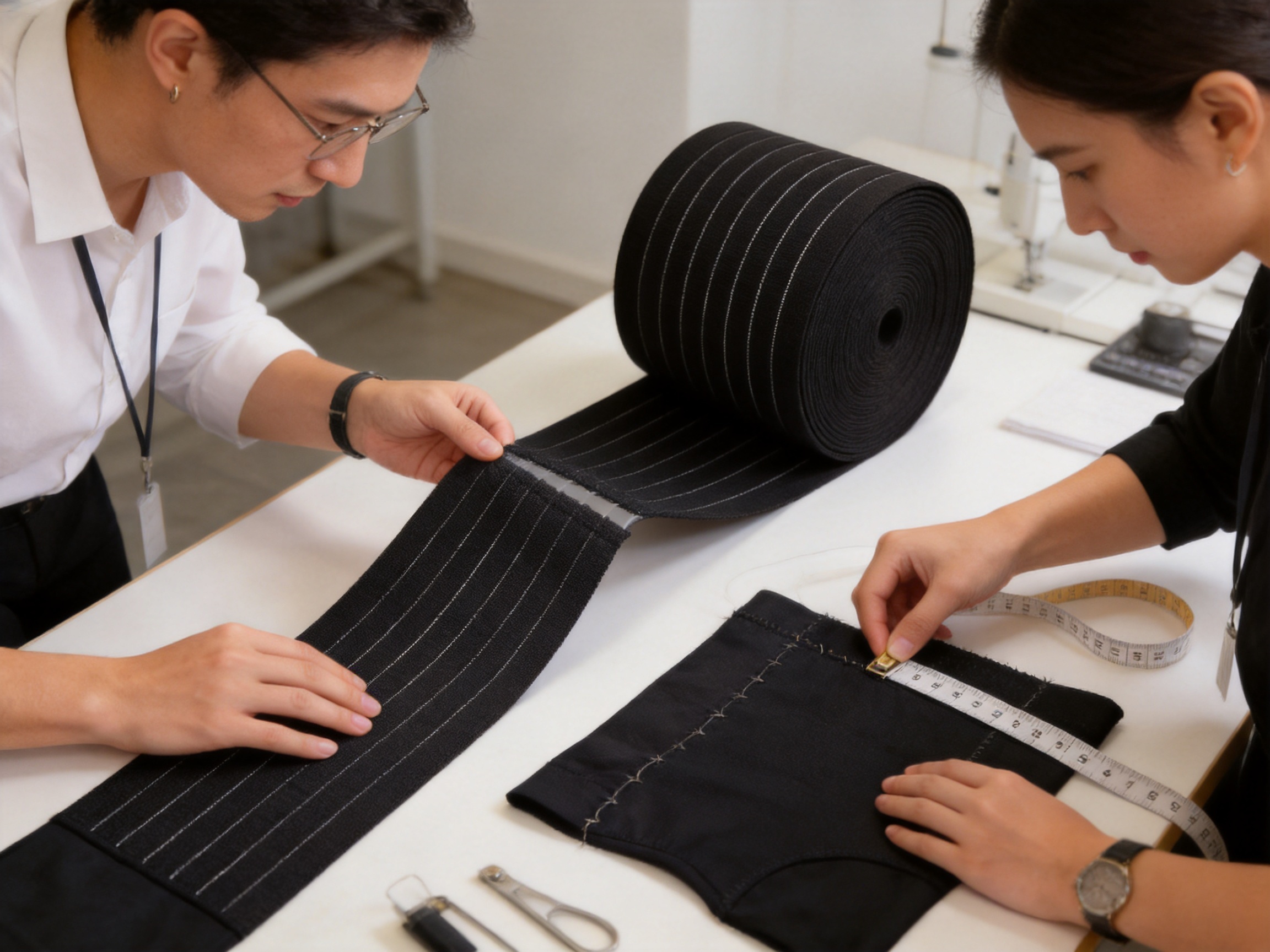
Manufacturers should select needles, threads, stitch patterns, seam allowances, and feeding methods according to the panel’s thickness and stretch. Sample sewing is recommended before mass production because stitch density and seam design can influence the final recovery and comfort of the finished garment. When handled correctly, the panel can support efficient production in both specialized and general sewing facilities.
7.5cm Black Woven Elastic Panels
Applications Across Garment and Textile Industries
Activewear and Sportswear
Activewear must accommodate movement while maintaining its shape and position. A 7.5cm woven elastic panel can be used in waistbands, high-rise sections, support tops, training garments, shorts, leggings, and other performance apparel. Its broad structure helps create a stable fit during running, stretching, cycling, training, and recreational activities.
In sportswear, the panel may work together with moisture-management fabrics, mesh, spacer textiles, hook and loop components, and protective padding. The combination of stretch and support allows designers to create garments that feel secure without depending entirely on rigid reinforcements. The final comfort level will depend on the garment pattern, tension percentage, fabric composition, and body-contact surface.
Underwear and Lingerie
Underwear requires elastic components that can maintain a close fit while remaining comfortable against the body. The broad panel can be used in high-waisted underwear, control garments, supportive briefs, camisoles, and structured lingerie. Its black appearance works well with dark base fabrics and can also be used as a concealed internal component.
For underwear production, manufacturers should evaluate edge comfort, surface softness, stretch recovery, and the interaction between the panel and the skin-contact fabric. A soft lining or fabric cover may be added when the component is intended to sit directly against sensitive skin. The woven construction can provide a useful foundation for designs that need more support than a narrow decorative elastic.
Shapewear and Compression Garments
Shapewear depends on carefully controlled tension. A panel that is too weak may fail to maintain the garment’s intended position, while a panel that is too aggressive may reduce comfort and restrict movement. The 7.5cm format gives designers a broad area for stabilizing waist sections, abdominal panels, hip areas, or garment openings.
When used in shaping products, the panel should be selected according to the required compression level and the construction of the surrounding fabric. Pattern makers should consider how the elastic interacts with stretch mesh, powernet, jersey, laminated fabric, and seam structures. Prototype testing is important to confirm that the finished product meets fit, recovery, and comfort expectations.
Maternity Wear
Maternity garments require flexible support as the body changes throughout pregnancy and after childbirth. A wide woven elastic panel can be incorporated into maternity waistbands, abdominal support garments, adjustable panels, and loungewear. Its ability to stretch and recover can help garments adapt to changing dimensions while maintaining a secure fit.
Comfort is especially important in maternity applications. Designers should evaluate pressure distribution, edge placement, fabric softness, and adjustability. A broad panel may reduce the need for multiple narrow elastic sections, helping to create a smoother support zone. Depending on the product design, the panel can be combined with hook and loop straps, adjustable fasteners, or soft lining materials.
Loungewear and Everyday Garments
Loungewear, pajamas, casual trousers, skirts, and relaxed garments often require elastic waistbands that are comfortable during extended wear. The 7.5cm width can create a more substantial waistband appearance while providing dependable retention. Black panels can be concealed inside a waistband casing or used as a visible design detail.
For everyday garments, the balance between firmness and comfort should be carefully assessed. A panel intended for relaxed clothing may require a different tension specification from one intended for sports protection or shapewear. The ability to customize elasticity gives manufacturers more flexibility when developing products for different markets and consumer preferences.
Medical and Orthopedic Supports
Wide woven elastic panels are also relevant to medical supports, orthopedic braces, abdominal binders, rehabilitation products, and sports protection equipment. In these applications, the elastic component may help maintain contact between the support and the body while allowing controlled movement. It can be used with foam, breathable fabric, hook and loop closures, rigid inserts, and non-elastic reinforcement tapes.
Medical and orthopedic products require close attention to material consistency, cleanliness, traceability, and production control. The panel itself must be evaluated as part of the complete device or garment rather than in isolation. Product developers should consider the intended duration of wear, washing conditions, contact with skin, adjustment method, and required support level.
Industrial and Protective Garments
Industrial garments may use wide elastic panels in waist sections, protective clothing, utility products, workwear, and equipment covers. Durability and dimensional stability are important in these environments because garments may be exposed to frequent movement, repeated laundering, friction, and demanding work conditions.
The black color is suitable for many industrial designs, especially where a practical and low-maintenance appearance is preferred. The panel can be combined with woven webbing, non-elastic reinforcement, reflective materials, protective fabrics, and fastening systems. Its final suitability should be confirmed through application-specific testing.
Why Woven Elastic Can Outperform Ordinary Alternatives
Comparison with Narrow Elastic Bands
Narrow elastic bands are useful for lightweight edges, small openings, undergarment legs, sleeves, and compact sewing areas. However, they may not provide enough width for applications that require broad stabilization. Using several narrow bands to replace one wide panel can increase sewing time, create overlapping seams, and produce uneven tension.
The 7.5cm woven panel provides a single broad support surface. This can simplify cutting and assembly and may create a cleaner appearance in the finished product. It also allows designers to distribute tension across a larger area, which is often desirable in abdominal, waist, maternity, and sports-support applications.
Comparison with Low-Grade Stretch Tape
Low-grade stretch tape may appear economical at the purchasing stage but can create hidden costs if it loses recovery, twists, frays, or varies in width. Inconsistent material can lead to sewing problems, product returns, and additional inspection requirements. A professionally manufactured woven panel is more likely to provide stable specifications and repeatable production results.
Material selection and process control are central to this difference. The manufacturer must monitor yarn quality, weave settings, tension, width, surface condition, and finishing. These controls help reduce variations that could affect garment fit and product performance.
Comparison with Rigid Support Materials
Rigid tapes, plastic strips, and stiff reinforcement materials can offer strong stabilization, but they may restrict movement or create pressure points when used in body-contact garments. Woven elastic provides a more flexible alternative where controlled movement is necessary. It can support a garment while allowing the wearer to bend, sit, walk, or exercise.
This does not mean elastic should replace rigid reinforcement in every product. Instead, it gives designers another option for balancing support and mobility. Elastic panels can also be combined with rigid materials to create hybrid structures in medical, protective, and sports products.
Comparison with Unstable Knitted Elastic
Knitted elastic can offer softness and flexibility, and it is appropriate for many applications. However, woven elastic may be preferred when a firmer hand, greater structural stability, and more controlled dimensional behavior are required. The choice depends on the desired appearance, recovery, stretch direction, thickness, and end-use environment.
The 7.5cm black woven panel is particularly suitable where support and shape retention are priorities. Its construction gives the panel a structured textile character that may be advantageous in waistbands, braces, shaping products, and durable garment components.
Advanced Manufacturing Capabilities
Integrated Textile Production
Jinhu Hengxiang Webbing Co., Ltd. was established in 2005 in Jinhu County, Huai’an City, Jiangsu Province, China. The company specializes in the research, development, production, sale, and service of elastic and non-elastic webbing. Its product experience includes materials for sports protection, orthopedic braces, medical protective equipment, apparel, and other textile applications.
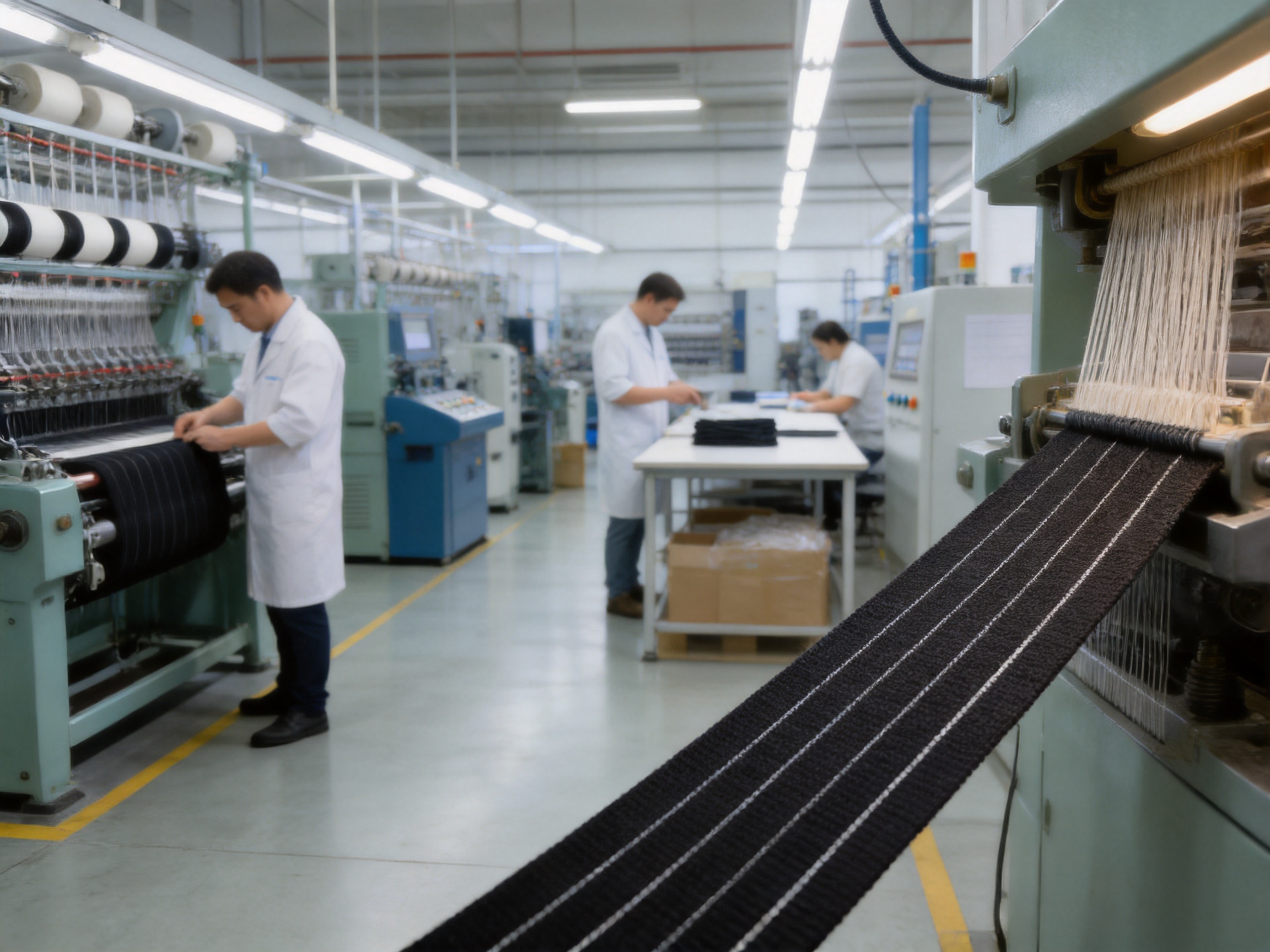
The company has introduced and updated production equipment including warping machines, knitting machines, woven machines, and packaging machines. This equipment supports an integrated production workflow and allows the company to manufacture millions of meters of elastic and non-elastic webbing each month. High production capacity is valuable for customers that require stable supply, repeat orders, and coordinated delivery schedules.
Integrated equipment also helps connect different stages of production. Warping prepares yarns in an organized arrangement for subsequent processing. Weaving equipment creates the structural body of the panel. Finishing and packaging equipment support the preparation of consistent finished rolls or quantities for shipment. When these stages are coordinated under one manufacturing organization, communication and production planning can be more efficient.
Material Sourcing and Yarn Preparation
Product performance begins with raw-material selection. Yarn characteristics influence tensile strength, elasticity, surface feel, color appearance, and resistance to repeated use. Before weaving, the materials must be prepared and arranged with appropriate tension and alignment. Poor preparation can cause irregularities that become visible in the finished panel.
Experienced production teams understand that different applications require different material balances. A panel for a casual waistband may prioritize comfort and moderate recovery, while a sports support may require stronger retention and more robust construction. By evaluating the target use, the manufacturer can guide material and construction decisions during product development.
Warping and Weaving Control
Warping is an important preparation stage in which yarns are arranged for the weaving process. Accurate warping supports uniform width, stable structure, and consistent tension. During weaving, machine settings influence density, interlacing, surface appearance, and dimensional behavior.
For a wide panel, consistency across the entire 7.5cm width is particularly important. Uneven tension from one edge to the other could cause curling, distortion, or inconsistent support. Proper machine setup and regular inspection help maintain a balanced structure throughout the production run.
Production personnel may monitor width, thickness, elasticity, recovery, color, edge condition, and visible defects. These checks can be performed at different stages so that potential problems are identified before large quantities are completed. Preventive control is generally more efficient than discovering defects after packaging or garment assembly.
Finishing and Surface Considerations
Finishing can influence the panel’s hand feel, appearance, handling, and compatibility with sewing. Depending on the specification, finishing may help stabilize the material, improve surface uniformity, or prepare it for storage and shipment. The finish should be appropriate for the intended use and should not interfere with the required elasticity or recovery.
For apparel applications, surface feel may be as important as tensile performance. A panel that supports the garment but feels excessively harsh may not be suitable for direct skin contact. For industrial or concealed applications, structural performance may receive greater emphasis. Custom discussions allow these priorities to be considered together.
Inspection and Quality Control
Strict quality control is applied throughout material sourcing, processing, testing, and packing. This full-process approach is stronger than relying only on a final visual inspection. By controlling multiple stages, the manufacturer can reduce the risk that variations in raw materials or machine conditions will affect the final product.
Typical quality considerations for woven elastic panels include finished width, color consistency, stretch behavior, recovery, surface condition, edge stability, tensile performance, roll appearance, and packaging integrity. Specific inspection items can be agreed upon according to the customer’s technical requirements and application.
Quality control is especially important for medical and sports-support products because variations in elastic behavior may affect fit and function. For apparel brands, consistent quality supports repeatable sizing and a more reliable customer experience. For distributors, stable specifications simplify inventory management and product communication.
Certifications, Compliance, and Responsible Production
Jinhu Hengxiang Webbing Co., Ltd. has obtained Oeko-Tex Standard 100 and ISO 13485 certificates. Oeko-Tex Standard 100 is associated with testing textile products for harmful substances, while ISO 13485 is a quality management standard relevant to medical devices and related production systems. Certification does not eliminate the need for application-specific evaluation, but it demonstrates the company’s commitment to recognized quality and compliance practices.
For customers serving medical, orthopedic, sports, or protective markets, documented systems can provide additional confidence during supplier qualification. Buyers may still request current certificates, test reports, declarations, samples, and technical specifications for their own approval procedures. The appropriate documentation depends on the finished product, destination market, and regulatory classification.
Responsible production also includes material efficiency, equipment maintenance, process control, packaging management, and reduction of avoidable waste. Producing stable material helps reduce rejected goods and unnecessary rework. In addition, a durable panel can contribute to longer product service life when properly designed and used.
Customization and Product Development
Different customers may require different elastic force, recovery, width tolerance, surface texture, thickness, color, or packaging format. The company provides customized webbing with tailored elasticity, texture, and color. This capability is useful for brands and manufacturers whose products require a specific fit or appearance rather than a generic stock component.
Customization normally begins with a clear application brief. The customer should identify the intended garment or product, required width, approximate stretch range, desired recovery, contact position, sewing method, washing conditions, color, order quantity, and performance expectations. Drawings, sample garments, technical specifications, or reference materials can help the manufacturer understand the requirement.
Sampling allows both parties to evaluate the material before mass production. The sample should be sewn into a representative construction rather than tested only as a loose strip. This helps reveal how the panel behaves under real seam tension, body movement, laundering, and repeated extension. Feedback from sampling can be used to adjust the weave, elastic force, surface feel, or finishing.
For large-volume production, an approved sample and written specification can serve as a reference for future orders. Customers should maintain records of the approved width, color, construction, packaging, and inspection requirements. Clear documentation supports consistency when repeat orders are produced months or years later.
Technical Factors for Buyers and Designers
Width and Cutting
The nominal width of the panel is 7.5cm. Buyers should confirm the acceptable width tolerance and determine whether the panel will be sewn as a full-width component or cut into smaller sections. Cutting may affect edge stability, so sample testing is recommended when the product is divided lengthwise or crosswise.
Cutting equipment should be selected according to the panel’s structure and production volume. Clean cutting helps reduce fraying and supports accurate garment assembly. If the panel is cut into sections, the design should account for the behavior of the new edges during sewing and wear.
Stretch and Recovery
Stretch refers to the amount the panel can extend under a specified load, while recovery describes its ability to return toward its original dimensions after stretching. These characteristics should be considered together. A material with high extension but weak recovery may not maintain a garment’s position, while a material with strong recovery but excessive force may feel uncomfortable.
Testing should reflect the intended application. A waistband, a medical abdominal support, and a sports brace may require different testing loads and extension percentages. Customers should communicate the practical function of the product so that the elastic specification can be developed appropriately.
Seam Construction
The final performance of a woven elastic panel is influenced by how it is sewn. Stitch type, thread selection, seam allowance, needle size, stitch density, and machine tension can all affect elasticity. A seam that is too rigid may restrict the panel, while a seam that is too loose may create puckering or instability.
Factories should test several seam constructions during product development. Stretch stitches, zigzag stitches, cover stitches, or specialized elastic-attachment methods may be appropriate depending on the garment. The selected method should maintain the required stretch while resisting seam failure during use and laundering.
Washing and Care
Care performance depends on the elastic yarn, textile fibers, dyes, finishing, sewing construction, and surrounding fabric. Before mass production, customers should evaluate the complete garment or product under the expected washing and drying conditions. Repeated laundering can affect stretch recovery, color, surface feel, and dimensional stability.
Care instructions should be based on actual testing rather than assumptions. If the finished item is intended for medical, sports, or industrial use, testing should reflect the frequency and intensity of cleaning expected in service. Proper care guidance can help preserve the panel’s performance throughout the product’s useful life.
Supply and Service Strengths
A capable webbing supplier provides more than a roll of material. Customers also need responsive communication, accurate production planning, stable quality, practical packaging, and dependable delivery. Jinhu Hengxiang Webbing Co., Ltd. emphasizes customer service, competitive pricing, timely delivery, and reliable quality.
The company serves customers in China and exports to North America, Eastern Europe, the Middle East, South Asia, and other regions. Experience across different markets can help the production team understand varied packaging expectations, communication requirements, product standards, and application needs.
OEM and ODM orders are welcome. OEM cooperation is suitable when a customer has an established specification or product design and requires manufacturing support. ODM cooperation can be useful when a customer wants assistance developing a suitable elastic structure, color, texture, or finished webbing solution.
Production capacity of millions of meters per month can support both regular purchasing and larger programs. Nevertheless, buyers should confirm available capacity, minimum order quantities, lead times, sample schedules, and shipment arrangements before placing an order. Early planning is particularly important for seasonal apparel, medical product launches, and promotional production cycles.
Recommended Evaluation Process
Step One: Define the End Use
Start by identifying where the panel will be used and what function it must perform. State whether it will be used in a waistband, abdominal support, sports brace, maternity garment, underwear product, shapewear design, industrial garment, or another application. Describe whether the panel will contact the skin, be enclosed inside a casing, or be combined with other materials.
Step Two: Establish Performance Requirements
Define the required stretch, recovery, firmness, width, thickness, color, surface feel, and durability. If the product is part of a medical or protective device, include the necessary functional and compliance requirements. If exact technical values are not yet available, provide a representative sample or finished product for evaluation.
Step Three: Request Samples
Sample material should be inspected visually and tested in the intended sewing construction. Check the width, color, edge condition, stretch, recovery, hand feel, and compatibility with the selected fabric. It is useful to compare the sample before and after repeated extension and laundering.
Step Four: Approve the Specification
Once the material meets the application requirements, record the approved specification. Include the product name, width, color, construction, stretch expectations, packaging format, inspection requirements, and any special instructions. A documented specification can reduce misunderstandings during mass production.
Step Five: Confirm Production and Delivery
Before ordering, confirm the production schedule, quantity, packaging, shipping method, payment terms, documentation, and delivery destination. Regular communication is especially important when the product is customized or integrated into a time-sensitive garment program.
Quality and Performance Comparison Table
| Evaluation Factor | 7.5cm Black Woven Elastic Panel | Narrow Elastic Band | Rigid Reinforcement |
|---|---|---|---|
| Coverage | Broad coverage across a 7.5cm support area | Limited coverage along a narrow line | Can provide broad coverage but may add rigidity |
| Flexibility | Controlled stretch with structural stability | Generally flexible, depending on construction | Low flexibility or limited controlled movement |
| Pressure Distribution | Helps distribute tension over a wider area | May concentrate tension in a narrow zone | May create firm pressure points if not shaped correctly |
| Garment Integration | Suitable for waistbands, support zones, panels, and braces | Suitable for edges, openings, and lightweight retention | Suitable for structural reinforcement and stiff support |
| Appearance | Clean, professional black textile appearance | Available in many forms but typically narrower | May be visible or require fabric covering |
| Best Use | Activewear, shapewear, maternity wear, supports, and industrial garments | Small openings, cuffs, hems, and lightweight garments | Applications requiring strong dimensional restriction |
Practical Advantages for Manufacturers
For garment manufacturers, a wide woven elastic panel can simplify the bill of materials. One broad component may replace several narrow strips or a combination of elastic and reinforcement pieces. This can reduce cutting complexity and make the sewing sequence easier to standardize.
The panel can also support product differentiation. A brand may use it to create a high-rise waistband, a visible technical detail, a supportive abdominal section, or a premium internal construction. Because the product is available in black and can be customized, it can serve both standard production and specialized product development.
Consistent material dimensions are valuable in automated and semi-automated production. When the width and stretch behavior remain stable, operators can set machines more confidently and reduce adjustments. Stable webbing can also help pattern makers maintain predictable garment measurements from one production lot to another.
For distributors and sourcing companies, the broad application range makes the product suitable for multiple customer categories. One supplier relationship may support apparel, sports protection, medical supports, and industrial textile programs. This can simplify procurement while giving customers access to a manufacturer with experience across several end-use markets.
Long-Term Value of Reliable Webbing
The cost of an elastic panel should be evaluated in relation to its complete contribution to the finished product. Low initial pricing may not represent good value if the material causes sewing problems, inconsistent sizing, early loss of recovery, or increased returns. Reliable webbing can support smoother production and reduce the risk of quality-related expenses.
Durability also affects the end user’s perception of product quality. A waistband that remains stable, a support that stays in position, or a garment that retains its intended fit can strengthen customer confidence. In competitive apparel and medical-support markets, material performance contributes directly to brand reputation.
The 7.5cm black woven elastic panel is therefore more than a simple stretch strip. It is a functional textile component that contributes to fit, support, appearance, comfort, and manufacturing efficiency. Its value is greatest when the construction is matched carefully to the intended application and integrated through an appropriate sewing process.
Frequently Asked Questions
What is a 7.5cm black woven elastic panel?
It is a wide woven textile component measuring approximately 7.5cm in width and incorporating elastic performance for controlled stretch and recovery. It is designed for garments, supports, braces, and other textile products that need broad, stable elastic coverage.
What products can use this panel?
Common applications include activewear, sportswear, underwear, shapewear, maternity wear, loungewear, waistbands, abdominal garments, orthopedic braces, sports supports, medical protective equipment, and industrial garments.
How is it different from narrow elastic?
The wider format distributes tension across a larger area and can provide more stable support. It may also reduce the need to sew several narrow strips together. Narrow elastic remains useful for small openings, cuffs, hems, and lightweight retention applications.
Can the panel be customized?
Yes. Jinhu Hengxiang Webbing Co., Ltd. provides customized webbing with tailored elasticity, texture, and color. Customers should provide application details, sample requirements, performance expectations, and packaging needs for evaluation.
Is the product suitable for medical applications?
It may be suitable for medical and orthopedic products when selected, tested, and incorporated according to the requirements of the complete device or garment. The company has experience producing webbing for sports supports, orthopedic braces, and medical protective equipment and has obtained ISO 13485 certification.
Is black the only available color?
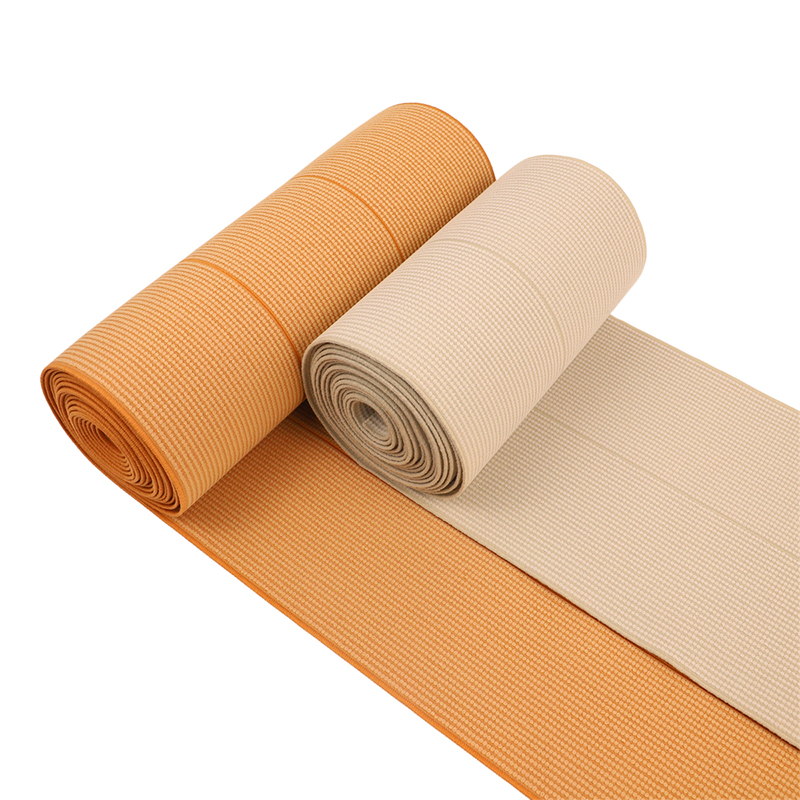
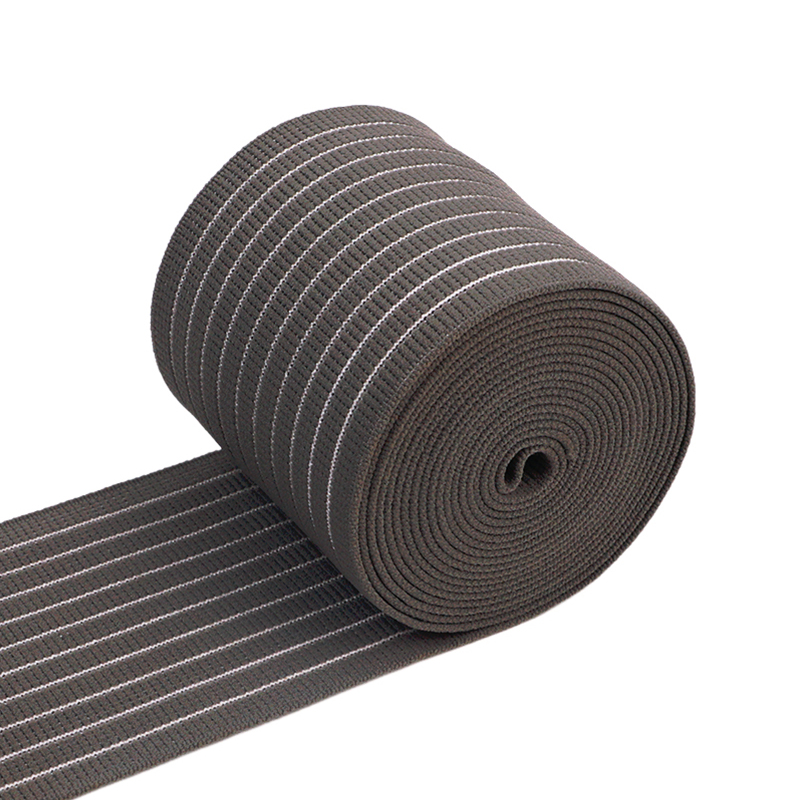
Black is the product color described here and is widely used because it is practical, versatile, and visually professional. Other colors may be available through customized development, subject to material, quantity, and production requirements.
How should buyers test the panel?
Buyers should evaluate width, color, stretch, recovery, surface feel, edge stability, sewing performance, laundering, and compatibility with the final fabric. Testing the panel inside a representative finished construction is more informative than evaluating a loose sample alone.
What sewing method should be used?
The appropriate method depends on the garment design and the panel’s specification. Zigzag stitches, stretch stitches, cover stitches, or specialized elastic-attachment methods may be used. Sampling is recommended to confirm stitch density, seam strength, appearance, and retained elasticity.
Where is the manufacturer located?
Jinhu Hengxiang Webbing Co., Ltd. is located in Gongnong Village, Licheng Town, Jinhu County, Huai’an City, Jiangsu Province, China. The company serves domestic and international markets.
Does the company accept OEM and ODM orders?
Yes. OEM and ODM orders are welcome. The company can support customers with established specifications as well as customers seeking customized elasticity, texture, color, and webbing development.
Conclusion
The 7.5cm black woven elastic panel provides a practical combination of width, support, controlled elasticity, durability, and professional appearance. Its broad structure makes it suitable for applications where narrow elastic is insufficient and rigid reinforcement is too restrictive. Activewear, sportswear, underwear, shapewear, maternity garments, loungewear, medical supports, orthopedic braces, and industrial clothing can all benefit from a carefully specified wide woven elastic component.
Its advantages are supported by the manufacturing capabilities of Jinhu Hengxiang Webbing Co., Ltd., including modern warping, knitting, weaving, and packaging equipment, high monthly production capacity, process-wide quality control, customization services, and experience in both elastic and non-elastic webbing. Oeko-Tex Standard 100 and ISO 13485 certifications further demonstrate the company’s attention to textile safety and structured quality management.
For the best results, buyers should define the end use clearly, request samples, test the material in a representative garment construction, and confirm the final specification before mass production. When matched correctly to the product design, the 7.5cm black woven elastic panel can improve fit stability, manufacturing consistency, comfort, and long-term value.
References
1. Jinhu Hengxiang Webbing Co., Ltd. Product information for 7.5cm Black Woven Elastic Panels.
2. Jinhu Hengxiang Webbing Co., Ltd. Company information, manufacturing capabilities, product categories, and quality management details.
3. International Organization for Standardization. ISO 13485: Medical Devices—Quality Management Systems—Requirements for Regulatory Purposes.
4. Oeko-Tex Association. Standard 100 principles for the testing of textiles for harmful substances.
5. Textile Institute. General principles of woven textile construction, yarn preparation, fabric stability, and textile performance.
6. Apparel manufacturing practice guides covering elastic selection, stretch recovery, garment construction, sewing methods, and quality inspection.