
 en
en
 English
 русский
 Français
 Español
 Português
 Tiếng Việt
Content
- 1 Understanding the Four-Panel Elastic Structure
- 2 One-Side Flat and One-Side Plush Design
- 3 Material Composition and Latex-Free Performance
- 4 Comfort During Extended Wear
- 5 Support for Postoperative and Rehabilitation Applications
- 6 Advantages Over Conventional Elastic Materials
- 7 Comparison of Key Product Characteristics
- 8 Width Selection for Different Product Designs
- 9 Manufacturing Expertise and Production Infrastructure
- 10 Quality Control from Materials to Packing
- 11 Application in Abdominal Binders
- 12 Use in Medical Dressings and Protective Products
- 13 Customization for OEM and ODM Projects
- 14 How the Manufacturing Process Supports Product Consistency
- 15 Benefits for International Buyers
- 16 Product Evaluation and Testing Considerations
- 17 Care, Storage, and Handling
- 18 Why This Material Is a Practical Competitive Choice
- 19 Recommended Product Development Workflow
- 20 Q&A About Four-Panel Elastic with One-Side Plush
- 20.1 What is four-panel elastic with one-side plush?
- 20.2 Which side should contact the skin?
- 20.3 What fibers are used in the material?
- 20.4 Is the material latex-free?
- 20.5 What widths are available?
- 20.6 Can it be used after hernia surgery?
- 20.7 Can it be used after a cesarean section or childbirth?
- 20.8 What makes the flat side useful?
- 20.9 What is the advantage of the plush side?
- 20.10 Can the material be customized?
- 20.11 What types of companies may use this material?
- 20.12 How should buyers evaluate the material?
- 20.13 Does the material itself constitute a medical device?
- 20.14 What certifications does the manufacturer report?
- 20.15 Does the company support OEM and ODM orders?
- 21 Conclusion
- 22 References
- 23 Product: 4 Panels Elastic W 1 Side Plush
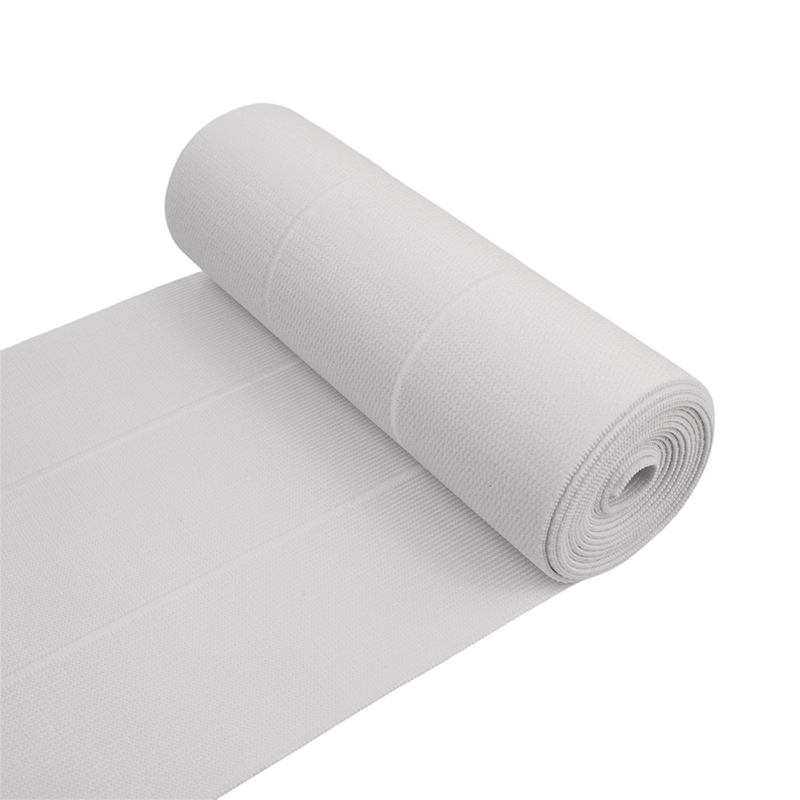
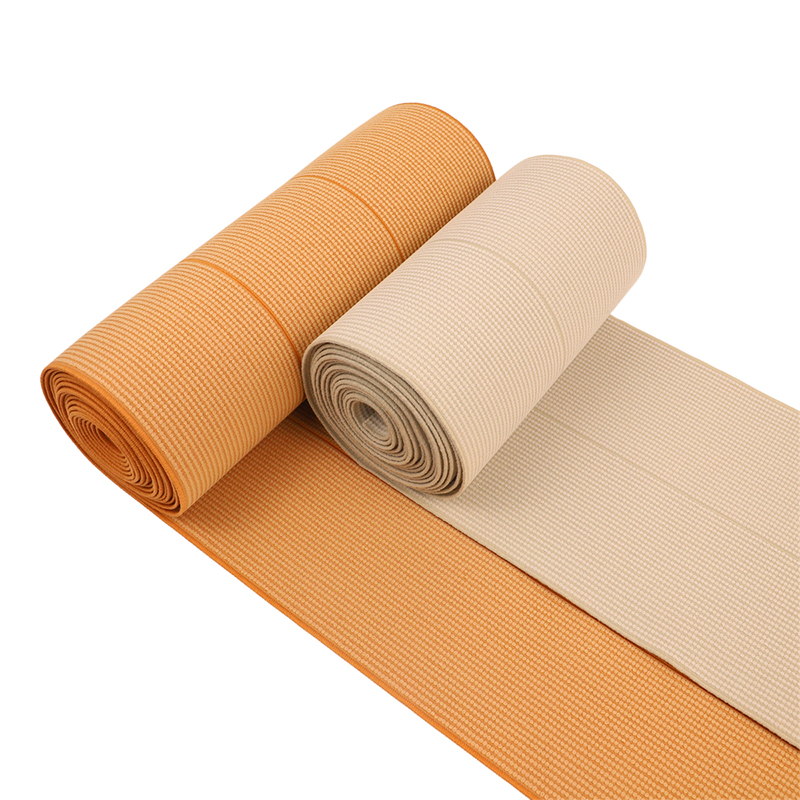
Abdominal support products require materials that combine reliable elasticity, comfortable skin contact, stable positioning, and consistent manufacturing quality. The four-panel elastic with one-side plush is designed to meet these requirements in abdominal binders, postoperative supports, rehabilitation braces, medical dressings, and other functional protective products. Its construction brings together a four-panel elastic structure, a flat surface on one side, and a soft plush surface on the other. This combination allows manufacturers to develop support products that provide controlled compression without sacrificing comfort during extended wear.
Made from a polyester, nylon, and spandex blend, this latex-free elastic material is suitable for applications where flexibility, breathability, and skin sensitivity are important considerations. It is available in 6-inch, 9-inch, and 12-inch widths, giving product designers practical options for different body areas, support levels, and finished-product dimensions. The material can be incorporated into abdominal binders used after hernia surgery, cesarean section, natural childbirth, abdominal injury, and other medical or rehabilitation situations.
This article examines the structure, performance, manufacturing value, application advantages, and customization potential of this four-panel elastic. It also explains how Jinhu Hengxiang Webbing Co., Ltd. supports the production of elastic and non-elastic webbing through professional equipment, quality control, material management, and experience in medical and sports-support applications.
Understanding the Four-Panel Elastic Structure
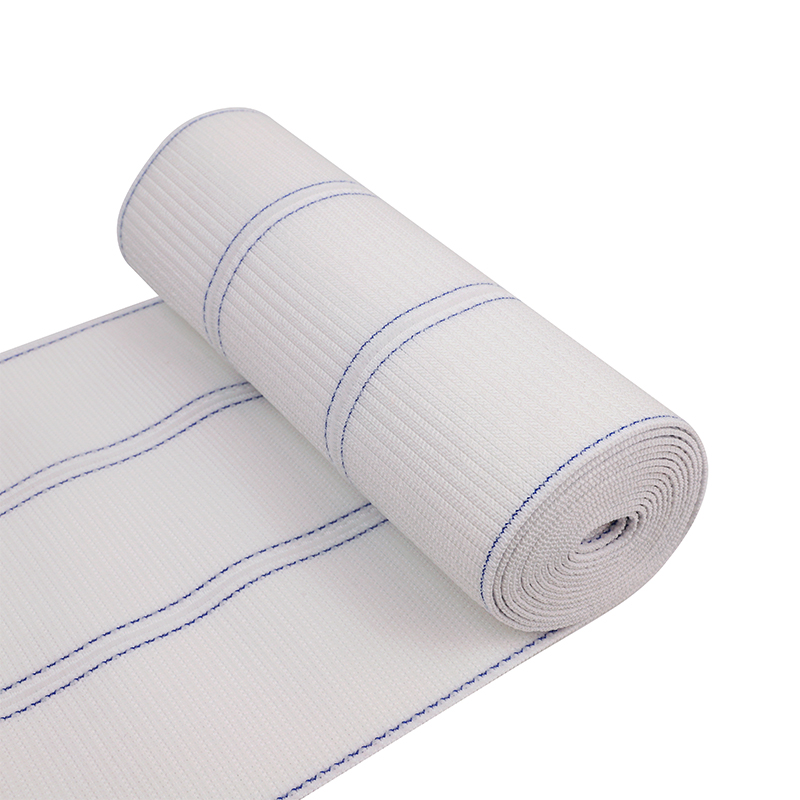
The four-panel construction is one of the defining characteristics of this material. Instead of relying on a single narrow strip, the product is formed as a broad elastic support structure that can provide more even coverage across the abdominal region. This design is especially useful when a finished abdominal binder must distribute pressure over a larger area rather than concentrate support along one narrow line.
A four-panel elastic arrangement can help designers create products with a balanced combination of stretch and recovery. When the material is applied around the body, the panels work together to follow natural movement while maintaining a supportive fit. This is valuable in postoperative and rehabilitation products, where excessive movement may cause discomfort but overly rigid construction can restrict breathing, sitting, walking, or other daily activities.
The structure can also contribute to a more stable finished product. Abdominal binders are frequently exposed to repeated bending, changes in body position, and moderate tension during use. A broad multi-panel construction can help reduce the likelihood that support will be concentrated in a single area. For manufacturers, this makes the material suitable for designs that require both coverage and controlled flexibility.
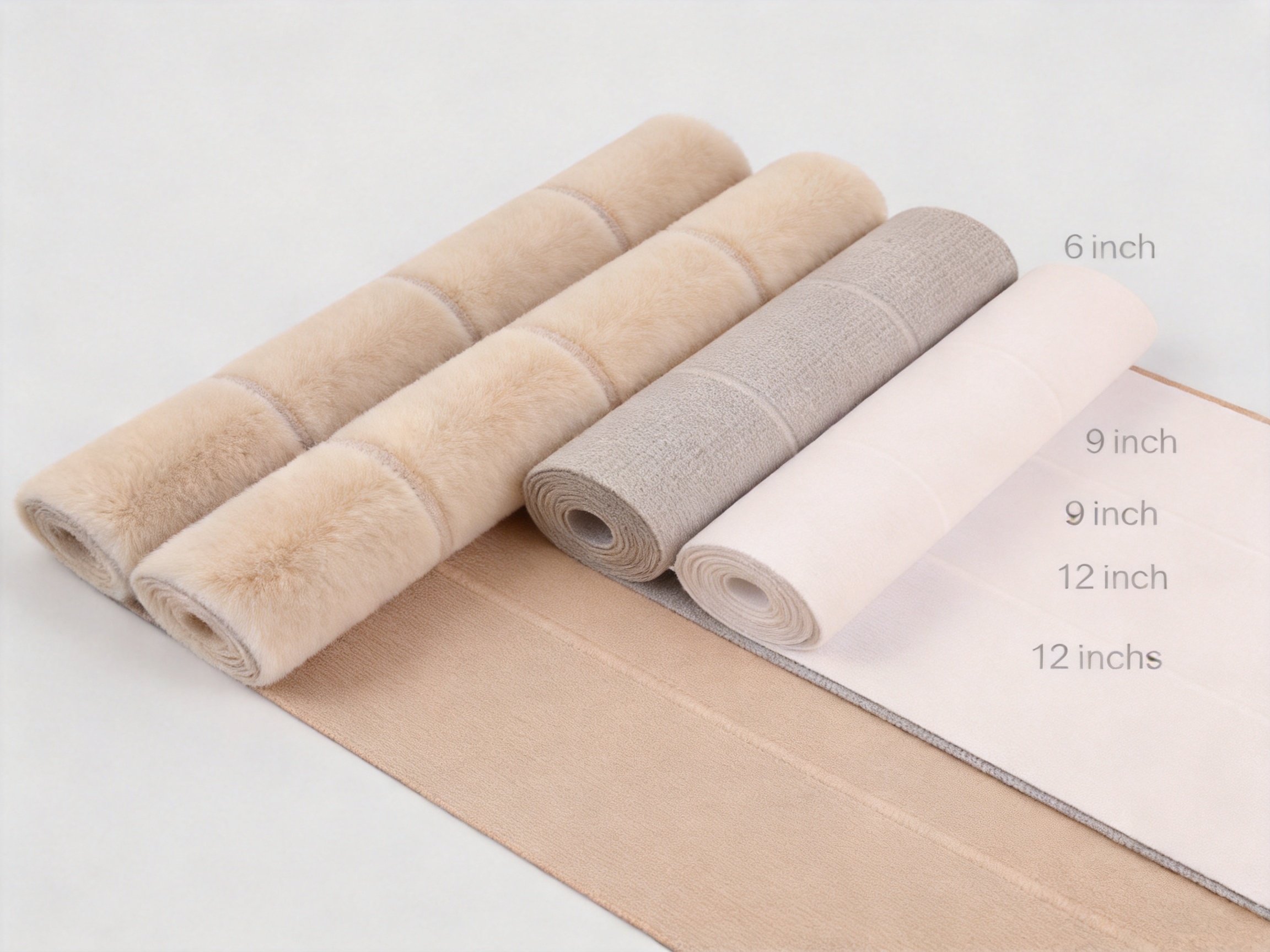
Because the product is available in multiple widths, designers can select a configuration that matches the intended support area. A 6-inch version may suit more compact or targeted support products. A 9-inch version can provide a broader balance between coverage and flexibility. A 12-inch version is appropriate for applications that require extensive abdominal coverage. The final selection should be based on the product pattern, user measurements, desired compression, closure system, and applicable medical-device requirements.
One-Side Flat and One-Side Plush Design
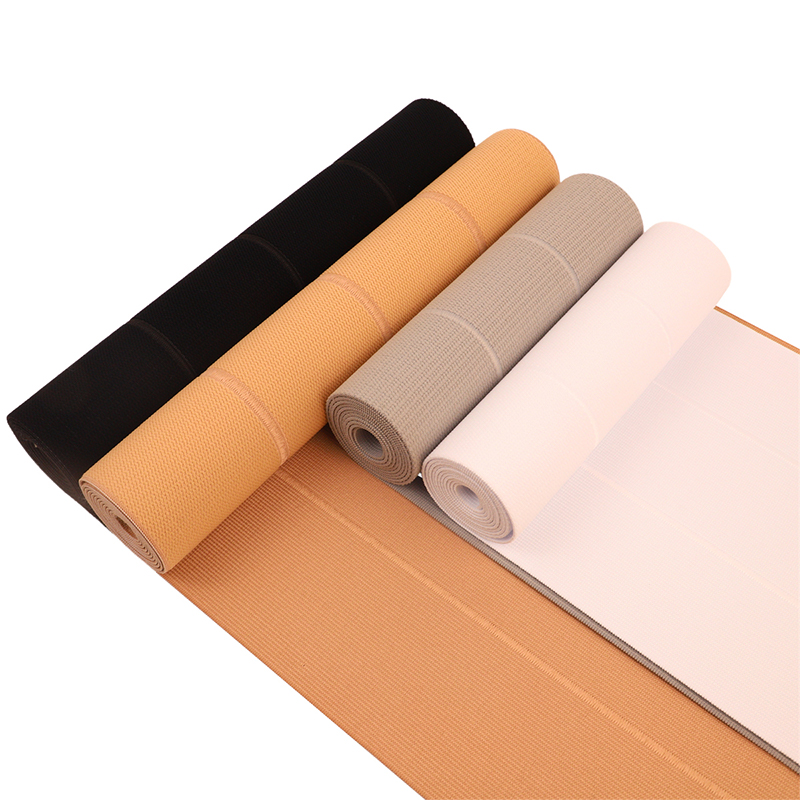
The two-sided surface design provides a practical advantage over ordinary elastic materials with the same surface texture on both sides. One side is flat, while the other side is plush. Each surface can perform a different function within the finished product.
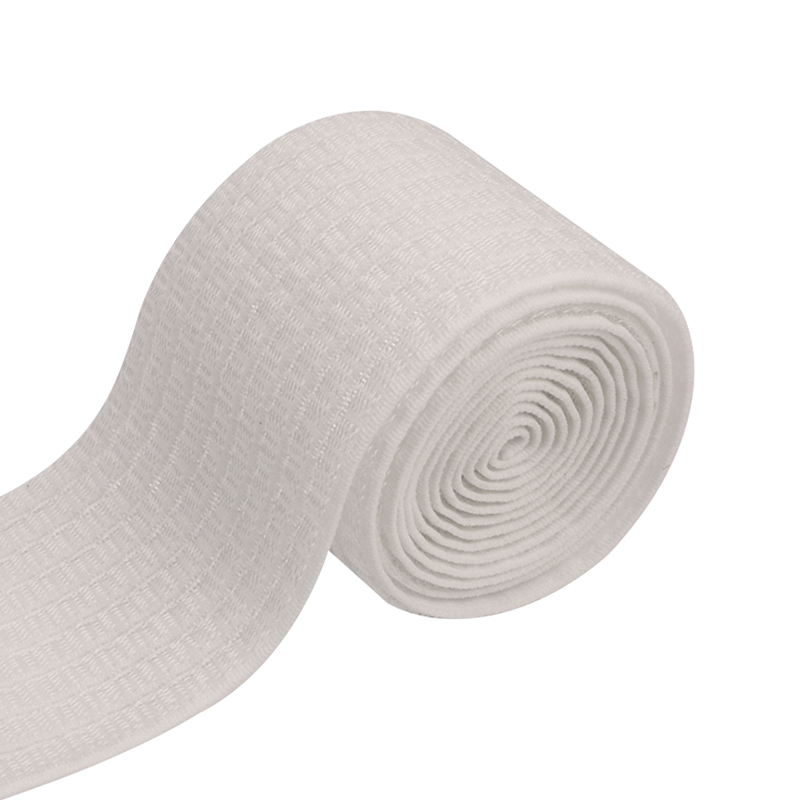
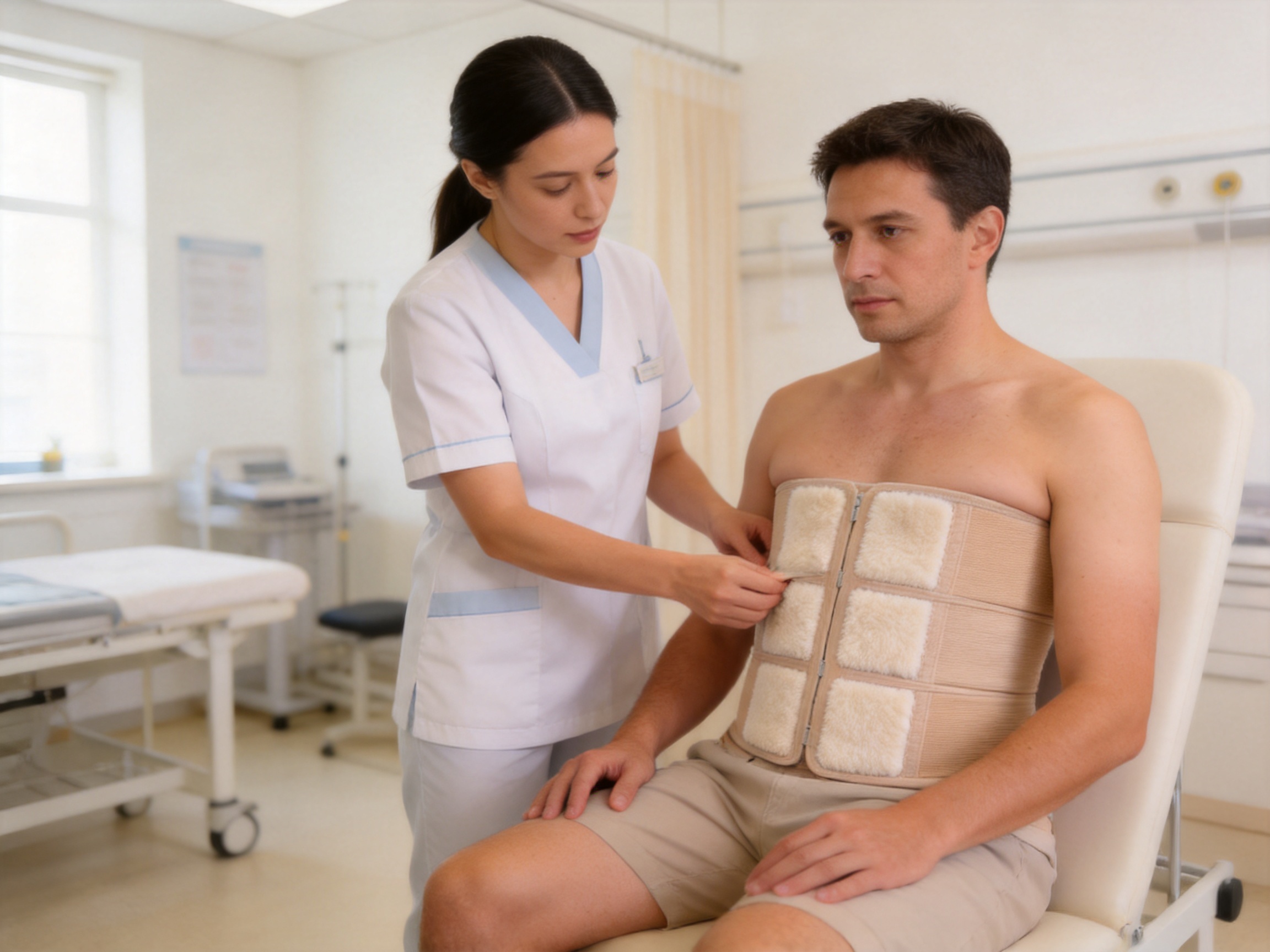
The plush side is soft and skin-friendly. When positioned toward the body, it can reduce the sensation of friction and help improve comfort during prolonged wear. This is particularly important for abdominal binders and rehabilitation supports that may be worn for several hours at a time. A soft contact surface can also be beneficial in applications where the user may have sensitive skin or where the product is used during recovery.
The flat side provides a smoother and more stable surface for construction and fixation. It can support close fitting against adjacent layers, facilitate attachment to other components, and help manufacturers create a more orderly finished appearance. Depending on the design, the flat surface may be used against a lining, closure component, reinforcement layer, or other webbing element.
By combining a plush contact side with a flat functional side, this material reduces the need to assemble separate comfort and fixation layers in certain product designs. This may simplify construction, reduce the number of components, and help manufacturers improve production efficiency. It also allows product engineers to place comfort and stability functions into the material itself rather than relying entirely on additional padding or lining.
The one-side plush structure can offer an advantage over basic elastic webbing that may feel rough, slide against clothing, or create greater friction during movement. It can also offer an advantage over fully plush materials when a smooth, stable surface is needed for sewing, bonding, layering, or closure integration. The result is a more application-oriented material designed for support products rather than a general-purpose elastic strip.
4 Panels Elastic W 1 Side Plush
Material Composition and Latex-Free Performance
The material is manufactured from a polyester, nylon, and spandex blend. Each fiber contributes different characteristics to the overall performance of the elastic.
Polyester is widely used in technical textiles because of its strength, dimensional stability, and resistance to everyday wear. It can help the material maintain its structure during repeated use and laundering, depending on the final product design and care instructions. Polyester also provides a dependable base for color, texture, and webbing construction.
Nylon is valued for its tensile performance, flexibility, and smooth textile behavior. In elastic support materials, nylon can contribute to a comfortable hand feel and help the webbing withstand repeated movement. Its contribution can be especially useful in products that must bend and stretch frequently during walking, sitting, lifting, or changing posture.
Spandex provides the stretch component required for an elastic abdominal support material. It allows the webbing to extend around the body and return toward its original dimensions after the tension is released. Elastic recovery is important because a support product must remain close to the body instead of becoming excessively loose after repeated stretching.
The blend of these fibers creates a balance between stretch, recovery, strength, weight, and comfort. The exact performance of the finished material depends on yarn specifications, weaving or knitting parameters, width, finishing treatment, tension control, and product assembly. For that reason, manufacturers should evaluate the actual production sample rather than relying only on general fiber descriptions.
The material is latex-free, which is an important consideration for medical and rehabilitation products. Some users may be sensitive to natural rubber latex, and latex-free construction can help manufacturers reduce concerns associated with latex exposure. Although the absence of latex does not eliminate every possible skin reaction, it provides an important material option for companies developing products for sensitive users or healthcare environments.
Latex-free elastic is also useful for manufacturers seeking consistent material specifications across product lines. It can be incorporated into abdominal binders, orthopedic supports, sports braces, compression accessories, and rehabilitation products where controlled stretch is required without using natural rubber latex.
Comfort During Extended Wear
Comfort is not a secondary feature in an abdominal binder. If a support product causes excessive heat, pressure, rubbing, or movement against the skin, users may reduce wear time or adjust the product incorrectly. These issues can weaken the practical value of an otherwise supportive device.
The one-side plush surface is designed to create a softer contact area. Its texture can help reduce the harsh feeling sometimes associated with flat, dense elastic materials. When the binder moves slightly with the body, the plush surface may help moderate direct rubbing against the skin. This can be valuable after surgery or injury, when the user may be more sensitive to pressure and friction.
The material is also described as breathable and lightweight. These features can support more comfortable use in products intended for daily wear. A lightweight elastic does not place unnecessary bulk around the waist, and a breathable textile structure may help manage the warm, enclosed environment that can develop beneath an abdominal binder.
Comfort also depends on correct sizing, garment pattern, closure tension, seam placement, washing instructions, and the condition of the wearer’s skin. The material can contribute to a comfortable product, but it should be combined with appropriate product engineering and user instructions. Manufacturers should conduct wear trials using representative body sizes and realistic activity conditions.
For product developers, the balance between support and comfort is one of the main reasons to consider a four-panel construction. The material can provide broad abdominal coverage while allowing controlled stretch. This makes it a practical alternative to rigid supports that may restrict motion or narrow bands that may concentrate pressure in one area.
Support for Postoperative and Rehabilitation Applications
Abdominal binders are commonly developed for use during recovery after abdominal procedures, including hernia surgery, cesarean section, natural childbirth, and abdominal injury. In these situations, the binder may be designed to provide gentle external support, help stabilize the abdominal area, and improve the user’s sense of security during movement.
The four-panel elastic can help manufacturers create support products that adapt to changing body positions. A user may need to stand, sit, walk, rest, or perform light daily activities while wearing the product. The elastic construction can accommodate these movements more readily than a completely rigid material, while the broad width can help maintain coverage.
After hernia surgery, a support product may be designed to help stabilize the area surrounding the surgical site. After cesarean section or childbirth, the user may require a product that offers abdominal support while remaining comfortable against sensitive skin. Following an abdominal injury, a support product may help reduce unwanted movement and provide a feeling of controlled compression. These applications must always be guided by medical advice and the requirements of the healthcare professional.
The material can also be used in rehabilitation braces and medical dressings. In these products, the elastic may function as a support section, adjustable wrap, reinforcement panel, or connection area. The flat side can facilitate attachment to other materials, while the plush side can face inward to improve contact comfort.
It is important to distinguish between a material component and a finished medical device. The elastic itself is a textile input. The safety, performance, labeling, and regulatory status of the final product depend on the complete design, manufacturing process, intended use, testing, and market requirements. Manufacturers should validate the finished product through appropriate strength, stretch, recovery, skin-contact, durability, and usability assessments.
Advantages Over Conventional Elastic Materials
Many elastic materials are available for support-product manufacturing, but they do not all provide the same combination of width, surface design, comfort, and construction flexibility. The four-panel elastic with one-side plush offers several potential advantages over conventional single-surface elastic.
First, the broad four-panel structure can provide more uniform coverage than a narrow elastic strip. A narrow strip may be useful for small reinforcement areas, but it may not distribute support effectively across a larger abdominal region. The four-panel design is better suited to binders and products that require broader contact.
Second, the one-side plush construction adds a dedicated comfort surface. Conventional elastic with two flat sides may offer reliable stretch but can create a less comfortable skin-contact experience. By contrast, the plush side can be positioned toward the body to help reduce friction and pressure sensations.
Third, the flat outer side supports easier integration with other product components. A manufacturer can use the smooth side for stitching, layering, closure attachment, or contact with a lining. This two-sided functionality can reduce the need for additional material treatments or separate comfort layers.
Fourth, the latex-free fiber blend provides a material choice for products intended for users who may be concerned about natural rubber latex. This can expand the design possibilities for medical, rehabilitation, and sports-support products.
Fifth, the availability of 6-inch, 9-inch, and 12-inch widths supports greater product customization. Instead of forcing different product sizes into a single standard width, manufacturers can select a size that better matches the intended body area and support function.
Finally, the material is manufactured by a company with experience in both elastic and non-elastic webbing. This broader manufacturing background can be valuable for customers who need coordinated materials, matching colors, customized elasticity, or different webbing structures across one product family.
Comparison of Key Product Characteristics
The following table summarizes how the principal design features may support finished-product development. Actual performance should be confirmed through technical samples and application-specific testing.
| Product characteristic | Design contribution | Potential application value |
|---|---|---|
| Four-panel elastic construction | Broad and balanced stretch coverage | Abdominal binders, rehabilitation braces, and support panels |
| One-side plush surface | Soft, skin-friendly contact area | Improved comfort during extended wear |
| One-side flat surface | Smoother side for fixation and close fitting | Layering, sewing, closure integration, and stable assembly |
| Polyester, nylon, and spandex blend | Combination of strength, flexibility, and recovery | Products requiring repeated stretching and movement |
| Latex-free composition | Alternative to natural rubber latex materials | Medical and sensitive-skin product development |
| 6-inch width | More compact coverage | Targeted support and smaller product patterns |
| 9-inch width | Medium coverage and flexibility | General abdominal support designs |
| 12-inch width | Extended abdominal coverage | Broader binders and larger support areas |
Width Selection for Different Product Designs
Width selection affects the appearance, support level, flexibility, and assembly method of the finished product. The 6-inch, 9-inch, and 12-inch options allow manufacturers to develop different configurations without changing the fundamental material concept.
A 6-inch width may be suitable when the product requires targeted abdominal stabilization or when the finished binder must remain compact beneath clothing. It may also be appropriate for smaller body areas, narrow rehabilitation braces, or designs that use multiple bands placed at different positions.
A 9-inch width provides a middle option. It can offer a useful balance between coverage and mobility, making it suitable for many general abdominal binder patterns. This width may be selected when the product must support the midsection without creating excessive bulk or extending too far across the torso.
A 12-inch width is designed for applications that need more extensive coverage. It can help cover a larger abdominal region and may be selected for broader postoperative binders or products designed for greater stabilization. A wider material may also reduce the need to combine several separate strips, potentially simplifying assembly.
The correct width depends on the intended user, product size range, desired compression, closure position, and medical or performance requirements. Manufacturers should assess the width together with the finished product pattern rather than treating it as an isolated specification.
Manufacturing Expertise and Production Infrastructure
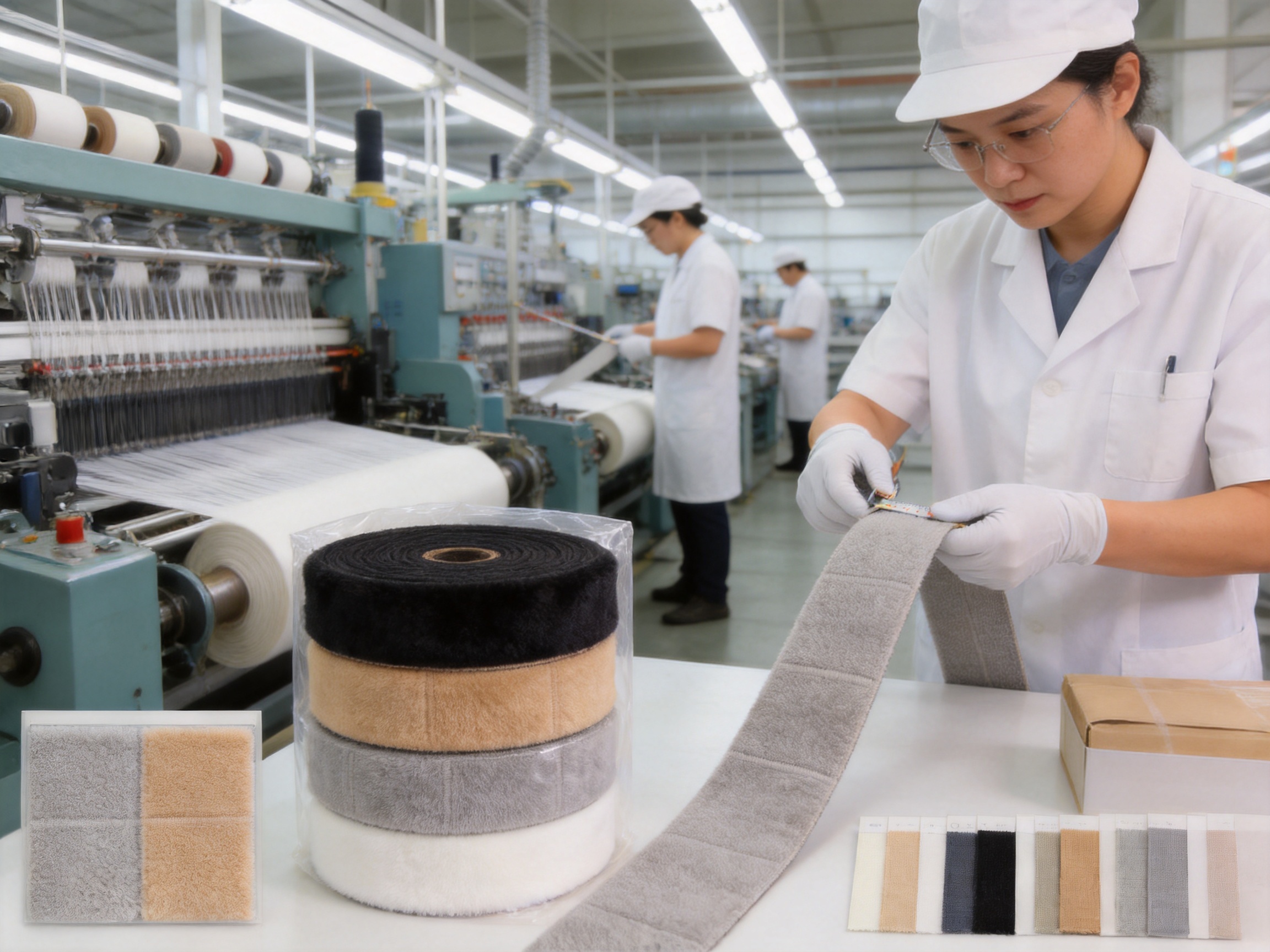
Jinhu Hengxiang Webbing Co., Ltd. was established in 2005 and is located in Jinhu County, Huai’an City, Jiangsu Province, China. The company specializes in the research, development, production, sale, and service of elastic and non-elastic webbing. Its product focus includes materials for sports supports, orthopedic braces, medical protective equipment, and related functional products.
The company has introduced and updated production equipment including warping machines, knitting machines, woven machines, and packaging machines. These production resources support different webbing structures and allow the company to manage multiple stages of manufacturing. For a specialized product such as four-panel elastic with one-side plush, coordinated control of yarn preparation, fabric formation, surface treatment, inspection, and packaging is important.
Warping equipment prepares yarns in an organized and controlled arrangement before subsequent textile processing. Accurate yarn preparation can influence the regularity, tension, and stability of the finished webbing. Knitting machines can support elastic textile constructions with suitable flexibility and surface characteristics, while woven machines provide another production route for webbing structures that require controlled stability and dimensional performance.
Packaging equipment also plays an important role. Medical and support-product manufacturers need webbing to arrive clean, organized, protected, and easy to identify. Proper packaging can reduce damage during storage and transportation while helping customers manage rolls, lots, colors, widths, and specifications in their own production facilities.
The company reports a production capacity of millions of meters of elastic and non-elastic webbing each month. This capacity can support both regular production programs and larger OEM or ODM projects. Capacity alone does not determine suitability, so customers should also review sampling procedures, quality documentation, lead times, production planning, and communication processes.
Quality Control from Materials to Packing
Consistent webbing quality begins with material selection. Polyester, nylon, and spandex yarns must be evaluated according to the required specification, including count, strength, elasticity, color, surface, and compatibility with the intended process. Proper incoming-material control helps reduce variation before production begins.
During processing, machine settings and production conditions influence width, stretch, recovery, surface texture, edge appearance, and dimensional stability. Regular monitoring can help identify problems such as uneven tension, irregular plush formation, inconsistent width, loose edges, or abnormal color. These controls are particularly important for medical-support products, where a small variation may affect the fit or comfort of the finished item.
Inspection should continue after the webbing has been produced. Depending on the customer’s requirements, checks may include visual inspection, width measurement, stretch testing, recovery testing, tensile testing, color evaluation, surface assessment, and roll-length verification. Finished-product manufacturers may also perform sewing trials and wear evaluations to confirm that the material behaves as expected in the complete design.
Packaging inspection is another part of quality management. Rolls should be protected from contamination, moisture, crushing, and other forms of handling damage. Labels should clearly identify the product, size, color, lot, quantity, and other information required by the customer. Clear identification is useful for production scheduling and traceability.
Hengxiang maintains quality control throughout material sourcing, processing, testing, and packing. The company has obtained Oeko-Tex Standard 100 and ISO 13485 certificates. Oeko-Tex Standard 100 is associated with testing textiles for harmful substances under the applicable certification requirements. ISO 13485 is a quality management standard specifically associated with medical devices and related organizations. Customers should confirm the scope and validity of certificates for their intended purchase and market.
Quality certifications do not replace product-specific validation, but they can demonstrate that the supplier has established documented systems and procedures. For buyers, this may provide a stronger basis for supplier evaluation than relying only on product photographs or general claims.
Application in Abdominal Binders
Abdominal binders are usually designed as wraparound products that apply controlled support around the torso. The four-panel elastic can serve as the primary support material or as an important structural section within a larger assembly. Depending on the design, the material may be combined with hook-and-loop closures, reinforced edges, labels, lining fabrics, padding, or additional elastic sections.
The plush side can be positioned inward for a softer skin-contact experience. The flat side can face outward or be used at the interface with the closure and reinforcement components. This orientation should be determined through prototype testing because the best arrangement may vary according to the pattern, closure method, and desired level of friction.
A properly designed binder should provide support without creating excessive pressure, difficulty breathing, skin damage, or restricted movement. The elastic material should be selected according to the intended compression and the user’s body dimensions. Too much tension may create discomfort, while insufficient tension may reduce the product’s stabilizing function.
The material may also help manufacturers streamline product construction. A broad elastic panel with an integrated plush surface can reduce the need for a separate inner comfort layer in some designs. Fewer layers may reduce sewing time, material usage, and finished-product thickness. However, the decision should be based on tested comfort and durability rather than cost alone.
Use in Medical Dressings and Protective Products
In medical dressing systems, elastic webbing may be used to hold a dressing or support component in position. The soft side can be useful when the material is near the body, while the flat side can support connection to other textile parts. The webbing can provide adjustable tension without the rigidity of a fixed band.
In functional protective products, the four-panel elastic can serve as a stabilizing section around the abdomen or lower torso. It may be integrated into rehabilitation garments, protective wraps, postoperative supports, and products intended to assist controlled movement. The wide format can help create a more secure interface between the product and the wearer.
For sports-support products, the material may be used where athletes require a combination of movement, comfort, and abdominal or lower-back support. The breathable and lightweight characteristics can be valuable in applications where the product is worn during physical activity. Sports products require their own testing because sweat, repeated high-intensity movement, and frequent laundering can place additional demands on the material.
Manufacturers should define the purpose of the finished product clearly. A support material should not be marketed as providing a medical benefit unless the finished product has been properly designed, tested, documented, and approved according to the applicable regulations and claims requirements.
Customization for OEM and ODM Projects
Medical and sports-support manufacturers often need materials that match a specific product design. Standard stock webbing may not provide the required width, elasticity, texture, color, or surface arrangement. Hengxiang welcomes OEM and ODM orders and can provide customized webbing with tailored elasticity, texture, and color.
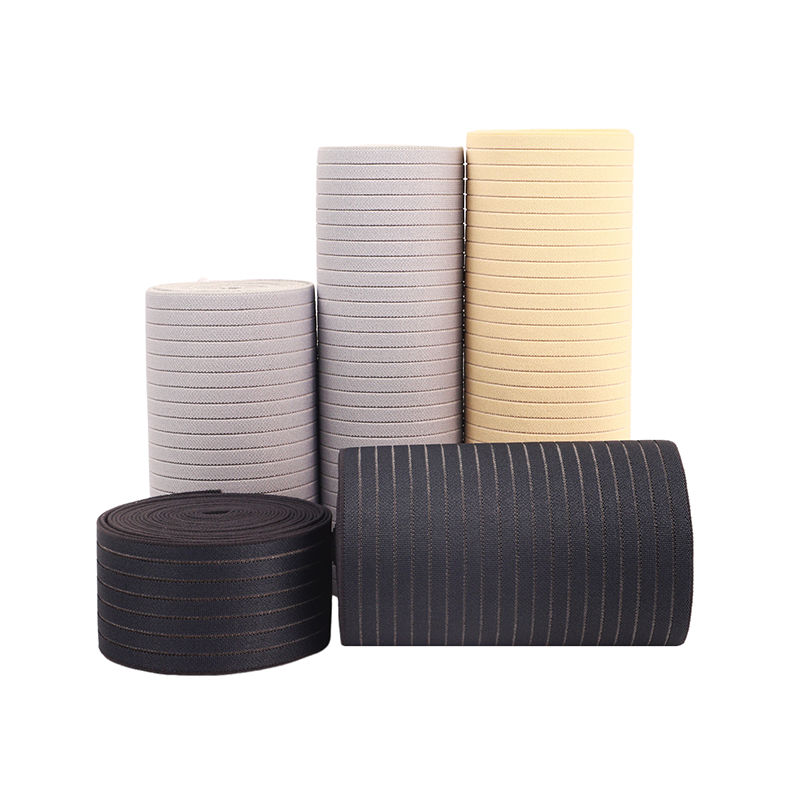
Customization may include adjustments to width, color, stretch behavior, surface feel, edge construction, roll length, packaging, and labeling. The available 6-inch, 9-inch, and 12-inch widths provide a useful starting point, while application-specific development can help refine the material for a particular binder or brace.
For an efficient customization project, buyers should provide detailed technical information. Useful inputs include the intended finished product, target users, body-size range, desired compression, closure method, contact-side orientation, washing conditions, color requirements, order volume, and applicable testing standards. A physical sample of the existing product or a technical drawing can also help clarify requirements.
Sampling is an essential stage. A customer should evaluate the material in the actual product pattern rather than only as a loose roll. Important observations include whether the material stretches evenly, returns to shape, lies flat, feels comfortable against the skin, works with the closure, and maintains its appearance after repeated use.
Once the sample is approved, production specifications should be documented. A clear specification may include fiber composition, width tolerance, stretch range, recovery expectation, color reference, surface description, roll length, packaging method, inspection criteria, and labeling requirements. Documented specifications help reduce misunderstandings during repeat orders.
How the Manufacturing Process Supports Product Consistency
A reliable manufacturing process is built around repeatability. For elastic webbing, repeatability means that different production lots should remain as similar as possible in width, stretch, recovery, surface texture, color, and handling behavior. This is particularly important when a finished medical or sports-support product is sold in multiple sizes or produced over a long period.
Production begins with yarn and material planning. The manufacturer must select suitable fibers and prepare them according to the required construction. Tension management is important because elastic materials can respond significantly to changes in yarn tension, machine speed, temperature, and finishing conditions.
During webbing formation, the manufacturer controls the relationship between the elastic yarns and structural yarns. This affects how the material extends under load and how it returns after tension is released. The plush side also requires controlled surface formation so that the texture remains sufficiently soft and consistent without damaging the underlying structure.
After formation, finishing and inspection help stabilize the material and prepare it for delivery. The manufacturer may review the webbing for defects, trim or organize the rolls, and prepare the product according to the customer’s packaging requirements. A systematic process reduces the risk that a customer will receive mixed specifications within one shipment.
Hengxiang’s experience with warping, knitting, weaving, testing, and packaging provides an integrated foundation for webbing production. Its focus on sports supports and orthopedic braces also gives the company familiarity with products that require controlled elasticity, repeatable dimensions, comfortable surfaces, and dependable support.
Benefits for International Buyers
International buyers often evaluate more than the product itself. They also consider supplier communication, technical support, production capacity, quality systems, export experience, delivery reliability, and the ability to support future development. Hengxiang exports products to North America, Eastern Europe, the Middle East, South Asia, and other regions.
Export experience can help a manufacturer understand the practical requirements of overseas orders, including documentation, packaging, shipping coordination, product identification, and communication across different time zones and business cultures. Customers should still confirm specific shipping terms and documentation requirements for each project.
The company’s location in Jiangsu Province provides access to established manufacturing and logistics networks. Its long-term operation since 2005 indicates experience in managing production relationships and customer requirements over an extended period. The company’s stated focus on quality, innovation, and sustainability also aligns with the expectations of customers seeking long-term supply partners.
Competitive pricing is another stated advantage, but price should be evaluated together with material consistency, quality control, service, lead time, and total production cost. A lower unit price may not be beneficial if inconsistent elasticity causes sewing problems, product returns, or rework. A stable material that performs consistently can provide greater value over the complete production cycle.
Product Evaluation and Testing Considerations
Before adopting the four-panel elastic in a commercial product, manufacturers should establish a testing plan. The plan should reflect the intended use and applicable standards. At minimum, the material should be reviewed for width, appearance, stretch, recovery, tensile strength, surface comfort, color stability, and compatibility with the assembly process.
Stretch testing can help determine how far the material extends under a specified load. Recovery testing can show how closely it returns toward its original dimensions after stretching. These properties are important for a binder because the product must remain supportive after repeated movement and adjustment.
Seam testing is also important. The material should be sewn using the proposed needle, thread, stitch type, seam allowance, and machine settings. Excessive needle damage, seam slippage, edge curling, or thread breakage may require adjustments to the production method.
Wear testing should use representative users or controlled test conditions. Evaluators can consider comfort, heat, movement, pressure, slippage, skin contact, and ease of adjustment. The material should also be assessed after repeated cycles of use, cleaning, drying, and storage when those conditions are relevant to the finished product.
For products intended for medical applications, buyers should also evaluate biocompatibility and skin-contact requirements according to the target market. The latex-free composition is useful, but it does not automatically establish compliance with every applicable medical-device requirement. Regulatory evaluation must consider the complete finished product and its intended use.
Care, Storage, and Handling
Elastic materials should be stored in a clean, dry location away from direct sunlight, excessive heat, sharp objects, and chemicals that may affect textile fibers or elastic recovery. Rolls should be protected from crushing and should not be stored under unnecessary compression for long periods.
Finished-product care instructions should be developed through testing. Washing temperature, detergent type, drying method, and exposure to disinfectants can affect the appearance and performance of elastic materials. A product designed for repeated laundering should be tested under realistic care cycles before instructions are finalized.
During manufacturing, operators should avoid dragging the webbing across rough surfaces or allowing it to contact contaminants. Proper roll handling can help preserve the plush surface and reduce edge damage. Clear lot identification supports traceability if a quality question arises later.
Because elastic performance may change with age, storage conditions should be considered in product planning. Buyers may request recommended storage periods, packaging details, and quality inspection procedures from the supplier. These practices support better inventory control and help maintain consistent production performance.
Why This Material Is a Practical Competitive Choice
The four-panel elastic with one-side plush competes effectively by combining several features in one material. Its value does not depend on a single characteristic. Instead, it comes from the interaction between broad support coverage, controlled elasticity, a soft contact surface, a flat functional surface, latex-free composition, and multiple width options.
Compared with narrow elastic bands, it can provide greater coverage and a more balanced distribution of support. Compared with two-sided flat elastic, it can offer a more comfortable contact surface. Compared with fully plush material, it can provide a smoother side for fixation and assembly. Compared with latex-containing products, it offers a latex-free alternative for appropriate applications.
These advantages can help product manufacturers develop thinner, more comfortable, and more functional abdominal binders. They may also reduce the number of separate components required in some designs. This can support production efficiency while giving designers more control over the relationship between comfort and support.
The material is especially competitive when supplied by a manufacturer capable of customization and stable volume production. A supplier that can adjust elasticity, texture, color, and packaging may help customers avoid the limitations of standard catalog materials. OEM and ODM support can also shorten the path from concept to production when technical communication is efficient.
Recommended Product Development Workflow
A structured workflow can help buyers achieve better results when developing a product with this elastic material.
Define the Intended Application
Begin by identifying whether the finished product is intended for postoperative support, rehabilitation, sports protection, medical dressing fixation, or another use. The intended purpose affects the required stretch, width, comfort, closure, testing, and labeling.
Select the Initial Width
Review the 6-inch, 9-inch, and 12-inch options in relation to the product pattern. Consider body coverage, product bulk, movement, overlap, and closure location. A sample in more than one width may be useful during early development.
Confirm Surface Orientation
Decide whether the plush side will face the body, a lining, or another product layer. Confirm that the flat side works with the planned attachment and assembly method. Surface orientation should be verified through physical prototypes.
Conduct Prototype Testing
Make prototypes in representative sizes and test them during realistic movement. Evaluate comfort, stability, pressure, breathability, slippage, and appearance. Test the closure system together with the elastic because the two components influence the final fit.
Establish Technical Specifications
After prototype approval, record the material composition, width, color, stretch requirements, recovery requirements, surface characteristics, roll length, packaging, and inspection criteria. This documentation should be used for quotation, sample approval, and repeat production.
Validate the Finished Product
Complete the required performance, durability, skin-contact, care, and regulatory evaluations for the finished product. The webbing should be considered as one part of a complete support system.
Plan Repeat Production
Before placing regular orders, confirm minimum order quantities, production lead times, delivery arrangements, quality documents, lot identification, and procedures for handling changes. A clear production plan helps protect supply continuity.
Q&A About Four-Panel Elastic with One-Side Plush
What is four-panel elastic with one-side plush?
It is a broad elastic webbing material designed with a four-panel construction, one flat side, and one soft plush side. It is commonly used in abdominal binders, rehabilitation braces, medical dressings, and functional support products.
Which side should contact the skin?
The plush side is generally the preferred skin-contact side because it is soft and designed to reduce friction. The final orientation should be confirmed through prototype testing and the requirements of the finished product.
What fibers are used in the material?
The material is made from a polyester, nylon, and spandex blend. Polyester and nylon contribute structural strength and textile durability, while spandex provides stretch and recovery.
Is the material latex-free?
Yes. The product is described as latex-free. This makes it a useful material option for manufacturers developing products where natural rubber latex is not desired. The complete finished product should still be evaluated for applicable skin-contact and regulatory requirements.
What widths are available?
The listed width options are 6 inches, 9 inches, and 12 inches. These choices support different abdominal coverage requirements and product designs.
Can it be used after hernia surgery?
It can be used as a component in abdominal binders designed for postoperative support after hernia surgery. The finished product should be designed and labeled appropriately, and users should follow the advice of their healthcare professionals.
Can it be used after a cesarean section or childbirth?
It can be incorporated into support products intended for recovery after cesarean section or natural childbirth. Product comfort, pressure, sizing, and medical suitability should be evaluated carefully for these applications.
What makes the flat side useful?
The flat side provides a smoother surface for fixation, layering, close fitting, and attachment to other components. It can help manufacturers achieve a more stable and orderly finished-product construction.
What is the advantage of the plush side?
The plush side provides a softer contact surface that may help reduce friction and pressure sensations during wear. It is particularly useful for products intended to remain against the skin for extended periods.
Can the material be customized?
Customization may be available for elasticity, texture, color, width, packaging, and other project requirements. Buyers should provide technical specifications and request samples before confirming mass production.
What types of companies may use this material?
Potential users include manufacturers of abdominal binders, orthopedic braces, rehabilitation supports, medical dressings, sports-support products, protective garments, and other functional textile products.
How should buyers evaluate the material?
Buyers should test the webbing in the actual product design. Important evaluations include width, stretch, recovery, tensile strength, surface comfort, sewing performance, closure compatibility, laundering durability, and finished-product stability.
Does the material itself constitute a medical device?
No. It is a textile component. The regulatory status and medical performance of the finished product depend on the complete design, intended use, manufacturing process, testing, claims, and requirements of the target market.
What certifications does the manufacturer report?
Jinhu Hengxiang Webbing Co., Ltd. reports Oeko-Tex Standard 100 and ISO 13485 certificates. Buyers should request current documentation and verify the scope of certification for their specific project.
Does the company support OEM and ODM orders?
Yes. The company welcomes OEM and ODM orders and provides customized elastic and non-elastic webbing for customer-specific requirements.
Conclusion
Four-panel elastic with one-side plush is a specialized material for manufacturers seeking a combination of support, comfort, stability, and design flexibility. Its polyester, nylon, and spandex composition provides a practical balance of stretch, recovery, strength, and lightweight handling. The latex-free construction offers an additional benefit for medical and sensitive-skin applications.
The one-side plush and one-side flat structure is particularly valuable because it assigns different functions to each surface. The plush side can improve skin comfort, while the flat side supports fixation and close assembly. The four-panel construction provides broad coverage for abdominal binders and related support products, and the 6-inch, 9-inch, and 12-inch widths allow manufacturers to match the material to different product patterns.
Jinhu Hengxiang Webbing Co., Ltd. strengthens this product offering through experience in elastic and non-elastic webbing, investment in warping, knitting, weaving, and packaging equipment, documented quality systems, international export experience, and OEM and ODM capabilities. Its experience in sports supports, orthopedic braces, medical protective equipment, and functional webbing gives customers a suitable foundation for application-specific development.
For the best results, buyers should evaluate samples in the finished product, define technical specifications clearly, validate the complete support system, and confirm quality and regulatory requirements for the target market. When properly selected and integrated, this four-panel elastic can help manufacturers create abdominal binders and rehabilitation products that are supportive, comfortable, durable, and commercially competitive.
References
1. Product specification information for four-panel elastic with one-side plush, including material composition and available widths.
2. General textile engineering principles relating to polyester, nylon, spandex, elastic recovery, and webbing construction.
3. Oeko-Tex Standard 100 certification framework for testing textiles for harmful substances.
4. ISO 13485 quality management principles for organizations involved in medical-device-related products.
5. General product-development practices for abdominal binders, rehabilitation braces, medical dressings, and sports-support equipment.