
 en
 English
 русский
 Français
 Español
 Português
 Tiếng Việt
Content
- 1 What Does “Bandage and Bandaging” Mean in Practice?
- 2 Why Elasticity Matters in Bandaging
- 3 Woven or Knitted? Choosing the Right Elastic Structure
- 4 Key Specifications to Review When Sourcing Elastic Bandage Webbing
- 5 Manufacturing and Quality Assurance Behind Medical Elastic Bandage
- 6 Sourcing From a Specialized Webbing Manufacturer
Bandage and bandaging may seem straightforward, but behind every effective bandage is a carefully engineered textile. Whether you work in medical devices, sports medicine, or first-aid manufacturing, the webbing that gives a bandage its elasticity determines how well it supports an injury, holds a dressing in place, and feels against the skin. For product developers, sourcing managers, and medical manufacturers, the textile behind a bandage is just as important as the bandage itself. In this guide, we share what we have learned as a webbing producer serving medical and sports markets: how to evaluate elastic bandaging materials, what measurements and certifications matter, and why the choice between woven and knitted elastic can change patient outcomes. We also explain how a specialized manufacturer can support your custom bandaging projects, whether you need a standard elastic bandage or a multi-panel support.
What Does “Bandage and Bandaging” Mean in Practice?
Bandage is a broad term. It can mean a simple gauze strip for covering a wound, a conforming bandage for compression therapy, or an elastic wrap for knee and ankle support. Bandaging is the skill of applying these materials so that they provide the right level of pressure without restricting circulation. In clinical practice, the technique must match the injury. In manufacturing, the technique must also match the material. The same material can behave differently when stretched, folded, or secured, so a reliable bandage starts with a predictable textile.
From a sourcing perspective, it helps to group bandages into categories. First, non-elastic bandages such as gauze and crepe are used for wound dressing and light retention. Second, elastic bandages are used when compression and support are needed. Third, adhesive bandages combine a textile layer with an adhesive coating for quick application. Fourth, triangular bandages are simple pieces of cloth used for making slings. The category determines the textile requirements, including stretch, thickness, finish, and reinforcement.
| Bandage Type | Typical Material | Primary Purpose | Elastic? |
|---|---|---|---|
| Gauze | Woven cotton | Wound dressing | No |
| Crepe | Cotton or wool blend | Light compression | Minimal |
| Elastic | Knitted or woven webbing | Compression and support | Yes |
| Adhesive | Fabric with adhesive | Securing dressings | Varies |
| Triangular | Calico | Sling or immobilization | No |
Elastic bandages stand out because they can deliver pressure while adapting to movement. This makes them essential in applications ranging from sports supports to post-operative care.
Why Elasticity Matters in Bandaging
Elasticity in a bandage serves three main functions. It holds dressings in place without tape, it applies compression that reduces swelling, and it gives the wearer freedom of movement. If the elastic is too weak, the bandage slides or fails to support. If it is too strong, it can act like a tourniquet. The ideal elasticity depends on the body area and clinical goal. For example, a wrist wrap needs less compression than a thigh support.
The textile industry expresses elasticity in terms of elongation and recovery. Elongation is how much the bandage can extend under load. Recovery is how well it returns to its original dimensions after stretching. Both must be engineered carefully. Webbing with excellent initial stretch but poor recovery may feel comfortable in the packaging but will not stay snug after a few minutes of wear. That is why bandage manufacturers need a stable, controlled elastic web rather than a generic strip of stretchable fabric.
Woven or Knitted? Choosing the Right Elastic Structure
Choosing between woven and knitted elastic is a core decision in bandage design. Knitted elastic is created from interlocking loops, which gives it a softer hand and the ability to conform to curved parts of the body. Many elastic bandages for ankles, wrists, and knees use knitted webbing because it wraps comfortably and redistributes pressure over a wider area. Knitted structures also tend to be more breathable, which is valuable for long-duration wear.
Woven elastic is made by interlacing warp and weft yarns, resulting in a flatter, firmer, more dimensionally stable material. It is less likely to curl and is often chosen for orthopedic braces, abdominal binders, and other supports that need to hold their shape. Some products combine both principles by using a woven base with a knitted touch or by adding hook-and-loop panels. The right choice depends on the final device and the level of support required.
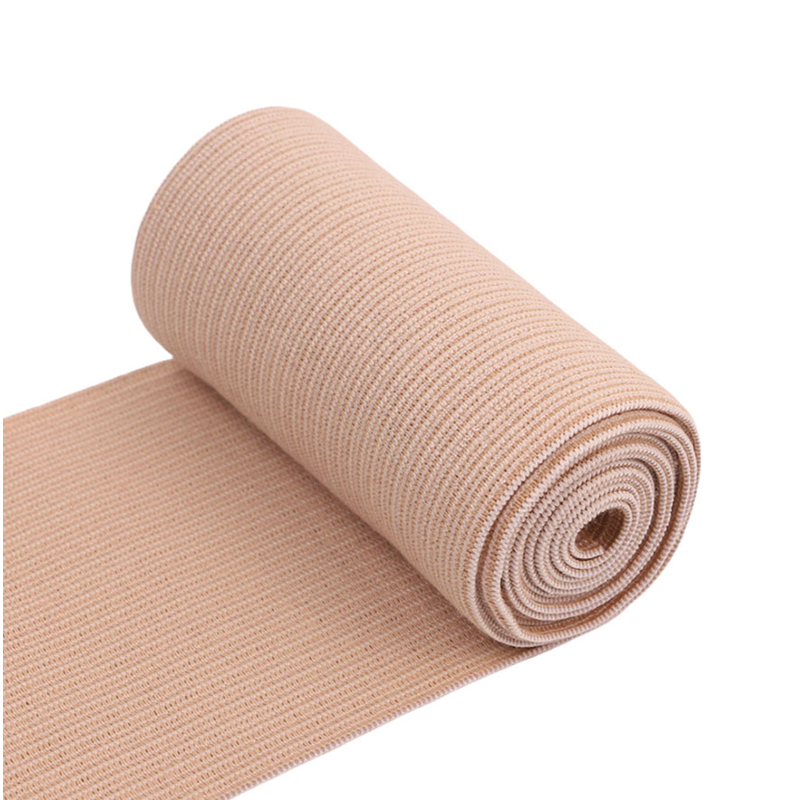
For medical elastic bandage applications, we frequently recommend knitted webbing because it provides the softness and conformability that patients expect. A common specification is our 10 cm light beige medical elastic bandage. It works for general bandaging and as a base layer in orthopedic supports.
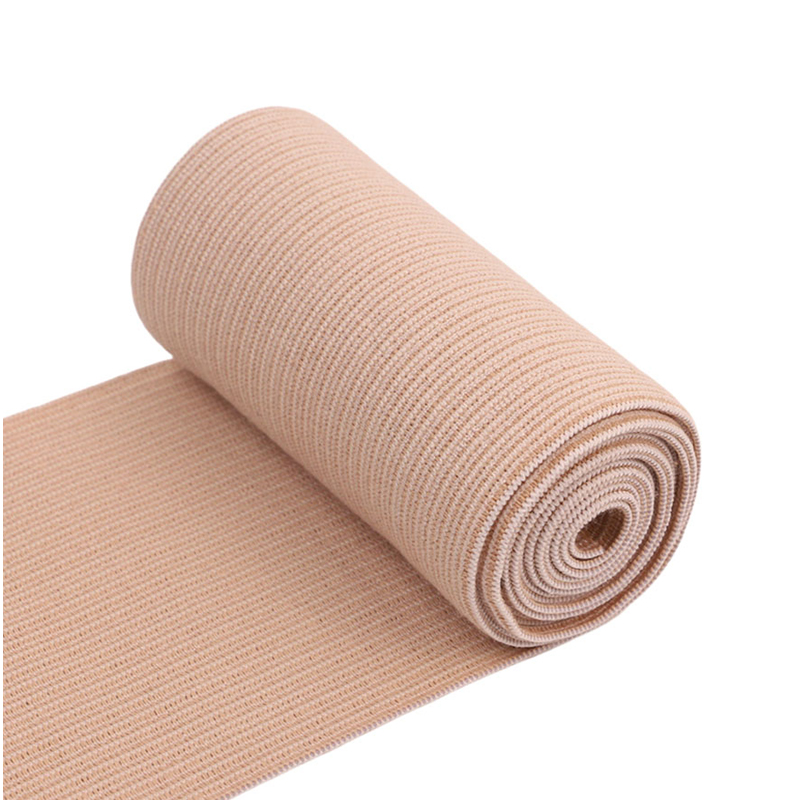 10cm Light Beige Medical Elastic BandageA soft, breathable knitted elastic bandage ideal for general bandaging and as a conformable base layer in orthopedic supports, offering consistent compression and skin-friendly comfort.View Product →
Key Specifications to Review When Sourcing Elastic Bandage Webbing
When you source a medical elastic bandage, the label “elastic” is only the beginning. Here are the specifications that should appear in your material specification or quality agreement:
- Width and length: Medical bandaging often uses 10 cm or 13 cm rolls. The width affects coverage and pressure distribution. Custom widths are available when your device demands it.
- Stretch and recovery: Specify acceptable elongation percentage and recovery. This will be influenced by the yarn composition and construction.
- Edge finish: Look for edges that do not fray, curl, or cut into skin. A clean edge is essential for patient comfort.
- Closure system: Some bandage designs need an integrated hook-and-loop closure. Others use separate clips or tape. Think about whether the webbing needs one soft side and one loop side.
- Breathability: Tightly woven or overly coated fabrics can trap heat. Breathable structures improve compliance in warm conditions.
- Color and dyeing: Medical environments often prefer skin tones or light colors so blood and discharge are visible. Dyes must be stable and safe for skin contact.
- Certification: ISO 13485 and Oeko-Tex Standard 100 are relevant, but also ask about batch traceability and testing records.
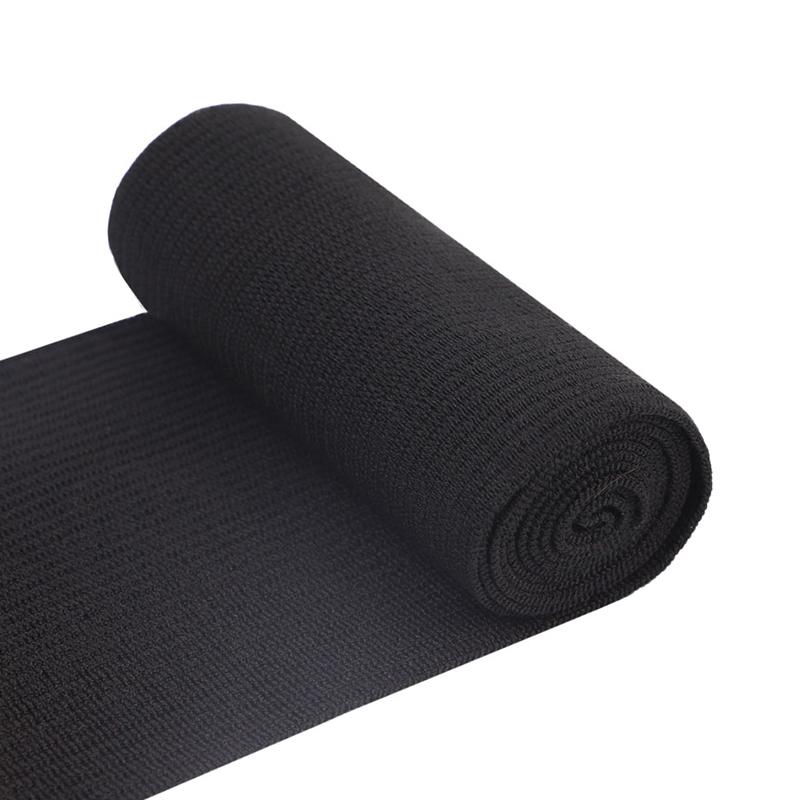
We supply a 13 cm black elastic bandage for medical use that is a good example of a stable, dye-fast, medium-width product. It is often selected for applications where a professional appearance and resistance to soiling are important.
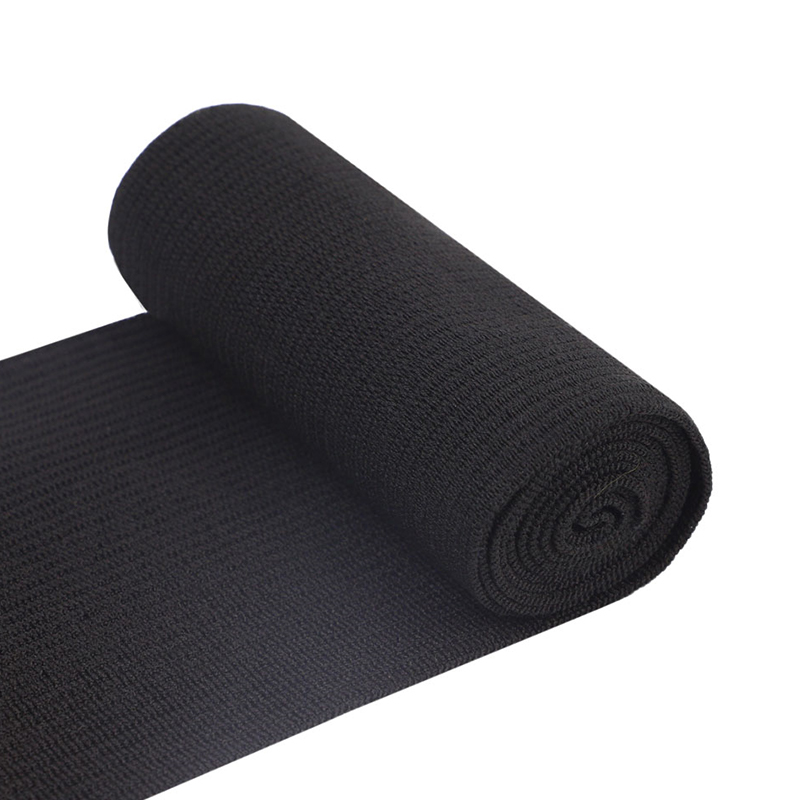 13cm Black Elastic Bandage for Medical UseA dye-fast, medium-width elastic bandage with a professional low-profile black finish and reinforced edges, suited for applications where durability and resistance to soiling matter.View Product →
Manufacturing and Quality Assurance Behind Medical Elastic Bandage
An elastic bandage may look simple, but producing a consistent roll is a demanding process. Warping, knitting or weaving, heat setting, dyeing, slitting, and packaging each affect the final tension, width, and edge quality. A small variation in yarn tension can create weak areas or uneven stretch. That is why we invest in dedicated equipment and in-process checks rather than treating bandage webbing as an afterthought.
At Jinhu Hengxiang Webbing Co., Ltd., our team manages production from raw material inspection to finished roll packaging. We have implemented a quality management system aligned with ISO 13485 for medical products. In parallel, we use Oeko-Tex Standard 100 as a framework to keep harmful substances out of textiles that touch the skin. These systems do not guarantee a good bandage by themselves, but they create the traceability and consistency that medical customers require.
If you are new to our company, you can see our certification story in our Oeko-Tex Standard 100 certificate news.
Sourcing From a Specialized Webbing Manufacturer
Many companies source elastic bandage as a finished product, but the material decision usually happens earlier. When you work directly with a webbing manufacturer, you can adjust yarn content, width, color, stretch, and closure before final assembly. This kind of customization is valuable for companies that need to differentiate their product by comfort, durability, or application-specific features.
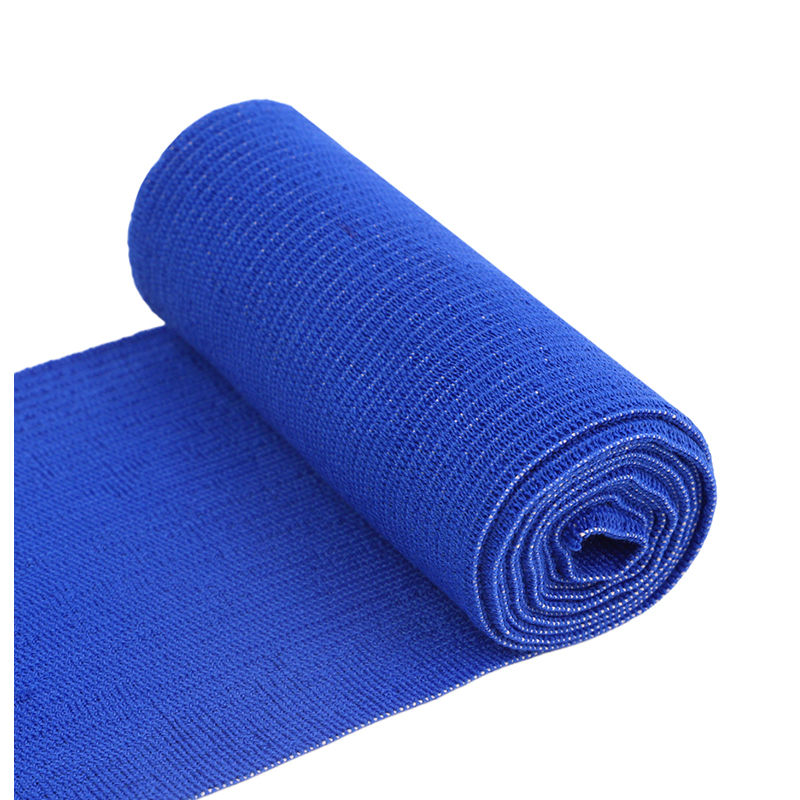
We regularly support OEM and ODM projects for first-aid bandages, orthopedic braces, abdominal binders, and sports supports. Our catalog includes standard items as well as custom woven and knitted webs. For broader wraps, a 13 cm blue medical elastic bandage is a good reference point; it is wide enough for knees and thighs, and the blue color is common in surgical settings.
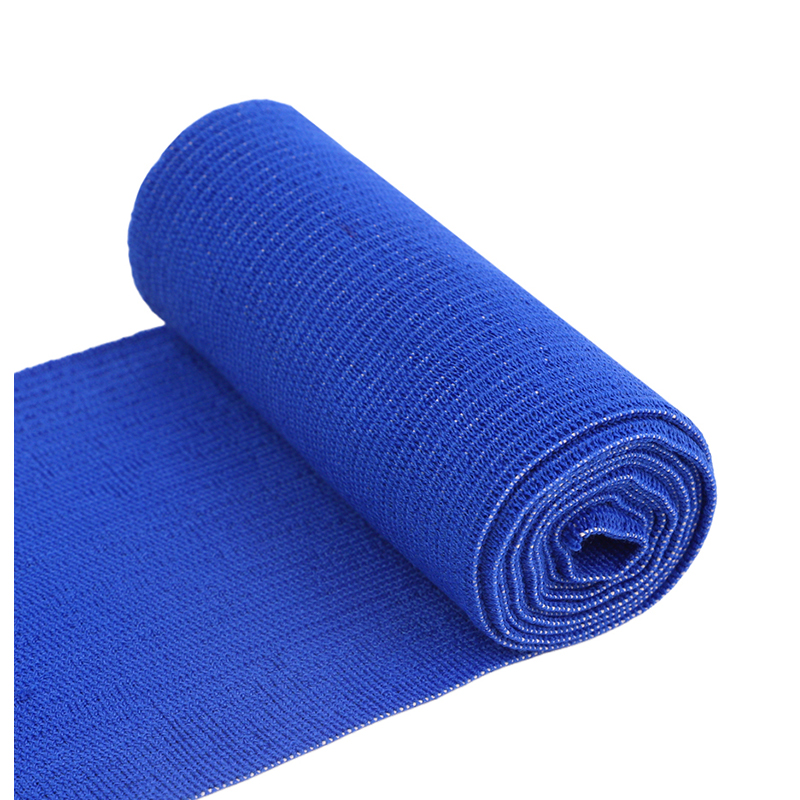 13cm Blue Medical Elastic BandageA wide elastic woven bandage in a recognizable blue tone for clinical settings, suitable for wrapping knees and thighs and supporting light to moderate compression during recovery.View Product →
To explore the full range of materials we offer, start at our homepage. You can also ask our technical team for recommendations based on your bandaging application.
Bandage and bandaging are more than the act of applying a strip of cloth. They are about safety, healing, and user confidence. By choosing the right elastic material, verifying production standards, and partnering with an experienced webbing manufacturer, you can create bandaging products that perform as well in practice as they do on paper.