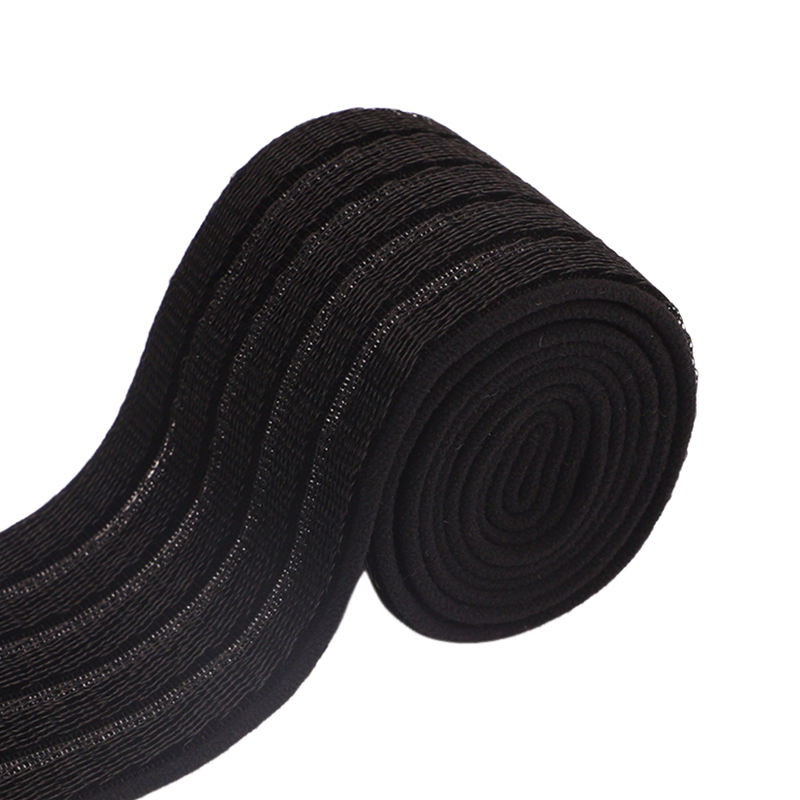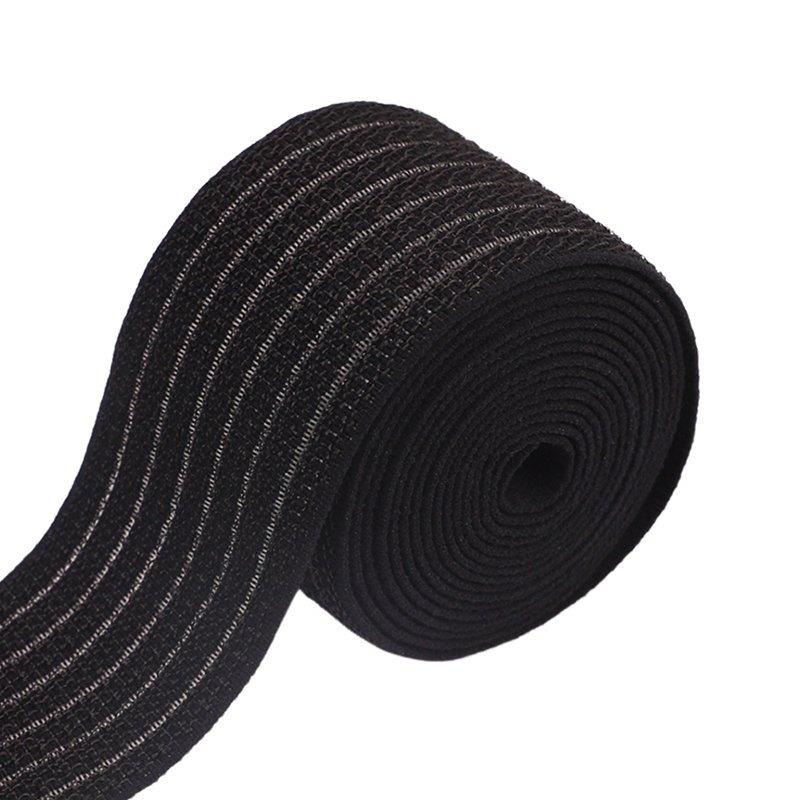

 en
en
 English
 русский
 Français
 Español
 Português
 Tiếng Việt
Content
Every sewing room has seen the same outcome: a waistband that twists after the first wash, rolls over at the center front, or loses its grip within a few wears. The instinct is to blame the stitching, but the stitching is rarely the real problem. The elastic itself, and the way it is anchored, determine whether a waistband stays flat and functional. Choose the right elastic construction for the fabric, then secure it with the correct method, and the waistband will hold its shape through repeated washing and wear.
Three Ways to Stitch an Elastic Waistband
No single method is universally best. The right approach depends on fabric weight, the garment silhouette, and whether the elastic will be visible. These three constructions cover most waistband sewing scenarios.
Direct Stitching
Direct stitching joins the elastic and fabric in one pass. It suits knit fabrics and loungewear, where the fabric stretches along with the elastic. Use a narrow zigzag or a three-step zigzag so the seam can flex, and keep the elastic stretched to its working length while feeding both layers through the machine. If the fabric edge runs longer than the elastic, distribute the fullness evenly; if the elastic is longer, ease the fabric to match. Even tension across the whole seam is what keeps the waistband flat.
Casing Method
The casing method creates a tunnel at the waist edge, and the elastic slides through it freely. This is the standard approach for woven fabrics such as cotton and linen, which do not stretch on their own. Fold over the waist edge and sew a casing about 1.5 cm wider than the elastic. Thread the elastic through, overlap the ends by 2 to 3 cm, and stitch them together with a secure rectangle or bar tack. Because a loose elastic can rotate inside the casing, edge-stitching the casing close to the elastic on both sides prevents twisting.
Topstitched Waistband
A topstitched waistband fixes the elastic to the fabric with one or more rows of straight stitching through all layers. This is the most secure construction and the one that looks most finished. Pull the elastic and fabric flat as you sew, and use a straight stitch of 2.5 to 3 mm. For wide elastics, add a second row through the center of the band. That center row stops the elastic from folding over on itself and keeps the waistband from rolling. Ready-to-wear garments favour this method because it survives laundering better than a loose casing.
| Method | Best for | Stitch type | Twist risk |
|---|---|---|---|
| Direct stitching | Knits, loungewear, childrenswear | Zigzag or three-step zigzag | Low with even tension |
| Casing | Woven fabrics, cotton, linen | Straight stitch | Medium; edge-stitching helps |
| Topstitched | Most fabrics, ready-to-wear finish | Straight stitch, 2.5-3 mm | Low; center row prevents folding |
Selecting Elastic That Won't Let the Waistband Down
Even a perfectly sewn waistband fails if the elastic has poor recovery or the wrong width for the garment. Selection starts with the fabric and ends with the mechanical properties of the band itself.
Match the Width to the Fabric Weight
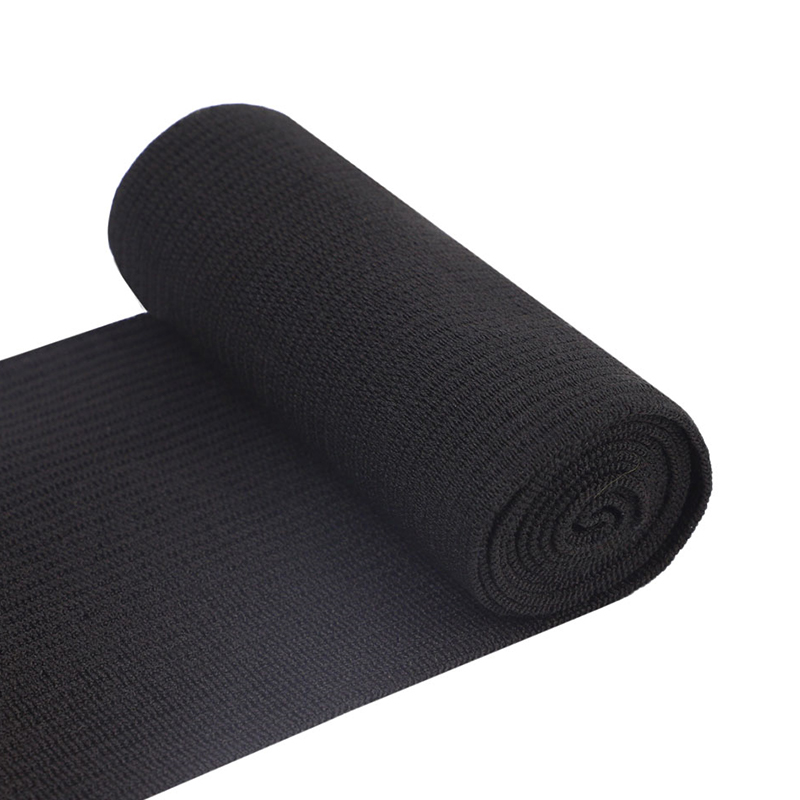
Elastic width changes more than the look of a waistband; it changes how the garment drapes. Narrow bands from 1.5 to 2 cm suit lightweight fabrics such as viscose, rayon, and summer cottons, where a wide band would add bulk. Medium and wide bands from 3 to 5 cm spread the tension over a larger area, so they are better for heavier fabrics such as denim and ponte knit. For loungewear and pajamas, a 4.5 cm black breathable elastic band provides enough grip to hold the garment up without digging into the waist.
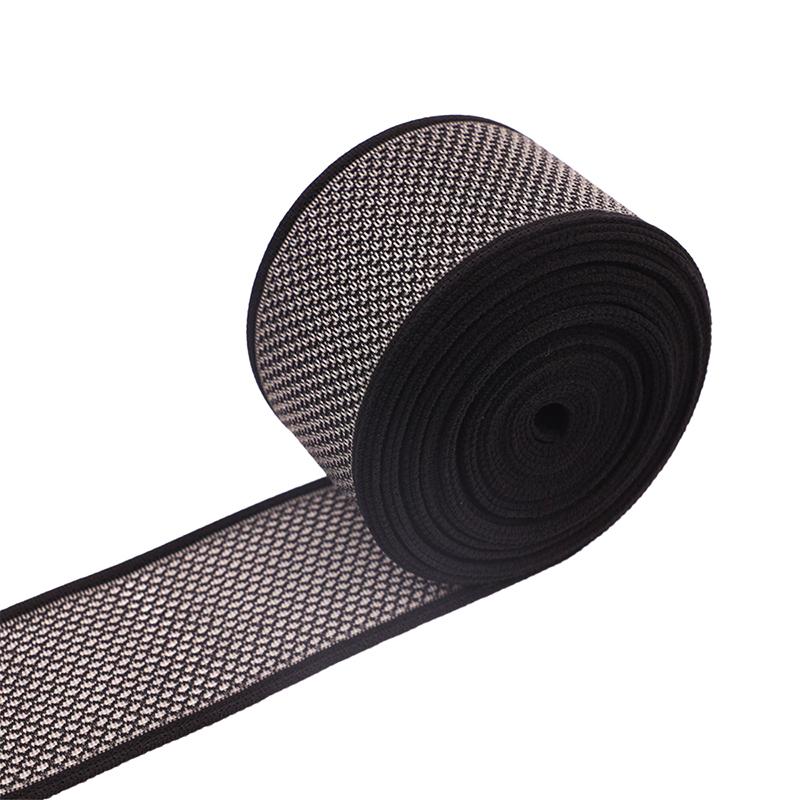 Wholesale 4.5cm Black Breathable Elastic Factory, Suppleirs - Jinhu Hengxiang WeJinhu Hengxiang Webbing Co., Ltd. is China wholesale 4.5cm Black Breathable Elastic manufacturers and factory,Features & Advantages:B...View Product →
Knitted or Woven Elastic
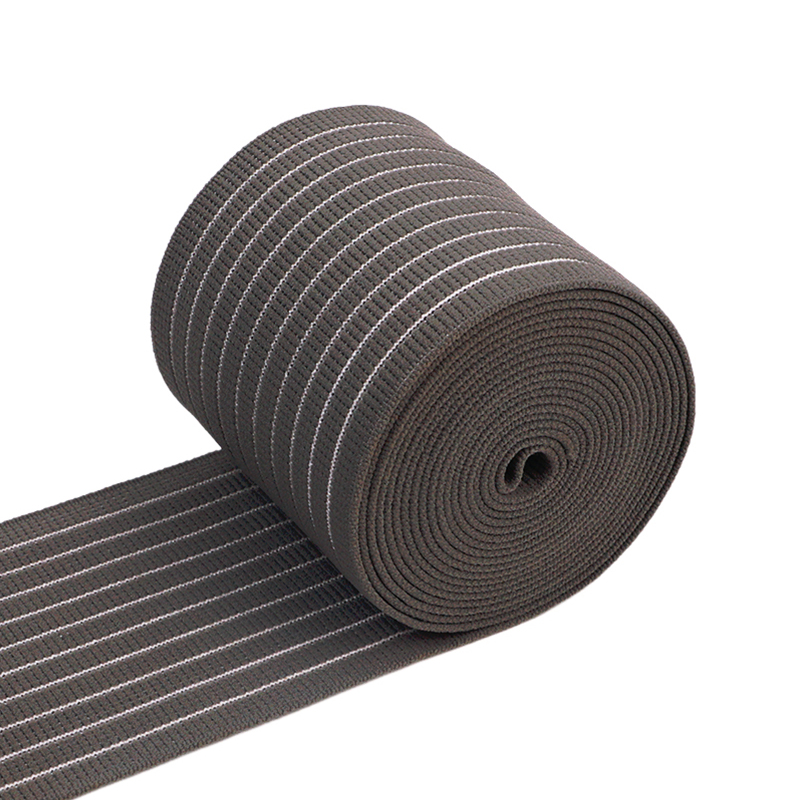
The internal structure of the elastic determines how it behaves under repeated strain. Knitted elastic is soft, conforms to the body, and stretches easily with low modulus, which makes it comfortable for wide waistbands on sleepwear and casual trousers. Woven elastic is firmer and holds its shape under tension, which suits structured garments and waistbands that must not relax over a long day. If the waistband will be visible, a knitted jacquard elastic keeps the pattern crisp after many washes; a navy jacquard elastic is a practical choice for tailored drawstring trousers.
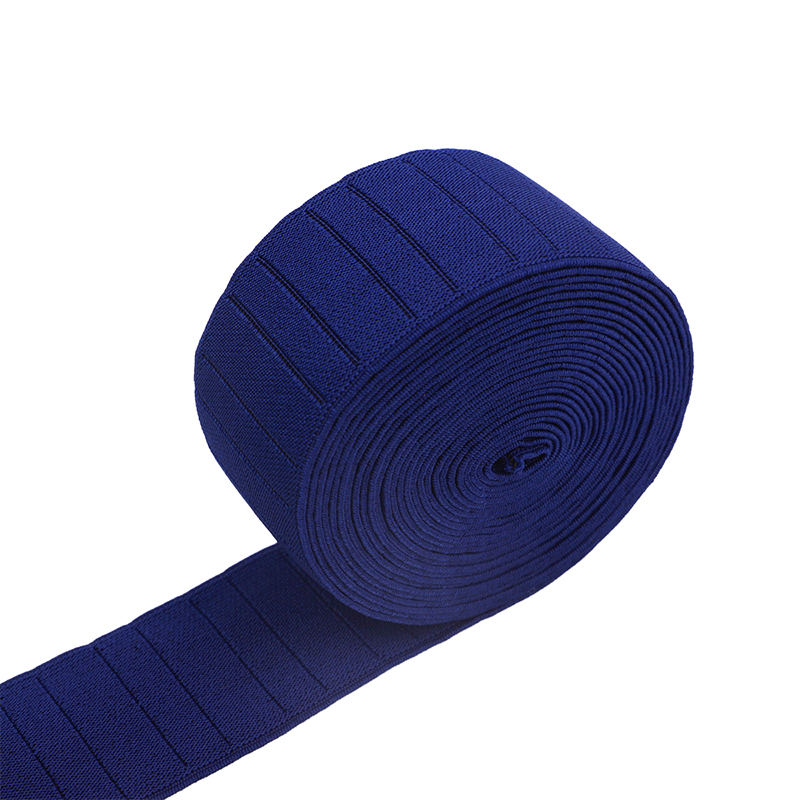 Wholesale 5cm Navy Jacquard Elastic Factory, Suppleirs - Jinhu Hengxiang WebbingJinhu Hengxiang Webbing Co., Ltd. is China wholesale 5cm Navy Jacquard Elastic manufacturers and factory,5cm navy jacquard elastic featur...View Product →
Check Stretch Recovery, Not Just Stretchiness
The most important specification in a waistband elastic is not how far it stretches but how completely it returns. Stretch recovery is expressed as the percentage of the original length that the elastic regains after being stretched. A waistband elastic should recover at least 90 percent of its original length after repeated stretching. Modulus, the force required to stretch the elastic to a set extension, controls how firmly the waistband grips. Higher modulus gives a firmer hold for trousers and skirts; lower modulus gives a gentler fit for childrenswear and sleepwear. Ask the supplier for a recovery specification before committing to a batch.
Common Waistband Failures and Their Real Causes
When a waistband fails, the visible symptoms are twisting, rolling, and loss of stretch. Each one traces back to a combination of construction choices and elastic behaviour.
Twisting
Twisting happens when the elastic rotates inside the casing or beneath the stitching. Uneven tension during sewing is one cause, but the elastic itself can be another. Elastic with unbalanced knitting or uneven edges will twist when stretched. A simple bench test: stretch a 30 cm length and hold it at both ends. If one edge rolls over the other, the elastic will twist inside a waistband. Reject such material before cutting.
Rolling
Rolling, where the top edge of the waistband folds outward, occurs when the elastic is too narrow for the fabric weight or when the casing is cut too deep. It also happens with elastics that have a weak edge finish. A well-made elastic band has a firmer, denser edge than its center, which keeps the band flat against the body. This edge structure is a quality indicator worth checking when comparing suppliers.
Loss of Stretch
Loss of stretch after washing usually points to the raw material. Natural rubber and some synthetic rubber blends lose recovery faster when exposed to heat, chlorine bleach, or fabric softeners. If a waistband turns baggy after a few washes, check the recovery percentage of the elastic and the care instructions on the garment. For products that will be laundered frequently, specify an elastic with higher recovery and recommend mild washing conditions.
Sourcing Elastic for Consistent Production
For a home sewer, buying elastic by the meter is a simple decision. For a brand, a pattern maker, or a small production shop, elastic is a component with specifications, tolerances, and batch-to-batch consistency. The same garment sewn with different elastic lots can produce noticeably different waistbands. This is why the textile industry increasingly treats elastic as an engineered material rather than a generic notion.
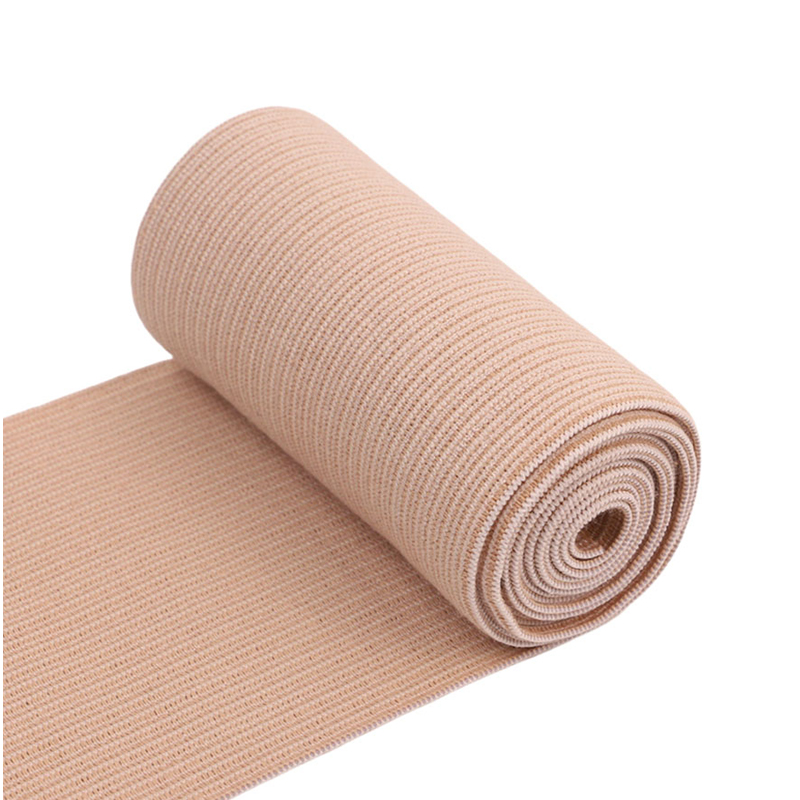
The safer route is to work with a manufacturer that produces elastic rather than a trader that resells it. A producer can adjust the width, color, surface structure, and recovery properties to the garment application. This matters most in medical and posture support, where elastic support is engineered for specific therapeutic functions. For brands producing garments with wide comfort waistbands, a 3-inch beige knitted elastic offers the softness and pressure distribution needed for all-day wear.
 Wholesale 3 Inch Beige Knitted Elastic Factory, Suppleirs - Jinhu Hengxiang WebbJinhu Hengxiang Webbing Co., Ltd. is China wholesale 3 Inch Beige Knitted Elastic manufacturers and factory,3-inch beige knitted elastic ...View Product →
Certifications are part of the specification. For elastic that sits against the skin, an Oeko-Tex Standard 100 certification verifies that the material is free from harmful substances. For suppliers serving medical wear and orthopedic products, ISO 13485 certification indicates a quality management system designed for medical devices. Both are worth requesting before placing an order.
Finally, look at the production capability behind the product. A supplier with dedicated knitting and weaving lines, in-house testing, and monthly output measured in millions of meters can maintain a steady supply for ongoing production. For industry updates on elastic materials and garment construction, manufacturer news pages are a practical source to follow.
Final Thoughts
Stitching an elastic waistband is a craft that combines sewing technique with material knowledge. Choose the right construction for the fabric, select the elastic by recovery and edge quality rather than by width alone, and the waistband will survive washing and wearing without twisting or rolling. For anyone producing garments in volume, treating the elastic as an engineered component, with specifications and certified quality, is what separates a dependable waistband from a warranty claim.